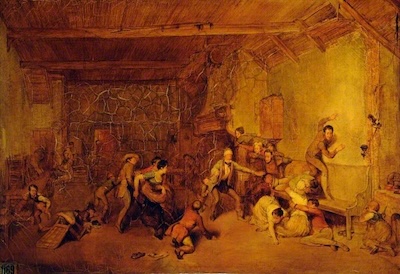
(David Wilkie, Blind Man’s Bluff: Sheffield Museums)
Sunshine, breeze. People walking or taking their dog for a walk or taking their phone for a walk, so intent upon that small screen that they will likely miss the apocalypse which, given the current derangements, may be sooner than expected and certainly sooner than hoped.
Oddly—or perhaps not—several features of recent and current news bring to mind Gilbert Murray’s The Stoic Philosophy. This was the Conway Memorial Lecture, delivered at South Place Institute, 16 March 1915, and published in volume form later that year.
Murray (1866-1957) is less well-known these days but was for many years an extremely familiar name in some circles: from 1908-1936 he was the Regius Professor of Greek at Oxford, and a very prolific translator and interpreter of ancient Greek literature and philosophy, particularly drama. He published almost a hundred books in all, including at least thirty volumes of translation and another twenty of classical studies. Born in Sydney, Australia, he came of an Irish Catholic family and was a consistent supporter of Irish Home Rule. His ashes are interred in Poets’ Corner, Westminster Abbey
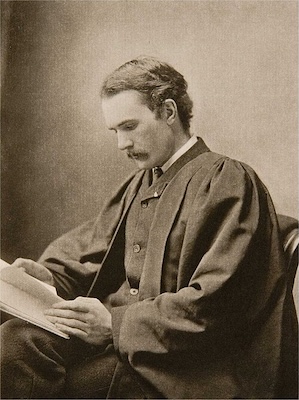
(Gilbert Murray)
He crops up several times in Ford Madox Ford’s letters in the period of the First World War, once as a signatory (one of 52) of a public letter, which appeared in The Guardian on 18 Sept. 1914, ‘British Authors and the War’, subheaded ‘Allies’ Righteous Cause’, setting out why the signatories supported Britain’s engagement in the war. His name was one of six which appeared both there and among the fifty signatories of another letter more than six years later, also published in The Guardian (1 Jan. 1921) but in several other newspapers also: ‘The State of Ireland. An Urgent Appeal for Mediation. Manifesto by the Arts and Professions’, a protest against the current policy being pursued in Ireland by the British government,[1] or, as Margaret Cole remembered it: ‘a propaganda campaign against the Black-and-Tans and the English occupation of Ireland’.[2]
The Stoic Philosophy is not a long book—a little more than 50 pages of Murray’s text, plus appendices and the Chairman’s introduction—and appeared at a serious historical juncture, just six months into the war which did not end war. It deals with major issues: philosophy, religion, history, the nature of matter, of reality: nevertheless, it seems to have been Murray’s comment on the 4th century BCE philosopher Zeno’s response to questioners that stuck in my head. Zeno of Citium is a major player here, being the founder of the Stoic philosophy, and Murray likens his strategy to that of the Duke of Wellington, when dealing with a subaltern who appears sceptical of the ageing Duke’s story, concerning an occasion during the Peninsula War when his servant opened a bottle of port and found that it contained a rat. The subaltern suggests that it must have been a very large bottle and the Duke retorts that it was ‘a damned small bottle’. The subaltern then comments that it must then have been a very small rat. The Duke replies that it was ‘a damned large rat’. ‘And there’, Murray concludes, ‘the matter has rested ever since.’[3]
Still, rats aside, there is plenty of interest in a relatively small space. Murray remarks of Zeno that ‘[t]he time of his coming is certainly significant. It was a time when landmarks had collapsed, and human life was left, as it seemed, without a guide’.
And: ‘Two questions lay before him—how to live and what to believe. His real interest was in the first, but it could not be answered without first facing the second. For if we do not in the least know what is true or untrue, real or unreal, we cannot form any reliable rules about conduct or anything else’ (22-23). And, towards the end: ‘Life becomes, as the Stoics more than once tell us, like a play which is acted or a game played with counters. Viewed from outside, the counters are valueless; but to those engaged in the game their importance is paramount. What really and ultimately matters is that the game shall be played as it should be played’ (50).
The game – or The Game. This does not mean—or need not mean—life viewed as trivial or to be taken lightly. It points towards a recognition of rules, of recognized forms and formations, though the outcome, the result—at, so to speak, the final whistle—is, of course, always the same.
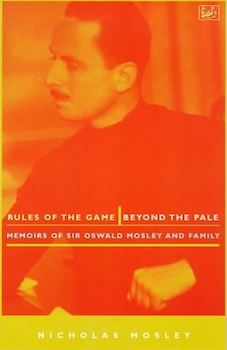
I remind myself that the first volume of the novelist Nicholas Mosley’s Memoirs of Sir Oswald Mosley and Family was Rules of the Game (the second was Beyond the Pale).
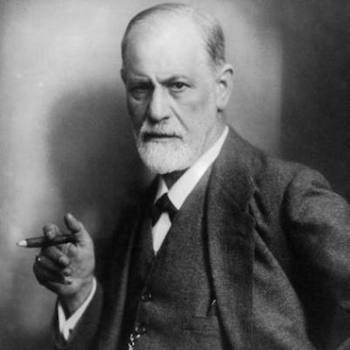
In the year of Murray’s lecture, Sigmund Freud was thinking about literature, particularly fiction: ‘It is an inevitable result of all this that we should seek in the world of fiction, in literature and in the theatre compensation for what has been lost in life. There we still find people who know how to die – who, indeed, even manage to kill someone else. There alone too the condition can be fulfilled which makes it possible for us to reconcile ourselves with death: namely, that behind all the vicissitudes of life we should still be able to preserve a life intact. For it is really too sad that in life it should be as it is in chess, where one false move may force us to resign the game, but with the difference that we can start no second game, no return-match. In the realm of fiction we find the plurality of lives which we need. We die with the hero with whom we have identified ourselves; yet we survive him, and are ready to die again just as safely with another hero.’[4]
In literature, and the arts generally, of course, you may break the rules of the game (once you have established to your own satisfaction what they actually are) without inflicting serious harm on others: while the same cannot confidently be said of politics, psychiatry, medicine or physics. Nor need its implications end with, or be restricted to, the human. In No More Parades, Ford Madox Ford has Christopher Tietjens thinking ‘good-humouredly’ about his official religion: God the great English landowner; Christ, an almost too benevolent land steward, son of the owner; the Third Person of the Trinity the spirit of the estate, ‘the Game, as it were, as distinct from the players of the Game.’[5]
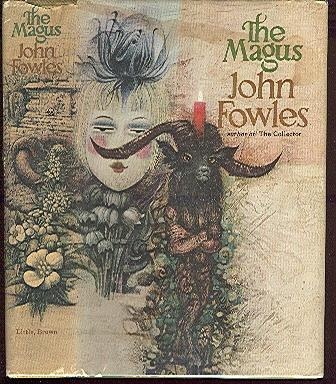
An element of the game occurred also to John Fowles when, with the figures of Heraclitus and Pascal hovering about his shoulders, he wrote of what he sometimes termed the Godgame (working title of his novel The Magus): ‘Put dice on the table and leave the room; but make it clear to the players that you were never there before you left the room.’[6]
The first task is to identify the rules of the game, the second to understand them or, perhaps, to understand what understanding in this context might amount to. Or is it, before all else, to confirm that it is in fact a game? Or is the attempt to confirm that itself the game?
Perhaps a little early in the day for such philosophical demands – or stoicism in the face of such questions. Barely one coffee in – and many hours away from an aperitif. . .
But a supplementary question must be: what of those who ignore the rules of the game or fail to understand them or whose ego obscures too much of the world, the people in it, their motives for what they do or say or fail to do or say?
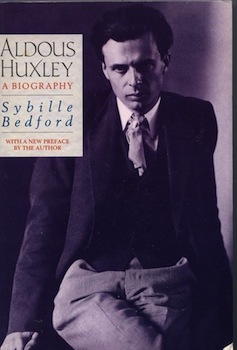
Sybille Bedford related the story of Aldous Huxley aboard a ship when, off North Borneo, a sailor was threatening to run amok with a dagger. While the ship’s officers conferred and the passengers stood huddled together, Huxley reflected on ‘the precarious artificiality of all that seemed most solid and fundamental in our civilization, of all that we take for granted. An individual has only to refuse to play the game of existence according to the current rules to throw the rule-observing players into bewildered consternation . . .
‘They are appalled, they are at a loss, they are helpless.’[7]
We have moved on from that, of course – and from more than the dagger, we fondly hope.
Notes
[1] The other five signatories to both letters were Arnold Bennett, G. K. Chesterton, Jane Harrison, Arthur Quiller-Couch and May Sinclair
[2] Margaret Cole, Growing Up into Revolution (Longmans, Green & Co, 1949), 83.
[3] Gilbert Murray, The Stoic Philosophy (New York: The Knickerbocker Press, G. B. Putnam’s Sons, 1915), 24-25.
[4] Sigmund Freud, ‘Thoughts for the Times on War and Death’ (1915), in Civilization, Society and Religion, edited by Albert Dickson (London: Penguin Books, 1991), 79.
[5] Ford Madox Ford, No More Parades (1925), edited by Joseph Wiesenfarth (Manchester: Carcanet Press, 2011), 96.
[6] John Fowles, The Aristos (London: Pan Books, 1968), 21-22.
[7] Sybille Bedford, Aldous Huxley: A Biography (Two volumes, 1973; one volume edition, with a new preface, London: Pan Macmillan, 1993), 173.

 Reconstructionary Tales