
The Sea – and James Agee

Beach

We have been to see the sea. We see it fairly often in any case but this time it was for a long, hard look, the window of the sitting-room of the rented apartment giving straight out onto the smaller beach and a wide view of the sea.

We are, of course, acquitted of the need to fashion trenchant or memorable remarks about it. It has all been done so many, many times before. ‘MER: N’a pas de fond. Image de l’infini. Donne de grandes pensées,’ Gustave Flaubert wrote, a hundred and fifty years ago, in his posthumously published Dictionnaire des idées reçues. Bottomless, a symbol of infinity, prompting deep thoughts.[1] That more or less covers it.

The fact is that gazing at a calm sea or, indeed, a restless one, is as transfixing as staring into an open fire, far more so, in fact. I might have added ‘watching other people work’ but this is often oddly gender-specific: men will watch for hours while other men dig a hole but perhaps they are ex-diggers themselves, so the watching is simply an exercise in nostalgia. Certainly, I can regard the open sea for a considerable period of time without strain; and have seen innumerable other people—regardless of gender—doing the same.

Agee

(© Walker Evans, 1937; via Smithsonian American Art Museum)

Writing of summer evenings in Knoxville, 1915, James Agee describes at length ‘the fathers of families’ all ‘hosing their lawns.’ After closely describing the varied sounds emitted by the hoses, singly and in concert, and then the dwindling and final ceasing of such activity, he notes that the locusts ‘carry on this noise of hoses on their much higher and sharper key.’ There is, again, the doubled effect, of the individual and the choral:

‘They are all around in every tree, so that the noise seems to come from nowhere and everywhere at once, from the whole shell heaven, shivering in your flesh and teasing your eardrums, the boldest of all the sounds of night. And yet it is habitual to summer nights, and is of the great order of noises, like the noises of the sea and of the blood her precocious grandchild, which you realize you are hearing only when you catch yourself listening.’[2]

That wonderful sentence is echoed for me, in another book published that same year, Lawrence Durrell’s Bitter Lemons, in which he stands with the Hodja (teacher) as darkness falls over the sea. ‘It was a blessed moment—a sunset which the Greeks and Romans knew—in which the swinging cradle-motion of the sea slowly copied itself into the consciousness, and made one’s mind beat with the elemental rhythm of the earth itself.’[3]

Bitter-Lemons

That ‘great order of noises’ evokes for me a faint tang of the divine, as of a religious order, which may not be fanciful, since religion played a significant part in Agee’s development: from the age of about ten, he lived for years in the dormitory at St Andrew’s School, established by Episcopal monks of the Order of the Holy Cross. His short novel The Morning Watch is set in such an institution, and centres on the thoughts and emotions of a young boy, Richard, in the early hours of Good Friday.

‘Knoxville: Summer 1915’ now stands as a brief prologue to Agee’s major novel, A Death in the Family. The central event, the death of the father in an automobile accident, is drawn from Agee’s boyhood: his own father died in just that way when James was seven. It’s an uneven but often very powerful book. The unevenness, or variations in control, focus and intensity, derive in part from the fact that Agee did not live to effect final revisions, which means, on occasion, that choices haven’t been made and words or phrases overlap and blur into one another. Then, too, the first editors chose to italicise sections of the book which they feel are not strictly part of the story: these are the reflections of the boy, Rufus, but it’s highly problematic to decide what is or is not ‘part of the story’ when that story largely comprises an intense recall of the events and its consequences: psychological, emotional and religious. The italics, anyway, are a little disconcerting at first – though only at first – recalling Faulkner’s The Sound and the Fury. Agee explores the reactions (and fears and repressions) of several members of the extended family, sometimes with a startlingly close-up, penetrative stare. Not formally perfect then, not aesthetically neat, but very effective, often strong, sometimes delicate.

Agee worked on A Death in the Family for several years from the late 1940s. When he died in 1955, it was completed, with the addition of ‘Knoxville : Summer 1915’, by the editors at McDowell, Obolensky (Agee’s friend David McDowell, was one of the co-founders), who also produced books by Hugh Kenner and William Carlos Williams, among others. Published in 1957, Agee’s novel won the Pulitzer Prize the following year. The University of Tennessee Press published a scholarly edition of the ‘restored’ manuscript ten years ago, edited by Michael A. Lofaro, professor of American literature and American and cultural studies at the University of Tennessee, Knoxville.

There’s a nice photograph by Helen Levitt, dating from 1939, which sat on my desktop for a while: Agee sitting at the wheel of his convertible beside his second wife, Alma, with, in the back seat, the young Delmore Schwartz.

Agee-Alma-Schwartz

Walker Evans Archive, Metropolitan Museum of Art © Estate of Helen Levitt (1913-2009)

Clouds of cigarette smoke, inevitably, drift up from the front seat; and all three are facing forward, Agee in what looks like a corduroy cap, Schwartz with his intent, distinctive profile; Alma, with her headscarf slipping back a little, gazing slightly down and, perhaps, inwards, maybe already sensing trouble to come. Here’s another photograph of Alma, by the great Walker Evans, taken in Brooklyn in 1939.

Alma-Agee

Walker Evans Archive, 1994 © Walker Evans Archive, The Metropolitan Museum of Art

Evans took the photographs which are so integral a part of the classic book he produced with Agee, published as Let Us Now Praise Famous Men (included in the Agee volume together with A Death in the Family and Agee’s shorter fiction: his novella The Morning Watch and a handful of short stories).

Much of Agee’s creative energy went into his film criticism (and co-writing the screenplay for The African Queen; he wrote the script for Charles Laughton’s 1955 The Night of the Hunter too, though Laughton cut it substantially). Agee also adapted ‘The Bride Comes to Yellow Sky’ by Stephen Crane. He appeared in a minor role in the film, which was released in a two-part Face to Face, the second section being an adaptation of Conrad’s The Secret Sharer.

That last detail interests the Ford Madox Ford scholar, because of Ford’s very specific allusions to Crane’s story,[4] and because several commentators have seen in Conrad’s novella evidence of his complicated attitude towards the collaboration with Ford (which produced two full-length novels and a long short story) and its ending.[5]

When her marriage to Agee broke down, Alma moved to Mexico with their young son, Joel; then back briefly to New York, then Mexico again, where she finally married the writer and political activist Bodo Uhse. She had some interesting encounters while working in a Mexico City Gallery, coming to know Diego Rivera, David Siqueiros and Pablo Neruda. In 1948, Alma, Bodo and Joel moved to East Germany. Joel later wrote a memoir called Twelve Years: An American Boyhood in East Germany (2000), published by the University of Chicago Press. Also for Chicago, Joel Agee has translated from German a number of volumes by writers including Rilke and Hans Erich Nossack, but principally, Friedrich Dürrenmatt: The Pledge, The Assignment, The Inspector Barlach Mysteries and the three-volume Selected Works.

Alma lived into her mid-sixties, dying in 1988: her memoir, Always Straight Ahead, appeared in 1993. But one striking fact about Agee’s generation of writers is how many of them failed even to attain that age. Agee himself died at 45, suffering a massive heart attack in a New York taxicab, while Delmore Schwartz died in a shabby hotel at 52. Weldon Kees was 41, John Berryman managed 57, and Robert Lowell 60. The slightly older R. P. Blackmur died – very slightly older – at just 61.

References

[1] Published in 1913: Robert Baldick’s translation of The Dictionary of Received Ideas is included in the A. J. Krailsheimer translation of Bouvard and Pécuchet (London: Penguin Books, 1976).

[2] James Agee, Let Us Now Praise Famous Men, A Death in the Family, and Shorter Fiction, edited by Michael Sragow (New York: Library of America, 2005), 470, 471.

[3] Lawrence Durrell’s Bitter Lemons (London: Faber and Faber, 1957), 240.

[4] See Ford, Thus to Revisit (London: Chapman & Hall, 1921), 108; and, particularly, ‘Stevie and Co.’, in New York Essays (New York: William Edwin Rudge, 1927). 29.

[5] See Frederick R. Karl, Joseph Conrad: The Three Lives (London: Faber and Faber, 1979), 673; letter from Thomas C. Moser, quoted in Zdzisław Najder, Joseph Conrad: A Chronicle, translated by Halina Carroll-Najder (Cambridge: Cambridge University Press, 1985), 361; Max Saunders, Ford Madox Ford: A Dual Life, two volumes (Oxford: Oxford University Press, 1996), I, 149.

 

Seeing again, making it new

Inheritors

Re-reading an early Ford Madox Ford work recently, I noticed that, while my scrappy and often baffling notes from the previous reading ran to little more than a page, I now have something over ten pages of extracts, cross-references and occasionally more general comments. Should I be impressed or anxious? Was it admirably thorough or mildly deranged? Clearly, this reader had changed substantially in the intervening period and, to that extent, the book itself was changed. Curious, since it had seemed stable enough in its hard covers, more than a century old.

Yet – how stable, exactly, even at the most basic level? It was written by Ford Madox Hueffer, who would subsequently become (in 1919) Ford Madox Ford, in collaboration with Joseph Conrad, who had become a British subject in 1886 and was previously known as Konrad Korzeniowski. It was written when work on their initial collaborative venture, Romance, was already well-advanced but was completed and published first; an unsteady hybrid of science fiction, political satire and roman à clef, it concerned itself with nefarious dealings in a country—‘Greenland’—which was clearly in Africa and, pretty obviously, the Congo Free State of the rapacious King Leopold II of Belgium. As Ford recalled it more than twenty years later: ‘The novel was to be a political work, rather allegorically backing Mr Balfour in the then Government; the villain was to be Joseph Chamberlain who had made the [Boer] war.’[1]

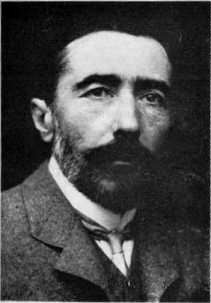
Conrad_1904

(Joseph Conrad, 1904)

Stability. A key word for those that have followed, with bafflement or appalled disbelief, the mad pantomime of British politics over the past few months. In The Inheritors, we find: ‘I became conscious that I wanted to return to England, wanted it very much, wanted to be out of this; to get somewhere where there was stability and things that one could understand.’[2] Cue a pained smile. ‘Permanence? Stability? I can’t believe it’s gone’, a later Ford narrator lamented.[3] Of course, it was—it is—always already gone. . .

In any case, I find it an intriguing and curious business, this revisiting—of a place, a person, a painting, a book, a film, a piece of music—and finding it so changed. It’s commonplace and banal, yet enduringly mysterious and fascinating. There are, to be sure, many thousands of pages of philosophy, psychology, biology, neurology, physics, optics and more, devoted to just this phenomenon. We’re increasingly comfortable with the idea that the observer alters what is observed, that the slightest shift in position or perspective alters the thing seen. Some of us saw the intriguing 1974 Alan Pakula political thriller, The Parallax View, with Warren Beatty and Paula Prentiss, and looked up the meaning of the title. (‘Parallax, you see. Observed from different angles, Gestalts alter.’)[4] Fifty years before that, in 1923, Wallace Stevens published ‘Thirteen Ways of Looking at a Blackbird’.

Parallax_View_movie_poster

II
I was of three minds,
Like a tree
In which there are three blackbirds.

XII
The river is moving.
The blackbird must be flying. [5]

A goodly proportion of those thousands of pages, though, can probably be reduced to just two words of the pre-Socratic philosopher Heraclitus, panta rei, everything flows, flux and change as the essential characteristics of the world.[6] 

T. S. Eliot used two quotations from Heraclitus to preface Four Quartets, the second of them translated as ‘The way up and the way down are one and the same’. Eliot wrote of being ‘much influenced’ by Heraclitus when younger and thought the influence a permanent one. The quotations were, he said, ‘a tribute to my debt to this great philosopher.’[7]

In Little Gidding, the last of the Quartets, Eliot wrote:

We shall not cease from exploration
And the end of all our exploring
Will be to arrive where we started
And know the place for the first time.[8]

See it again but know it for the first time.

Stanley Spencer wrote of his celebrated painting, The Resurrection in Cookham Churchyard: ‘The resurrection is meant to indicate the passing of the state of non-realization of the possibilities of heaven in this life to the sudden awakening to the fact. This is what is inspiring the people as they resurrect, namely the new meaning they find in what they had seen before.’[9]

The Resurrection, Cookham 1924-7 by Sir Stanley Spencer 1891-1959

(Stanley Spencer, The Resurrection in Cookham Churchyard, 1924-1927, © Tate Gallery)

That ‘awakening’ is, again, indissolubly linked to the familiar or, at least, to that which has been seen before. Much of Spencer’s art is ‘religious’ but very idiosyncratically so, ‘visionary’ rather, an art constantly linking back to his feelings about the village of Cookham and its people, his childhood and familial memories and sensations revisited, recaptured and reworked.

Time slips and eddies. We return, retrace, revisit and see again, in thought, in dreams, in conversation. Memories lose their edges, become indistinct, bleed into others. We can’t always predict what has taken root in the mind or the nerves, what doesn’t need to be consciously recovered, what can be held and turned in a glancing light and mysteriously made new.

I could not draw a map of it, this road,
Nor say with certainty how many times
It doubles on itself before it climbs
Clear of the ascent. And yet I know
Each bend and vista and could not mistake
The recognition, the recurrences
As they occur, nor where. So my forgetting
Brings back the track of what was always there
As new as a discovery.[10]


References

[1] Ford Madox Ford, Joseph Conrad: A Personal Remembrance (London: Duckworth, 1924), 133.

[2] Ford Madox Ford and Joseph Conrad, The Inheritors: An Extravagant Story (1901; Liverpool: Liverpool University Press, 1999), 106.

[3] Ford Madox Ford, The Good Soldier: A Tale of Passion (1915; edited by Max Saunders, Oxford: Oxford University Press, 2012), 13.

[4] Hugh Kenner, ‘Joyce on the Continent’, in Mazes (Athens: University of Georgia Press, 1995), 114.

[5] Wallace Stevens, The Collected Poems (New York: Vintage Books, 1982), 92, 94.

[6] ‘All things are a flowing,/ Sage Heracleitus says’, Ezra Pound wrote, adding: ‘But a tawdry cheapness/ Shall outlast our days.’ See Hugh Selwyn Mauberley, in Personae: The Shorter Poems of Ezra Pound, edited by Lea Baechler and A. Walton Litz (New York: New Directions, 1990), 186.

[7] The Poems of T. S. Eliot. Volume I: Collected and Uncollected Poems, edited by Christopher Ricks and Jim McCue (London: Faber & Faber, 2015), 907. John Fowles offers: ‘The road up and the road down are the same road’, in The Aristos (London: Pan Books, 1968), the ‘original impulse’ for the book and ‘many of the ideas’ in it having come from Heraclitus (214).

[8] The Poems of T. S. Eliot. Volume I, 208. Another faint connection for John Fowles readers: this is the first marked passage in the poetry anthology which Nicholas Urfe finds on the beach, in The Magus (London: Pan Books, 1968), 60.

[9] Kenneth Pople, Stanley Spencer: A Biography (London: Harper Collins, 1991), 226, citing the Spencer collection in the Tate Archives, reference TA 733.3.1.

[10] Charles Tomlinson, ‘The Return’, New Collected Poems (Manchester: Carcanet Press, 2009), 413.


Ford Madox Ford’s Fourth of August

Ford Madox Ford, 1915

The Good Soldier: Ford in 1915 by E. O. Hoppé: National Portrait Gallery via New York Review of Books

4 August commemorates not only a flurry of artistic birthdays—Shelley, Pater, W. H. Hudson, Knut Hamsun, Louis Armstrong—and a clutch of significant dates for relatives of artists—the wedding of D. H. Lawrence’s sister Ada, the birthday of Stanley Spencer’s sister Florence, the birthday of Violet Hunt’s sister Venice, named after The Stones of Venice by John Ruskin, her godfather—but, probably above all else, Britain’s 1914 declaration of war, Sir Edward Grey’s ultimatum to Germany having expired.

‘All that was left was to wait for midnight (eleven o’clock, British time). At nine o’clock the government learned, through an intercepted but uncoded telegram sent out from Berlin, that Germany had considered itself at war with Britain from the moment when the British ambassador had asked for his passports.’[1]

On the day that war was declared, the Bradford Daily Argus ‘suggested that “it will be in the kitchens that the pinch will be chiefly felt but that difficulty may be overcome by deleting the more dainty dishes”.’[2] An admirable prediction but, as things turned out, a little wide of the mark.

For readers of Ford Madox Ford, there are supplementary significances. In The Good Soldier alone, he mentions 4th August sixteen times; in other writings he refers to it more than a dozen times, frequently in conjunction with the name of the village of Gemmenich, the point at which German troops crossed the Belgian border that morning

blast1

The recurrence of the date in The Good Soldier is a well-established mystery. The novel was published in London and New York by John Lane, in March 1915. The first section of the novel, then still entitled ‘The Saddest Story’, had appeared in the June 1914 issue of Blast: Review of the Great English Vortex. Tantalisingly, although the published section includes one mention of ‘August’, the excerpt ends a chapter and a half before the novel’s first specific reference to 4th August, which comes at the very beginning of Part II of the published text.

We can’t be sure, and are unlikely to become so, exactly when the novel was finished. It seems likely that a coincidental mention of 4th August was, in the course of revision, and after the war had started, made central to the novel, as noted by two of The Good Soldier’s most recent editors.[3] As Martin Stannard remarks elsewhere, ‘Trying to reconstruct the textual history of a Ford novel is like trying to establish the details of a dream.’[4]

There are dreams enough in The Good Soldier. Early on in the novel, the narrator, in a wonderful passage, proposes to ‘imagine myself for a fortnight or so at one side of the fireplace of a country cottage, with a sympathetic soul opposite me. And I shall go on talking, in a low voice while the sea sounds in the distance and overhead the great black flood of wind polishes the bright stars.’[5] (As usual, I’m tempted to analyse and comment upon almost every word here with the possible exceptions of ‘at’ and ‘a’, though I’m not sure that even those can safely be left unexamined.) Spoken rather than written, an illusion maintained until very near the end (‘I am writing this, now, I should say, a full eighteen months after the words that end my last chapter’).[6] Intriguing, then, to find this:

‘But the fellow talked like a cheap novelist.—Or like a very good novelist for the matter of that, if it’s the business of a novelist to make you see things clearly. And I tell you I see that thing as clearly as if it were a dream that never left me.’[7]

Carcassonne

Carcassonne, late 19th century: Fonds Eugène Trutat, via Wikipedia

And this, the wonderful conjunction of the specific (‘Carcassonne’) and the indefinite (‘some people’):

‘I don’t mean to say that I sighed about her or groaned; I just wanted to marry her as some people want to go to Carcassonne.

Do you understand the feeling—the sort of feeling that you must get certain matters out of the way, smooth out certain fairly negligible complications before you can go to a place that has, during all your life, been a sort of dream city?’[8]

Yes, suffice to say that there are plenty of mysteries and diversions in this short novel other than the date of its completion or its repeated reference to 4th August.


References

[1] Barbara Tuchman, The Guns of August and The Proud Tower, edited by Margaret MacMillan (New York: Library of America, 2012), 155.

[2] Denis Winter, Death’s Men: Soldiers of the Great War (London: Penguin Books, 1979), 23.

[3] Ford, The Good Soldier, edited by Max Saunders (Oxford: Oxford University Press, 2012), xxxviii-xl; edited by Martin Stannard, second edition (New York and London: W. W. Norton, 2012), 192-193 and ‘Textual Appendices’, 216, 220.

[4] Stannard, ‘The Good Soldier: Editorial Problems’, in Robert Hampson and Max Saunders (eds), Ford Madox Ford’s Modernity, International Ford Madox Ford Studies 2 (Amsterdam: Rodopi, 2003), 147.

[5] The Good Soldier, edited by Max Saunders, 18.

[6] The Good Soldier, 178.

[7] The Good Soldier, 89. The phrase ‘to make you see things clearly’ is a reference to Joseph Conrad’s ‘Preface’ to The Nigger of the “Narcissus”’, in Typhoon and Other Tales (New York: Signet Classics, 1962), 21.

[8] The Good Soldier, 97. See my ‘“Speak Up, Fordie!”: How Some People Want to Go to Carcassonne’, in Sara Haslam, editor, Ford Madox Ford and the City, International Ford Madox Ford Studies 4 (Amsterdam: Rodopi, 2005), 197-210.