
Remembering, or forgetting, 4 August


(Selwyn Image, ‘Stained Glass Design’, 1887: © Victoria & Albert Museum)

Looking at the news this 4 August, it’s sobering to reflect that one of the candidates for the Tory leadership recently vowed to ‘turn the tide of Liberalism’, when it is painfully obvious that what is actually – and urgently – needed is to turn the tide of fascism and racist violence.

Today is the 110th anniversary of Britain’s declaration of war, which will be old news to anyone who reads or writes around the First World War, or simply has an average grasp of history, and it has tended rather to dwarf other, personal, events and anniversaries – though not, perhaps, for the individuals concerned.

Walter de la Mare (‘Jack’) and Elfrida Ingpen (‘Elfie’) were married privately in the parish church at Battersea on 4 August 1899. D. H. Lawrence’s sister Ada married William Edward Clarke on 4 August 1913.[1] Julian Barnes noted that his grandparents were married on 4 August 1914, the day itself,[2] which also marked the birth of Anthony, Rebecca West’s son by H. G. Wells. It was the birthday of Florence, Stanley Spencer’s sister: she married J. M. Image, Cambridge don and brother to Selwyn Image.[3] Ezra Pound, quite recently arrived in London, went in February 1909 to see Selwyn, ‘who does stained glass. & has writ a book of poems. & was one of the gang with Dowson – Jonson – Symons – Yeats etc. – talks of “when ‘old Verlaine’ came over etc.’[4]
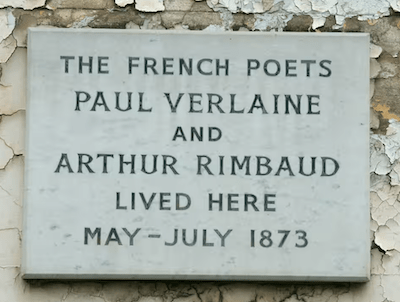

(Plaque, Royal College Street, Camden, via The Guardian: photograph by Frank Baron)

‘Old Verlaine’ came over more than once, firstly in 1872, in the company of Arthur Rimbaud (whom he later shot and wounded, in Brussels, another story), settling for a while in rooms in Howland Street off the Tottenham Court Road and, on a second visit shortly afterwards, in Camden Town. They seem to have dropped in on one of the soirées at the Fitzroy Square home of Ford’s maternal grandfather, the painter Ford Madox Brown and his second wife Emma.[5] In October 1893, at the suggestion of William Rothenstein, Verlaine arrived to lecture and read his poetry, in London and in Oxford. Ernest Dowson recorded that, arriving in the small hours of the morning, Verlaine was greeted by the poet and critic Arthur Symons, ‘bearing a packet of biscuits and a bottle of gin’. He gave his first lecture at Barnard’s Inn on 21 November and two days later arrived in Oxford, to be met by Rothenstein and a man named York Powell, of Christ Church (Icelandic scholar, authority on Roman Law, boxing and Middle High Dutch. He also knew Hebrew and Old Irish). Verlaine lectured on contemporary French poetry ‘in the room behind Mr Blackwell’s shop’ and was so enamoured of the city—‘Ô toi, cité charmante et mémorable, Oxford!’— that prising him out of it necessitated both escorting him to the train and withholding his lecture fee until he was safely on the train for London.[6]

Famously (if not quite famously enough), 4 August is the date threaded through Ford Madox Ford’s The Good Soldier—seventeen occurrences in all—and also the birthdate (4 August 1841) of W. H. Hudson, one of Ford’s most consistently admired writers, to whose work he recurred over more than thirty years, sometimes singling out Nature in Downland but more generally stressing that Hudson’s writing had ‘a tranquillity, a clearness of epithet, and an utter absence of affectation or strain that renders his pages like balm for tired souls’, adding that, as with Turgenev, ‘it is all one whether these writers treat of birds or of South American revolutions, of peasants singing, or of Nihilists at their debates. It is simply that the pages of their books reveal a personality, restful soothing, and itself quite at ease.’[7]
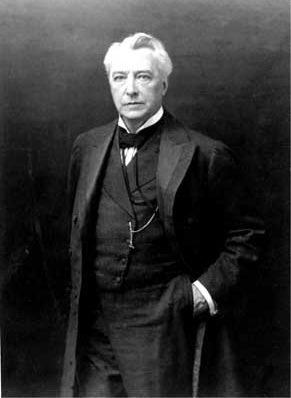

(Edward Heron-Allen in 1927, via The Edward Heron-Allen Society)

On 4 August 1918, the polymath (writer, scientist, linguist, historian) Edward Heron-Allen—very much not a friend of Ford’s—wrote in his journal that: ‘One thing stands out and is certain, and that is, that mentally and physically we are changed, changed as we never dreamed a whole nation could be changed.’ He noted that he had ‘escaped the “Spanish Influenza” of which we hear so much, but it seems to be a real menace. We are told that the German Army is “decimated” by it, and that this accounts for the delay and failure’ of the recent offensive.[8]

A decade and a bit further on, the poet and artist David Jones was making his third visit to his friend Helen Sutherland at Rock Hall, Northumberland, 4 August 1931. At the start and end of each visit, Jones would be driven past the Duke of Northumberland’s castle. Helen told him that this was on the site of Lancelot’s castle, Joyous Guard – and the supposed place of his burial. ‘With this association in mind, Jones referred to the church at Rock as “the Chapel Perilous”, the place of terrifying enchantment that Lancelot enters –­ an episode in Malory that reminded him of his experience at night in Mametz Wood.’[9]

The Battle of Mametz Wood, during the First Battle of the Somme, involved British attacks on 7 and 10-12 July, centrally involving the 38th (Welsh) Division and resulting in huge losses: their casualties were one-fifth of their total strength. David Jones was wounded in the early hours of 11 July, and his great poem In Parenthesis, stops at that point.[10]
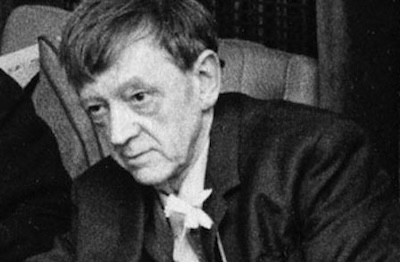

(David Jones via The Poetry Foundation)

Lie still under the oak
next to the Jerry
and Sergeant Jerry Coke.
   The feet of the reserves going up tread level with your fore-
head; and no word for you; they whisper one with another;
pass on, inward;
these latest succours:
green Kimmerii to bear up the war.[11]

Ford Madox Ford left Cardiff with the 3rd Battalion on 13 July; and departed for France from Waterloo on 17 July. When 4 August came around this time, he was in a Casualty Clearing Station at Corbie, having been blown into the air and severely concussed by a high explosive shell, ‘so that, as I have said, three weeks of my life are completely dead to me though I seem to have gone about my duties as usual. But, by the first of September I had managed to remember at least my own name…’[12]

Quite a few public figures (not least newspaper columnists) seem to have lost their memories lately – quite selectively and with markedly less excuse.


Notes

[1] Letters of D. H. Lawrence II, June 1913–October 1916, edited by George J. Zytaruk and James T. Boulton (Cambridge: Cambridge University Press, 1981), 38n.

[2] Julian Barnes, Nothing to be Frightened of (Cape 2008), 28.

[3] Kenneth Pople, Stanley Spencer: A Biography (London: Harper Collins, 1991), 55, 49.

[4] Ezra Pound to His Parents: Letters 1895–1929, edited by Mary de Rachewiltz, David Moody and Joanna Moody (Oxford: Oxford University Press, 2010), 160.

[5] Angela Thirlwell, Into the Frame: The Four Loves of Ford Madox Brown (London: Chatto & Windus, 2010), 100. On a later visit, Verlaine lodged at 10, London Street, Fitzroy Square, very close to Howland Street.

[6] Joanna Richardson, ‘’The English Connection: French Writers and England, 1800-1900’, in Richard Faber, editor, Essays by Divers Hands: being the transactions of the Royal Society of Literature. New Series: Volume XLV (Woodbridge: The Boydell Press, 1988), 33-35; Joanna Richardson, Verlaine (London: Weidenfeld and Nicholson, 1971), 317-320.

[7] Ford Madox Ford, ‘Literary Portraits: XXV. The Face of the Country’, Tribune (11 January 1908), 2.

[8] Edward Heron-Allen’s Journal of the Great War: From  Sussex Shore to Flanders Fields, edited by Brian W. Harvey and Carol Fitzgerald (Lewes: Sussex Record Society, 2002), 203. A footnote adds that there were approximately 70 million deaths worldwide in 1918-19, compared to the estimated total of 7.8 million killed in action in the war.

[9] Thomas Dilworth, David Jones: Engraver, Soldier, Painter, Poet (London: Jonathan Cape, 2017), 140-142.

[10] Anthony Hyne, David Jones: A Fusilier at the Front (Bridgend: Seren Books 1995), 37.

[11] David Jones, In Parenthesis (1937; London: Faber, 1963), 187.

[12] Ford Madox Ford, It Was the Nightingale (London: Heinemann, 1934), 175.

Writing, healing and the First World War at The Authors’ Club

(Vivien Whelpton’s biography; Louisa Garrett Anderson:
https://www.londonremembers.com/subjects/dr-louisa-garrett-anderson )

Yesterday, pausing from doggedly extracting nails and staples from the newly exposed floorboards in the old kitchen, I took a crowded train to London, in the company of Lev Nikolayevich Tolstoy—always impressive but we’ll never be close friends.

I went to the Authors’ Club in London for an event entitled ‘Writing, Healing and the First World War’. There were three panellists: Sara Haslam, Chair of the Ford Madox Ford Society and author of—among other things—Fragmenting modernism: Ford Madox Ford, the novel and the Great War; Vivien Whelpton, who published a recent biography of poet, novelist, translator and biographer Richard Aldington; and Sunny Singh, novelist and lecturer in Creative Writing and English Literature.

Sara Haslam talked about her recent research: first, into the Endell Street Military Hospital started by Louisa Garrett Anderson and Flora Murray, doctors and suffragettes, run and staffed entirely by women and dealing almost exclusively with male patients, revolutionary facts in the context of that time; then into the War Library started by Helen Mary Gaskell to distribute free books to wounded servicemen, a scheme that produced a staggering number of volumes donated by the public, with one individual contribution of 35,000 titles and huge deliveries of new stock that often brought traffic to a standstill.

Vivien Whelpton talked very knowledgeably and engagingly about Aldington, particularly his poetry and his 1929 novel, Death of a Hero; also his marriage to H. D., and association with Ezra Pound, Ford Madox Ford, T. S. Eliot and others, damaged, as was so much else in Aldington’s life, by his experience of war. His 1955 book on T. E. Lawrence, then still idolised by many, effectively wrecked Aldington’s standing with the literary establishment in this country and his autobiography, Life for Life’s Sake, published in the United States in 1941, finally emerged here in 1968.

Sunny Singh discussed a tale by Chandradhar Sharma Guleri, later translated as ‘The Troth’—famous among a domestic audience though little known in this country—apparently the first short story in Hindi, published early in the war (1915) and highly suggestive in its handling of the complex issues around Imperial subjects fighting in a war which did not directly affect them, highlighting too the often degrading treatment suffered by the Indian troops. Perhaps as many as a million and a quarter Indian soldiers served on the Western Front and in Africa, a huge majority of those in combat roles, almost 75,000 of whom were killed.

A fascinating – and informative – evening.

Sara Haslam talking about Endell Street Military Hospital: A Suffragette story, in a short Open University film, is here:
https://www.youtube.com/watch?v=kEDRAv9NlY0

Her recent essay, ‘Reading, Trauma and Literary Caregiving 1914-1918: Helen Mary Gaskell and the War Library’, appeared in the Journal of Medical Humanities: http://oro.open.ac.uk/54285/


Margins and Montague

Cat-hair

What a menu of news: a major earthquake in Mexico, another hurricane battering the Caribbean, and leading politicians well down to their usual standard, whether of dishonest posturing or reckless and irresponsible ranting. Sidestepping further gloom, I decide to forego the pleasures of the churchyard shortcut—a man shooting up on the steps a few weeks ago, two agitated women clearly waiting for The Man a few days ago—and take another route, the way I used to walk to work, to call at the baker, the deli and the fishmonger. I pause only long enough for the visiting cat to successfully deposit some hair on the leg of my trousers before setting off.

The fishmonger is open but seems a little unready, as none of the fish is labelled yet. ‘Am I a bit early?’ I wonder. No, no, he says, then asks casually if I know exactly what I want and mentions, when I come to pay, that he’d prefer a card transaction because he hasn’t sorted out a float yet. But no, I’m not too early, he’s just ‘marginally, marginally late.’ How marginal is that, precisely?

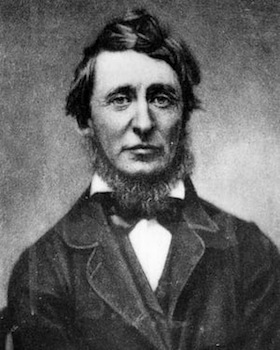
Henry-Thoreau

Margin: an edge or border, blank edge on the page of a book, something allowed more than is needed. ‘I love a broad margin to my life’, Thoreau wrote—and elsewhere: ‘The really efficient laborer will be found not to crowd his day with work, but will saunter to his task surrounded by a wide halo of ease and leisure. There will be a wide margin for relaxation to his day.’[1] This is (possibly) not an experience of work and working conditions commonly shared by those on zero-hour contracts in the United Kingdom’s contemporary employment paradise.

I saunter, pausing from time to time to check that the two cartons of double cream—‘Keep upright’—in my rucksack are in fact keeping upright. I am thinking of margins, firstly of that blank edge of a book’s page. W. J. Jackson wrote a book entirely about the notes that found their way there: Marginalia: Readers Writing in Books (Yale University Press, 2002) and the British Library holds William Blake’s copy of the three-volume set of the Works of Sir Joshua Reynolds, with their extensive annotations in Blake’s hand (there are—of course—books and articles wholly devoted to these).

When Sr Joshua Reynolds died
All Nature was degraded;
The King dropd a tear into the Queens ear;
And all his Pictures Faded.[2]

reynolds-joshua-works-B20132-53

Blake’s copy of Reynolds’ Works: British Library.
(‘To Generalize is to be an Idiot  To Particularize is the Alone Distinction of Merit—General Knowledges are those Knowledges that Idiots possess’)

In Lawrence Durrell’s Sebastian, ‘In the margin of a book she had borrowed from Sutcliffe’, Constance ‘had found the scribbled words: “The same people are also others without realising it.”’[3] Robert Phelps wrote to James Salter: ‘Scrapbooks, footnotes, almanacs, letters, diaries, questionnaires, marginalia, memos, alphabets . . . how I love them. Pasolini once called himself a “pasticheur.” I think I am an annotator. The story exists for the scribbled notes in the margin.’[4]

Secondly, that edge or border, often physical, often psychological and sometimes both at the same time. In war, certainly in the First World War, that sense of being on the edge of things, never having sufficient information to know what was actually going on, worsened by feeling abandoned or forgotten. Eric Leed wrote: ‘Astonishing numbers of those who wrote about their experience of war designate No Man’s Land as their most lasting and disturbing image. This was a term that captured the essence of an experience of having been sent beyond the outer boundaries of social life, placed between the known and the unknown, the familiar and uncanny. The experience of war was an experience of marginality, and the “change of character” undergone by the combatant could adequately be summarized as marginalization.’[5]

David Jones writes of John Ball and his comrades (‘Here they sat, his friends, serving their harsh novitiate’), in contrast to the Army Service Corps, Base-wallahs, Staff-wallahs and the like: ‘but these sit in the wilderness, pent like lousy rodents all the day long; appointed scape-beasts come to the waste-lands, to grope; to stumble at the margin of familiar things—at the place of separation.’[6]

‘Marginal’ is often applied to those figures that are viewed as of secondary importance, off-centre: but in some disciplines, the centre has an unsettling habit of shifting.[7] Certainly, in the arts, the ‘canon’ broadens and deepens constantly as some of the most important figures of previous generations are found not to last, the new questions addressed to them getting little or nothing in reply.

Montague-Capt-Cadge-censors

(C. E. Montague and Captain Cadge as army censors via Spartacus International

That third margin, the ‘something allowed more than is needed’, is a critical element in the title story of C. E. Montague’s Action (1928), part of our recent haul from Hay-on-Wye. It concerns Christopher Bell, ‘reigning sovereign’ of a dynasty of Manchester merchant princes, who wakes one morning to feel a numbness down one side of his body. He has fought in the Great War, during which he lost his beloved wife, and is a keen climber. Facing a future of invalid-chair and male nurse, and after a couple of humiliating allowances being made for his condition, he revolts. He won’t commit suicide but, reading of a great climber’s ‘greatest adventures’, Bell wonders how big a margin of safety had attended that successful expedition: ‘what if such a party were to try paring and paring away at that pretty wide margin?’ He returns to an old haunt, Zinal, in the Swiss canton of Valais, in late September. His target is a glacier with ice ‘steep and bare and blue’—with an overhang: ‘nowhere in the whole thousand feet of ascent would a man have a foothold to stand on, unless he made it.’ He climbs conscientiously until genuinely exhausted: ‘that was the end, he felt, of all possible effort’. Then a falling ice-axe and the standard Alpine cry for help, alerts him to a drama just above the overhang: a woman at the end of a rope which her husband desperately hangs on to above her. Bell is galvanised into heightened, unthinking action, and all three are eventually saved. In the Weisshorn hut, while she sleeps, he tells the man, Gollen, who’s a doctor, his symptoms. Gollen talks about artists, saints, raised to the uttermost through action, ‘“every bit of your consciousness taken up into some ecstasy of endeavour that’s passion and peace.”’ Looking out at the mountain under the moon, Gollen asks, when Bell says it’s ‘all right’, whether it’s all right enough. Bell says oh yes, he’s ‘sticking on’.

Thirty pages in my pocket edition,[8] and a story, ‘inspired by a report of a climber who had died of exposure on Kinder Scout following a mountain storm on New Year’s Day 1922’, which manages to touch on a surprising number of themes, the effects of the recent war, masculinity, heroism, trauma and recovery.[9]

Montague himself might be regarded as a ‘marginal’ man but is of great interest to those working in and around the Great War, especially those concerned with its after-effects, social and cultural, through the nineteen-twenties.

There’s an informative page on Montague at Spartacus International:
http://spartacus-educational.com/Jmontague.htm
and he also crops up on Josh Levithan’s remarkable site, A Century Back
http://www.acenturyback.com/
and on George Simmers’ excellent Great War Fiction blog:
https://greatwarfiction.wordpress.com/

Some very good criticism on Montague can be found in Andrew Frayn’s Writing Disenchantment: British First World War Prose, 1914-30 (Manchester: Manchester University Press, 2014) and in his essay, ‘“What a victory it might have been”: C. E. Montague and the First World War’, in Trudi Tate and Kate Kennedy, editors, The Silent Morning: Culture and Memory After the Armistice (Manchester: Manchester University Press, 2015), 131-148.

Montague is a fascinating figure who really illuminates some important aspects of the post-war period—and I’m still reading him.

 
References

[1] Henry David Thoreau, Walden, edited by Jeffrey S. Cramer (New Haven and London: Yale University Press, 2004), 108 and note.

[2] The Complete Poetry & Prose of William Blake, newly revised edition, edited by David V. Erdman (New York: Anchor Books, 1988), 641. This edition also includes Blake’s underlinings and annotations in works by Swedenborg, Lavater, Bacon, Wordsworth, Edward Young and others.

[3] Durrell, Sebastian or Ruling Passions (1983), in the Avignon Quintet, one-volume edition (London: Faber and Faber, 2004), 978.

[4] Memorable Days: The Selected Letters of James Salter and Robert Phelps, edited by John McIntyre (Berkeley, California: Counterpoint, 2010), 38.

[5] Eric J. Leed, No Man’s Land: Combat and Identity in World War I (Cambridge: Cambridge University Press, 1979), 15.

[6] David Jones, In Parenthesis (1937; London: Faber and Faber 1963), 70.

[7] So the first two, at least, of Piers Gray’s Marginal Men: Edward Thomas; Ivor Gurney; J. R. Ackerley (Basingstoke: Macmillan, 1991) are much more visible twenty-five years later.

[8] C. E. Montague, Action (1928; London: Chatto & Windus, Phoenix Library, 1936), 1-31.

[9] Paul Gilchrist, ‘Mountains, Manliness and Post-war Recovery: C.E. Montague’s “Action”’, Sport in History, 33:3 (2013), 288 and passim.