
Advice Notes


(Marianne North, Foliage and Flowers of a Madagascar Tree at Singapore, Marianne North Gallery; photo credit: Board of Trustees of the Royal Botanic Gardens, Kew)

I see that Mick Jagger—Sir Michael Philip Jagger, rather—is eighty this year. We lived abroad for a few years because of my father’s job while the Beatles and the Rolling Stones were getting going. ‘Not Fade Away’ must have been the first Stones song I heard when we came back to England; and it was another year before Jagger sang: ‘Well I told you once and I told you twice, But you never listen to my advice’—a slight friction there between ‘telling’ and ‘advice’? Unsurprising, perhaps, that it could have been the last time.

I’ve always been wary of advice, both giving and receiving. ‘I never myself took anyone’s advice’, Ford Madox Ford remarked, ‘and I do not imagine that many people will take mine.’[1] Robert Lowell appears to have taken it, though with mixed results, telling Flannery O’Connor in 1952: ‘Ford used to say that you could tell if a writer was any good from the first sentence—I found this advice useful when manuscript-reading for Sheed and Ward, though it led to fatal misunderstandings in my interviews with students at Iowa . . . ’[2]

I wouldn’t say ‘never’, I’m sure I’ve taken it from time to time but rarely with enthusiasm. Giving it as well, being too conscious of the tendency in many people, myself not excluded, to react negatively to such gestures, even embracing the opposite, sometimes ending up, metaphorically or literally, in a rainstorm without an umbrella. Though, it now occurs to me, I can advise, or at least suggest, that eating beetroot for lunch while reading a book you care about is best avoided.

Politicians, newspapers, television channels and radio stations are profligate dispensers of the stuff. I can recall the days when doctors and the BBC, anyway, were viewed with near-unanimity as reliable sources. Now people unwilling or unable to distinguish between blanket mistrust and informed scepticism are easy prey. Some conversations, to be sure, are best kept private when so much of the world appears to have gone mad-dog. To be appalled by so many governments is hardly a novelty, though, and my intake of news bulletins remains. . . careful.
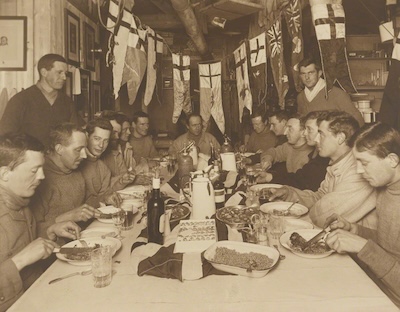

(Herbert George Ponting, ‘Captain Scott’s Birthday, 6 June 1911’, National Portrait Gallery, London; photo credit, NPG. Cherry is the third seated man along on the left)

‘Defeats on the Western Front in March catapulted the nation into shock’, Sara Wheeler wrote in her biography of Apsley Cherry-Garrard, recalling the period of the First World War. ‘The Times rallied as usual to shore up public confidence, issuing advice on all fronts, including the stern “Don’t think you know better than Haig”, even though most people over the age of ten probably did.’[3]

On all fronts, not just the Western one.

In Penelope Fitzgerald’s The Blue Flower, a novel based on the life of the 18th century writer  Novalis, Fritz meets Sophie’s elder sister Friederike (‘the Mandelsloh’): ‘“I thank you for your advice,” said Fritz. “I think, indeed, that women have a better grasp on the whole business of life than we men have. We are morally better than they are, but they can reach perfection, we can’t. And that is in spite of the fact that they particularise, we generalise.”
   “That I have heard before. What is wrong with particulars? Someone has to look after them.”’[4]

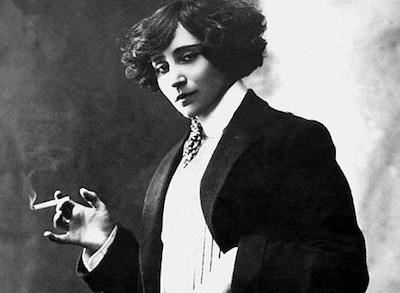
Yes, those particulars. Colette was a generous dispenser of advice, not least to the young Georges Simenon when she was literary editor at Le Matin, telling him that, though on the right track, ‘he should drop “the literature”. “Pas de littérature!” she said. “Supprimez toute la littérature et ça ira!”’[5] To a young woman writer who had sought her advice, she replied: ‘When you are capable of certifying that today’s work is equal to yesterday’s, you will have earned your stripes. For I am convinced that talent is nothing other than the possibility of resembling oneself from one day to the next, whatever else befalls you.’[6] But she also served as a magazine’s regular agony aunt, sharing her expertise in matters of dress, cosmetics and, always, love.


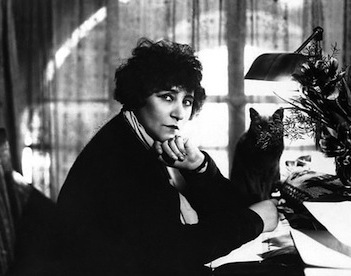
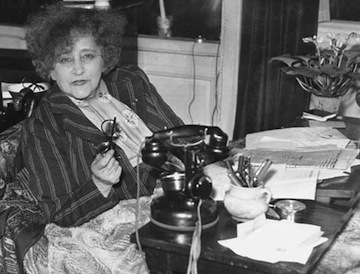
(Colette, plus—of course—a cat)

On dress and cosmetics, I am probably unreliable; but I was writing recently about aeroplanes, though hardly straying from my usual temporal zone, the first two or three decades of the twentieth century. The context was Ford Madox Ford’s war but a lot of the material I had to draw on related to Guy Davenport—some of which has gone into blog posts here—as well as other writers of Ford’s time, references to whom had to be whittled down or eliminated. Every time I approached the suggested word limit, things spiralled out of control again as some other alleyway beckoned. I remembered that line of W. B. Yeats: ‘My thoughts were a great excitement, but when I tried to do anything with them, it was like trying to pack a balloon into a shed in a high wind.’[7]

The Davenport material went, leaving only a faint shadow of his 1991 response to Laurence Zachar’s remark that: ‘A proportionately large part of your work is Utopian. It deals with happy people, in an ideal place where there is no violence’, when Davenport commented of  “The Aeroplanes at Brescia”, ‘there’s the implicit sense that aeroplanes were going to stop all wars; the Wright brothers wrote a famous letter to the War Department which paid no attention to it, saying: with the aeroplane, there can be no more troop movements because they can be observed from the air, and therefore no more wars.’[8]

When his story, or assemblage—drawing on Franz Kafka’s first published work, a report on the 1909 air show—appeared in the Hudson Review, a paragraph on the final page put the assertion that wars would cease with the coming of the aeroplane into the mouth of Max Brod’s engineer brother Otto but Davenport may have felt that such an unbearably painful irony was too easy, too heavy-handed. It was omitted when revised for book publication.[9]
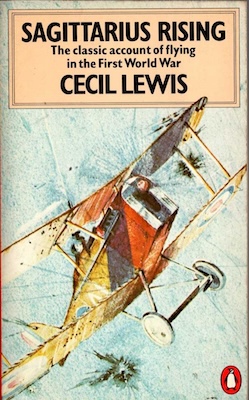

Another twist on that occurred to me when I was rereading the memoir by Cecil Lewis, Sagittarius Rising, who was in his teens when he joined the Royal Flying Corps. By the time he was posted to Home Establishment, he had survived eight months overseas, including four months of the Somme battle, and spent 350 hours in the air, during a period when pilots were lasting, on average, three weeks. Within little more than a month after the Armistice, he had been demobilised and secured a civilian job with Vickers. He was then twenty years old.

Writing in the mid-1930s, he looked back to the failure of the postwar conferences, aimed at ensuring peace, to take note of air power, finally waking to the significance of that power with a shudder of horror. ‘No wonder. Frontiers were gone. Security was gone. No man could hope for peace or prosperity under the threat of a violent death. The days of war were over: massacre had taken their place, wholesale massacre of the community in which children would retch their lives away, women would be blinded and men powerless to protect or succour. The end of civilization was in sight.’[10]


Notes

[1] Ford Madox Ford, Return to Yesterday: Reminiscences 1894-1914 (London: Victor Gollancz, 1931), 251-252.

[2] The Letters of Robert Lowell, edited by Saskia Hamilton (New York: Farrar, Straus and Giroux, 2005), 187.

[3] Sara Wheeler, Cherry: A Life of Apsley Cherry-Garrard (London: Jonathan Cape, 2001), 199.

[4] Penelope Fitzgerald, The Blue Flower (1995; London: Everyman, 2001), 364.

[5] Patrick Marnham, The Man Who Wasn’t Maigret: A Portrait of Georges Simenon (San Diego: Harcourt Brace & Company 1994), 112.

[6] Judith Thurman, Secrets of the Flesh: A Life of Colette (London: Bloomsbury Publishing, 2000), 409.

[7] W. B. Yeats, Autobiographies (London: Macmillan, 1955), 41.

[8] Laurence Zachar, ‘Guy Davenport. Lexington, Kentucky: December 1991’, Effets de voix (Tours: Presses universitaires François Rabelais, 1994).
See: http://books.openedition.org/pufr/3904 (accessed 20 January 2021).

[9] Guy Davenport, ‘The Aeroplanes at Brescia’, Hudson Review, 22, 4 (Winter, 1969-1970), 567-585; Tatlin! Six Stories (New York: Scribner’s, 1974), 52-70.

[10] Cecil Lewis, Sagittarius Rising (1936; Harmondsworth: Penguin, 1977), 152-153.
Books, music-hall, lovers, cats, Colette

Colette-3

This week’s Times Literary Supplement reprinted a 1985 review of Deep into Mani: Journey to the southern tip of Greece by Peter Greenhalgh and Edward Eliopoulos. The reviewer was Patrick Leigh Fermor, whose evident delight in the book was based on an intimate knowledge of the region described and the existing literature about it (his own Mani had appeared almost thirty years before). He was, then, in his accustomed context. A slightly less familiar one is as translator on the title page of Julie de Carneilhan and Chance Acquaintances by Colette, two novellas written and published during the Nazi occupation of France, which appeared in English in 1952. He ‘usually enjoyed her writing but having to correct the proofs in a rush soured him for Colette.’ Still, the money was useful.[1]

Colette-4

(Via http://www.musee-colette.com/)

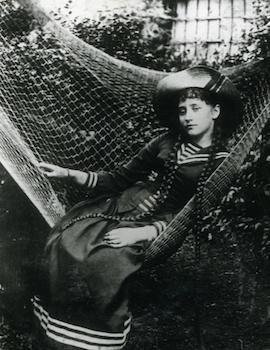
Novelist, autobiographer, journalist and short-story writer (and actress and dancer) Colette was born Sidonie-Gabrielle Colette on 28 January 1873, in Saint-Sauveur-en-Puisaye, a village in Burgundy. ‘To those who live in the country and use their eyes everything becomes alike miraculous and simple.’[2] She was allowed, she remembered, to go out at 3.30 in the morning, walking towards the kitchen-gardens. ‘I went alone, for there were no dangers in that free-thinking countryside. It was on that road and at that hour that I first became aware of my own self, experienced an inexpressible state of grace, and felt one with the first breath of air that stirred, the first bird, and the sun so newly born that it still looked not quite round.’[3] As a teenager, she wanted to be a doctor, ‘an ambition all the more extraordinary’ since there were only seven woman doctors in the whole of France at that time.[4]

Famously, Colette’s earliest books were credited to Henri Gauthier-Villars, ‘Willy’, whom she had married when she was 20 (he was fifteen years older): his part in them seems, rather, to have been that of editing, suggesting and prompting. Colette left him in 1906 and worked as a music-hall performer to earn a living. For many years, she was involved with the stage, with literary journals, with music.

‘The opening, last night, was epic. The orchestra conductor, as we saw too late, was not an orchestra conductor but a wine merchant. Musically, the evening was a disaster, for the other numbers as well as our own. Backstage everyone was howling, and the audience booed the conductor. It was stunning!’[5]

She published nearly eighty volumes, which is one point of affinity with another writer whose birth year she shared, Ford Madox Ford—there are perhaps two others: a deep love of France and a complex, mutable relationship between fiction and autobiography.

A wonderfully sensuous writer, she powerfully evokes her early years, her relationship with her mother, her schooldays, the smells, sights and sounds not only of her childhood and girlhood but also of the Paris and Provence of her adult life. She was a mass of contradictions but had a wonderful eye for detail, an ear for tone and feeling, a fiercely intimate relationship with the physical world. ‘We do not look, we never look enough, never attentively enough, never excitedly enough.’[6]

Colette2

Some of her remarks about the South ultimately conquering its conquerors recall similar statements from Ford and Joseph Roth: ‘The barbarians from the north parcel out the land, speculate and deforest, and that is certainly a great pity. But during the course of the centuries how many ravishers have not fallen in love with such a captive? They arrive plotting to ruin her, stop suddenly and listen to her breathing in her sleep, and then, turning silent and respectful, they softly shut the gate in the fence.’[7] She wrote lyrically too about Brittany: ‘I wish you could see Rozven, with its cove of green sea, its complicated rocks, the little woods, the old and new trees, the warm terrace, the rosebushes, my yellow room, and the beach to which the tides bring treasures—mauve coral, polished shells, and sometimes casks of whale oil or benzine, from far-off shipwrecks. And I have a rocky perch, between the sky and the sea . . . ’[8]

Colette’s father, Le Capitaine (Jules-Joseph Colette), died in 1905. He was an ex-captain of the select Zouave infantry, born in Toulon and trained at Saint-Cyr, and had lost his left leg in Italy in 1859. She recalled the row of volumes well-bound in boards, covered in marble paper, on the highest shelves of the family library. The titles, handwritten in Gothic lettering, were, she remarked, not tempting: My Campaigns, The Lessons of ’70, Elegant Algebra, Zouave Songs and others. After the Captain’s death, Colette’s brother went through those books. ‘The dozen volumes bound in boards revealed to us their secret, a secret so long disdained by us, accessible though it was. Two hundred, three hundred, one hundred and fifty pages to a volume: beautiful, cream-laid paper, or thick “foolscap” carefully trimmed, hundreds and hundreds of blank pages. Imaginary works, the mirage of a writer’s career.’[9]

She was divorced from Willy in 1910 and her beloved, maddening mother died two years later. Colette’s daughter Bel-Gazou was born in 1913. the year after her second marriage to Henry de Jouvenel. In the first winter of the war, she managed to get through the lines and join Henri at Verdun.[10] She wrote extensively about that war (and the next one): her reports for Le Matin were later collected as Les Heures Longues, sections of which are translated in Earthly Paradise.

Gigi-film-poster

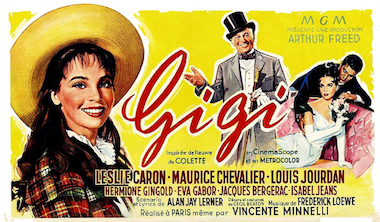
Admired by Edith Wharton, Cocteau, André Gide, W. H. Auden, Somerset Maugham, she crops up constantly in the literary history of the first half of the twentieth-century. In 1921, she writes to Marcel Proust in response to his sending her an inscribed copy, ‘If I were to tell you that I burrow in its pages every night before going to sleep, you would think I was merely offering you a hollow compliment. But the fact is, Jouvenel gets into bed every night to find me, your book, and my glasses. “I am jealous but resigned,” he says.’[11] As editor, in the office of Le Matin, she advises Georges Simenon to ‘Suppress all the literature and it will work’.[12] In November 1952, when François Mauriac wins the Nobel Prize for Literature, ‘one of the first things he did was to call on Colette, who should have had it, he felt, in his place.’[13]

Chéri and The Last of Chéri, Break of Day, The Vagabond, the other more frankly autobiographical volumes, the stories, the letters: there’s a great deal of pleasure to be had; with the added attraction that she often makes me laugh.

‘It’s curious that the hat which is too small creates an impression of lunacy much more than does the hat that is too large. A lunatic hardly ever puts on his head a hat which is too big. He readily covers himself with a bottle-top, an empty matchbox, a child’s boat turned upside-down, a jampot.’[14]

A jampot is tempting but I’m currently opting for the bottle-top.

References

[1] Artemis Cooper, Patrick Leigh Fermor: An Adventure (London: John Murray, 2012), 263-264; see also the letter to Joan Rayner [January 1952], in Dashing for the Post: The Letters of Patrick Leigh Fermor, selected and edited by Adam Sisman (London: John Murray, 2016), 60.

[2] Colette, My Mother’s House, translated by Una Vincenzo Troubridge and Enid McLeod, in My Mother’s House & Sido (Penguin, 1966), 61.

[3] Colette, Sido, translated by Enid McLeod, in My Mother’s House & Sido, 147.

[4] Judith Thurman, Secrets of the Flesh: A Life of Colette (London: Bloomsbury Publishing, 2000), 54.

[5] To Léon Hamel, Dijon, 22 September 1910: Letters from Colette, selected and translated by Robert Phelps (London: Virago Press, 1982), 17.

[6] Looking Backwards: Recollections [Journal à rebours and De ma fenêtre], translated by David Le Vay (London: Peter Owen, 1975), 149.

[7] Colette, Break of Day [La Naissance du Jour], translated by Enid McLeod (1928; London: The Women’s Press, 1979), 14.

[8] To Louis de Robert, early April 1911: Letters from Colette, 22.

[9] Colette, Sido, in My Mother’s House & Sido, 182.

[10] Colette, Earthly Paradise: An autobiography drawn from her lifetime writing by Robert Phelps (Harmondsworth: Penguin, 1974), 18.

[11] Letters from Colette, 63.

[12] Patrick Marnham, The Man Who Wasn’t Maigret: A Portrait of Georges Simenon (San Diego: Harcourt, Brace, 1994), 112.

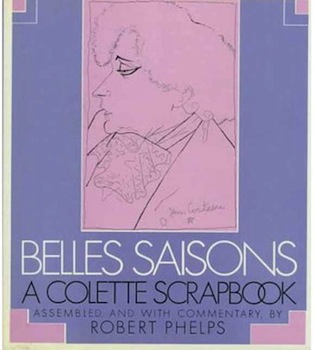
[13] Robert Phelps, Belles Saisons: A Colette Scrapbook (London: Secker and Warburg, 1978), 269.

[14] Looking Backwards, 138.

‘The story exists for the scribbled notes in the margin’

Robert-Phelps

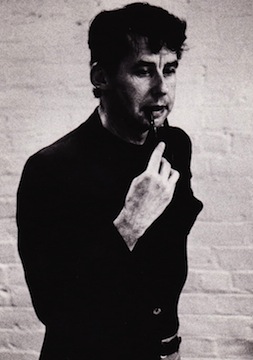
(Robert Phelps via Narrative)

‘As for credos, Monroe Wheeler, Glenway, and I were once walking along the gentle ridge above his house and I asked how each would summarise his philosophy. Monroe’s answer was straightforward, prompt: “I never want to be left out of the dance.” After a slow, foxy smile, Glenway reached down and picked up a stone. “I believe everything breathes; even this stone must utter a blissful sigh every millennium.”’

This is Robert Phelps, in the third of ‘three miniature portraits’ which he believed combined to offer a view of the writer Glenway Wescott, whose The Pilgrim Hawk (1940) and An Apartment in Athens (1945) I’ve read and admired.

wescott

Glenway Wescott, photographed by Carl Van Vechten, 1936: Via the Beinecke Library, Yale University: http://beinecke.library.yale.edu/

Phelps (born 16 November 1922) did publish one novel, though it was not successful: ‘a serious new writer like Robert Phelps produces in Heroes and Orators (1958) a complex and troubling study of homosexual love that goes unnoticed’, Leslie Fiedler commented.[1] Phelps was one of the co-founders of Grove Press, though he sold his share in it and turned to freelance writing. He’s best remembered now as the editor and translator of, particularly, Colette, introducing a great many readers to her work, primarily through his wonderful compilation of her own writings, superbly fitted together to form an autobiography, Earthly Paradise. He also edited her Collected Stories and worked the same sort of editorial magic on the writings of Jean Cocteau. His other major editing job was the journal of Glenway Wescott or rather, drawn from memos, newspaper clipping and carbon copies of letters, Phelps remarked, ‘in substance as well as appearance it is closer to a scrapbook.’[2] To James Salter, he wrote of his work on this volume: ‘It’s like walking for days along the English coast after the wreck of the Armada. The beach is strewn. You keep running back and forth. Everything glitters, even the eyes of dead men.’[3]

Colette

(Colette)

Phelps died in 1989, aged 66. I’d read a few books by Colette over the years but read quite a few more, especially the Phelps-related ones, after coming across the letters between Phelps and James Salter: two superb writers in love with other writers, in love with each other’s being in the world, to talk and write about books and weather and France and the look of things, the touch and smell of things. ‘Your stories pour over me’, Salter wrote, ‘I am in a different world, one where I recognize myself’ (12). Phelps intensely admired Salter’s writing and, what is less common, was able to articulate the reasons for that admiration. Of Salter’s story, ‘The Cinema’, he observed: ‘The thing that most gratifies me (and I mean gratify literally, as good cheese gratifies me, or a well-hung line of laundry snapping in the wind, or a Cavafy poem) is that if I stop at the end of almost any given sentence, I cannot guess what will come next—neither substance nor syntax. With most writers, there is maximum predictability. You can skim whole paragraphs’ (30). After noting that Salter was ‘a minority of one’ and ‘a new herb in the cabinet’, he remarked that, with ‘wholly different temperaments, Genet and Pasolini do something of the same thing. But you are tender, and unperverse. You are pure, and in the European sense of the word, American’ (31).

He told Salter about Erik Satie: ‘Did you know that after he died, his friends found one hundred unused umbrellas in his room? There was also a piano, which was unplayable and which Braque bought as a souvenir’ (47). He mentioned his hostess at Pound Ridge, in upstate New York, where he was staying. She was ‘an old friend of Philip Roth’ and told Phelps how Roth ‘puts the ms. of his current book in the refrigerator every day—in case of a fire’ (51).

Salter wrote to him, with more than a little urgency, ‘We must catch the train, Robert, we must move, otherwise life takes you, makes you soggy. We’re wearing cheap shoes, we must stay ahead of it’ (53).

Belles-Saisons

So much fascinating, mysterious, stimulating, alluring, irresistible stuff in the world—‘Scrapbooks, footnotes, almanacs, letters, diaries, questionnaires, marginalia, memos, alphabets . . . how I love them’ (38)—to which he brought an insatiable curiosity and in which he took an evident delight: he asks Salter, ‘Did you know that St. Francis of Assisi thought of God “as a melody so sweet it could just be borne”? One of his best friars, Giles, when attacked by theologians, answered their arguments on the flute’ (111).

Just reminding myself of Phelps and his work has prompted me—wanting more of such melodies—to order two books that I found I didn’t have.

There’s a very fine 2009 piece on Phelps in American Scholar by Michael Dirda (who contributed the ‘Foreword’ to Memorable Days:
http://theamericanscholar.org/i-wanted-to-be-robert-phelps/#.UZEHY4ImZUQ

References

[1] Leslie Fiedler, Love and Death in the American Novel (1960; revised edition, Harmondsworth: Penguin Books, 1984), 477.

[2] Continual Lessons: The Journals of Glenway Wescott, edited by Robert Phelps with Jerry Rosco (New York: Farrar, Straus, Giroux, 1990), vii.

[3] Memorable Days: The Selected Letters of James Salter and Robert Phelps, edited by John McIntyre (Berkeley, California: Counterpoint, 2010), 71: other page references to this book in parentheses.