Dusks and darks

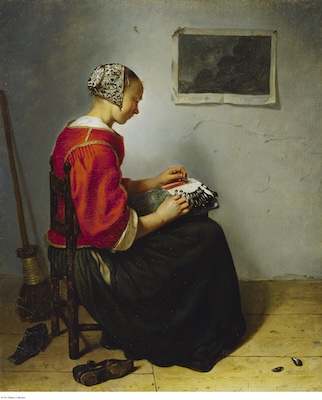
(Caspar Netscher, The Lace Maker, Wallace Collection)

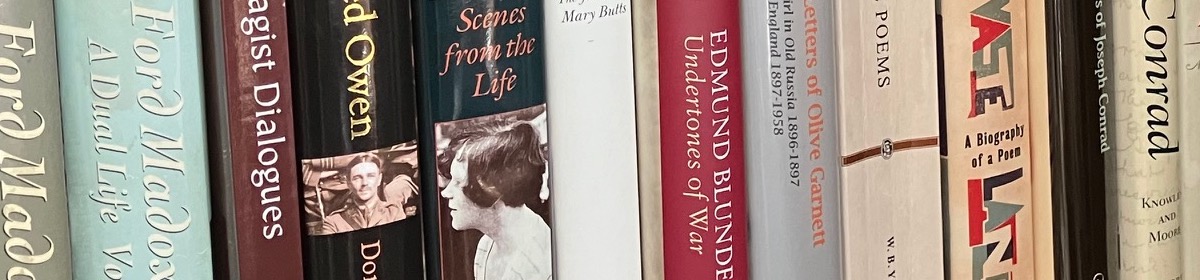
‘In a mid-September twilight’, Ford Madox Ford writes, remembering himself as Second Lieutenant in September 1916, ‘the rain poured down on Pont-de-Nieppe.’ He is bothered by his wet shirt-cuffs and the man assigned to him as temporary batman has clearly decided that Ford is not a man who can be safely left and, ‘though he must have been uncommonly wet and hungry and tired, he followed me to the door of the house in whose dark windows I had seen the luminous patch—the forehead of Rosalie Prudent as she sat sewing, her head bent forward, in the twilight.

‘I don’t know how it is: but from the moment when I first saw that highlight—and it had been certainly three hours before—I had been perfectly sure that that was what it was—the forehead of a quiet woman bending her head forward to have more light from the high window whilst she sewed in the dusk.’

This is Rosalie Prudent of Pont-Nieppe, who has lost her house, her husband and her sons, and is one of the most significant figures that Lieutenant Ford Madox Hueffer—a man at the end of his tether and a writer who cannot write—will encounter during the war. She will sit by the stove in the wash-house, sewing his wristbands. She will cook him an omelette and fried potatoes, talk to his orderly and, ‘looking at Mme. Rosalie—so extremely centred in the work in hand, so oblivious to the very real danger, so brave and so tranquil, I said to myself:
“What the devil! If she can stick it, I too can!”’[1]

And he will. He is one young Australian artist and one five shilling a week cottage away from salvation: ‘The dusk was falling as I approached my isolated, sixteenth century abode that had a leaky, red-tiled roof and defective diamond-framed casements. It stood under a darkling bank. . . . And you think that the half-crown dog was an extravagance! I assure you that he was not. The floors sagged, the paper fell in scrolls from the walls. There was more than a bushel’s bulk of starling’s nest in the downstairs ingle.’[2]

Back in the day—ah, those days—I read, as did half the people I knew at the time, the books of Carlos Castaneda or, at least, the first three or four. Much of it, even the unfolding controversy, is a little cloudy now, but I do recall the assertion that: ‘The twilight is the crack between the worlds.’ Or rather, I recalled it as I made my way around the park a day or two back as the light slipped further down into its last phase before incontrovertible darkness.
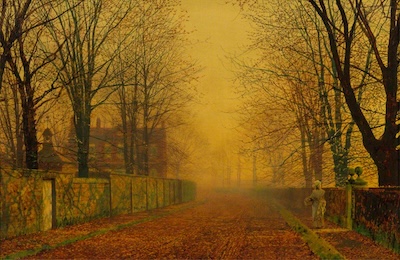
(John Atkinson Grimshaw, Evening Glow: Yale Center for British Art)

If that is in fact the case, some of the denizens of that other world are a little unsettling. As is, of course, the possibility that I myself am, in fact, an inhabitant of the ‘other’ world.

There seem to be more people than usual devoting their time to shouting into phones or at dogs, heard rather than seen, or glimpsed between branches or benches. A man wearing a cloth cap and an alarming neck tattoo scatters broken biscuits from a bag as he walks, to more than a dozen crows and one slightly shifty magpie (‘Yeah, I’m a crow. Who’s asking?’). A second man passes me, marching like a robot, legs thrown out, with a can of beer gripped in each outstretched hand; a teenaged schoolgirl, one of three, having an emotional moment, turns her tearstained face away from me as I pass and one of her friends says: ‘I didn’t meant to hurt you, Lily, but you shouldn’t have said—‘. And on an upper path, a woman running towards me; I cross over to make room for her; she smiles and turns sharply into the play area ten yards ahead, to crouch in front of a swing on which her child is sitting, watched over by a friend.

Vladimir Nabokov mentions ‘soomerki—the lovely Russian word for dusk.’[3] It is, or can be, oddly different, the air itself a different texture or the mind made more receptive to such notions by the slippage in other senses: sounds half-heard and harder to locate, things not quite seen. A Golden Labrador with one of those illuminated collars races through a thick ribbon of trees that borders a lower path, a ghost dog that has me wracking my brains to come up with Jim Jarmusch’s 1999 film, Ghost Dog: The Way of the Samurai, with Forest Whitaker as the hitman. A group of dog-owners I passed earlier did look and sound like contract killers but that may have been down to the special sound qualities of this twilight zone.
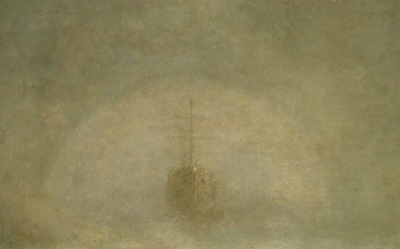
(G. F. Watts, A Sea Ghost: Watts Gallery – Artists’ Village)

‘It is the magic hour’, Lawrence Durrell wrote, ‘between two unrealized states of being—the day-world expiring in its last hot tones of amber and lemon, and the night-world gathering with its ink-blue shadows and silver moonlight.’[4] The colours may be a little different in Corfu, as emotional responses might have been a little more accentuated in Emerson’s nineteenth-century New England: ‘Crossing a bare common, in snow puddles, at twilight, under a clouded sky, without having in my thoughts any occurrence of special good fortune, I have enjoyed a perfect exhilaration. I am glad to the brink of fear.’[5]

Richard Garnett (father of Edward and Olive, father-in-law of Constance) wrote about The Twilight of the Gods (as did Richard Wagner); Nietzsche wrote about the Twilight of the Idols; D. H. Lawrence wrote of Twilight in Italy; Edith Wharton was concerned with Twilight Sleep; a volume of Conan Doyle stories was called Tales of Twilight and the Unseen.  ‘I drove carefully’, the private eye Lew Archer says, ‘feeling a little depressed, stalled in the twilight period when day has run down and night hasn’t picked up speed.’[6]

We’re just a week away from the winter solstice, the shortest day, the longest night. Beyond that date, of course, the days get longer, inch by inch. Grounds for optimism, some say. And why not? Just mind the cracks—and, of course, those worlds.


Notes

[1] Ford Madox Ford, No Enemy (1929; edited by Paul Skinner, Manchester: Carcanet Press, 2002), 117, 127, 124.

[2] Ford Madox Ford, ‘Rough Cookery’, New York Herald Tribune Magazine (29 July 1928), 18.

[3] Vladimir Nabokov, Speak, Memory: An Autobiography Revisited (New York: Putnam’s, 1966), 81.

[4] Lawrence Durrell, Prospero’s Cell (London: Faber 1962), 105.

[5] Ralph Waldo Emerson, ‘Nature’, Selected Essays, edited by Larzer Ziff (Penguin American Library, 1982), 38.

[6] Ross Macdonald, The Moving Target (1949; Warner Books, 1990), 98.
Rosemary, responsibility


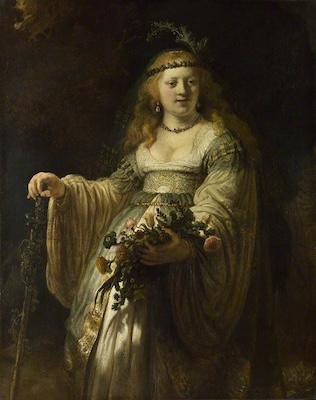
(Rembrandt van Rijn, Saskia van Uylenburgh in Arcadian Costume: National Gallery, London)

In the other park, which we traverse quite often, there are rosemary bushes to be discreetly ransacked – for potatoes, fish, meat, as well as for remembrance. ‘“There’s rosemary, that’s for remembrance”’, Ophelia says. And Laura Cumming notes that when Rembrandt’s wife Saskia van Uylenburgh died in 1642, at the age of 29 and after less than eight years of their marriage, Rembrandt ‘put a sprig of rosemary in her hand: rosemary for remembrance.’[1]

The weather forecast offers a 70% chance of rain. I add an umbrella to my tote bag and am soon walking uphill – in warm sunshine. Yes, the forecasts are more sophisticated these days, with many technical advances – on the other hand, I seem to remember that, in the days before we broke the weather, things were a bit more definite. Or did conditions appear to change every ten minutes then as well?


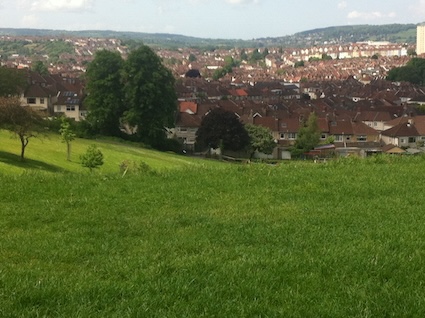
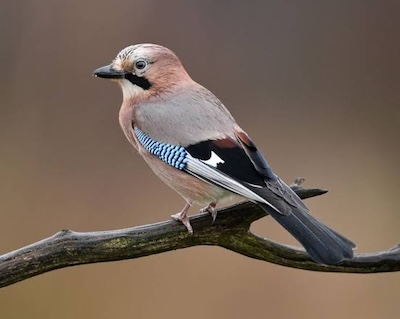
Under an abruptly darkening sky, I enter the park and the uncertain terrain of rosemary-picking. Plants in a public park: it would never occur to me to pick flowers in one and take them home since they’re for everybody to look at and enjoy. But a bush, herbs, green, largely unnoticed, simply wasted if not used. . . the case is altered, surely. Nevertheless, I aim for discretion and scan the park. Two women with dogs on the grassy slope; a woman with a child in a pushchair walking towards me on the path. Progress is arrested by the sight of a jay, landing on a nearby wooden post. It lingers for ten, fifteen seconds. I stand and stare. Eventually, it moves, I move. The woman says, in passing: ‘Pretty birds, aren’t they?’ Always the loquacious Englishman, I say ‘Yes, very’, moving on to stock up on rosemary and continue my walk into a sunshine resuming its humorous campaign.


In another campaign, the fallout from the presidential debate in Philadelphia on Tuesday night was still dominating the media, and I could still amuse the Librarian by abruptly announcing: ‘They’re eating the dogs!’ but the joke, if that’s what it is, is a dark one. Like a great many other people – at least I hope so, I’m baffled by this stuff much of the time, by those ‘undecided voters’, let alone those determined to make America hate again.

I realised later that it was the birthday of Louis MacNeice, a fine poet who also kept a wary eye on the political weather and who died at the absurdly young age of 55. Thinking of how the wrong things keep happening and the wrong people ending up on top almost invariably, and how far, how much, if at all, the rest of us can be said to bear responsibility, I noted the lines in his Autumn Journal:


And at this hour of the day it is no good saying
            “Take away this cup”;
Having helped to fill it ourselves it is only logic
            That now we should drink it up.
Nor can we hide our heads in the sand, the sands have
            Filtered away;
Nothing remains but rock at this hour, this zero
            Hour of the day.[2]

‘Responsibility’ is a handy word. Delmore Schwartz’s famous short story, ‘In Dreams Begin Responsibilities’, which gave his first volume its title, has the narrator watching, on a movie screen, the time just before the beginning of his own life, his parents moving towards their disastrous marriage, which will have a lasting and damaging effect on the poet. He’s ejected from the cinema after shouting at the screen—’“What are they doing?”’—and wakes up ‘into the bleak winter morning of my twenty-first birthday, the windowsill shining with its lip of snow, and the morning already begun.’[3]

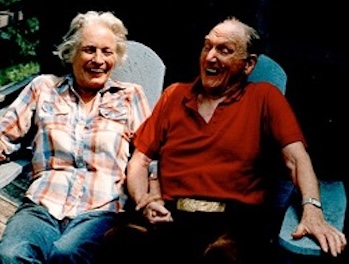
But I was thinking too of the close of Robert Penn Warren’s fine novel, All The King’s Men : ‘soon now we shall go out of the house and go into the convulsion of the world, out of history into history and the awful responsibility of Time.’[4] The connection is with MacNeice, because of that poet’s relationship with Eleanor Clark in 1939-40. When MacNeice was invited by F. R. Higgins to join the Irish Academy of Letters, it was to Eleanor that he wrote about it, saying that ‘The Irish Academy of Letters meets once a year in Dublin’s only decent restaurant and gets so drunk they have to send the waiters away.’[5] Clark grew up in Connecticut, went to  Vassar in the 1930s, and worked on their literary magazine with Elizabeth Bishop and Mary McCarthy, among others. She wrote for left-leaning magazines and journals such as The Partisan Review, thought of herself for a while as a ‘Trotskyite sympathizer’ and went to Mexico in the late 1930s. Apparently, she did some translating for Trotsky and was married for a while to his Czech secretary, Jan Frankl. She wrote novels, essays and reviews, children’s books and a memoir, but was probably best-known for her travel books, Rome and a Villa and The Oysters of Locmariaquer. She married Robert Penn Warren in 1952 and died in 1996, aged 82, seven years after Warren himself.


(Eleanor Clark and Robert Penn Warren at their summer home in West Wardsboro, Vermont, 1986: Kentucky Library and Museum)

The novelist Nicholas Mosley once wrote that ‘Humans can either learn – or refuse to believe that humans are responsible for themselves.’[6] My favourite use of ‘responsibility’, though, is probably that of the hugely influential Trinidadian radical historian, journalist and political theorist, C. L. R. James, who adopted, in his early years, William Makepeace Thackeray’s Vanity Fair as the book: ‘By the time I was fourteen I must have read the book over twenty times’. And he adds, a little later: ‘Thackeray, not Marx, bears the heaviest responsibility for me.’[7]

That radical, Thackeray!

Notes


[1] William Shakespeare, Hamlet, IV. v.; Laura Cumming, Thunderclap: A memoir of art and life & sudden death (London: Chatto & Windus, 2023), 61.

[2] Louis MacNeice, Collected Poems, edited by Peter McDonald (London: Faber, 2007), 111.

[3] Ilan Stavans, editor, The Oxford Book of Jewish Short Stories (New York: Oxford University Press, 1998), 165.

[4] Robert Penn Warren, All The King’s Men (1946; Harmondsworth: Penguin, 2007), 661.

[5] Louis MacNeice, Letters of Louis MacNeice, edited by Jonathan Allison (London: Faber, 2010), 351.

[6] Nicholas Mosley, Efforts at Truth: An Autobiography (London: Minerva , 1996), 299.

[7] C. L. R. James, Beyond a Boundary (1963; London: Vintage, 2019), 24, 52.

Changes for the worse


Strange days. Even to say so is to provoke suspicions of glimpses into the bleeding obvious. But strangeness there is, the compass broken and the maps all wrong.

Writing to Eudora Welty in July 1969, the novelist and editor William Maxwell told her of offering to let his elder daughter Kate, then fifteen, read a lot of the letters he’d received. He added: ‘And maybe I will, as a result, not be the mystery to her that my parents are to me, but more than likely it won’t change anything. It takes a great deal to change things. In a better way, I mean. To change things for the worse, all you need is somebody like Nixon, and there are plenty like him.’[1]

Watching a news programme earlier this month, I saw a clip of Nixon explaining to a bemused David Frost—unsurprisingly bemused since Nixon had no justification at all then for claiming this—that, whatever a president did, it couldn’t be illegal, by definition.

Rather more recently, of course, a stacked Supreme Court has thrust yet another blade into the guts of the republic.

 I began writing a post around the time of the British general election but was overtaken, as they say, by events. When the last results were coming in early on the Friday morning, it was clear that, after so many years of other countries viewing us with sympathy or disbelief or disdain, we had a distinct possibility of edging at least in the direction of honesty or sanity or some other unfashionable trait. The irony adhered in the fact that while we had pulled ourselves out of a ditch after a decade and half, some of those same countries seemed hellbent on hurling themselves into it. Thankfully, France has since pulled back to slightly firmer ground, though remaining unsettlingly close to the edge.

Watching the election, I flagged a little around 3 a.m. but rallied at the prospect of seeing some of the more appalling figures in the Tory ranks ditched. Some clung on but there were certainly highlights, particularly the member for North East Somerset being sent home to Nanny and seeing the shortest-serving British Prime Minister do to a 26,000 majority (2019) roughly what she’d done to the country. So, however brief or prolonged the respite it promises, that interesting Fourth of July turned out to be our Independence Day. It must have appeared a great deal less so in the United States,

Since then, a European football competition that grabbed wide attention, a botched assassination attempt on a former president of the United States, the usual murders, atrocities, coups, crises and catastrophes.


But for us, here, drowning out all that, the critical illness of an irreplaceable member of our household. Then the trips to the vet, the phone calls, the fraught conversations, the broken sleep, the agonised weighing of options. And now the weeks of ghost steps on the stairs, of puzzling shadows at the corners of your eyes, of strident silences and oddly empty spaces, because a light has gone out of our world.

Harry the Cat has left the building.


Notes

[1] Suzanne Marrs, editor, What There Is to Say, We Have Said: The Correspondence of Eudora Welty and William Maxwell (Boston and New York: Houghton Mifflin Harcourt, 2011), 259.

Fit to stroke a cat

‘If you are ready to leave father and mother, and brother and sister, and wife and child and friends, and never see them again’, Henry Thoreau wrote, ‘– if you have paid your debts, and made your will, and settled your affairs, and are a free man – then you are ready for a walk.’[1]

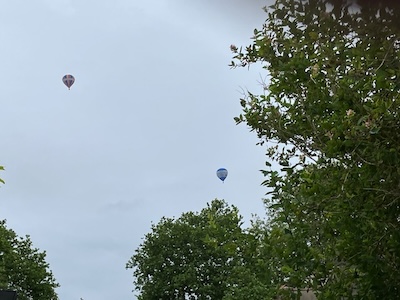
Without jettisoning all the relevant relations but also without a burdensome array of debt, I think I’m ready for a walk. A couple of mornings back, when someone all too few gardens away was learning to play ‘Johnny B. Goode’, I was a good deal readier but today, certainly at an early hour, there’s nothing louder than a blue tit close by and, further off, the occasional roar of propane burners firing as the two hot air balloons make sure that they’re well clear of the treetops in the park,

Hotter weather tends to make for weariness, certainly in those unaccustomed to it, like us in our northern temperate zone. It was hard to keep my eyes open on a recent trip down to Somerset by train, though driving probably wouldn’t have been much better (and a damned sight more hazardous). Judith Stinton once quoted Theodore Powys on motors and motoring: ‘A Journey in a motor car is the most tiring experience in the world . . . When I am tired all I feel fit to do is to stroke a cat’.[2] That I can do.

On that theme of tiredness: we have a General Election looming, its imminence evident from the increasingly desperate headlines in the right-wing press, as Jonn Elledge has noted:
https://www.newstatesman.com/politics/2024/06/the-tory-media-has-gone-into-meltdown


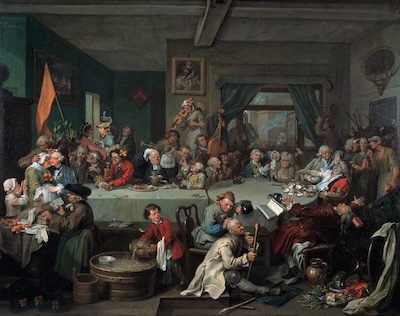
(William Hogarth, ‘An Election: 1. The Entertainment’: Sir John Soane’s Museums)

There’s a fairly general consensus that the present administration has failed utterly to honour the contract assumed to exist between government and governed, having trashed the public realm, lavished huge sums on the few at the expense of the many, and repeatedly attacked, dismantled or disparaged precisely those elements that distinguish a civilised society. Given the damage done and the importance of the contest, it seems a little strange that so much of the campaigning is so muffled – this is because neither of the two main parties can afford to be honest about the true state of the nation and what is needed even to begin to repair it. A while back, the – Tory – politician Rory Stewart, trying to define a picture of the country, came up with: ‘An economy 80 per cent based on elusive intangible services; buoyed by an improbable housing bubble, and entirely dependent for its health and care on immigrants, whom citizens seemed to wish to exclude.’[3] Not much has changed, unless for the worse. Yet with all that said, we are still in comparatively privileged conditions. It’s painfully obvious from the international news that a good many people, in several countries, some of them particularly surprising cases, have decided that fascism—which we thought a world war was largely fought to defeat—did not, after all, have a fair crack of the whip and deserves another go. Those people are doing their best, under various names and flags and guises, to give it that go now. And again, despite some disturbing recent domestic moves against democratic freedoms and the right to protest, we are still extremely unlikely in this country to be beaten, tortured or shot on account of being—or despite being—a medical professional, a journalist, a hospital patient, a poet, a photographer, a peace activist,  a woman, a child, or simply someone of the wrong racial character.

(‘After such knowledge, what forgiveness?’ T. S. Eliot asked in another context.[4] To which the most probable answer is: ‘none’.)

To avoid the danger of overdosing on the pleasures of current affairs, I’m taking refuge in the extremely relaxing early eighteenth century when ‘[s]tealing anything worth more than a shilling carried the death penalty’ but, on the other hand, ‘It took only four days to go from London to York or to Exeter by stagecoach.’[5] 

Those were the days. . .


Notes

[1] Henry Thoreau, ‘Walking’ (1862), in The Portable Thoreau, edited by Carl Bode (Harmondsworth: Penguin Books, 1979), 593. Emerson’s 1862 eulogy, ‘Thoreau’, included the observation that: ‘The length of his walks uniformly made the length of his writing. If shut up in the house he did not write at all.’ Ralph Waldo Emerson, Selected Essays, edited by Larzer Ziff (Harmondsworth: Penguin Books, 1982), 400.

[2] Judith Stinton, Chaldon Herring: Writers in a Dorset Landscape (Norwich: Black Dog Books, 2004), 41.

[3] Rory Stewart, Politics on the Edge: A Memoir from Within (London: Jonathan Cape, 2023), 360.

[4] T. S. Eliot, ‘Gerontion’.

[5] A ‘torrent of legislation’ after the Glorious Revolution of 1688 ‘raised the number of capital crimes from about fifty to over 200 by the turn of the nineteenth century.’ Lucy Moore, The Thieves’ Opera: The Remarkable Lives and Deaths of Jonathan Wild, Thief-Taker, and Jack Sheppard, House-Breaker (London: Penguin Books), 1998), ix, 188, 137.

Passing the critical stage, or not


RSPB: https://www.rspb.org.uk/birds-and-wildlife/jay

The highlight of yesterday morning was the jay, garrulus glandarius, briefly perched on the high roof of the shed beyond our back fence, a bird we’ve seen high up in the trees of the Victorian cemetery but never so close to home. The lowlight, in the wake of the announcement of a forthcoming General Election, now a little over five weeks away, was probably the reported Tory proposals to cut taxes for the rich again and to bring back National Service. This last appears to be an attempt to outflank satirists with a first strike of absurdity and anachronism. We await with bated breath the reintroduction to the statute books of the death penalty for stealing a pocket handkerchief, damaging Westminster Bridge or impersonating a Chelsea Pensioner.

Reading the stories of  Somerville and Ross lately, I alighted on Major Sinclair Yeates, together with Flurry Knox and the visiting Englishman Leigh Kelway, taking refuge from the rain in a public-house, having failed to get to the country races: ‘The bread tasted of mice, the butter of turf-smoke, the tea of brown paper, but we had got past the critical stage.’[1]

On occasion, we – or certainly I – don’t get to the critical stage, much less past it. Some things, moments, sights, sounds, are merely to be experienced and enjoyed (or, occasionally, suffered), without evaluation or ranking or even attempted analysis. And sometimes, writing so good or so distinctive that it delays or disarms criticism.

After a recent lunch, the librarian lingered at the table, extending her familiarity with the work of Olivia Laing, occasionally pausing to tell me how good it—The Garden Against Time—was. On my side of the table, I was extending my familiarity with the work of Anne Carson (Wrong Norma), frowning occasionally, laughing often and muttering, not at all rarely, ‘Wonderful!’ None of which, I suppose, passes muster as incisive literary analysis or exegesis. Not all the world’s a critical stage, you might say. (I’ve since read the Olivia Laing myself, muttering ‘Wonderful’ from time to time.)


The authors: from Irish Memories (1919)

‘It has been said of Ireland that the inevitable never happens, and that the impossible invariably occurs.’[2]

The volume that contains the Somerville and Ross story was published 125 years ago and is dense with hunting and hunting lore: horses, hounds, whips, drags and the rest. I could hardly be further from the imagined target audience if an interest in, or sympathy with, hunting were assumed. But that, of course, is not the point. The point is the writing, the humour, the sharply drawn characters, the thorough, detailed knowledge of Irish people and culture with which it deals, the politics of the time not made central but subtly pointed up from time to time.

In the Laing book, in fact, there are hundreds of plant names that meant nothing to me, functioning rather as sound poetry, mantra or music. But then, as more than one critic has pointed out, you don’t need detailed knowledge of baccarat or poker to take pleasure in Ian Fleming’s Casino Royale and, more broadly, the narrator or central character of a novel with whom we don’t sympathise, empathise, agree or even like at all is pretty standard. So too the frequent apparent gap between the maker and the made, and the recurrent agonising over how one can possibly read X’s writings or look at Y’s pictures or listen to Z’s music because they were such awful people doesn’t really connect with me. . .

On hunting, Walter de la Mare had a neat little poem:

Hi! Handsome hunting man,
Fire your little gun,
Bang! Now that animal
Is dead and dumb and done.
Never more to peep again, creep again, leap again,
Eat or sleep or drink again, oh, what fun![3]

In a New York Times Book Review piece, W. H. Auden quotes it and concludes: ‘A child brought up on such verses may break his mother’s heart or die on the gallows but he will never suffer from a tin ear.’[4]

Tin ears are very widely rampant just now (if ears can in fact ramp). But then, in the cemetery this morning: two jays in the same tree, quite close together. I doubt if the Tories, in their distorting lowlight mirror, can rival that.


Notes

[1] E. Œ. Somerville & Martin Ross, ‘Lisheen Races, Second-Hand’, in The Irish R. M. (London: Abacus, 1989), 102-103.

[2] ‘Major Apollo Riggs: Part III’, The Irish R. M., 518.

[3] Walter de la Mare, Rhymes and Verses: Collected Poems for Children (New York: Holt, 1988), 86.

[4] W. H. Auden, ‘An Appreciation of the Lyric Verse of Walter de la Mare’ (NYTBR, 26 February 1956), reprinted in Prose, Volume IV: 1956-1962, edited by Edward Mendelson (Princeton: Princeton University Press, 2010), 8. He noted that Randall Jarrell’s was ‘the only good American article about de la Mare’s recent work that I have come across’. This must be the piece published in The Nation (1946) and included in Poetry and the Age (1955; London: Faber and Faber, 1973), 137-141.

Local elections and watching for dragons


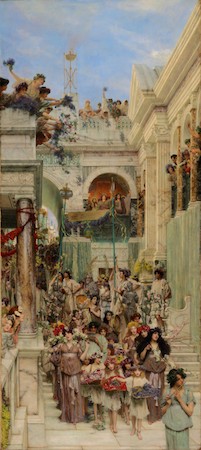
(Lawrence Alma-Tadema, Spring: J. Paul Getty Museum)

Mayday, m’aider. I think, without counting pages to an absurd degree, that 1 May, along with 1 January, is only exceeded by 25 December in the extent of its coverage in The Oxford Companion to the Year, which mentions at the outset the sacrifice of a pregnant sow by the priest of Vulcan to Maia (a goddess of growth).[1] My ageing dictionary offers for Mayday ‘given to sports and to socialist and labour demonstrations’. There was such a time, I think, and the change has not been for the better. This particular Mayday, we have continuing wars and war crimes, failing states, thuggish cops violently assaulting and arresting students and faculty on several American campuses.

But here – we have local elections! Yes, one-sixth of England’s district, borough and unitary councils will hold elections tomorrow, Thursday, 2 May: 2,636 council seats to be contested in the 107 (out of 317) scheduled council elections and 48 by-elections, plus elections for 10 metro mayors, as well as police commissioners and members of the London Assembly. Our ward is in one of the 107: two councillors to be elected and the only candidates standing who contested it that last time around are the incumbents, both Green Party councillors.

We’ve been constantly reminded, of course, that this is the Year of Elections. More than 60 countries and directly affecting almost half of the world’s population. From India and the United States to Indonesia, Mexico, Iceland and Sri Lanka. It would be pleasant to view the prospect positively or even with equanimity, but it’s just too much of a stretch. Many of the countries going to the polls are not even democracies in any meaningful sense. Not that democracy is a perfect political system—if it were, there would be fewer psychopathic thugs, undisguised crooks and congenital liars in positions of power—it’s just that all the other systems are worse.

In the UK, we expect a General Election too and, around the country, people—especially those who follow politics closely—are able to indulge in the parlour game that consists of trying to identify a single sector or section of British social, cultural and economic life that the present government, in its fourteen-year tenure, has not destroyed, diminished, degraded or damaged beyond repair or recovery. Among the candidates are the health service, universities, schools, rivers and coastal waters, housing, freedom of speech, crime, social care, railways, roads, parks, the tax system, the legal profession, pedestrian thoroughfares, prisons, immigration, foreign policy, poverty, doctors, dentists, childcare, homelessness, domestic violence, the rental sector, defence, the climate emergency, the right to protest, sexual harassment in and out of the House of Commons. Answers on a polling card, please. . . 


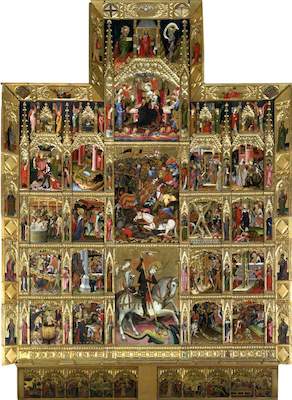
(Altarpiece of St George, Attributed to Andrés Marçal de Sas, active 1393–c.1410: Victoria and Albert Museum)

Still, as Sarah Churchwell, observed, a few years back: ‘Because most people spend little time analysing political events or studying history, democracy will always risk being shaped by voters’ feelings rather than analysis.’[2] A risk, yes, but there are points in any country’s history when the two converge, in some species of agreement: informed analysis of the last decade and a half in the United Kingdom will identify decline, dissension, worsening social and economic conditions for the majority of its citizens, while a wide-ranging survey of voters’ feelings will find an immense tiredness, if not exhaustion, in a nation where everything now is broken and nothing works – unless, as ever, you are filthy rich.


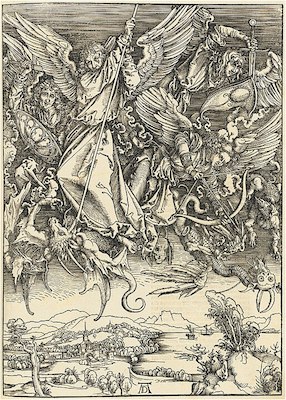
(Albrecht Dürer, St Michael Fighting the Dragon)

Churchwell wrote in another book that: ‘Mythical histories lay the groundwork for fascist politics.’[3] Also true, increasingly evident in many countries around the world, including some of the most vaunted ‘democracies’, a few of them uncomfortably close. It was briefly illuminated (through a glass, darkly) by some of the clamorous noise around 23 April, St George’s Day, the patron saint of England, though ‘very little is known of him and his very existence is often doubted’.[4] If he did exist, he may have been born in Cappadocia, may have died in Palestine and never came near England. Still, he’s the patron saint of at least fifteen countries, states and major cities around the world. And, of course, there’s the matter of that dragon, a story added centuries later. Something may have happened somewhere in Libya, it seems.

‘Before Dürer’, Philip Hoare wrote, ‘dragons existed; after him, they did not. We were left with only the dragons of our unconscious, as Carl Jung would say.’[5] Even more on topic, one might say, is Nicolas Mosley’s comment about his father, Oswald Mosley: ‘But heroes continue not to see the dragons that are in themselves.’[6]

While the local elections may not accurately predict the winners in the various constituencies in the coming General Election, they will, I think, correctly identify the losers.


Notes

[1] Bonnie Blackburn and Leofranc Holford-Strevens, The Oxford Companion to the Year (Oxford: Oxford University Press, 1999), 183.

[2] Behold, America: A History of America First and the American Dream (London: Bloomsbury Publishing, 2018), 215.

[3] The Wrath to Come: Gone With the Wind and the Lies America Tells (London: Head of Zeus, 2022), 352.

[4] The Oxford Companion to the Year, 166.

[5] Philip Hoare, Albert & the Whale (London: 4th Estate, 2021), 11.

[6] Nicholas Mosley, Rules of the Game; Beyond the Pale: Memoirs of Sir Oswald Mosley and Family (London: Pimlico, 1994), 116.

All, or mostly, at sea


(Pound’s ‘Canto I’, initial by Henry Strater)

I see that, 118 years ago today—a nice round number, as they say—Ezra Pound, on a fellowship from the University of Pennsylvania to study Spanish literature in Madrid,  ‘went down to the ship’, specifically the König Albert, and left New York, landing at Gibraltar on 7 May. On that later day, he wrote to his parents to announce his arrival, mentioning that he’d been reading Rudyard Kipling’s From Sea to Sea and quoting from that work: ‘Imagine a shipload of people to whom time is no object, who have no desires beyond three meals a day and no emotions save those caused by a casual cockroach.’ He added: ‘for this voyage. deduct the cock roach, as the boat is clean.’[1]

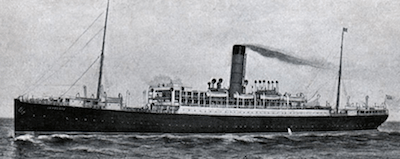
Pound went down to the ship on several occasions in this early part of his life: the European tours with his Aunt Frank Weston in 1898 and 1902; the 1906 trip;  the departure on 17 March 1908, on Cunard Royal Mail Steamship Slavonia, to Gibraltar in March, then Venice for much of the summer and on to London in August 1908.[2] In 1911, after  more than six months in the United States, he returned to Europe, boarding S. S. Mauretania on 22 February 1911. Then followed something of a pause in those sailings, before he boarded the Rex in Genoa, 13 April 1939 – that pause being a little over 28 years.[3]


(S. S. Slavonia)

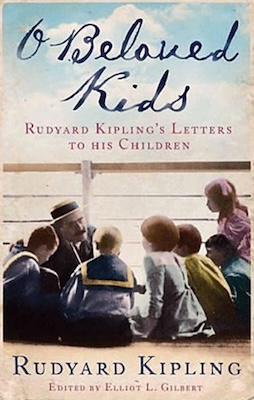
Kipling himself went down to ships a great deal more often than ‘the Idaho kid’. Born in Bombay—now Mumbai—he was taken to England, aged two, by his mother when she travelled there to give birth to her second child, Alice (‘Trix’). Then they returned to India. Aged 5, he took ship again, he and his sister being left in Southsea at ‘The House of Desolation’ as Kipling later termed it.[4] He was there for five years. In 1882, he sails back to India, returning to England seven years later via Rangoon, Singapore, Hong Kong, Yokohama, San Francisco and New York. His trip around the world follows in 1891. The following year sees more voyaging, to America and Japan. After the return to England the frequent trips to winter in South Africa begin – and there’s more to come, including the West Indies and South America.[5]

Much of the 1890s journeying fed into the many letters and sketches which provided the material for the two-volume From Sea to Sea and Other Sketches, as well as the later Letters of Travel (1892-1913). In that sense, the voyages were not simply leisure; yet Kipling could somehow combine work and play to a striking degree. Immediately preceding the lines quoted by Pound in the letter to his parents, Kipling writes: ‘Now we are lying off Moulmein [later renamed Mawlamyine] in a new steamer which does not seem to run anywhere in particular. Why she should go to Moulmein is a mystery; but as every soul on the ship is a loafer like myself, no one is discontented.’[6]

He wrote again about his experience of a specific ship in the article, ‘Sea Travel’, first published as ‘Egypt of the Egyptians’ in Nash’s Magazine (June 1914). Some of the men working on the ship brought back vivid memories of his early years in India: ‘Serangs [lascar boatswains] used to be very kind to little white children below the age of caste.’ Then: ‘Most familiar of all was the ship itself. It had slipped my memory, nor was there anything in the rates charged to remind me, that single-screws still lingered in the gilt-edged passenger trade.’ This was an exciting discovery for some ‘North Atlantic passengers’, who were ‘as pleased about it as American tourists at Stratford-on-Avon.’ The passengers are disembarking at Port Said, towards which the ‘one-screw tub thumped gingerly’. Kipling has leisure to observe the table linen, the glassware, the poor waiting service, the cabins lacking curtains and other dispiriting features: ‘time and progress had stood still with the P. & O.’ He then gets into conversation with other passengers and is entertained by the telling of several stories but ‘no stories could divert one long from the peculiarities of that amazing line which exists strictly for itself.’ He reflects on the glory days of the Peninsular and Oriental Steam Navigation Company and concludes that: ‘To-day it neither feeds nor tends its passengers, nor keeps its ships well enough to put on any airs at all.’[7]


Ships and stories. His biographers explore his love of both. He would later enjoy trips on Royal Navy vessels but in From Sea to Sea the author of Barrack-Room Ballads (1892) remarked that: ‘The blue-jacket is a beautiful creature, and very healthy, but . . . I gave my heart to Thomas Atkins long ago, and him I love’ (I, 292). Marghanita Laski observes that, ‘As a traveller, his chosen transport was the most comfortable steamer available, and even so, if the sea was at all rough, he was usually seasick.’[8] Nevertheless, a remarkable number of articles, fictions and poems centre on, or strongly feature, Matthew Arnold’s ‘unplumb’d, salt, estranging sea’.[9]

When I was a child and my father was posted to Singapore, we flew out and sailed back. I can’t be entirely sure of the ship’s name but believe it was the S. S. Oriana, at that stage owned by the Orient Steam Navigation Company. The flight out had its moments—an impressive bout of air sickness, melting tarmac under the feet at the airport in Tehran, brief stops at Istanbul and Mumbai, I think—but the voyage home, three years later, unsurprisingly, had far more. Pyramids and Tutankhamen in Cairo, fierce heat and alley cats in Aden, light and colour in Lisbon. Sea, sky, the shipboard entertainment uncritically consumed, the table tennis tournaments, ferreting about in forbidden corners, running like lunatics up and down stairs and along narrow corridors. Even a fine romance –as fine, at least, as an inexperienced thirteen-year-old could make it. . .


(A boy on a camel)

At that age, it occurs to me, Kipling’s work was appearing for the first time in The Scribbler, a family magazine, in collaboration with May and Jenny Morris (daughters of William and Jane), and Philip and Margaret Burne-Jones (children of Edward and Georgiana). More precocious than some, that Kipling.

Notes


[1] Ezra Pound, Ezra Pound to His Parents: Letters 1895–1929, edited by Mary de Rachewiltz, David Moody and Joanna Moody (Oxford: Oxford University Press, 2010), 72n., 73.

[2] J. J. Wilhelm, Ezra Pound in London and Paris, 1908-1925 (University Park: Pennsylvania State University Press, 1990), 66.

[3] A. David Moody, Ezra Pound: Poet: A Portrait of the Man and His Work: Volume II: The Epic Years 1921–1939 (Oxford: Oxford University Press, 2014), 301.

[4] Rudyard Kipling, Something of Myself, edited by Thomas Pinney (Cambridge: Cambridge University Press, 2008), 7; and see the story, ‘Baa Baa, Black Sheep’, in Wee Willie Winkie, edited by Hugh Haughton (London: Penguin Books, 1989), 260-288. An ‘English Heritage’ blue plaque is on the house now: I see it’s not so very far from where I lived in Southsea for several years.

[5] Much of the chronology lifted from Norman Page’s indispensable A Kipling Companion (London: Macmillan, 1989), 1-7.

[6] Rudyard Kipling, From Sea to Sea and Other Sketches: Letters of Travel, 2 volumes (London: Macmillan, 1900), I, 230.

[7] Rudyard Kipling, Letters of Travel (1892-1913) (London: Macmillan, 1920), 210, 211, 219.

[8] Marghanita Laski, From Palm to Pine: Rudyard Kipling Abroad and at Home (London: Sidgwick & Jackson, 1987), 142.

[9] ‘To Marguerite – Continued’, Poetry and Criticism of Matthew Arnold, edited by A. Dwight Culler (Boston: Houghton Mifflin, 1961), 81. Familiar to some readers from its use in John Fowles’ The French Lieutenant’s Woman.

Corner posts and lucky beans


‘When he finally left, his eyes blurry from having stared at printed papers for so long, he felt that something was different’, Georges Simenon (or his translator) wrote of Inspector Jules Maigret. ‘It took a while to dawn on him that it had stopped raining. It felt like a void.’[1]

It has hardly stopped raining here, has barely drawn breath, in fact. No relief. None either in the news, with its daily litany of continuing atrocities, grotesque historical ironies and politicians soiling themselves to degrees remarkable even in our Golden Age of Hypocrisy.

But here the work continues, the ordinary processes of living which, more fortunate than some others, we are able to pursue: in my case, transcribing letters, reading Simenon, William Faulkner, Mary Butts – and feeding the cat.


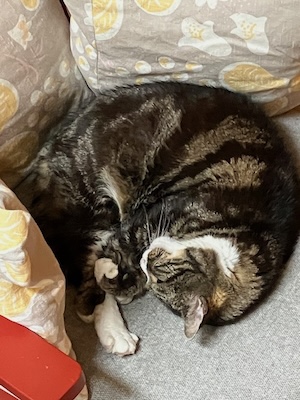
(Harry the Cat)

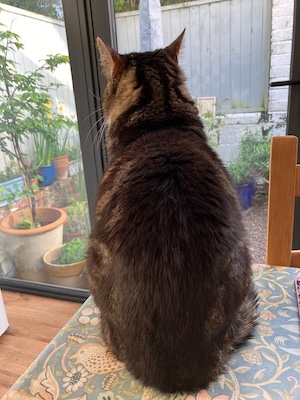
When their meals are imminent, some cats have a habit of displaying affection to their owners (their staff) and, often, to the corners of cupboards, the legs of chairs, the edges of tables. Harry rubs his face against various fixtures and fittings but, particularly, the corners of a low table in front of the living-room sofa, where I sit to take off my outdoor shoes after a walk. Several times I’ve watched him work his way around the table – but always nudging three corners and missing one, though the missed one varies.

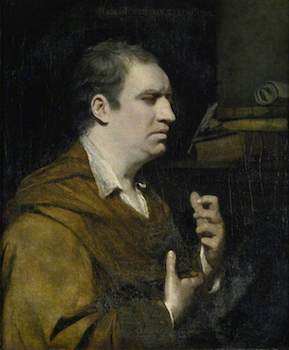
I mention to the vacant room that, when Doctor Johnson missed touching a post, he had to turn back to remedy the situation before continuing on his way, as reported by a man named Samuel Whyte:

I perceived him at a good distance working along with a peculiar solemnity of deportment, and an awkward sort of measured step…. Upon every post as he passed along, I could observe he deliberately laid his hand; but missing one of them, when he had got at some distance, he seemed suddenly to recollect himself, and immediately returning back, carefully performed the accustomed ceremony, and resuming his former course, not omitting one till he gained the crossing. This, Mr. Sheridan assured me … was his constant practice.[2]


(Joshua Reynolds, Samuel Johnson, National Trust: Knole)

Superstitions. Black cats, lucky beans, touching iron, meeting pigs, replacing chairs after dining, turnips, umbrellas and snails – throwing and divination. I realise that I have not one but two relevant reference books: Steve Roud, The Penguin Guide to the Superstitions of Britain and Ireland (London: Penguin, 2003), and Iona Opie and Moira Tatem, editors, A Dictionary of Superstitions (Oxford: Oxford University Press, 1989). Iona Opie, with her husband Peter, wrote the classic The Lore and Language of Schoolchildren, containing a chapter, ‘Half-Belief’, which assembles an astonishing array of ‘ancient apprehensions’ that, ‘even if only half-believed in, continue to infiltrate their minds’. These range from the likely bad effects of seeing a white horse (and omitting to spit) through the madness resulting from moonlight shining on a sleeping person’s face, screeching owls, dropped photograph frames, the perils of stepping on black beetles, walking under bridges as trains cross them, glimpses of funerals, chimney sweeps, spotted dogs, haycarts, sailors’ collars, nuns and wooden legs.[3]

(Georges Simenon: via Discovering Belgium)

Simenon again:

“Good luck, boys!”
“Break a leg,” grunted Torrence, touching wood.
Lucas, who claimed not to be superstitious, repeated in an almost reluctant whisper, “Break a leg!”[4]

Lucas claiming not to be superstitious but following suit anyway is a sly version of Pascal’s wager: bet on God’s existence and, if you’re wrong, nothing lost; if you bet on his non-existence and he then rolls up at your front door with a couple of heavies, you’re in trouble. I have vague memories of paying childhood lip service to one or two superstitions, just in case, then vigorously reversing. My avoidance of walking under ladders was succeeded by my determinedly walking under every ladder in sight (to demonstrate that I was not superstitious) and I recall an enthusiastic embracing of the number 13 on every possible occasion. Black cats I greeted warmly, was never overly concerned with sneezes or snowdrops, and may have looked askance at pairs of crows or ravens only because of the ballad of ‘The Twa Corbies’.

“Ye’ll sit on his white hause-bane,
And I’ll pike out his bonny blue e’en:
Wie ae lock o’ his gowden hair
We’ll theek our nest when it grows bare.”

Richard Ellmann writes that Paul Ruggiero, whom James Joyce had known in Zurich during the First World War and with whom he renewed acquaintance on returning there following the outbreak of the Second, had the habit of dropping in to see Joyce after work and laying his hat on the bed. Joyce ‘reproved him each time’, believing in the superstition that it meant somebody was going to die.[5]  This one seems connected particularly to cowboys and Italians. Bad luck to anyone that sleeps in the bed, evil spirits spilling out of it – in past times, I gather, priests and doctors would sometimes lay their hat on the bed if the patient in it was on the way out. Joyce, of course, subscribed to a mass of superstitions, ranging from thunder through colours, numbers, months, the arrangement of cutlery and a rat running downstairs.

He also shared Ford Madox Ford’s dismal view of years which added up to 13,[6] and a superstition about numbers must be one of the commonest. Edmund de Goncourt recalled a dinner at the Charpentiers, attended also by Emile Zola and his wife. Zola ‘spoke about his superstitions, saying that he added up the figures of the carriages he noticed, that 7 was his favourite number, and that he tapped the doors and windows a given number of times before going to bed.’[7]

‘I have always been superstitious myself and so remain—impenitently’, Ford wrote in 1931. ‘I cannot bear to sit in a room with three candles or to bring snowdrops, may or marigolds indoors.’ He claimed that, when the Daily Mail requested him to write a sonnet on Samuel Johnson, ‘All I could remember about Johnson at the moment was that he had kept pieces of orange peel and patted corner posts when he walked down Fleet Street.’[8]

Superstitions, the word and the idea, are endlessly malleable, able to fit occasion, character or context. Herman Melville, he of the White Whale, whose dealings with William Shakespeare were complex and extensive, nevertheless asserted that ‘this absolute and unconditional adoration of Shakespeare has grown to be a part of our Anglo-Saxon superstitions. The Thirty-Nine Articles are now Forty. Intolerance has come to exist in this matter. You must believe in Shakespeare’s unapproachability, or quit the country.’[9] Wyndham Lewis remarked that, ‘One of our greatest superstitions is that the plain man, being so “near to life,” is a great “realist.”’[10] Graham Greene presented it, in the case of his Assistant Commissioner, more as a matter of conscious selection, albeit a necessary one, like diet or wardrobe: ‘One had to choose certain superstitions by which to live; they were the nails in the shoes with which one gripped the rock. This was what a war threw up: a habit, a superstition, one more trick by which one got through the day.’[11]

But I like this, what might be termed intelligent tolerance, another threatened species – Dervla Murphy, in another age and another country, noting a traffic policeman in Kabul, abandoning his post to pray at the appointed time: ‘This frank devotion is for me one of the most impressive features of Islamic culture. If we accept that it is more than a superstition then there is something very wonderful indeed about mixing one’s daily deeds and one’s daily prayers in such an unselfconscious fashion, instead of keeping each in an airtight compartment.’[12]


Notes

[1] Georges Simenon Maigret and the Man on the Bench (1953; translated by David Watson, London: Penguin Books, 2017), 108.

[2] Samuel Whyte, Miscellanea Nova (Dublin, 1801), 49: James Boswell, Life of Johnson, edited by G. B. Hill, revised and enlarged by L. F. Powell (Oxford, the Clarendon Press, 1934), I, 485 n1. This and a great deal more is referred to and discussed by Lawrence C. McHenry, Jr., in an article, ‘Samuel Johnson’s Tics and Gesticulations’, Journal of the History of Medicine, 22 (April 1967), 152-168.

[3] Iona and Peter Opie, The Lore and Language of Schoolchildren (1959; New York: New York Review of Books, 2001), 206-231.

[4] Georges Simenon, Maigret, Lognon and the Gangsters (1952; translated by William Hobson, London: Penguin Books, 2017), 140.

[5] Richard Ellmann, James Joyce, new revised edition (Oxford: Oxford University Press, 1983), 739.

[6] Stuart Gilbert, editor, Letters of James Joyce (London: Faber, 1957), 161, n.

[7] Entry for 8 December 1891: Edmund and Jules de Goncourt, Pages From the Goncourt Journal, edited and translated by Robert Baldick (New York: New York Review Books, 2006), 369.

[8] Ford Madox Ford, Return to Yesterday: Reminiscences 1894-1914 (London: Victor Gollancz, 1931), 254-255 and 271; 299.

[9] Herman Melville, ‘Hawthorn and His Mosses’ (1850; in The Portable Melville, edited by Jay Leyda, Harmondsworth: Penguin Books, 1975), 409.

[10] Wyndham Lewis, The Complete Wild Body, edited by Bernard Lafourcade (Santa Barbara: Black Sparrow Press, 1982), 102. 

[11] Graham Greene, It’s a Battlefield (1934; London: Penguin Books, 1980), 170.

[12] Dervla Murphy, Full Tilt: Ireland to India with a Bicycle (1965; London: Century Publishing, 1985), 63.

Fetch a flitch of bacon


(John Frederick Herring II, ‘Farmyard with Saddlebacks’: Haworth Art Gallery)

The year has turned but, unfortunately, the direction of human travel has not, bringing to mind the old ballad:

It was mirk, mirk night, there was nae starlight,
They waded thro’ red blude to the knee;
For a’ the blude that’s shed on the earth
Rins through the springs of that countrie.[1]

We have long passed ‘that blessed season’, which Saki so liked, ‘between the harshness of winter and the insincerities of summer’.[2] I read hungrily, if not always strictly relevantly to the projects currently in train.

‘Every time I consider autobiography’, Guy Davenport wrote to the author and publisher W. C. Bamberger in June 2000, ‘my mind instantly runs to senseless (but satisfying) recrimination.’ He went on to detail the losses – due to carelessness or dishonesty – of valued letters, priceless association copies of books, drawings made to accompany essays or stories, which were jettisoned by editor or publisher once the material had been printed. ‘One of them was a Greek mask I’d worked on for a week, pen and ink, perhaps the finest drawing I’ve ever done.’ He added: ‘And there’s the art book with color plates that a fellow grad student at Harvard borrowed and kept his place with a slice of bacon,’ before concluding: ‘L’enfer, c’est les autres.’[3]


(Portrait of Lady Charlotte Harley as Ianthe: drawn by Richard Westall, engraved by W. Finden)

Bacon, you say. . . . Francis and Roger and Francis, and how many more? There was Lady Charlotte, wife of Colonel Anthony Bacon of the Lancers and daughter of the Earl of Oxford. Bacon was involved in the War of the Brothers, 1832-1834 (Pedro and Miguel) in Portugal, in the cause of Dom Pedro. Charlotte was the ‘Ianthe’ to whom, at the age of ten, Byron wrote his introductory stanzas at the beginning of Childe Harold.[4]

Such is thy name with this my verse entwined;
And long as kinder eyes a look shall cast
On Harold’s page, Ianthe’s here enshrined
Shall thus be first beheld, forgotten last[5]

There was Sir Nicholas Bacon, Keeper of the Great Seal to Queen Elizabeth I, who built a fine house mentioned by Ronald Blythe in his discussion of Stiffkey, a Norfolk village more famous since for the rector, Harold Davidson, who was defrocked after being charged with immorality – and died as a result of being mauled by a lion.[6] Francis – not the painter – supplies two epigraphs to Dorothy Sayers in her 1935 novel, Gaudy Night.[7] More entertainingly on the bacon front, Peter Vansittart writes that, until the Hundred Years’ War, the patron saint of England was Edward the Confessor. ‘Then Edward III, in debt to Genoese bankers, replaced him with their patron, the more aggressive St George, who was not to escape the attention of the supreme English ironist, Gibbon: he dismissed George as a dishonest bacon contractor, loathed by Christian and pagan alike.’[8]

Anyone fretfully wondering how long it will take Ford Madox Ford to rock up can now put their mind at rest. In Ancient Lights, Ford segued from a memory of Dante Gabriel Rossetti’s limericks to an anecdote about ‘another poet, a descendant of many Pre-Raphaelites, of whom it was related that whilst reading his friend’s valuable books at that friend’s breakfast table he was in the habit of marking his place with a slice of bacon.’ He added that he knew this anecdote to be untrue.[9] How might he be so sure? Slip forward twenty years and Ford is remembering his doctor, Tebb, with whom Ford stayed for a while when the good doctor was treating him in the late stages of a breakdown. He writes of Tebb inventing ‘one of the most ingenious lies’ about his guest: that Ford marked his place in Tebb’s ‘priceless first editions and incredibly sumptuous large paper copies with a slice of bacon.’[10]

Reading the recently published collection of shorter pieces by Hilary Mantel—and reminding myself of just how funny she can be—I come across an article, written for Vogue, on perfumes. Mantel remarks: ‘What women have always wanted to know is what scent drives men wild; researchers have the answer, say Turin and Sanchez [co-authors of the book Perfumes: The Guide], and it’s bacon.’[11] It’s just possible that this news may not have brought unalloyed delight to those inquiring women.

Bacon features largely in Ford’s letters around the end of the First World War, given the twin factors of meat rationing (introduced in 1918) and Ford’s own pig-breeding ambitions. ‘I got as far as the above’, he wrote to Stella Bowen in a letter that stretched over two days (28-29 April 1919), ‘when sleep overtook me—or rather sleepiness, for, when I went to bed I cd not get to sleep. I fancy an unmixed diet of bacon is telling on my liver.’[12]


William Cobbett – farmer, MP, soldier, traveller, radical journalist, printer, avid dispenser of practical advice to the common people (‘The Poor Man’s Friend’) – who took a positive view of pigs, wrote in his Cottage Economy:

A couple of flitches of bacon are worth fifty thousand Methodist sermons and religious tracts. The sight of them upon the rack tends more to keep a man from poaching and stealing than whole volumes of penal statutes, though assisted by the terrors of the hulks and the gibbet.[13]

It was also a matter of personal preference. On one of his famous rural rides, he arrived at Ashurst ‘(which is the first parish in Kent on quitting Sussex)’, where, ‘for want of bacon’, he was ‘compelled to put up with bread and cheese for myself. I waited in vain for the rain to cease or to slacken, and the want of bacon made me fear as to a bed.’[14] So he rode on through the night and the driving rain. Better drenched than baconless.

No mention of pork or bacon, unsurprisingly, in our Syrian and Palestinian cookbooks, nor, surely, in Claudia Roden’s The Book of Jewish Food? But yes, there is an entry in her index, which turns out to be connected with her visit to El Molino in Granada, a centre for research into the history of Spanish food. She was told that some Marranos, forced by the Inquisition to convert to Christianity, ‘made a point of cooking pork to protect themselves from charges by the Inquisition of continuing to practise their old religion.’[15]

The Librarian and I were recently comparing our inability to remember jokes. Some people have a repertoire of hundreds, others recall not a single one. The Librarian offers only one: it concerns the Pink Panther and she first heard it decades ago. I cudgel my brains and offer a knock knock joke dredged from some long unvisited cerebral recess:

Knock knock! (Who’s there?) Egbert! (Egbert who?) Egbert not bacon!

A brief, pitying smile. She murmurs, with visible effort, ‘That’s quite funny.’

It’s the way I tell them.


Notes

[1] ‘Thomas the Rhymer’, in The Oxford Book of Ballads, edited by Arthur Quiller-Couch (Oxford: Oxford University Press, 1910, reprinted 1932), 3.

[2] ‘The Romancers’, The Short Stories of Saki (London: The Bodley Head, 1930), 311.

[3] Guy Davenport, I Remember This Detail: 40 Letters to Bamberger Books, edited by W. C. Bamberger (Whitmore Lake, Michigan: Bamberger Books, 2022), 79-80. The French sentence is Jean Paul Sartre’s famous line from his play Huis Clos (No Exit).

[4] Rose Macaulay, They Went to Portugal (1946; London, Penguin Books, 1985), 307.

[5] Lord Byron, Selected Poems, edited by Susan J. Wolfson and Peter J. Manning (London: Penguin Books, 1996), 60.

[6] Ronald Blythe, The Age of Illusion: England in the Twenties and Thirties 1919-40 (Harmondsworth: Penguin, 1964), 156.

[7] Dorothy Sayers, Gaudy Night (1935; London: Hodder and Stoughton, 2016), Chapters 3 and 17.

[8] Peter Vansittart, In Memory of England: A Novelist’s View of History (London: John Murray, 1998), 42.

[9] Ford Madox Ford, Ancient Lights and Certain New Reflections (London: Chapman and Hall, 1911), 44, 45.

[10] Ford Madox Ford, Return to Yesterday: Reminiscences 1894-1914 (London: Victor Gollancz, 1931), 305.

[11] Hilary Mantel, ‘At First Sniff’ (2009), in A Memoir of My Former Self: A Life in Writing, edited by Nicholas Pearson (London: John Murray 2023), 332. I also learn from this that Burger King, yes, released a meat-infused scent called ‘Flame Grilled’.

[12] Correspondence of Ford Madox Ford and Stella Bowen, edited by Sondra J. Stang and Karen Cochran (Bloomington & Indianapolis: Indiana University Press, 1994), 109-110.

[13] William Cobbett, Cottage Economy (1823; Oxford University Press, 1979), 103. In past centuries, pigs ‘were kept by everyone, fed economically on scraps, waste, and wild food’: Alan Davidson, The Oxford Companion to Food, Second Edition by Tom Jaine (Oxford: Oxford University Press, 2006), 49.

[14] William Cobbett, Rural Rides, edited by George Woodcock (1830 edition; Harmondsworth: Penguin Books, 1983), 171-172.

[15] Claudia Roden, The Book of Jewish Food (London: Viking, 1997), 332.

Melancholy baby, maybe


(George Romney, Mirth and Melancholy (Miss Wallis, Later Mrs James Campbell): National Trust, Petworth House)

‘What did you do in the end times?’ Well, among other things, I reread Olivia Manning’s Fortunes of War with immense pleasure and admiration. Here is the eunuch in the hallway of the Pomegranate nightclub in Athens: ‘His face was grey-white, matte, and very delicately lined. It was fixed in an expression of profound melancholy.’[1]

In 1915, after refraining from reading it until he had his own ‘few pages’ out of the way, Joseph Conrad wrote to the author of The Good Soldier: ‘The women are extraordinary—in the laudatory sense—and the whole “Vision” of the subject perfectly amazing. And talking of cadences, one hears all through them a tone of fretful melancholy extremely effective. Something new, this, in Your work my dear Ford – c’est très, très curieux. Et c’est très bien, très juste. You may take my word for that —speaking as an unsophisticated reader first—and as homme du métier afterwards—after reflection.’[2]

That ‘fretful melancholy’ is perhaps a distant relation of the ‘hilarious depression’ identified by Graham Greene in his review of  Ford’s Provence.[3] But it’s the word ‘melancholy’ that lingers more determinedly: how could it not, in yet another news cycle dominated by the latest governmental cowardice, grubbiness and xenophobia?

‘Come to me my melancholy baby/ Cuddle up and don’t be blue’. So ran the 1912 song, ‘My Melancholy Baby’, since associated with some famous names—Judy Garland, Al Bowlly, Connie Francis, Bing Crosby. The word itself has a long history, beginning as one of the four humours in Hippocratic medicine. Black bile, linked not only to melancholy but to one of the elements, Earth, and later to the season of autumn.[4] John Keats grants melancholy goddess status, associating her with beauty and joy as well as loss: ‘Ay, in the very temple of Delight/ Veiled Melancholy has her sovran shrine’.[5] But such nuances were sternly ironed out over time and the word became, as it has essentially remained, a near-synonym for sadness, though usually implying something deeper and longer-lasting than the common or garden kind and, often, of rather mysterious or inexplicable origin.


‘This was one of the blackest days that I ever passed. I was most miserably melancholy’, the sufferer James Boswell wrote; and in a letter of the following year: ‘Yet let me remember this truth: I am subject to melancholy, and of the operations of melancholy, reason can give no account.’[6] He recalled of Dr Johnson: ‘Burton’s Anatomy of Melancholy, he said, was the only book that ever took him out of bed two hours sooner than he wished to rise.’[7] Robert Burton and Edward Young, author of Night Thoughts, are probably the big cheeses of British gloom. I have a copy of the Anatomy, a reprint of the 1932 edition, introduced then by Holbrook Jackson (bibliophile and journalist, who had bought the New Age in partnership with A. R. Orage), and in the New York Review Books edition by William Gass. I have, though, only sampled and dipped, rather than read cover to cover. Alexandra Harris mentioned that Burton, ‘it was rumoured, took his own life in his college room in Christ Church. If this is true, the date makes sense. He died on 25 January 1640, well past the encouraging feasts of Christmas, at a melancholy time of the year.’[8]

An understandable trajectory there: the falling off or lapsing back from good fare and company to a more customary level, and the likely worsening of weather into the bargain. Melancholy often sits companionably enough beside modifying words or notions. Robert Graves remembered an old man in an antique shop telling him that ‘everyone died of drink in Limerick except the Plymouth Brethren, who died of religious melancholia.’[9] Ernst Jünger, fighting on the Western Front, remarked: ‘How often since that first time I’ve gone up the line through dead scenery in that strange mood of melancholy exaltation!’ And he remembered walking through a neglected but flourishing landscape: ‘Nature seemed to be pleasantly intact, and yet the war had given it a suggestion of heroism and melancholy; its almost excessive blooming was even more radiant and narcotic than usual.’[10]


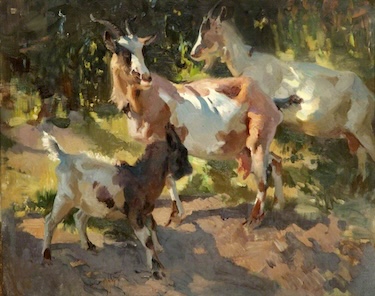
(Dorothy Adamson, Goats: Walker Gallery)

D. H. Lawrence decided that staying a long time in England made one ‘so melancholy’ but let that feeling extend to Sardinia and to other living creatures than troublesome humans: ‘Sometimes near at hand, long-haired, melancholy goats leaning sideways like tilted ships under the eaves of some scabby house. The call the house-eaves the dogs’ umbrellas. In town you see the dogs trotting close under the wall out of the wet. Here the goats lean like rock, listing inwards to the plaster wall. Why look out?’[11]

Lawrence and animals. I have a vague (and getting vaguer) memory of an exam question which I seized upon – was it writers on the animal world or specifically Lawrence? A resounding victory for the vagueness. I certainly wrote about Lawrence and, what, horses, snakes, cattle, perhaps even goats. It used to be a not uncommon ploy for people to concede cautiously that Lawrence was ‘very good with children and animals’, as though he couldn’t be trusted with anything else. Perhaps, for them, he couldn’t. Unsettling sort of chap. There are increasing numbers of unsettling figures in literary history as boundaries soften or bend. Is she modernist or not? Is he essentially Georgian or Victorian or. . .? The either/or becoming both or several or all.

Nick Jenkins, narrator of Anthony Powell’s A Dance to the Music of Time, reflects of  Dicky Umfraville: ‘He seemed still young, a person like oneself; and yet at the same time his appearance and manner proclaimed that he had had time to live at least a few years of his grown-up life before the outbreak of war in 1914. Once I had thought of those who had known the epoch of my own childhood as “older people”. Then I had found there existed people like Umfraville who seemed somehow to span the gap. They partook of both eras, specially forming the tone of the postwar years; much more so, indeed, than the younger people. Most of them, like Umfraville, were melancholy; perhaps from the strain of living simultaneously in two different historical periods.’[12]

Umfraville! Umfraville! – a composition for trombones or some other confident brass instruments. A bleak and almost wintry sky. ‘Cuddle up and don’t be blue’.


Notes

[1] Olivia Manning, Friends and Heroes (1965) in The Balkan Trilogy (London: Penguin Books, 1981), 802.

[2] The Collected Letters of Joseph Conrad: Volume 5 1912-1916, edited by Frederick R. Karl and Laurence Davies (Cambridge: Cambridge University Press, 1996), 529.

[3] ‘As in his fiction he writes out of a kind of hilarious depression’: London Mercury, xxxix (December 1938), in Frank MacShane, editor, Ford Madox Ford: The Critical Heritage (London: Routledge and Kegan Paul, 1972), 173.

[4] Roy Porter has a useful diagram of humours and elements in his The Greatest Benefit to Mankind: A Medical History of Humanity from Antiquity to the Present (London: Harper Collins, 1997), 58.

[5] John Keats, ‘Ode on Melancholy’, in The Complete Poems, edited by John Barnard, 3rd edition (London: Penguin Books, 1988), 349.

[6] Boswell’s London Journal, 1762-1763, edited by Frederick A. Pottle (London: William Heinemann, 1950), 213-214; letter to William Temple, 17 April 1764, in Boswell in Holland, 1763-1764, edited by Frederick A. Pottle (London: William Heinemann, 1952), 220.

[7] James Boswell, Life of Johnson, edited by R. W. Chapman, revised by J. D. Fleeman, (Oxford: Oxford University Press, 1980), 438.

[8] Alexandra Harris, Weatherland: Writers and Artists Under English  Skies (London: Thames & Hudson, 2015), 123.

[9] Robert Graves, Good-bye to All That: An Autobiography (1929; Harmondsworth: Penguin, 2014), 349.

[10] Ernst Jünger, Storm of Steel, translated by Michael Hofmann (Harmondsworth: Penguin, 2004), 9, 143.

[11] Letters of D. H. Lawrence II, June 1913-October 1916, edited by George J. Zytaruk and James T. Boulton (Cambridge: Cambridge University Press, 1981), 25; Sea and Sardinia (1921), in D. H. Lawrence and Italy (London: Penguin Books, 1997), 13.

[12] Anthony Powell, The Acceptance World, in A Dance to the Music of Time: 1st Movement (Chicago: University of Chicago Press, 1995), 153.