Trust; and his sister, Miss Trust

TSE-and-cat

(T. S. Eliot—a British subject, anyway—and a definite cat)

Being an Englishman of a certain age and type, I rarely speak to strangers in the street, though I always speak to cats—and strangers sometimes speak to me. Not long ago, a woman, elderly and rather frail, came out of her house as I was passing and asked me to open a tin of baked beans for her: the ring pull was stiff and her fingers were arthritic. In fact, the ring pull came off in my hand and, though she said she owned an old-fashioned tin opener and looked for it while I waited just inside her front door, she was unable to find it.

What struck me in retrospect was the fact of my being left for several minutes standing on my own inside her home. She’d never set eyes on me before. Did she trust me or was it more a matter of her not mistrusting anybody? Had she just been extraordinarily fortunate in her previous dealings with random strangers? Thinking of some of the people that I’d seen, and passed, within a few minutes’ walk of her house, I could only think it lucky for her that it was me, and not any of them, that she’d happened upon.

At the time of the horsemeat scandal about five years ago, someone on the news observed that trust takes a long time to establish but no time at all to lose. True enough, and true also of other things, which take so long to build up but can be so quickly screwed up, national health services, national public library systems and the like—civilisations, even.

zounds-room-already-full-devils
‘Zounds, the room is already full of devils!’ Gustave Doré, from Œuvres de François Rabelais (Works of François Rabelais), Paris, 1854. (Source: archive.org)

So who do we trust? Two or three generations ago, a lot of people would have opted for doctors, teachers, bank managers, clergymen, the police, solicitors. Not all of those groups have lasted well in this respect. Politicians may never have been especially trustworthy but trust in them was probably never quite as damaged or as threadbare as it is now.

Who else is there? Family, friends, perhaps neighbours – and? Some people ‘trust’ the internet or social media – or yes, journalists (some journalists).

‘Artists are the antennae of the race’, Ezra Pound wrote, remembering Shelley and adding, characteristically, ‘but the bullet-headed many will never learn to trust their great artists.’[1] Adrian Stokes wrote later, in Stones of Rimini, that ‘Poets alone are trustworthy interpreters’ – which sounds a little Poundian, and it should come as no surprise to learn that Stokes was drawn to the materials and settings of his major work by Pound’s Cantos.[2]

George Santayana, who had presumably had a few unlucky encounters at the local pub, wrote in his Soliloquies in England: ‘Trust the man who hesitates in his speech and is quick and steady in action, but beware of long arguments and long beards.’[3]

And here is John Ruskin—who did, indeed, sport a long beard, certainly in his later years and was not averse to long arguments—explaining in his Fors Clavigera (addressed, a wee bit optimistically, to ‘The Workmen of England’) some of the ramifications of his title:

Ruskin-1894

‘Certain authoritative conditions of life, of its happiness, and its honour, are therefore stated, in this book, as far as they may be, conclusively and indisputably, at present known. I do not enter into any debates, nor advance any opinions. With what is debateable I am unconcerned; and when I only have opinions about things, I do not talk about them. I attack only what cannot on any possible ground be defended; and state only what I know to be incontrovertibly true.’
‘You will therefore find that whatever is set down in Fors for you is assuredly true, – inevitable, – trustworthy to the uttermost, – however strange.*’

Followed by this excellent footnote: ‘*Observe, this is only asserted of its main principles; not of minor and accessory points. I may be entirely wrong in the explanation of a text, or mistake the parish schools of St. Matthias for St. Matthew’s, over and over again. I have so large a field to work in that this cannot be helped. But none of these minor errors are of the least consequence to the business in hand.’[4]

Now there was a – trustworthy – man with work to do. And rather wonderful, the comment that ‘when I only have opinions about things, I do not talk about them’. Lately, of course, a great many people feel no need to be informed about things or to know about things: why would they when they have opinions to voice?

Hindsight, even in fiction, is a wonderful thing. But—in or out of fiction—there is a need to adjust your opinions should the facts, or new knowledge of the facts, demand it. As Ford Madox Ford’s John Dowell remarks of Edward Ashburnham: ‘You would have said that he was just exactly the sort of chap that you could have trusted your wife with. And I trusted mine—and it was madness.’[5]


References

[1] Literary Essays of Ezra Pound, ed. T. S. Eliot (London: Faber and Faber, 1960), 297.

[2] Adrian Stokes, The Quattro Cento and The Stones of Rimini (Aldershot: Ashgate, 2002), 20, 26.

[3] George Santayana, ‘The British Character’, Soliloquies in England and Later Soliloquies (1922; Ann Arbor, Michigan, 1967), 32.

[4] John Ruskin, Fors Clavigera: Letters to the Workmen and Labourers of Great Britain (Orpington & London: George Allen, 1896), II, 379, 380.

[5] Ford Madox Ford, The Good Soldier: A Tale of Passion (1915; edited by Max Saunders, Oxford: Oxford University Press, 2012), 16.


Seeing again, making it new

Inheritors

Re-reading an early Ford Madox Ford work recently, I noticed that, while my scrappy and often baffling notes from the previous reading ran to little more than a page, I now have something over ten pages of extracts, cross-references and occasionally more general comments. Should I be impressed or anxious? Was it admirably thorough or mildly deranged? Clearly, this reader had changed substantially in the intervening period and, to that extent, the book itself was changed. Curious, since it had seemed stable enough in its hard covers, more than a century old.

Yet – how stable, exactly, even at the most basic level? It was written by Ford Madox Hueffer, who would subsequently become (in 1919) Ford Madox Ford, in collaboration with Joseph Conrad, who had become a British subject in 1886 and was previously known as Konrad Korzeniowski. It was written when work on their initial collaborative venture, Romance, was already well-advanced but was completed and published first; an unsteady hybrid of science fiction, political satire and roman à clef, it concerned itself with nefarious dealings in a country—‘Greenland’—which was clearly in Africa and, pretty obviously, the Congo Free State of the rapacious King Leopold II of Belgium. As Ford recalled it more than twenty years later: ‘The novel was to be a political work, rather allegorically backing Mr Balfour in the then Government; the villain was to be Joseph Chamberlain who had made the [Boer] war.’[1]

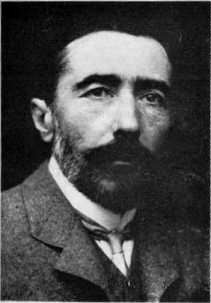
Conrad_1904

(Joseph Conrad, 1904)

Stability. A key word for those that have followed, with bafflement or appalled disbelief, the mad pantomime of British politics over the past few months. In The Inheritors, we find: ‘I became conscious that I wanted to return to England, wanted it very much, wanted to be out of this; to get somewhere where there was stability and things that one could understand.’[2] Cue a pained smile. ‘Permanence? Stability? I can’t believe it’s gone’, a later Ford narrator lamented.[3] Of course, it was—it is—always already gone. . .

In any case, I find it an intriguing and curious business, this revisiting—of a place, a person, a painting, a book, a film, a piece of music—and finding it so changed. It’s commonplace and banal, yet enduringly mysterious and fascinating. There are, to be sure, many thousands of pages of philosophy, psychology, biology, neurology, physics, optics and more, devoted to just this phenomenon. We’re increasingly comfortable with the idea that the observer alters what is observed, that the slightest shift in position or perspective alters the thing seen. Some of us saw the intriguing 1974 Alan Pakula political thriller, The Parallax View, with Warren Beatty and Paula Prentiss, and looked up the meaning of the title. (‘Parallax, you see. Observed from different angles, Gestalts alter.’)[4] Fifty years before that, in 1923, Wallace Stevens published ‘Thirteen Ways of Looking at a Blackbird’.

Parallax_View_movie_poster

II
I was of three minds,
Like a tree
In which there are three blackbirds.

XII
The river is moving.
The blackbird must be flying. [5]

A goodly proportion of those thousands of pages, though, can probably be reduced to just two words of the pre-Socratic philosopher Heraclitus, panta rei, everything flows, flux and change as the essential characteristics of the world.[6] 

T. S. Eliot used two quotations from Heraclitus to preface Four Quartets, the second of them translated as ‘The way up and the way down are one and the same’. Eliot wrote of being ‘much influenced’ by Heraclitus when younger and thought the influence a permanent one. The quotations were, he said, ‘a tribute to my debt to this great philosopher.’[7]

In Little Gidding, the last of the Quartets, Eliot wrote:

We shall not cease from exploration
And the end of all our exploring
Will be to arrive where we started
And know the place for the first time.[8]

See it again but know it for the first time.

Stanley Spencer wrote of his celebrated painting, The Resurrection in Cookham Churchyard: ‘The resurrection is meant to indicate the passing of the state of non-realization of the possibilities of heaven in this life to the sudden awakening to the fact. This is what is inspiring the people as they resurrect, namely the new meaning they find in what they had seen before.’[9]

The Resurrection, Cookham 1924-7 by Sir Stanley Spencer 1891-1959

(Stanley Spencer, The Resurrection in Cookham Churchyard, 1924-1927, © Tate Gallery)

That ‘awakening’ is, again, indissolubly linked to the familiar or, at least, to that which has been seen before. Much of Spencer’s art is ‘religious’ but very idiosyncratically so, ‘visionary’ rather, an art constantly linking back to his feelings about the village of Cookham and its people, his childhood and familial memories and sensations revisited, recaptured and reworked.

Time slips and eddies. We return, retrace, revisit and see again, in thought, in dreams, in conversation. Memories lose their edges, become indistinct, bleed into others. We can’t always predict what has taken root in the mind or the nerves, what doesn’t need to be consciously recovered, what can be held and turned in a glancing light and mysteriously made new.

I could not draw a map of it, this road,
Nor say with certainty how many times
It doubles on itself before it climbs
Clear of the ascent. And yet I know
Each bend and vista and could not mistake
The recognition, the recurrences
As they occur, nor where. So my forgetting
Brings back the track of what was always there
As new as a discovery.[10]


References

[1] Ford Madox Ford, Joseph Conrad: A Personal Remembrance (London: Duckworth, 1924), 133.

[2] Ford Madox Ford and Joseph Conrad, The Inheritors: An Extravagant Story (1901; Liverpool: Liverpool University Press, 1999), 106.

[3] Ford Madox Ford, The Good Soldier: A Tale of Passion (1915; edited by Max Saunders, Oxford: Oxford University Press, 2012), 13.

[4] Hugh Kenner, ‘Joyce on the Continent’, in Mazes (Athens: University of Georgia Press, 1995), 114.

[5] Wallace Stevens, The Collected Poems (New York: Vintage Books, 1982), 92, 94.

[6] ‘All things are a flowing,/ Sage Heracleitus says’, Ezra Pound wrote, adding: ‘But a tawdry cheapness/ Shall outlast our days.’ See Hugh Selwyn Mauberley, in Personae: The Shorter Poems of Ezra Pound, edited by Lea Baechler and A. Walton Litz (New York: New Directions, 1990), 186.

[7] The Poems of T. S. Eliot. Volume I: Collected and Uncollected Poems, edited by Christopher Ricks and Jim McCue (London: Faber & Faber, 2015), 907. John Fowles offers: ‘The road up and the road down are the same road’, in The Aristos (London: Pan Books, 1968), the ‘original impulse’ for the book and ‘many of the ideas’ in it having come from Heraclitus (214).

[8] The Poems of T. S. Eliot. Volume I, 208. Another faint connection for John Fowles readers: this is the first marked passage in the poetry anthology which Nicholas Urfe finds on the beach, in The Magus (London: Pan Books, 1968), 60.

[9] Kenneth Pople, Stanley Spencer: A Biography (London: Harper Collins, 1991), 226, citing the Spencer collection in the Tate Archives, reference TA 733.3.1.

[10] Charles Tomlinson, ‘The Return’, New Collected Poems (Manchester: Carcanet Press, 2009), 413.


Everything as something else

Sea

When I read John Banville’s novel, The Sea, some years ago, one statement stuck in my head, when the narrator observed: ‘Everything now reminds me of something else.’ It stayed with me because this seemed increasingly my own case. If you have an associative memory, in which details tend to cling to others like burrs, as the sheer quantity of matter in that memory becomes unmanageable, it’s increasingly difficult to dredge up a thing cleanly. ‘To see the object as it really is’—a central concern for Matthew Arnold, meaning rather to remove the incrustations of orthodoxy or class habit or cultural assumption: perfection ‘can never be reached without seeing things as they really are; and it is to this, therefore, and to no machinery in the world, that culture sticks fondly.’[1]

How much of a problem is it if something read or heard or, increasingly, seen recalls something else, quotations, images derived from similar-sounding words, parallels and echoes? And, problem or not, is it in any case avoidable—or even desirable that it should be?

‘Now, this power of suggestion is one of the most mysterious properties of words. Everyone who has ever written a sentence must be conscious or half-conscious of it. Words, English words, are full of echoes, of memories, of associations—naturally. They have been out and about, on people’s lips, in their houses, in the streets, in the fields, for so many centuries. And that is one of the chief difficulties in writing them today’. This is Virginia Woolf, who gives the example of ‘incarnadine’, adding: ‘who can use it without remembering also “multitudinous seas”?’[2]

Woolf.2

‘Incarnadine’ isn’t a word I’d use that often anyway, to be honest, but the essential case is made and plenty of other examples confirm it. The word ‘swaddled’, for instance, is now, I think, inextricable from images of the Christ-child, even in the minds of those least-versed in Christian imagery and symbolism. Yet that’s immediately complicated by the example of the word’s use that first springs to mind, T. S. Eliot’s ‘Gerontion’, where, to borrow a phrase, ‘the quotabilities swarm’:[3]

Signs are taken for wonders. ‘We would see a sign!’
The word within a word, unable to speak a word,
Swaddled with darkness. In the juvescence of the year
Came Christ the tiger

Tiger

The poem is two and a half pages long; the commentary, twenty. ‘Swaddled with darkness’? ‘The Book of Job’ (38, 9) via a sermon of Lancelot Andrewes.[4]

But the Banville, yes. At some point, without foreboding or focused intention, but merely happenstance (how often and how genuinely are things ‘merely happenstance’?), I browsed my way back to it and noticed (of course) that what I recalled so vividly was not present at all. He had actually written: ‘…everything for me is something else, it is a thing I notice increasingly.’[5]

And (of course) this, or something like it, had cropped up before; many times, probably, but one occurs to me without searching or straining. Towards the end of To the Lighthouse, James, the Ramsay son to whom the first words of the novel are addressed, recalls what the lighthouse has meant to him in the past and compares it with the reality of the structure very close to him, as the boat journey to the rocks on which it stands is almost ended. And he understands that ‘the Lighthouse’ is neither one thing nor the other, not simply, not always. ‘For nothing was simply one thing.’[6] And in Orlando, a work notable above all, I suppose, for changeability, mutability and instability: ‘Everything, in fact, was something else.’[7]

Something else as well, I want to write. Everything turning out to be something completely different from what we believed it to be is too scary a thought; but multiplicity is fine, better than fine, desirable, no, indispensable.

World is crazier and more of it than we think,
Incorrigibly plural. I peel and portion
A tangerine and spit the pips and feel
The drunkenness of things being various.[8]

We are deluged with information now, much of it crazy, much of it incorrigibly plural—and much of it by routes where nothing is filtered or ordered. The internet is a wonderfully accurate reflection of this: a hundred or a thousand or a hundred thousand links brought up by a typed keyword or phrase. We may recognize a few of the sources and already have them arranged in a loose hierarchy in our minds; but in most cases we can’t tell without clicking on them, assessing, questioning. Many people assume, based on other contexts, that the ‘best’ links are at the top of the page. Alas, it ain’t necessarily so. And the question we ask of them can often not be answered since the lack of the information required to answer it was what prompted the original inquiry. I recall this from the novelist Nicholas Mosley: ‘The experiment is to discover the mechanisms of the brain. But the instruments are constructed by these mechanisms, so the operation is impossible.’[9]

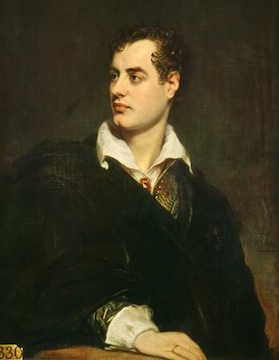
Byron

Information overload. Recreation overload. Writing a letter to Lord Byron (as you do), W. H. Auden remarked:

Indeed our ways to waste time are so many,
Thanks to technology, a list of these
Would make a longer book than Ulysses.[10]

I remind myself that we’ve had eighty years since Auden published his poem to develop ways of wasting our time – and that my favourite edition of Ulysses is 933 pages.

 
References

[1] Culture And Anarchy (1869; edited by J. Dover Wilson, Cambridge: Cambridge University Press, 1969), 35.

[2] Virginia Woolf, ‘Craftsmanship’, in Selected Essays, edited by David Bradshaw (Oxford: Oxford University Press, 2008), 88 (referring to Macbeth, II, ii, 59).

[3] Hugh Kenner on Part II of William Faulkner’s The Sound and the Fury, in A Homemade World: The American Modernist Writers (London: Marion Boyars, 1977), 194.

[4] The Poems of T. S. Eliot. Volume I: Collected and Uncollected Poems, edited by Christopher Ricks and Jim McCue (London: Faber & Faber, 2015), 31, 474.

[5] John Banville, The Sea (London: Picador, 2006), 138.

[6] Virginia Woolf, To the Lighthouse (1927; edited by David Bradshaw, Oxford: Oxford University Press, 2008), 165-166, 152.

[7] Virginia Woolf, Orlando (1928; edited by Rachel Bowlby, Oxford: Oxford University Press, 1992), 138.

[8] Louis MacNeice, ‘Snow’, in Collected Poems, edited by Peter McDonald (London: Faber, 2007), 24.

[9] Nicholas Mosley, Natalie Natalia (Dalkey Archive Press: Victoria, Texas: 2006), 130.

[10] Auden, Letter to Lord Byron, Part II (first published in Letters from Iceland, his 1937 collaboration with Louis MacNeice), in The English Auden: Poems, Essays and Dramatic Writings, 1927-1939, edited by Edward Mendelson (London: Faber, 1977), 177.


Sorrows, joys, magpies

magpies

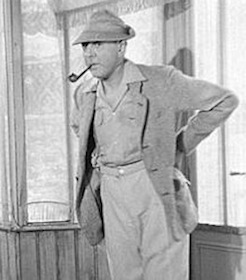
Watching a magpie on the garden fence, trying to identify the memory that its gestures and movements called to mind, I realised that it was Jacques Tati, in Monsieur Hulot’s Holiday. (One of my earliest visits to the cinema: the only time I ever saw my father crying with laughter.) The abrupt uplifting and lowering of the head, the stiff yet rapid leaning forward from the waist, the quick flicks of the head to left and right: mais oui, c’est Monsieur Hulot!

Tati

Their distinctive staccato chatter sounds from the roof, the fence, the tree, the neighbouring chimneys. It’s everywhere in the nearby park, though generally singly. There was a period during which we would see five or six in a group, strutting, leering, looking distinctly thuggish. But lately it’s one at a time. More than a dozen years ago now, my wife was walking to work over the park and had just noted two magpies when she slipped on black ice and fractured her wrist. Since then, we have been wary of rhymes’ prophetic validity. Two may not be lucky but do the loners necessarily signify misfortune?

One for sorrow, two for joy
Three for a girl, four for a boy

That’s the version most people know, at least if of a certain age and able to recall the television programme. What is, presumably, the older rhyme runs:

One’s sorrow, two’s mirth,
Three’s a wedding, four’s a birth[1]

This survives in the version – from a sixteen-year-old Birmingham schoolgirl, recorded by Mark Cocker and Richard Mabey:

One for anger, two for mirth,
Three for a wedding, four for a birth

This version gets ‘saltier’ (their word) as it progresses:

Five for rich, six for poor
Seven for a bitch, eight for a whore[2]

The origin of the name runs back through Shakespeare’s Macbeth (‘maggot-pie’) to ‘Margaret’ or ‘Margot the pye’, from a French equivalent. Iona and Peter Opie have a nice story of the poet laureate, Henry James Pye, appointed in 1790, whose first (very poor) ode was for the king’s birthday, and was guyed by a punster named George Steevens (‘when the PYE was opened’), unimpressed as he was by Pye’s feeble effort. The Opies quote a version of ‘Sing a song of sixpence’, the rhyme published in 1784, which ends with ‘Up came a magpie and bit off her nose.’ The maid still suffers, then, but at the hands – beak, rather – of a different bird.[3]

‘Pie’ is ‘pied’, of course, the black and white plumage, and bishops were sometimes termed ‘magpies’ because of the similarly contrasting colours of their vestments. The magpie’s occurrences in literature include one in Ezra Pound’s ‘Canto 81’:

Pull down thy vanity
Thou art a beaten dog beneath the hail,
A swollen magpie in a fitful sun,
Half black half white
Nor knowst’ou wing from tail[4]

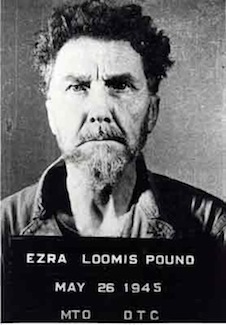
The black and the white together is a handy representation of the opposing strains of interpretation of this passage and the question of just who is being addressed here (‘Pull down thy vanity’): some say it’s Pound himself, others the U.S. Army (Pound’s captors at that time, in the Disciplinary Training Center at Pisa).[5]

Ezra_Pound_1945_May_26_mug_shot

In ‘House and Man’, Edward Thomas recalls a man in his house amidst ‘forest silence and forest murmur’, the only house for miles:

But why I call back house and man again
Is that now on a beech-tree’s tip I see
As then I saw – I at the gate, and he
In the house darkness, – a magpie veering about,
A magpie like a weathercock in doubt.[6]

This is, as you’d expect from Thomas, quite accurate: I’ve watched magpies, precisely, veering about; and ‘a weathercock in doubt’ is wonderfully suggestive.

John Fowles had a bookplate which showed his name surrounded by magpies, a pictorial representation of his habits as both reader and buyer of books. ‘A quite literal pair of magpies breed in my garden every year,’ he closes his essay on the subject. ‘Wicked creatures though they are, I let them be. One must not harm one’s own.’[7]

‘Wicked’? The magpie certainly has a justified reputation for being omnivorous: eggs and nestlings feature among many other food sources. It’s a famously intelligent bird, sociable, mischievous and, I’d venture, with a strong sense of humour. Pretty widespread too: Jonathan Trouern-Trend, who served in Iraq, notes sightings of grebes, egrets, kites, vultures, bustards and avocets galore but, happily, our friend Pica pica is also there: ‘Seen year round at LSAA [LSA – Logistics Support Area is my guess – Anaconda, his home base], seemed more common at higher elevations.’[8]


References

[1] The version quoted by Sylvia Townsend Warner, in a letter to Julius Lipton, 21 October 1935: Letters, edited by William Maxwell (London: Chatto & Windus, 1982), 36-37.

[2] Mark Cocker and Richard Mabey, Birds Britannica (London: Chatto & Windus, 2005), 400.

[3] The Oxford Dictionary of Nursery Rhymes, edited by Iona and Peter Opie, second edition (Oxford: Oxford University Press, 1997), 471, 472.

[4] The Cantos of Ezra Pound, fourth collected edition (London: Faber and Faber, 1987), 521.

[5] So, for instance, Christine Froula—‘self-accusations’—in A Guide to Ezra Pound’s Selected Poems (New York: New Directions, 1983), 236; and A. David Moody—‘humbled’—Ezra Pound: Poet: A Portrait of the Man and His Work: Volume III: The Tragic Years 1939-1972 (Oxford: Oxford University Press, 2015), 159; as against Jerome McGann—‘not himself but the US Army’—in Towards a Literature of Knowledge (Oxford: Clarendon Press, 1989), 114.

[6] Edward Thomas, The Annotated Collected Poems, edited by Edna Longley (Tarset, Northumberland: Bloodaxe Books, 2008), 60.

[7] John Fowles, ‘Of Memoirs and Magpies’, in Wormholes: Essays and Occasional Writings, edited by Jan Relf (London: Jonathan Cape, 1998), 33.

[8] Jonathan Trouern-Trend, Birding Babylon: A Soldier’s Journal from Iraq (San Francisco: Sierra Club Books, 2006), 79.


Gathering Roses

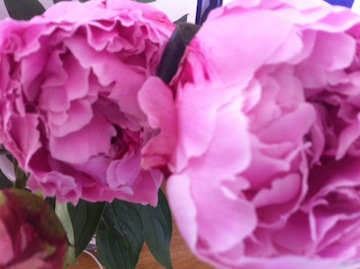
Rose

There are seven, or is it eight, buds on our rosebush now. Like many readers, I can call to mind the first line of Robert Herrick’s ‘Gather ye rosebuds while ye may’ but then I tend to falter. The poem’s usual title, ‘To the Virgins, to make much of time’, points to those preoccupations with sex and death which are so common in the poetry of that period, perfectly reasonably so, given wars, plagues and an average life expectancy of less than forty years (that this was heavily influenced by a very high infant mortality rate can’t have been that much comfort). So the other three lines of Herrick’s first stanza are:

Old Time is still a-flying:
And this same flower that smiles to-day
Tomorrow will be dying.[1]

Be not coy, he advises those maidens, an admonition moved up to headline status in Andrew Marvell’s wonderful To His Coy Mistress. Marvell is also extremely keen to get his lover into bed: of course, he’d like nothing better than to devote tens, hundreds, even thousands of years to praising and adoring her eyes, forehead, breasts and heart. ‘But’, alas, ‘at my back I always hear/ Time’s wingèd chariot hurrying near’. And he points out, quite sensibly, that ‘The grave’s a fine and private place,/ But none, I think, do there embrace.’[2]

So the rose, or rather, the beauty of the rose, is inextricable from the brevity of its flowering. There are, I see now, a staggering number of poems about roses and often, simultaneously, about beauty, sex and death also. They stretch back to the ancient world—Homer, Horace, Sappho—up through Shakespeare and Milton to the modern period of Frost, H. D., Yeats, De la Mare, Randall Jarrell and Charles Tomlinson.

Go, lovely Rose—
Tell her that wastes her time and me,
That now she knows,
When I resemble her to thee,
How sweet and fair she seems to be.[3]

Edmund_Waller_John_Riley

(Edmund Waller, after John Riley)

This is the first stanza of the famous lyric by Edmund Waller (1606-1687), poet and politician; involved in a 1643 plot in the interest of the king, he escaped execution and was banished to France, returning to England in 1652 and becoming an admirer and friend of Oliver Cromwell.

And here’s the first stanza of the ‘Envoi’, carefully dated (1919), to the first part of Ezra Pound’s Hugh Selwyn Mauberley:

Go, dumb-born book,
Tell her that sang me once that song of Lawes:
Hadst thou but song
As thou hast subjects known,
Then were there cause in thee that should condone
Even my faults that heavy upon me lie
And build her glories their longevity.

The speaker then thinks of how the grace and beauty might be made to outlast its moment, its natural lifespan, as roses might be made to do:

Tells her that sheds
Such treasure in the air,
Recking naught else but that her graces give
Life to the moment,
I would bid them live
As roses might, in magic amber laid,
Red overwrought with orange and all made
One substance and one colour
Braving time.[4]

Henry Lawes set Waller’s ‘Goe lovely Rose’ to music; ‘her that sang me once that song of Lawes’ was almost certainly Raymonde Collignon (Madame Gaspard-Michel), who made her professional debut in 1916, was favourably reviewed several times by Pound when he reviewed music for the New Age under the name ‘William Atheling’, and performed in Pound’s opera, The Testament of François Villon.[5]

A quarter of a century later, in the last pages—what I think of as the ‘English’ pages—of Canto LXXX, part of the Pisan sequence, Pound wrote:

Tudor indeed is gone and every rose,
Blood-red, blanch-white that in the sunset glows
Cries: ‘Blood, Blood, Blood!’ against the gothic stone
Of England, as the Howard or Boleyn knows.[6]

Catherine-Howard

(© National Portrait Gallery, London
Unknown woman, formerly known as Catherine Howard
after Hans Holbein the Younger; oil on panel, late 17th century)

The red rose of Lancaster and the white rose of Yorkshire: the thirty-year-long Wars of the Roses and the passing of the Plantagenet dynasty; then the deaths of Katharine Howard and Anne Boleyn on the block; followed by the end of the Tudors with the death of Elizabeth.

But Pound used roses in another context: their delicacy, fragility and vulnerability set against the patterning of energy made visible by, for instance, iron filings acted upon by a magnet.

Hast ‘ou seen the rose in the steel dust
(or swansdown ever?)
so light is the urging, so ordered the dark petals of iron
we who have passed over Lethe.[7]

Pound first mentioned his magnetic ‘rose’ in a 1915 piece on Vorticism, at a time when he was preoccupied with forms of energy. ‘An organisation of forms expresses a confluence of forces [ . . . . ] For example: if you clasp a strong magnet beneath a plateful of iron filings, the energies of the magnet will proceed to organise form. It is only by applying a particular and suitable force that you can bring order and vitality and thence beauty into a plate of iron filings, which are otherwise as “ugly” as anything under heaven. The design in the magnetized iron filings expresses a confluence of energy.’[8]

He returned to the theme—and the image—again in an essay on the medieval Italian poet Guido Cavalcanti,[9] and in 1937, once again found the rose revivified by magnetic energy: ‘The forma, the immortal concetto, the concept, the dynamic form which is like the rose pattern driven into the dead iron-filings by the magnet, not by material contact with the magnet itself, but separate from the magnet. Cut off by the layer of glass, the dust and filings rise and spring into order. Thus the forma, the concept rises from death’.[10]

The idea and the image tend to divert attention from the language used: but the words themselves form highly effective, opposing clusters: ‘dead’ and ‘death’, ‘separate’ and ‘cut off’ set against ‘immortal’, ‘dynamic’, ‘rise’, ‘spring’, ‘rises’.

Ruskin

Eighty years earlier, another writer—another highly contentious figure—began his own rose-centred obsession. John Ruskin, in the preface to his autobiography, Praeterita, referred to ‘passing in total silence things which I have no pleasure in reviewing, and which the reader would find no help in account of.’ Later in the same book, he writes that ‘Some wise, and prettily mannered, people have told me I shouldn’t say anything about Rosie at all. But I am too old now to take advice…’[11]

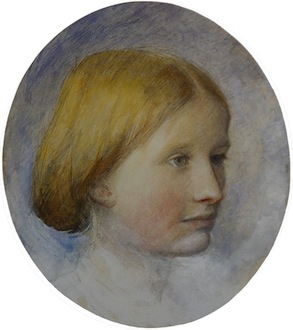
Rosie—Rose La Touche—was ten years old when she first met Ruskin. She died at the age of twenty-seven. He seems to have asked her to marry him around her eighteenth birthday, though he had clearly fallen in love with her some time before that: she asked him to wait for an answer until she was twenty-one. The story of this long, sad affair, complicated by parental concern, religious mania and Ruskin’s well-documented predilection for young girls, has been traced at length by Ruskin’s biographers. Tim Hilton states baldly that Ruskin ‘was a paedophile’,[12] which, certainly in today’s cultural climate, seems to say both too much and too little. As Catherine Robson points out, ‘There is no evidence that Ruskin sexually abused little girls: the exact dynamics of his encounters with real girls—with Rose La Touche, with the pupils at Winnington, with girls in London, France, Italy, Switzerland, the Lake District—remain essentially unknowable.’[13] Given the ‘non-consummation’ of Ruskin’s marriage with Effie Gray, it seems highly likely that Ruskin never had a full sexual relationship at all.

Roses are everywhere in Ruskin’s work, from the title of his botanical book, Proserpina—not only does the title embrace the word ‘rose’ but Ruskin associated Rose La Touche with Proserpina since at least the spring of 1866[14]—to numerous pages in Fors Clavigera, not least thelittle vignette stamp of roses’ on the title page, of which he writes in ‘Letter XXII’: ‘It is copied from the clearest bit of the pattern of the petticoat of Spring, where it is drawn tight over her thigh, in Sandro Botticelli’s picture of her, at Florence.’[15]


 Ruskin-Rosie-1861

(Rose La Touche by John Ruskin, 1861)

And at the last, in ‘Letter XCVI. (Terminal)’ of his great work, Ruskin talks of ‘a place called the Rosy Valley’, which becomes ‘Rosy Vale’, the title of the letter. Rosy Vale, ‘Rosy farewell’. At the head of the letter is a drawing by Kate Greenaway, called, of course, ‘Rosy Vale’. And Fors Clavigera closes with these words: ‘The story of Rosy Vale is not ended;—surely out of its silence the mountains and the hills shall break forth into singing, and round it the desert rejoice, and blossom as the rose.’[16]

How much this painful history contributed to Ruskin’s depression and mental decline is impossible to gauge. Rose had died mad in 1875; from 1889 to his death in 1900, Ruskin produced little and, apparently, spoke little, that span of a dozen years eerily echoed in the life of Friedrich Nietzsche, who suffered a mental collapse in 1889 but lived on until 1900. For the last dozen years of his life, Ezra Pound produced practically nothing and spoke—in public—barely at all.

‘You think I jest, still, do you? Anything but that; only if I took off the Harlequin’s mask for a moment, you would say I was simply mad. Be it so, however, for this time.’[17]

References

[1] The Oxford Book of English Verse, 1250-1918, edited by Sir Arthur Quiller-Couch (Oxford: Clarendon Press, 1966), 274.

[2] Andrew Marvell, ‘To His Coy Mistress’, in The Complete Poems, edited by Elizabeth Story Donno (Harmondsworth: Penguin Books, 1986), 50. Some readers of Ford Madox Ford prick up their ears at this point, remembering General Campion’s quoting (and misquoting) of this poem: No More Parades (1925; edited by Joseph Wiesenfarth, Manchester: Carcanet Press, 2011), 219-220.

[3] The Oxford Book of English Verse, 318.

[4] Ezra Pound: Poems and Translations, edited by Richard Sieburth (New York: Library of America, 2003), 557.

[5] Eva Hesse, ‘Raymonde Collignon, or (Apropos Paideuma, 7-1 & 2, 345-346): The Duck That Got Away’, Paideuma, 10, 3 Winter 1981), 583-584.

[6] The Cantos of Ezra Pound, fourth collected edition (London: Faber and Faber, 1987), 516.

[7] ‘Canto LXXIV’, The Cantos of Ezra Pound, 449. Pound critics point to Ben Jonson’s ‘Her Triumph’ here; and to the form of Edward Fitzgerald’s The Rubáiyát of Omar Khayyám in the case of the previous quotation.

[8] Ezra Pound, ‘Affirmations II. Vorticism’, New Age, XVI, 11 (14 January, 1915), 277. Later in the series, an article on Imagism mentioned ‘energy’ or ‘energies’ twelve times, ‘emotion’ or ‘emotional’ sixteen times.

[9] Literary Essays of Ezra Pound, edited by T. S. Eliot (London: Faber and Faber, 1960), 154.

[10] Pound, Guide to Kulchur (1938; New Directions, 1970), 152,

[11] Ruskin, Praeterita and Dilecta (London: Everyman’s Library, 2005), 9, 471.

[12] Tim Hilton, John Ruskin: The Early Years (New Haven and London: Yale University Press, 1985), 253.

[13] Catherine Robson, Men in Wonderland: The Lost Girlhood of the Victorian Gentleman (Princeton and Oxford: Princeton University Press, 2001), 122.

[14] Tim Hilton, Ruskin: The Later Years (New Haven and London: Yale University Press, 2000), 311.

[15] Ruskin, Fors Clavigera: Letters to the Workmen and Labourers of Great Britain, new edition (Orpington & London: George Allen, 1896), I, 427.

[16] Ruskin, Fors Clavigera, IV, 507.

[17] Ruskin, Fors Clavigera, III, 257,

Waking, Sunday morning

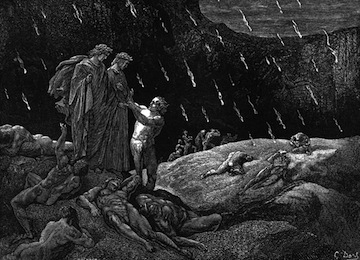
Dante_Inferno_XV

(Gustav Doré, illustration for Dante, Inferno, Canto XV)

Waking on Sunday morning, I listen to the headlines, just to be sure that the 45th President of the United States has not brought about the incineration of a large part of the world because someone called him names in the playground. Then downstairs, to resume my book over coffee, hoping that there’s no significance in the title of the long story I’m finishing: ‘The Nemesis of Fire’.[1]

Sunday seems to preoccupy poets, with its unsettling conjunction of religion and war, of prophecy and delusion.

Complacencies of the peignoir, and late
Coffee and oranges in a sunny chair,
And the green freedom of a cockatoo
Upon a rug mingle to dissipate
The holy hush of ancient sacrifice.

An attractive setting in which to consider questions of religious belief, the possibility of paradise on earth and the acceptance of inevitable endings. There are unsettling moments, to be sure:

Death is the mother of beauty, mystical,
Within whose burning bosom we devise
Our earthly mothers waiting, sleeplessly.[2]

More direct, perhaps, is Robert Lowell in ‘Waking Early Sunday Morning’, the poem which opens Near the Ocean. Politics and religion in the era of the Vietnam War and, of course, the Six-Day War,[3] bled profusely into one another:

O Bible chopped and crucified
in hymns we hear but do not read,
none of the milder subtleties
of grace or art will sweeten these
stiff quatrains shovelled out foursquare—
they sing of peace, and preach despair;
yet they gave darkness some control,
and left a loophole for the soul.

Lowell

(Via The Poetry Foundation: www.poetryfoundation.org/)

The last three stanzas move from an imagined glimpse of the President (Lyndon B. Johnson on his Sunday morning) to end thus:

No weekends for the gods now. Wars
flicker, earth licks its open sores,
fresh breakage, fresh promotions, chance
assassinations, no advance.
only man thinning out his kind
sounds through the Sabbath noon, the blind
swipe of the pruner and his knife
busy about the tree of life . . .

Pity the planet, all joy gone
from this sweet volcanic cone;
peace to our children when they fall
in small war on the heels of small
war—until the end of time
to police the earth, a ghost
orbiting forever lost
in our monotonous sublime.[4]

On a Sunday in September 1819, John Keats wrote ‘To Autumn’. The Odes, of which this is one of the most famous, were written, Robert Gittings notes, ‘in what Keats had now come to regard as a fever, a beating at the bars of life.’ Less than five months later, on the night of Thursday 3 February 1820, came the first showing of arterial blood, followed by a second, massive haemorrhage.[5]

Gittings_Keats

There are less portentous Sundays, some offering simple (or complex) pleasure. ‘This is the day that Robert Burns delighted in,’ the Reverend Francis Kilvert remarked in his diary, ‘the first fine Sunday in May.’[6] Fifty years later, D. H. Lawrence was in receptive mood: ‘This Sunday morning, seeing the frost among the tangled, still savage bushes of Sardinia, my soul thrilled again. This was not all known. This was not all worked out. Life was not only a process of rediscovering backwards. It is that, also: and it is that intensely. Italy has given me back I know not what of myself, but a very, very great deal.’[7]

There was a time, not that long ago, when Sunday in this country was either a huge relief, peaceful and relaxing; or stupendously boring, enough to drive you up the wall, depending on your age, character and predilections. Norman Lewis remembered that ‘England, this April [1946], was an everlasting Sunday morning, lying under a spell of emptiness and silence.’[8]

And in the United States? Charles Reznikoff remembered ‘Sunday Walks in the Suburbs’, hardly an Edenic setting:

On stones mossed with hot dust, no shade but the thin, useless shadows of roadside grasses;
into the wood’s gloom, staring back at the blue flowers on stalks thin as threads.

He details rubbish, rats, scared dogs, old women, old men and remarks that:

This is where I walked night after night;
this is where I walked away many years.[9]

Henry Thoreau, though, sought to reach back to something precisely Edenic, before the religious disagreements that complicated the life of his friend and mentor Ralph Waldo Emerson: ‘It was a quiet Sunday morning, with more of the auroral rosy and white than of the yellow in it, as if it dated from earlier than the fall of man, and still preserved a heathenish integrity’.[10]

SundayBloodySunday

We could certainly do with a large infusion of integrity in public life. But heathenish? No, probably not. Always these complications. Sunday bloody Sunday, as they say. (U2, yes, but John Schlesinger first.)


References

[1] ‘Nemesis of Fire’, in The Tales of Algernon Blackwood (London: Martin Secker, 1938), 440-513. The story is about a ‘fire-elemental’, enraged by the desecration of a tomb and the theft of a ‘scarabaeus’, a gem in the form of the dung-beetle, sacred to the ancient Egyptians.

[2] Wallace Stevens, ‘Sunday Morning’, The Collected Poems (New York: Vintage Books, 1982), 66-67, 69.

[3] See Lowell’s comments on the poem in The Letters of Robert Lowell, edited by Saskia Hamilton (New York: Farrar, Straus and Giroux, 2005), 485-486, 487.

[4] Robert Lowell, Collected Poems, edited by Frank Bidart and David Gewanter (New York: Farrar, Straus and Giroux, 2003), 384, 385-386. See 933-936 for the magazine version of the poem, which included two more stanzas between the last two quoted here.

[5] Robert Gittings, John Keats (Harmondsworth: Penguin Books, 1971), 507, 508.

[6] Kilvert’s Diary, edited by William Plomer, Three volumes (London: Jonathan Cape, 1938, reissued 1969). Volume One (1 January 1870—19 August 1871), 329: entry for Sunday 7 May 1871.

[7] Lawrence, Sea and Sardinia (1921), in D. H. Lawrence and Italy (London: Penguin Books, 1997), 123.

[8] Lewis, The World, the World (London: Jonathan Cape, 1996), 18.

[9] Charles Reznikoff, Poems 1918-1936: Volume I of The Complete Poems of Charles Reznikoff, edited by Seamus Cooney, two volumes (Santa Barbara: Black Sparrow Press, 1978), 41.

[10] A Week on the Concord and Merrimack Rivers, in Henry David Thoreau, A Week on the Concord and Merrimack Rivers; Walden; The Maine Woods; Cape Cod (New York: Library of America, 1985), 36.


‘Remember that I have remembered’

Binyon_via_BBC
(Laurence Binyon via BBC)

A great many people in the English-speaking world, even if unfamiliar with the name of Laurence Binyon, would probably recognise his words. These words anyway:

They shall grow not old, as we that are left grow old:
Age shall not weary them, nor the years condemn.
At the going down of the sun and in the morning
We will remember them.[1]

The fourth stanza of seven, used in all manner of places on Remembrance Day, formerly Armistice Day—of course, many people still call it that, though the date refers to only one armistice: the signatures on a document in a railway carriage in a clearing in the forest of Compiègne on 11 November 1918.

Binyon was born on 10 August 1869 (he died in 1943). For literary historians and, perhaps, some art historians, the authorship of those famous words might easily be forgotten or set aside as a mere detail in Binyon’s story, interesting in its own right but also connecting with a great many other stories.

One example would be the Abstract & Concrete exhibition (February 1936), which was organised by Nicolete Gray. She was a friend of Myfanwy Evans, who edited a periodical called Axis, devoted to abstract art, from 1935 to 1937, and married John Piper in the latter year. Nicolete was an art scholar and calligrapher, later a friend of David Jones, publishing a book about his paintings  – and the youngest of Laurence Binyon’s daughters: she married Basil Gray, Binyon’s assistant at the British Museum.[2]

Gray-Jones

(The jacket illustration is Jones’s 1931 self-portrait entitled Human Being).

Another example would be an encounter in the Vienna – or Wiener – Café:

So it is to Mr Binyon that I owe, initially,
Mr Lewis, Mr P. Wyndham Lewis. His bull-dog, me,
as it were against old Sturge M’s bull-dog, Mr T. Sturge Moore’s
bull-dog[3]

The poet and playwright Thomas Sturge Moore was, in a way, Lewis’s mentor at that stage and, thirty years later, Lewis would write from his self-imposed wartime exile in Toronto: ‘How calm those days were before the epoch of wars and social revolution, when you used to sit on one side of your work-table and I on the other and we would talk’.[4] Thirty years before the Pisan Cantos, Pound wrote in Poetry magazine (June 1915) an appreciation of Sturge Moore in which he referred to the poet as ‘more master of cadence than any of his English contemporaries.’ In the same piece, he wrote a famous line that William Cookson would isolate many years later in his edition of Pound’s Selected Prose: ‘The essential thing in a poet is that he build us his world.’[5] And Pound said that these lines of Sturge Moore’s had stayed with him: ‘Aie, aie, aie!/ Laomedon![6]

At the time of that meeting in the Wiener Café, Binyon was Assistant Keeper at the British Museum. He became, in 1913, Keeper of the new Sub-Department of Oriental Prints and Drawings, with the orientalist Arthur Waley as his assistant. The exhibition Binyon organised of Chinese and Japanese paintings ran throughout 1910-12. His access to, and wide knowledge of, oriental art was hugely influential in the development of modernism. He published over forty books, including more than a dozen volumes of poetry and almost as many on British art and literature, another eight on oriental art, plus plays and biographies.

Binyon_Flight_Dragon

Pound often referred approvingly to Binyon’s 1911 book, The Flight of the Dragon, on Chinese and Japanese art (one factor in preparing Pound to respond as he did to the gift of Ernest Fenollosa’s notebooks from his widow, Mary, which resulted in Cathay); and he remembered too Binyon’s thirty-page poem Penthesilea (1905), about the queen of the Amazons, her involvement in the Trojan War and her eventual death at the hands of Achilles, whose spear penetrates her shield:

in her side it pierced
And bore her down; imperially she fell
Without a cry, sank on lost feet, nor heard
Achilles’ dread voice, ‘Art thou satisfied,
Penthesilea?’ but the heavy shield
Rang on her fallen, the helmet rolled in dust
From her proud head, and the long, loosened hair
Tossed one tress richly over throat and bosom
Shuddering strongly up from where the blood
Welled dark about the spear forced deep within;
And sudden as a torch plunged in a pool
Her face lay dead-pale with the eyes quite closed.[7]

Much later in life, Binyon produced a translation of Dante’s Divine Comedy in terza rima, which was the version used in the Portable Dante, published by Viking and available from Penguin Books for many years. Pound corresponded with him about his ten-year project and involved himself quite actively in it. In 1934, he published a long, complimentary review, in T. S. Eliot’s Criterion, of Binyon’s version of Inferno. In the course of that review, looking back to his pre-war acquaintance with Binyon at the British Museum, he recalled how he ‘perused, it now seems, in retrospect, for days the tales of . . . demme if I remember anything but a word, one name, Penthesilea, and that not from reading it, but from hearing it spoken by a precocious Binyonian offspring.’[8]

Pound wrote several detailed letters while Binyon was working on the Purgatorio and went through the proofs, commenting to his old teacher William Shepard that Binyon ‘sheds more light on Dante than any translation I have ever seen.’[9]

Ezra Pound 1939 by Wyndham Lewis 1882-1957
(Wyndham Lewis, Ezra Pound (1939): Tate Modern
© Wyndham Lewis and the estate of Mrs G A Wyndham Lewis
A major exhibition, Wyndham Lewis: Life, Art, War, is currently at IWM North (until 1 January 2018): The Quays, Trafford Wharf Road, Manchester, M17 1TZ)

His attitude to Binyon was often one of ‘baffled exasperation’, as Donald Davie phrases it in some fascinating pages on the relationship between them. Binyon, Davie says, ‘knew the unformulated rules of the society that he moved in, and played the game consistently as the amateur that that society required him to be. It is true to this day in England that, if one has learning, one must wear it so lightly that it is unnoticeable.’[10] (That was 1976. Forty years later—?)

before the world was given over to wars
Quand vous serez bien vieille
remember that I have remembered[11]

One other thing that Pound remembered was mentioned in a letter of 6 March 1934, when he asked Binyon: ‘I wonder if you are using (in lectures) a statement I remember your making in talk, but not so far as I recall, in print. “Slowness is beauty,” which struck me as very odd in 1908 (when I certainly did not believe it) and has stayed with me ever since’.[12]

It stayed with him for at least another twenty years, until ‘Canto LXXXVII’: ‘BinBin “is beauty”./ “Slowness is beauty.”‘


References

[1] Laurence Binyon, ‘For the Fallen’, first published in The Times, 21 September 1914. See Poetry of the First World War: An Anthology, edited by Tim Kendall (Oxford: Oxford University Press, 2013), 44.

[2] Frances Spalding, John Piper, Myfanwy Piper: Lives in Art (Oxford: Oxford University Press, 2009), 86-89.

[3] Ezra Pound, ‘Canto LXXX’, The Cantos of Ezra Pound, fourth collected edition (London: Faber and Faber, 1987), 507.

[4] Letters of Wyndham Lewis, edited by W. K. Rose (New York: New Directions, 1963), 293.

[5] Pound, ‘Hark to Sturge Moore’, Poetry, VI, 3 (June 1915), 139-145 (141, 140). The line was used as epigraph to ‘Part One’ of Ezra Pound, Selected Prose 1909-1965, edited by William Cookson (London: Faber and Faber, 1973), 19.

[6] Richard Sieburth points out that this is the opening to Sturge Moore’s 1903 work, The Rout of the Amazons: Ezra Pound, The Pisan Cantos, edited by Richard Sieburth (New York: New Directions, 2003), 148, note.

[7] Collected Poems of Laurence Binyon (London: Macmillan, 1931), 215. More Amazons! Why just then? The Suffragette group called The Bodyguard was dubbed ‘The Amazons’ by sections of the press, but this was a few years later.

[8] Pound, ‘Hell’, in Polite Essays (1937; Plainview, New York: Books for Libraries Press, 1966), 28-46 (29). Nicolete was born in 1911; Pound’s memory is probably of 1909 (he met Binyon in February of that year), and thus of one of the twins, Helen or Margaret (born in December 1904). See ‘Canto LXXX’, 506: ‘Mr Binyon’s young prodigies/ pronounced the word: Penthesilea’.

[9] Ezra Pound, Selected Letters, edited by D. D. Paige (New York: New Directions, 1971), 311. These letters to Binyon are concentrated in the period April–May, 1938.

[10] ‘Ezra Among the Edwardians’ (1976), collected in Studies in Ezra Pound: Chronicle and Polemic (Manchester: Carcanet Press, 1991), 227-231.

[11] Pound, ‘Canto LXXX’, The Cantos of Ezra Pound, 506.

[12] Pound, Selected Letters, 255.

[13] Pound, ‘Canto LXXXVII’, The Cantos of Ezra Pound, 572.

Weather or not

Window

Rain is skittering on the windows above my head. Rain again, the reign of rain. Tip tap. Or is it dot dash? Is it, perhaps, messaging? There’s a solid twenty-first-century word. Are you messaging, rain?

It might say: I can keep this up all day. Or even: I can keep this up forever, even after your stupid, aggressive, greedy, self-destructive species has wiped itself off the face of the earth. To which I reply: Too harsh by far. Lots of us are not like that at all. To which the rain says: So how did all you intelligent, peaceful, progressive, constructive people let this happen? To which I reply: I must go shopping now. . .

Yes, August! High summer, as comedians say. Colossal price hikes from us, as travel companies say, if quietly. In continental Europe, the weather is easing for some, though Italy and parts of the Balkans are still in the grip of a heat wave and parts of Greece too would still be uncomfortable for me. My younger daughter writes from Barcelona that it’s been twenty minutes since she had something to drink: she must go in search of fluids. Some British holidaymakers, warned away from swimming pools and beaches in Italy or Southern Spain must be a little confused to find themselves casting longing glances in the direction of home, where our weather forecasters try to vary the menu a little but with limited options. Sunshine and showers. Maybe sunshine between the showers. Showers this morning will give way to heavy rain in places. Rain, rain, rain.

William-Cobbett

August. William Cobbett, travelling early in that month in 1823, through southern English counties, rode into bad weather:

‘But, alas! Saint Swithin had begun his works for the day before I got on top of the hill. Soon after the two turnip-hoers had assured me that there would be no rain, I saw, beginning to poke up over the South Downs (then right before me) several parcels of those white, curled clouds that we call Judges’ Wigs. And they are just like Judges’ wigs. Not the parson-like things which the Judges wear when they have to listen to the dull wrangling and duller jests of the lawyers; but those big wigs which hang down about their shoulders, when they are about to tell you a little of their intentions, and when their very looks say, “Stand clear!” These clouds (if rising from the South West) hold precisely the same language to the great-coatless traveller. Rain is sure to follow them.’[1]

St Swithin’s day, if thou dost rain,
For forty days it will remain;
St Swithin’s day, if thou be fair,
For forty days ‘twill rain nae mair.

An idea already current in the fourteenth century, apparently.[2] In a wholly or largely agricultural economy, weather is a crucial matter. We had an industrial revolution; agriculture’s proportionate contribution to the national economy has diminished hugely; but we are still, famously, preoccupied with our weather.

There have been periods in our history when other topics fought for—and, briefly, achieved—ascendancy. But those periods have usually coincided with wars. Mollie Panter-Downs, writing in August 1941, remarked on the weather being ousted as the primary subject of conversation. ‘Everyone talks about food.’[3]

Chateauwood

(Soldiers of an Australian 4th Division field artillery brigade, near Hooge in the Ypres salient, 29 October 1917: photograph by Frank Hurley, who famously accompanied Mawson and Shackleton on expeditions to the Antarctic but was also official photographer with Australian forces in both World Wars. Australian War Memorial,  collection number E01220.)

War and weather, particularly extreme weather, have been frequently discussed just lately because of the centenary of the Third Battle of Ypres, better known as Passchendaele (July–November 1917), when relentless and prodigious rainfall, the heaviest for thirty years, turned the battlefield into a lethal quagmire, where men and horses drowned in great pools of foul water.

‘“That agony returns,”’ Edmund Blunden wrote. ‘On July 31 the worst and most hated of the British offensives was begun, against all reason, all around or nearly all around Ypres. Reason had had no luck for weeks before’.[4]

CO_002252.IWM

(Canadian Stretcher Bearers carry wounded through the mud: Imperial War Museum)

There were moments of individual, rainy luck—rain or, rather, its cessation. Ernst Jünger wrote of a shell hitting the collapsing farmhouse which he’d sheltered in earlier that day because it was raining; now, without rain, he has stayed outside: ‘That’s the role of chance in war. More than elsewhere, small causes can have a vast effect.’[5]

Not long after that war, in fact, we find weather, specifically the implausible dream of prolonged, fine English weather advanced as characteristic of utopian politics, when the Dowager Duchess of Denver (not that Denver), mother of Dorothy Sayers’ detective Lord Peter Wimsey, in conversation with Inspector Parker, is admiring the handsomeness of Sir Julian Freke: ‘just exactly like William Morris, with that bush of hair and beard and those exciting eyes looking out of it—so splendid, these dear men always devoted to something or other—not but what I think socialism is a mistake—of course it works with all those nice people, too good and happy in art linen and the weather always perfect—Morris, I mean, you know—but so difficult in real life.’[6]

One of my teachers, a Buddhist, used to assure me that there was no such thing as ‘bad weather’—there was only weather. Yes, we need to be—one can’t, in all conscience, use the word ‘robust’ since it has been so misused and degraded by politicians recently—stalwart, doughty, if not weatherproof. As Doctor Johnson said to Doctor Brocklesby: ‘The weather indeed is not benign; but how low is he sunk whose strength depends upon the weather!’[7]


References

[1] William Cobbett, Rural Rides, ed. George Woodcock (1830 edition; Harmondsworth: Penguin Books, 1983), 123.

[2] Steve Roud, The English Year: A Month-by-Month Guide to the Nation’s Customs and Festivals, from May Day to Mischief Night (London: Penguin Books, 2006), 244.

[3] Mollie Panter-Downes, London War Notes, edited by William Shawn; new preface by David Kynaston (London: Persephone Books, 2014), 194.

[4] Edmund Blunden, Fall In, Ghosts: Selected War Prose, edited with an introduction by Robyn Marsack (Manchester: Carcanet Press, 2014), 129.

[5] Ernst Jünger, Storm of Steel, translated by Michael Hofmann (Harmondsworth: Penguin, 2004), 196.

[6] Dorothy L. Sayers, Whose Body? (1923; London: New English Library, 1968), 93.

[7] James Boswell, Life of Johnson, edited by R. W. Chapman, revised by J. D. Fleeman, introduction by Pat Rogers (Oxford: Oxford University Press, 1980), 1338.


Ford Madox Ford’s Fourth of August

Ford Madox Ford, 1915

The Good Soldier: Ford in 1915 by E. O. Hoppé: National Portrait Gallery via New York Review of Books

4 August commemorates not only a flurry of artistic birthdays—Shelley, Pater, W. H. Hudson, Knut Hamsun, Louis Armstrong—and a clutch of significant dates for relatives of artists—the wedding of D. H. Lawrence’s sister Ada, the birthday of Stanley Spencer’s sister Florence, the birthday of Violet Hunt’s sister Venice, named after The Stones of Venice by John Ruskin, her godfather—but, probably above all else, Britain’s 1914 declaration of war, Sir Edward Grey’s ultimatum to Germany having expired.

‘All that was left was to wait for midnight (eleven o’clock, British time). At nine o’clock the government learned, through an intercepted but uncoded telegram sent out from Berlin, that Germany had considered itself at war with Britain from the moment when the British ambassador had asked for his passports.’[1]

On the day that war was declared, the Bradford Daily Argus ‘suggested that “it will be in the kitchens that the pinch will be chiefly felt but that difficulty may be overcome by deleting the more dainty dishes”.’[2] An admirable prediction but, as things turned out, a little wide of the mark.

For readers of Ford Madox Ford, there are supplementary significances. In The Good Soldier alone, he mentions 4th August sixteen times; in other writings he refers to it more than a dozen times, frequently in conjunction with the name of the village of Gemmenich, the point at which German troops crossed the Belgian border that morning

blast1

The recurrence of the date in The Good Soldier is a well-established mystery. The novel was published in London and New York by John Lane, in March 1915. The first section of the novel, then still entitled ‘The Saddest Story’, had appeared in the June 1914 issue of Blast: Review of the Great English Vortex. Tantalisingly, although the published section includes one mention of ‘August’, the excerpt ends a chapter and a half before the novel’s first specific reference to 4th August, which comes at the very beginning of Part II of the published text.

We can’t be sure, and are unlikely to become so, exactly when the novel was finished. It seems likely that a coincidental mention of 4th August was, in the course of revision, and after the war had started, made central to the novel, as noted by two of The Good Soldier’s most recent editors.[3] As Martin Stannard remarks elsewhere, ‘Trying to reconstruct the textual history of a Ford novel is like trying to establish the details of a dream.’[4]

There are dreams enough in The Good Soldier. Early on in the novel, the narrator, in a wonderful passage, proposes to ‘imagine myself for a fortnight or so at one side of the fireplace of a country cottage, with a sympathetic soul opposite me. And I shall go on talking, in a low voice while the sea sounds in the distance and overhead the great black flood of wind polishes the bright stars.’[5] (As usual, I’m tempted to analyse and comment upon almost every word here with the possible exceptions of ‘at’ and ‘a’, though I’m not sure that even those can safely be left unexamined.) Spoken rather than written, an illusion maintained until very near the end (‘I am writing this, now, I should say, a full eighteen months after the words that end my last chapter’).[6] Intriguing, then, to find this:

‘But the fellow talked like a cheap novelist.—Or like a very good novelist for the matter of that, if it’s the business of a novelist to make you see things clearly. And I tell you I see that thing as clearly as if it were a dream that never left me.’[7]

Carcassonne

Carcassonne, late 19th century: Fonds Eugène Trutat, via Wikipedia

And this, the wonderful conjunction of the specific (‘Carcassonne’) and the indefinite (‘some people’):

‘I don’t mean to say that I sighed about her or groaned; I just wanted to marry her as some people want to go to Carcassonne.

Do you understand the feeling—the sort of feeling that you must get certain matters out of the way, smooth out certain fairly negligible complications before you can go to a place that has, during all your life, been a sort of dream city?’[8]

Yes, suffice to say that there are plenty of mysteries and diversions in this short novel other than the date of its completion or its repeated reference to 4th August.


References

[1] Barbara Tuchman, The Guns of August and The Proud Tower, edited by Margaret MacMillan (New York: Library of America, 2012), 155.

[2] Denis Winter, Death’s Men: Soldiers of the Great War (London: Penguin Books, 1979), 23.

[3] Ford, The Good Soldier, edited by Max Saunders (Oxford: Oxford University Press, 2012), xxxviii-xl; edited by Martin Stannard, second edition (New York and London: W. W. Norton, 2012), 192-193 and ‘Textual Appendices’, 216, 220.

[4] Stannard, ‘The Good Soldier: Editorial Problems’, in Robert Hampson and Max Saunders (eds), Ford Madox Ford’s Modernity, International Ford Madox Ford Studies 2 (Amsterdam: Rodopi, 2003), 147.

[5] The Good Soldier, edited by Max Saunders, 18.

[6] The Good Soldier, 178.

[7] The Good Soldier, 89. The phrase ‘to make you see things clearly’ is a reference to Joseph Conrad’s ‘Preface’ to The Nigger of the “Narcissus”’, in Typhoon and Other Tales (New York: Signet Classics, 1962), 21.

[8] The Good Soldier, 97. See my ‘“Speak Up, Fordie!”: How Some People Want to Go to Carcassonne’, in Sara Haslam, editor, Ford Madox Ford and the City, International Ford Madox Ford Studies 4 (Amsterdam: Rodopi, 2005), 197-210.


August and blackberrying

Orpen, William, 1878-1931; Harvest

William Orpen, Harvest (1918), © Imperial War Museum.
The ambiguities of autumn enlarged: war and peace, life and death.

August. High summer, though you’d hardly know it as the rainclouds roll over the house and the showers come and go. The first day of August, in fact. Lammas, hlafmaesse, ‘loaf-mass’. First fruits, harvest. Hurry into your local church with the bread and the wheat.[1] ‘After Lammas corn ripens as much by night as by day.’[2]

The harvest (a word related in origin to ‘autumn’) has been, is still, quite literally a matter of life and death for a great many people. It’s been a rich source for the horror genre too, both on the screen and on the page (Stephen King, Thomas Tryon, The Harvest, Dark Harvest, Blood Harvest, and more, no doubt). And it has its visionary or mystical moments. Poet and playwright Ronald Duncan, a pacifist, ran a co-operative farm in Devon during the Second World War. He recalled of an August day in 1940 that, ‘Binding up these sheaves of oats, I am certain I believe in oats. The stalks falling behind the cutter which we draw behind an old car, the monk binding methodically, the new members binding enthusiastically, women with coloured scarves round their heads are gleaning and one cannot glean ungracefully. If one cannot see God in an oatfield one will never see. For, here is the whole of it.’[3]

West-Mill-Welcombe-Devon

West Mill, Welcombe, Devon: http://www.literaryplaces.co.uk/?p=147

‘Standing there in the morning happiness,’ T. H. White recalled, ‘with a saffron sky in the east and the moon in the south-west still lemon yellow, beside a field where the harvest had already begun, one saw in the mind’s eye the imaginary lines all over England: the roads coming up macadamized to the invisible threads, and going on as stone, the ditches suddenly changing from cut to uncut, the parishes and territories and neighbours’ landmarks: all slept at peace now, all this beautiful achievement of cooperation and forethought among our fathers who were at peace also, in dust.’[4]

Light-in-August-US-1932

Over the years, William Faulkner’s 1932 novel, Light in August provoked a good deal of discussion over the meaning of its title. Lena Grove is heavily pregnant at the novel’s opening and Faulkner was once asked at the University of Virginia whether his title did indeed refer to a ‘colloquialism for the completion of a pregnancy’. He said no, it was to do with the peculiar quality of light in that month.[5] In his biography of Faulkner, Joseph Blotner tells of the novelist sitting with his wife Estelle in the late afternoon. ‘“Bill,” she said, “does it ever seem to you that the light in August is different from any other time of the year?”’ In this account, Faulkner goes directly to his worktable, crosses out his working title for the novel, ‘Dark House’ and replaces it with ‘Light in August’. It has to be said, though, that Faulkner was largely responsible for the later uncertainty over the ‘meaning’ of his title.[6]

This morning, I noticed a tiny stain on the shoulder of the shirt I wore yesterday: blackberry juice. We’d been wading in among the brambles and nettles for the second time in a few days. Blackberrying is ‘the one almost universal act of foraging to survive in our industrialised island’, Richard Mabey writes.[7] The country in the city, so to speak. We pick them on a path which certainly isn’t hidden. There’s a fair amount of traffic but only by foot and bicycle—there’s no motor traffic nearby which is the main consideration, since we object to being poisoned. Still, it’s odd that quite a few passers-by seem baffled by what we’re doing and hurry their children past. (‘What are they doing, mummy?’ ‘Picking delicious free food, dear, I’ve no idea why.’) Blackberry and apple crumble: even the words taste good.

Gash, Walter Bonner, 1869-1928; Two Girls Picking Blackberries*

Walter Bonner Gash, Two Girls Picking Blackberries
© Alfred East Art Gallery Permanent Collection

Late August, given heavy rain and sun
For a full week, the blackberries would ripen.
At first, just one, a glossy purple clot
Among others, red, green, hard as a knot.
You ate that first one and its flesh was sweet
Like thickened wine: summer’s blood was in it
Leaving stains upon the tongue and lust for
Picking.

The speaker in Heaney’s poem recalls how quickly the blackberries would rot. ‘Each year I hoped they’d keep, knew they would not.’[8]

Blackberries

And we have thorn pricks, nettle stings, stained hands. Still—two and a half kilos of blackberries in the freezer. Kilos! What am I saying? That may be a little too foreign for these troubled time. Say five and a half pounds, avoirdupois—but there I go again. . .

I have, though, called to mind a story that Ford Madox Ford told, which seems to me to hint at why some people chose the option that they did in last year’s referendum (and perhaps in more than one election since). Ford was, for a brief time, working on a small farm on the outskirts of Philadelphia. His employer eventually hired another worker, which released Ford from his labours. He was stopping up a wasp’s nest one day, while the hired man was on the roof, fixing the shingles.

I heard him call:
“I’m coming down now.”
I said: “Wait while I fetch a ladder.” When I came back he was lying on the ground.
He said: “I’ve bruck me leg.”
I said: “What did you jump for?”
He answered: “Wal, I thought I’d see.”[9]


References

[1] Steve Roud, The English Year: A Month-by-Month Guide to the Nation’s Customs and Festivals, from May Day to Mischief Night (London: Penguin Books, 2006), 260-261.

[2] Bonnie Blackburn and Leofranc Holford-Strevens, The Oxford Companion to the Year (Oxford: Oxford University Press, 1999), 315.

[3] Ronald Duncan, Journal of a Husbandman (London: Faber and Faber, 1944), 52-53.

[4] T. H. White, The Goshawk (1951; Harmondsworth: Penguin Books, 1975), 39.

[5] Cleanth Brooks, William Faulkner: The Yoknapatawpha Country (New Haven: Yale University Press, 1966), 375.

[6] Joseph Blotner, William Faulkner : A Biography, two volumes (London: Chatto & Windus, 1974), I, 702 and ‘Notes’, 102.

[7] Richard Mabey, Flora Britannica (London: Sinclair-Stevenson, 1996), 183.

[8] Seamus Heaney, ‘Blackberry-Picking’, Death of a Naturalist (1966; London: Faber and Faber, 2006), 8.

[9] Ford, Return to Yesterday: Reminiscences 1894-1914 (London: Victor Gollancz, 1931), 166-167.