Oxford Days (a few)


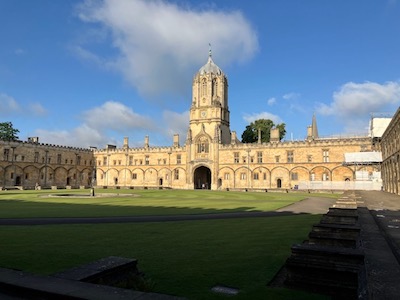
(Tom Quad, Christ Church College)

‘Even when we protested the invasion of Iraq’, I said to the Librarian, recalling that day some twenty years earlier when we shuffled along London streets in company with over a million others, ‘I think we moved more quickly than this.’

‘This’ was our glacial progress up St Aldates in Oxford on a sunny afternoon, together with residents, tourists, American and other participants in the Oxford Experience, or those embarked upon the countless other summer courses and programmes, and many hundreds of—mainly Japanese—children dressed in the Gryffindor house colours of scarlet and gold, concerned to take in the Harry Potter vibrations from New College, the Bodleian Library and Christ Church College. Tour guides in their dozens hoisted small flags or halted in gateways with uplifted arms. Lanyards in their hundreds bobbed or swung. Some individuals, either on home turf or away, looked vague, a little stunned, reminding me of the passage in Rory Stewart’s memoir, where he described Steve Hilton, David Cameron’s director of strategy, moving into the corridor and another room. ‘He seemed to be searching for something – although I couldn’t tell whether it was a cat, an idea, or his shoes.’[1]

On High Street or Broad Street, Broad Walk, Christ Church Meadow, by rivers and canals, on bridges and benches, crowds ebbed and flowed – but mainly flowed. We are soon to be visible in a thousand physical or virtual photograph albums. I said, at one point, ‘Okay, if it’s a child of ten or younger having a photograph taken, we’ll pause. Otherwise, we plough straight on.’ The Librarian agreed but soon lowered the qualifying age to eight, then six. Minutes later, it was down to zero. Thereafter, we ploughed straight on.
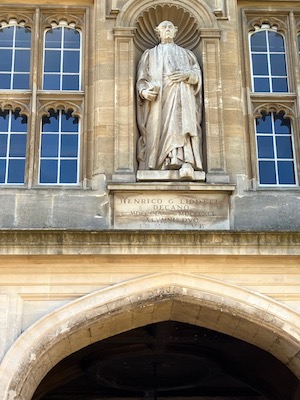

(Alice Liddell’s dad, Henry George Liddell, dean of Christ Church from 1855)

Oxford! The literary references the word throws up are astonishing, even excluding the people that only studied there. Lewis Carroll, or rather, Charles Dodgson, haunts the place, but other names rampage through a distracted memory: Philip Pullman, Dorothy Sayers’ Gaudy Night, John Wain, P. D. James, Iris Murdoch, Hardy’s Jude and Colin Dexter’s Morse, C. S. Lewis and J. R. R. Tolkien. A random footnote fact I gathered since that visit was that Edward De Vere, seventeenth Earl of Oxford, was educated not at Oxford, as one might reasonably expect, but at Queen’s College, Cambridge. Attempts were later made to claim him as the ‘real’ author of Shakespeare’s plays, an idea launched by the splendidly named John Thomas Looney. De Vere was the nephew of Arthur Golding, translator of Ovid, his Metamorphoses ‘the most beautiful book in the language’, in Ezra Pound’s words.[2] A man skilled in ‘fourteeners’ (that many syllables in a line):

Then sprang up first the golden age, which of it selfe maintainde,
The truth and right of every thing unforst and unconstrainde.
There was no feare of punishment, there was no threatning lawe
In brazen tables nayled up, to keep the folke in awe.
There was no man would crouch or creepe to Judge with cap in hand,
They lived safe without a Judge, in everie Realme and lande.

Here Daphne flees from Apollo:

And as shee ran the meeting windes hir garments backewarde blue,
So that hir naked skinne apearde behinde hir as she flue,
Hir goodly yellowe golden haire that hanged loose and slacke,
With every puffe of ayre did wave and tosse behind hir backe.[3]

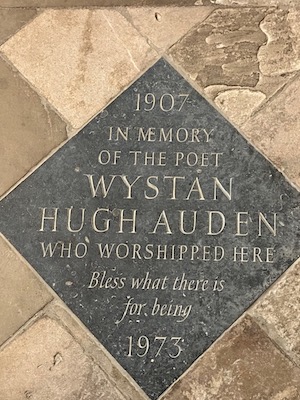
One name occurs on the ground as well as in the mind, the memorial plaque in Christ Church Cathedral (astonishing vaulted ceiling, stained glass by Burne-Jones and others, the St Frideswide Shrine). W. H. Auden came to the College to study biology, switched to English Literature in his second year and graduated (with a third class degree) in 1928. Nearly 30 years later, he became Oxford Professor of Poetry, and returned to Christ Church to live (part of the time) in 1972, the year before his death.

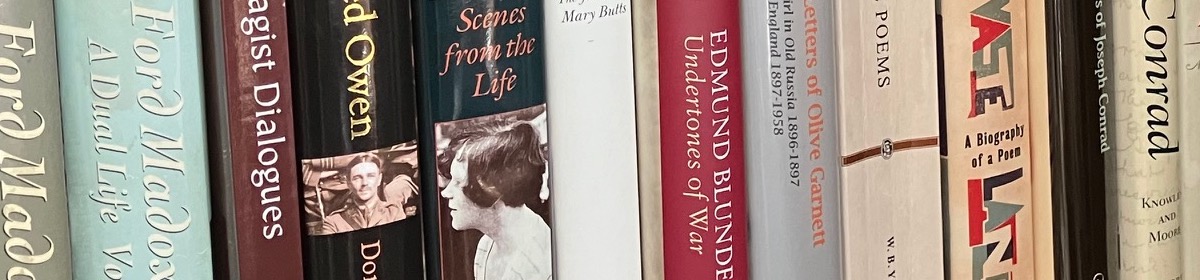
Wot, no Ford Madox Ford notes? Perhaps a sly one. In Some Do Not. . ., Christopher Tietjens, in a mood verging on ‘high good humour’, walks through a Kentish field with Valentine Wannop, a scene, a day, a walk which will recur in both their memories. Among those things that the best people must know are the local names (and the stories behind them) of the plants and flowers they pass. Tietjens—younger son, mathematician, member of the English public official class, who will also, in time, be lover, soldier and antique dealer—tells over to himself the words, the names, the language:

In the hedge: Our lady’s bedstraw: dead-nettle: bachelor’s button (but in Sussex they call it ragged robin, my dear: So interesting!) cowslip (paigle, you know, from the old French pasque, meaning Easter): burr, burdock (farmer that thy wife may thrive, let not burr and burdock wive!); violet leaves, the flowers of course over; black briony; wild clematis: later it’s old man’s beard; purple loose-strife. (That our young maids long purples call and liberal shepherds give a grosser name. So racy of the soil!) …[4]

In the wonderful Botanic Garden, the country’s oldest, one section is the Literary Garden, featuring plants that occur in literature, Alice in Wonderland, Agatha Christie (a great user of poisons) and others, including William Shakespeare:
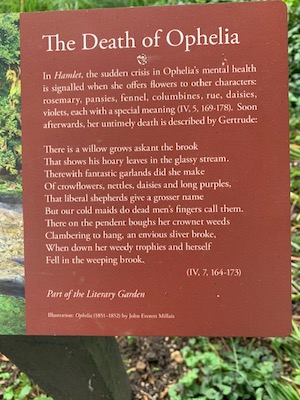
Yes, those liberal shepherds grossly naming again. Modernists though Joyce, Eliot, Woolf, Wyndham Lewis and Ford were, they were not Futurists rejecting the past—a little more selective than that: ‘BLAST years 1837 to 1900’ and, indeed, ‘BLESS SHAKESPEARE for his bitter Northern Rhetoric of humour’—and they all had frequent recourse to that Elizabethan. . .


Notes

[1] Rory Stewart, Politics on the Edge: A Memoir from Within (London: Jonathan Cape, 2023), 100.

[2] Ezra Pound, The ABC of Reading (London: Faber and Faber, 1961), 127

[3] Extracts in The Oxford Book of Classical Verse, edited by Adrian Poole and Jeremy Maule (Oxford: Oxford University Press, 2000), 394; The Oxford Book of Verse in English Translation, Chosen and Edited by Charles Tomlinson (Oxford: Oxford University Press, 1980), 38.

[4] Ford Madox Ford, Some Do Not. . . (1924; edited by Max Saunders, Manchester: Carcanet Press, 2010), 132.
Rosemary and rue


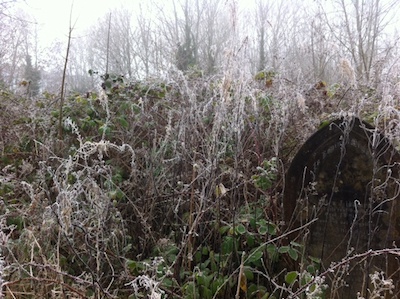
We walk back from the frosty cemetery, my jacket pocket stuffed with sprigs of rosemary, courtesy of the bush—one of two—in the park we cut through on the way. The original Latin phrase (ros marinus) translates as ‘sea dew’. Put soon into a jar of water, it lasts surprisingly well.

‘There’s rosemary, that’s for remembrance—pray you, love, remember’, poor Ophelia says to Laertes (Hamlet, IV, v). ‘And there is pansies, that’s for thoughts.’

There is, I suspect, little danger of our failing to remember the events of the past week. In our country, record numbers of Covid-19 cases seemingly every day, and the hospitals, especially in London, in crisis. In the United States, a record number of daily deaths from the same cause – and, ah, what seems rather like an attempted coup. Astonishing scenes from the Capitol, which apparently surprised even some of those who knew something very like it was on the cards – let alone the ones who pretended that it hadn’t been coming down the track for the past four years. Clearly, I don’t know enough about American politics to understand why the man who incited all this—and incited or effectively authorised so much more—isn’t already behind bars, along with a good many other members of his entourage, past and present. ‘The cradle of democracy’, I’ve seen the United States referred to as several times recently (not always ironically). If that’s so, the child has been sickening for some time now and, for all the hopeful signs, the prognosis must be in doubt.

Here, luckily, no Conservative politician is acquainted with Donald Trump; nor do they even recognise the name. The thumbs-up, the golden elevator, the smarming and sucking up and toadying – never happened. Reality can be so misleading.

In Shakespeare’s The Winter’s Tale (IV, iv), Perdita (which means lost, suitably enough, though she is found again) offers ‘flowers’ to the disguised Polixenes and Camillo: ‘Reverend sirs,/ For you there’s rosemary and rue. These keep/ Seeming and savour all the winter long.’ ‘Rue’, of course, offers puns a-plenty but its Old High German root, I see, meant ‘mourning’.

Let’s hope for sufficient doses—and effective distribution—of rosemary and rue.

Golden lads and girls

Bishop

On Wednesday afternoon, 5 September 1929, the eighteen-year-old Elizabeth Bishop was writing to Frani Blough, whom she’d met at the Walnut Hill boarding school in Massachusetts: they became lifelong friends. Bishop was, she said, halfway through Cymbeline: ‘I had no idea it was so good—I never thought of Shakespeare except in terms of Macbeth and Hamlet, but don’t you like this?’ And she quoted:

Fear no more the heat o’ the sun,
Nor the furious winter’s rages;
Thou thy worldly task hast done,
Home art gone, and ta’en thy wages:
Golden lads and girls all must,
As chimney-sweepers, come to dust.[1]

Don’t you like this? Yes, we do. We also like the passage in Hugh Kenner’s The Pound Era, discussing those lines. ‘“Golden,” magical word, irradiates the stanza so that we barely think to ask how Shakespeare may have found it.’ Kenner thinks to ask – or rather, puts to good use what a friend has passed on to him: ‘Yet a good guess at how he found it is feasible, for in the mid-20th century a visitor to Shakespeare’s Warwickshire met a countryman blowing the grey head off a dandelion: “We call these golden boys chimney-sweepers when they go to seed.”’[2]

But yes, ‘golden’, certainly a word magical enough to fascinate and gravitate to many title pages. Before Penelope Fitzgerald’s The Golden Child, David Garnett’s The Golden Echo or Carson McCullers’ Reflections in a Golden Eye, Kenneth Grahame wrote The Golden Age, a phrase that would later resound in Raymond Williams’ The Country and the City as he explored the ‘myth’ of the golden age, pointing out that, as early as Hesiod, ‘at the beginning of country literature, it is already far in the past.’ He sees the ‘escalator of golden ages’ always moving backwards in time, always receding.[3] Every generation, in fact, or a proportion of it, looks back to that supposed idyllic period.

Frida_Uhl

(Frida Strindberg, née Uhl)
https://commons.wikimedia.org/w/index.php?curid=17944741

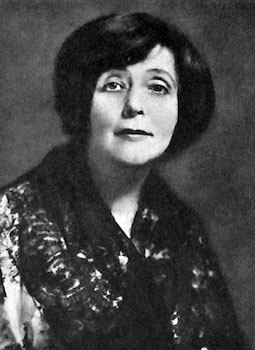
Then, as Ronald Blythe recalls, ‘One of the first night-clubs was opened in 1913 by Strindberg’s second wife, a beautiful ex-actress with a Viennese reputation. It was called the Cave of the Golden Calf and Epstein and Wyndham Lewis decorated its walls and columns. It was haunted by artists, the demi-monde, and guardsmen who went there, so they said, to listen to the accordions of Galician gypsies and hear Lilian Shelly singing “Popsie-wopsie”.’[4]

‘Popsie-wopsie’? It seems so, though I’ve seen it mentioned as ‘My Little Popsy-Wopsy’. She was born in Bristol and apparently posed for both Jacob Epstein and Augustus John.

Eric Gill carved a bas-relief of the golden calf – obviously the central motif – which was hung up beside the entrance (and reproduced on membership cards) ‘and finally carved in three dimensions in Hoptonwood stone and erected on a pedestal’. Madame Strindberg being unable to pay for it, Gill then lent it to Roger Fry for the second Post-Impressionist show at the Grafton Gallery.[5]

And then: The Golden Bowl by Mr Henry James. Writing to his aunt Laura from Alexandria in 1916, E. M. Forster wrote: ‘Work here is quieter again, which leaves me time for reading, and while you were at H. J.’s Portrait of a Lady I was tackling his latter and tougher end in the person of What Maisie Knew. I haven’t quite got through her yet, but I think I shall: she is my very limit—beyond her lies The Golden Bowl, The Ambassadors and similar impossibles. I don’t think James could have helped his later manner—is a natural development, not a pose. All that one can understand of him seems so genuine, that what one can’t understand is likely to be genuine also.’[6] A careful cloud of unknowing.

Warlight

Three years later, in John Buchan’s Mr Standfast, the chapter entitled ‘‘I take the Wings of a Dove’ includes the phrase ‘golden bowl’.[7] But my favourite recent reference is in Michael Ondaatje’s fine novel Warlight (‘The Moth’ is a name conferred by the narrator and his sister): ‘One night when Rachel had been unable to sleep, he pulled a book called The Golden Bowl from my mother’s shelf and began reading to us. The manner of the paragraphs, as the sentences strolled a maze-like path towards evaporation was, to the two of us, similar to The Moth’s when he was being drunkenly magisterial. It was as if language had been separated from his body in a courteous way.’[8]


References

[1] Elizabeth Bishop, One Art: The Selected Letters, edited by Robert Giroux (London: Pimlico, 1996), 5. Cymbeline, IV, ii, 258-263.

[2] Hugh Kenner, The Pound Era (London: Faber and Faber, 1972), 122. His endnote (570) reads: ‘A visitor to Warwickshire: W. Arrowsmith, reported by Guy Davenport.’ Further elucidated in Questioning Minds: The Letters of Guy Davenport and Hugh Kenner, edited by Edward Burns, two volumes (Berkeley: Counterpoint Press, 2018), I, 639, 641, 643.

[3] Raymond Williams, The Country and the City (New York: Oxford University Press, 1973), 14, 10.

[4] Ronald Blythe, The Age of Illusion: England in the Twenties and Thirties 1919-40 (Harmondsworth: Penguin Books, 1964), 28.

[5] Fiona MacCarthy, Eric Gill (London: Faber and Faber, 1990), 108-109.

[6] Selected Letters of E. M. Forster, Volume One: 1879-1920, edited by Mary Lago and P. N. Furbank (London: Collins, 1983), 240.

[7] John Buchan, Mr Standfast (1919; edited by William Buchan, Oxford: Oxford University Press, 1993), 133.

[8] Michael Ondaatje, Warlight (London: Jonathan Cape, 2018), 61.


Cats, monkeys, parrots and a pelican

Shylock-Tubal

https://shakespeareillustration.org/2016/08/13/shylock-and-tubal/

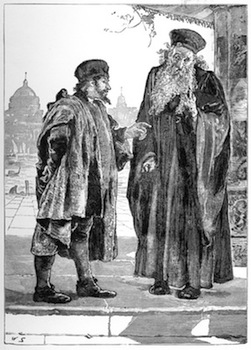
‘Though I had to run to London several times’, Edward Fitzgerald wrote to Frederick Tennyson on 8 June 1852, ‘I generally ran back as fast as I could; much preferring the fresh air and the fields to the smoke and ‘“the wilderness of monkeys”’ in London.’

That last phrase comes from The Merchant of Venice—by the dramatist of whom Fitzgerald wrote, ‘What astonishes me is, Shakespeare: when I look into him, it is not a Book, but People talking all round me.’[1] Tubal tells Shylock he has been shown a ring that one of Antonio’s creditors ‘had of your daughter for a monkey.’ Shylock is hugely upset by the news since the ring was a turquoise given to him by Leah, before she became his wife: ‘I would not have given it for a wilderness of monkeys’ (III.i).

My Arden edition, so wedded to extensive and detailed footnotes, has nothing to add here. But recurrences of the phrase, with embellishments, or near misses or oblique references, have offered other editors and annotators hours of fun.

‘Excuse these moans’, Ivor Gurney wrote to Mrs Voynich in April 1916. ‘But I am as a bottle in the smoke, a mouldy pelican in a howling wilderness of monkeys.’ A footnote here points to the Book of Common Prayer, Psalm cxix (bottle in the smoke) and the pelican ‘(not mouldy)’ in Psalm cii, while commenting on Gurney’s ‘also mixing in the “wilderness of monkeys” from Shylock’s valuing of his ring in The Merchant of Venice, III, i.’[2]

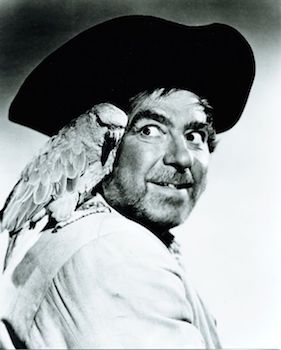
Ten years later, C. E. Montague wrote in Rough Justice of his characters, ‘Molly and Auberon too, making no show among parrots and monkeys, but still somehow right’.[3] Parrots and monkeys now? An Army phrase meaning goods and chattels, personal possessions, Eric Partridge tells us, citing a later catchphrase: ‘All right! Pick up your parrots and monkeys, and get mobile’.[4]

Newton-Long-John-Silver

(Robert Newton as Long John Silver – with parrot)

Pelicans, parrots, monkeys. Something missing? Ah. In Some Do Not. . ., the first volume of Ford Madox Ford’s Parade’s End tetralogy, he has Christopher Tietjens remember ‘the words of some Russian: “Cats and monkeys. Monkeys and cats. All humanity is there.”’ ‘Some Russian’, forsooth! It was the New Yorker Henry James, as Ford’s editor, Max Saunders, documents in a footnote: ‘See Henry James, “The Madonna of the Future” (1873), which repeats the sentence: “Cats and monkeys, monkeys and cats; all human life is there!”: The Tales of Henry James, ed. Maqbool Aziz, vol. II (Oxford: Clarendon Press, 1978), 202–32 (226, 232).’[5] Fordian numerologists will savour the publication date of James’s story (the year of Ford’s birth).

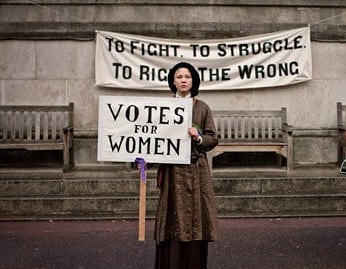
Nor is this the volume’s only dealings with these furry constituents of ‘all humanity’. Less than fifty pages later, Mrs Wannop, writer and mother of Valentine, addresses Christopher Tietjens. ‘“My dear boy,” she said. “Life’s a bitter thing. I’m an old novelist and know it. There you are working yourself to death to save the nation with a wilderness of cats and monkeys howling and squalling your personal reputation away. . . ”’ This further twist engages the editor again: ‘While “cats and monkeys” echoes the phrase noted on 100 above, the addition of “wilderness” here adds another echo, to The Merchant of Venice, III.i.112–14, when Shylock says to his friend: “Thou torturest me, Tubal: it was my turquoise; I had it of Leah when I was a bachelor: I would not have given it for a wilderness of monkeys.”’ Four more pages and the stalwart Mrs Wannop remarks, ‘“Of course, I back my daughter against the cats and monkeys.”’[6] As who would not?

Valentine-in-Parades-End-008

(Adelaide Clemens as Valentine Wannop in the BBC/HBO series of Parade’s End)

A decade before Some Do Not. . ., Ford had devoted an entire book to Henry James, in the course of which he quoted that final sentence of ‘The Madonna of the Future’ twice, the second time while he was comparing aspects of James and another of Ford’s most admired confrères, Turgenev: ‘For the Russian could never have written The Turn of the Screw; and, if he could have given us Daisy Miller, he certainly could not have written “Cats and monkeys, monkeys and cats – all human life is there. . .”’[7]

Not that it’s all literary larks. Jaap Goudsmit’s 1997 study, Viral Sex, discussed the possible lines of descent of HIV and SIV (Simian immunodeficiency, a virus found in primates), mentioning that monkeys and cats ‘in the same household might sometimes become companions and groom each other.’ That they would also fight is shown in tomb paintings dating from the reigns of Amenhotep III and Horemheb, both fourteenth century BC. ‘So more than three thousand years ago, Egyptian domestic culture gave cat viruses the chance to infect monkeys.’[8]

Cats and monkeys. Monkeys and cats.

References

[1] The Letters of Edward Fitzgerald, edited by Alfred McKinley Terhune and Annabelle Burdick Terhune, four volumes (Princeton: Princeton University Press, 1980), II 56, 372.

[2] Ivor Gurney, Collected Letters, edited by R. K. R. Thornton (Mid Northumberland Arts Group & Carcanet Press 1991), 78 and fn.

[3] C. E. Montague, Rough Justice (London: Chatto & Windus 1926), 204.

[4] Eric Partridge, A Dictionary of Slang and Unconventional English, 8th edition, edited by Paul Beale (London: Routledge, 1984), 856.

[5] Ford Madox Ford, Some Do Not. . . (1924; edited by Max Saunders, Manchester: Carcanet Press, 2010), 100 and fn.

[6] Ford, Some Do Not. . ., 148 and fn., 152.

[7] Ford Madox Ford, Henry James: A Critical Study (London: Martin Secker, 1914), 140, 143. As the Oxford Dictionary of Quotations points out, from the late 1950s, ‘All human life is there’ became the slogan of the News of the World. They may not have come across it in their studies of Henry James, of course. Chapter Five of Fred Kaplan’s 1992 biography of James is entitled ‘“Cats and Monkeys”’.

[8] Jaap Goudsmit, Viral Sex: The Nature of AIDS (New York: Oxford University Press, 1997), 129.