Blackberries, cats and a tilly


And every tree is a tree of branches
And every wood is a wood of trees growing
     And what has been contributes to what is.
So I am glad to have known them,
     The people or events apparently withdrawn;
The world is round and there is always dawn
     Undeniably somewhere.[1]

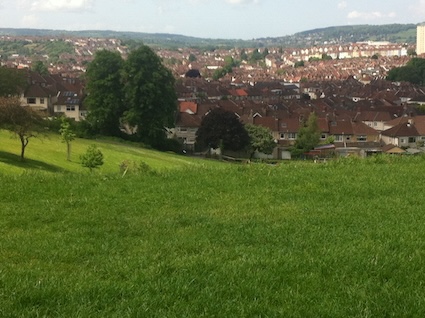
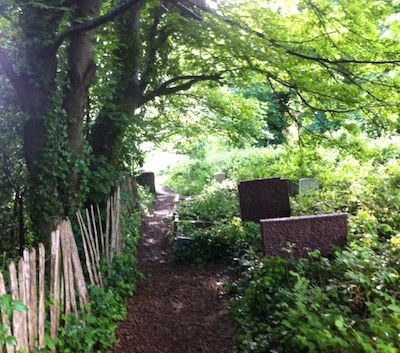
Some days, if you’re early enough, you can walk all the way round a huge Victorian cemetery and not see even a single dogwalker—though you might catch sight of a fox, if you’re lucky. The blackberries have got ahead of themselves to such an extent that  they’ll barely last the month: but once in the freezer drawer, they’ll see us well into winter.  Cow parsley, Anthriscus sylvestris, or Queen Anne’s lace (or, I gather, keck) still hangs on in places. A mistle thrush and a song thrush seem to answer one another and there’s a goldcrest somewhere near.

We are well past midsummer now. Glastonbury Festival is over (I shall probably get The Cure’s ‘Friday I’m in Love’ out of my head soon), the Wimbledon tennis tournament finished, the Bristol Harbour Festival has happened and the Balloon Fiesta is just a couple of weeks away. The wider canvas still largely features arterial blood and heavy boots on infant faces though even some Western politicians have now begun to wonder if deliberately starving thousands of innocent civilians and then shooting them down in cold blood day after day when they try to secure food might be just a bit over the top. Even so, to demonstrate that they know what’s terrorism and what isn’t, our government is prosecuting people who object to their country’s complicity in war crimes.

But pass on, pass on. Books, music, food, wine, love, cats.

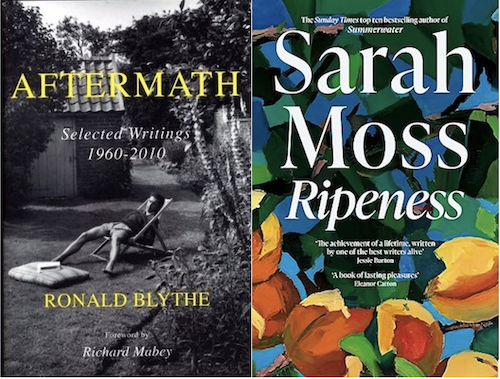
When I surface from Ford’s letters, I have waiting for me Paul Willetts’ remarkable reconstruction of the life of Julian Maclaren-Ross, Ronald Blythe, Sarah Moss, early Ernest Hemingway. Otherwise, I just revel in Anne Carson:


‘My mother forbad us to walk backwards. That is how the dead walk, she would say. Where did she get this idea? Perhaps from a bad translation. The dead, after all, do not walk backwards but they do walk behind us. They have no lungs and cannot call out but would love for us to turn around. They are victims of love, many of them.’[2]

Yes. Meanwhile, the weather, or much of it, prompts me to recognise my increasing intolerance to higher temperatures (and to much else: I know I’m widely assumed to become more conservative politically as I age but something’s clearly gone wrong). Earlier walks, more water, more cursing – I know all the tricks.

As to cats – yes, I like to remember that ‘Balthus painted himself once as a cat dining on fish, and once as the King of the Cats.’[3] Sylvia Townsend Warner mentioned, in a letter to William Maxwell (9 April 1952) , the northern Scottish traveller’s tale of seeing the cat funeral. ‘And the cat of the house, lying on the hearth, started up at these words, and exclaimed, “Then I am the King of the Cats”, and vanished up the chimney.’[4] When Swinburne died in 1909, William Butler Yeats said to his sister Lily, ‘Now I am king of the cats.’[5]

.

(John Butler Yeats, portrait of embroiderer, and co-founder (with her sister Lolly) of Cuala Industries, Susan Mary (Lily) Yeats (1901): National Gallery of Ireland)

The novelist, suffragist and partner—for several fraught years—of Ford Madox Ford had a good many of them: ‘Violet’s parrots—part of a menagerie that included an  owl (named Anne Veronica after Wells’s novel), a bulldog and nine Persian cats—shrieked “Ezra! Ezra!” whenever they saw him bouncing up the walk.’[6]

I can, alas, only half-agree with Lord Peter Wimsey when he says to Parker at the end of that bell-ringing mystery, The Nine Tailors, ‘“Bells are like cats and mirrors – they’re always queer, and it doesn’t do to think too much about them.”’[7] Queer they may be but I think about them a good deal and seem none the worse for it.

There was a collection of essays published ‘on the Occasion of the 25th Anniversary of Finnegans Wake’, which included pieces by Padraic Colum, Frank Budgen, Vivian Mercier, Fritz Senn, A. Walton Litz and other distinguished Joyceans. It was called Twelve and a Tilly.[8]

For ‘tilly’, my Shorter Oxford has: ‘In Ireland and places of Irish settlement, an additional article or amount unpaid for by the purchaser as a gift from the vendor.’ Joyce’s nocturnal masterpiece offers four occurrences and the splendid online glossary – http://finwake.com – adds to ‘the thirteenth of a baker’s dozen’ the derivation from Irish tuilleadh, added measure.

Opening my eyes to uncertain light, I can hear the table-tennis ball moving in the kitchen and the hall, knocking against skirting-boards and doorframes. I get up for a pee and a small grey tabby runs in to check on my progress and brush against my legs. Getting back into bed, I see that it’s 03:50. Moments later, the table-tennis ball is on the move again.

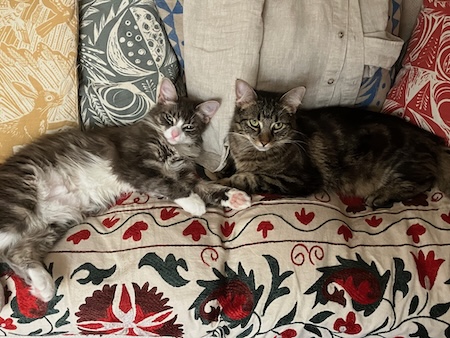
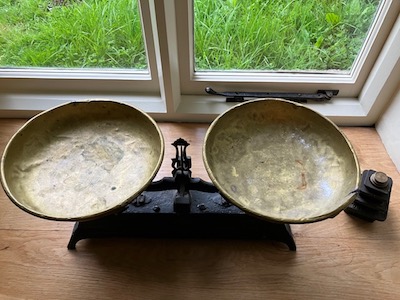
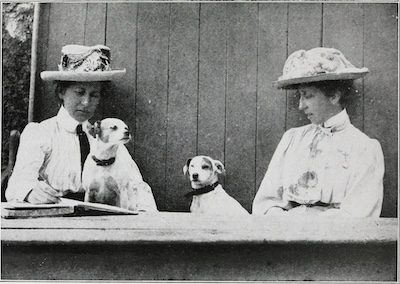
Yes, we have our own Tilly now, not an added measure but one-half of a pair. Her brother is named Max, which I like in part because it was the name of the very first pet I remember, in Gillingham, Kent, a black cocker spaniel—but also because of the occasional fleeting uncertainty which attends such phrases as ‘I said to Max’ or, more plausibly, ‘I asked Max’, which might conceivably be a reference to either a handsome tabby or our leading Ford Madox Ford scholar.

Scholars, though, at least as a general rule, do not sit in the kitchen sink, talk to toy mice or suck their tails. . .

Notes


[1] Louis MacNeice, ‘Autumn Journal: XXI’, Collected Poems, edited by Peter McDonald (London: Faber, 2007), 153.

[2] Anne Carson, ‘On Walking Backwards’, Plainwater: Essays and Poetry (New York: Vintage, 2000), 36.

[3] Guy Davenport,  A Balthus Notebook (New York: Norton, 1989), 7. Le Roi des Chats (1935). Balthus identified strongly with cats: in the year of this self-portrait, he began signing his letters to his future wife Antoinette as ‘King of Cats’. ‘Jeune fille’ occurs many times in the titles of his paintings—but so does ‘chat’ (sometimes together).

[4] Sylvia Townsend Warner, Letters, edited by William Maxwell (London: Chatto & Windus, 1982), 133.

[5] Yeats to Susan Mary (‘Lily’) Yeats, 12 Apr. 1909: R. F. Foster, W. B. Yeats: A Life. I: The Apprentice Mage: 1865–1914 (Oxford: Oxford University Press, 1997), 616n.69.

[6] Pound, of course. Barbara Belford, Violet: The Story of the Irrepressible Violet Hunt and her Circle of Lovers and Friends—Ford Madox Ford, H. G. Wells, Somerset Maugham, and Henry James (New York: Simon and Schuster, 1990), 166-7.

[7] Dorothy L. Sayers, The Nine Tailors (1934; with an introduction by Elizabeth George, London: New English Library, 2003), 305.

[8] Twelve and a Tilly: Essays on the Occasion of the 25th Anniversary of Finnegans Wake, edited by Jack P. Dalton and Clive Hart (Evanston: Northwestern University Press, 1965).

Grackles, clouds, popes

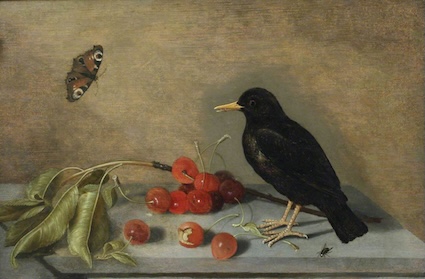
(Ambrosius Bosschaert the Younger, A Blackbird, Butterfly and Cherries: National Trust, Ham House)

04:30 and the blackbird already in full song. Not conducive to much further sleep but fine music. The same bird or a different one has several times come down to pick up grubs from pots ranged against the walls. Writing of the disappearances from the natural world over the past decades, Richard Mabey mentions smaller gnat swarms and choruses of blackbirds, and the barn owls gone.[1] And it’s true that we never hear such choruses now: it is almost always a solitary blackbird.

Guy Davenport remarks on ‘Gracchus’, meaning ‘grackle’ or ‘blackbird’; in Czech, kavka. And that Franz Kafka’s father had a blackbird on his business letterhead.[2] I recall that Davenport used ‘Grackle’ in ‘The Messengers’, his fourth story about Kafka (after ‘The Aeroplanes at Brescia’, ‘The Chair’ and ‘Belinda’s World Tour’). The writer is asked his name by the household god:
‘My name? Why, it’s Amschel. I mean, Franz. By the world, I am Franz Kafka.’
‘A kavka is a jackdaw.’
‘A grackle. Graculus, in Latin a blackbird.’
‘Yes.’[3]

I see that yesterday was Allen Ginsberg’s birthday, just one short of a centenary. Dear Ginsberg. I saw him read a couple of times, too many years ago, and the phrase ‘what thoughts I have of you’ came into my mind quite recently, remembering then: ‘What thoughts I have of you tonight, Walt Whitman, for I walked down the sidestreets under the trees with a headache self-conscious looking at the full moon.’

That poem ends: ‘Ah, dear father, graybeard, lonely old courage-teacher, what America did you have when Charon quit poling his ferry and you got out on a smoking bank and stood watching the boat disappear on the black waters of Lethe?’[4]

Whitman’s America, opening out; Ginsberg opening, broadening, welcoming. A decade or so later and he calls on Whitman again, this time with a long quotation from Democratic Vistas as epigraph to the collection called, ah, The Fall of America.

Here we are. And here we are.

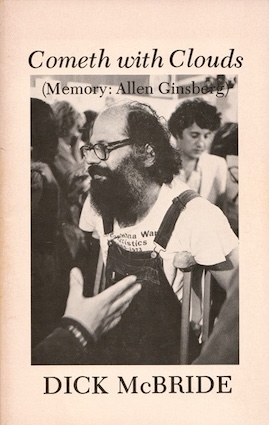
Back then too, in my early bookselling days, was Dick McBride, poet, playwright, actor, bookseller, publisher, former manager of City Lights Bookshop, having been introduced to Lawrence Ferlinghetti by poet, painter and novelist Kenneth Patchen. Dick was living in England then, distributing American small press books (and not so small: New Directions for a while)—a cottage in Great Horwood, Buckinghamshire, and an abandoned Victorian Methodist chapel for a warehouse. On my shelves is a copy of Cometh with Clouds (Memory: Allen Ginsberg), inscribed to me by Dick and dated July 14, 1983. It was published the previous year by Cherry Valley editions. I think I have a few of his other books, Lonely the Autumn Bird: Two Novels and Memoirs of a Natural-Born Expatriate were issued by Alan Swallow, and also The Astonished I, published by, ah, McBride’s Books.

Looking for online traces of Dick all these years later, I find more than I’d expected, on the Allen Ginsberg Project site and, particularly, a fine website created (and ongoing) by Rob McDowall: https://dickmcbride.co.uk/

I am currently with James Boswell in Italy, Dorothy Parker in New York, and Ford Madox Ford more or less anywhere, generally in either Paris or New York, though occasionally in Corsica or Carqueiranne. Also, just now, with Stella Bowen in Italy, where she is travelling with Dorothy Pound, looking at pictures, while Ezra ransacks the archives to find material for the Malatesta Cantos. Quite unable to rely on so much of the world to refrain from barbarism and conduct its affairs with decency, intelligence or basic humanity, I’m happy enough to be elsewhere in quite other temporal locations.

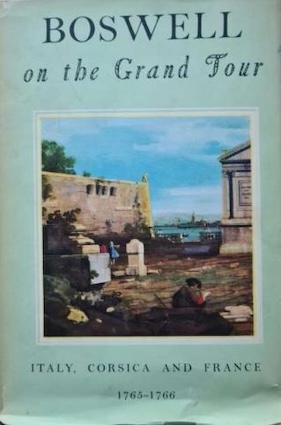
Poor Boswell lectures himself on his conduct almost daily but then argues with his companions, pursues a married countess or takes himself off to the nearest working girl.  A ‘fille charmante’, about seven shillings. Also, ‘“Des filles” in the next three days ran to thirteen shillings.’ He seems strikingly subject to venereal disease too. After his triumphant forays into the lives of Jean Jacques Rousseau and Voltaire, Boswell is travelling with a party that includes Lord Mountstuart, son of Lord Bute, and has secured the friendship of John Wilkes, who (perhaps not an ideal model for young Boswell) takes the view that ‘dissipation and profligacy renew the mind’, he having written his best issues of his newspaper The North Briton (founded to attack Prime Minister Lord Bute) while ‘in bed with Betsy Green’.[5]

(Alexander Pope by William Hoare: National Portrait Gallery)

From time to time, I also try to get back more into the eighteenth-century frame of mind with some Pope – Alexander, to avoid any possible confusion, recalling an occasion not so long ago when I asked the Librarian what she was watching. ‘A bit of Pope’, she said. I looked into the front room and saw a blaze of red, cardinal red, you might say. Boswell, in an earlier journal, had recounted an evening including the poet’s work, which was not, however, quite enough to save the occasion: ‘The night before I drank tea and sat all the evening writing in the room with my landlord and landlady. They insisted that I should eat a bit of supper. I complied. I also drank a glass of punch. I read some of Pope. I sung a song. I let myself down too much. Also, being unaccustomed to taste supper, my small alteration put me out of order. I went up to my room much disgusted. I thought myself a low being.’[6]

Having actually taught Pope to unfortunate students many years back, I’m surprised to find I have to make a stern and conscious effort to stick with him, uneasily recalling W. H. Auden’s remark (8 January 1947) to Alan Ansen: ‘The real test of liking English poetry is Pope. His ideas aren’t much, but the language is wonderful—“Chicane in furs.” The Rape of the Lock is the most perfect poem in English.’[7] Or, indeed, Hugh Kenner, reviewing Maynard Mack’s life of the poet: ‘The great danger of absorbing writers’ biographies is that you can begin to think you understand writing you’ve not troubled to come to terms with.’[8]

I like to think of Gilbert White being presented with a copy of Pope’s six-volume translation of the Iliad by the poet himself, when graduating with distinction from Oriel College, Oxford, in 1743.

In Pope’s ‘Epistle to Burlington’, I see a neat encapsulation of pre-Romantic sensibility:

‘In all, let Nature never be forgot.
But treat the Goddess like a modest fair,
Not over-dress, nor leave her wholly bare;
Let not each beauty ev’ry where be spy’d
Where half the skill is decently to hide.
He gains all points, who pleasingly confounds
Surprizes, varies, and conceals the Bounds.’

And elsewhere a remark that never goes out of date, alas:

‘But when to Mischief Mortals bend their Will,
How soon they find fit Instruments of Ill!’ (‘Rape of the Lock’, Canto III).


Notes

[1] Richard Mabey, Nature Cure (London: Chatto & Windus 2005), 134.

[2] Guy Davenport, The Hunter Gracchus and Other Papers on Literature and Art (Washington: Counterpoint, 1996), 2.

[3] Guy Davenport, The Cardiff Team: Ten Stories (New York: New Directions, 1996), 2.

[4] ‘A Supermarket in California’, in Allen Ginsberg, Selected Poems 1947-1995 (London: Penguin Books, 2001), 89.

[5] Boswell on the Grand Tour: Italy, Corsica and France, 1765-1766, edited by Frank Brady and Frederick A. Pottle (London: William Heinemann, 1955), 54n., 58n.

[6] Sunday 19 December 1762: Boswell’s London Journal, 1762-1763, edited by Frederick A. Pottle (London: William Heinemann, 1950), 95.

[7] Alan Ansen, The Table Talk of W. H Auden, edited by Nicholas Jenkins (London: Faber and Faber, 1991), 15-16.

[8] Hugh Kenner, ‘Maynard Mack’s Pope’, Historical Fictions (Athens: University of Georgia Press, 1995), 250.

In the Scales

On 25 August 1773, in an indifferent inn at Banff, James Boswell watched Samuel Johnson pen a long letter to Mrs Thrale. ‘I wondered to see him write so much so easily. He verified his own doctrine that “a man may always write when he will set himself doggedly to it.”’[1]

Dogged, yes: ‘sullen’ I don’t quite see but ‘pertinacious’, holding obstinately to an opinion or a purpose, unyielding, we can certainly settle for. So that

Writing of April in the Scotland uplands, of mainly grey days, cold and snow, the 20-year-old John Buchan remarked: ‘Nor have we any of the common associations of spring, like the singing of birds. A mavis or a blackbird may on occasion break into a few notes, and there is, for certain, an increasing twitter among the trees. But the clear note of the lark as yet is not; the linnet does not pipe; the many named finches are still silent.’[2]

We have also been in the hills this April, though further south, with not a hint of snow. A few days in the Black Mountains, the border country, with its panoramic vistas and the River Wye looking sleek and animated and glossy, and where, on some roads, you move from England to Wales and back again with dizzying ease and frequency. That was in a foreign country. . .

As for birds. . . . In a few days and in a limited area, we saw or heard (frequently both), skylark, chaffinch, blackbird, robin, blackcap, sparrow, wood pigeon, linnet,  chiffchaff, wren, dunnock, crow, goldfinch and song thrush (Buchan’s ‘mavis’).[3] Many of these in the trees and the grass outside the living-room or kitchen windows of the farmhouse we were renting, others on walks through fields and woods.

Birds we had, then, in abundance. Space and grass and sheep and silence also. Wi-Fi, broadband, not so much. ‘I’ve rebooted it and logged on several times, it seems fine now’, the housekeeper said before leaving. The blue light lasted for at least a minute. The Librarian tried resetting it a few times, quite a few times, over the next few days with the same result. But we had food, wine, books and packs of cards. There were mobile phones too, in the event of an emergency. We survived. And what lengths would we go to, should we go to, for the latest news? After all, given the current state of things, should you not warm to neo-fascist extremism or the aggressive erasure of history or the continuing mass murder of civilians or the vicious suppression of non-violent protest, there’s little in daily bulletins to lift the spirits. Some people, though—and I have it on the best authority—can find it oddly cheering to see, as they cross a field from stile to stile, a pheasant strolling to and fro in that field, apparently without a care in the world.

So Inspector Jules Maigret sweltered in August heat or remained on edge when ‘no one had ever known such a damp, cold gloomy March.’[4] Virginia Woolf did not go to the party at Gordon Square where the d’Aranyi sisters, Adila, Hortense and Jelly (‘great-nieces of the renowned Hungarian violinist Joachim’) would be playing, because Leonard arrived home too late, ‘& it rained, & really, we didn’t want to go.’[5] And I was glad to learn about the Society of Dilettanti, concerned with practical patronage of the arts, whose members included Sir Joshua Reynolds, David Garrick and Charles James Fox, and to be told of Horace Walpole’s writing that, while the nominal qualification for membership of the Society was having been to Italy, the real one was being drunk.[6]

After the diversions of fictional Paris and historical Brighton, I am now with James Boswell, young Boswell on his Grand Tour, after Holland, currently in Germany, soon to be in Switzerland. He is still often preposterous, still wholly irresistible—and still battling with the Black Dog (‘The fiend laid hold of me’). But he finds diversions enough: ‘I must not forget to mark that I fell in love with the beauteous Princess Elizabeth. I talked of carrying her off from the Prince of Prussia, and so occasioning a second Trojan War.’[7]

We are back, then, via taxi and train among Good Friday crowds, walking again in the park amidst hurtling spaniels rather than quietly to and fro along a secluded lane with teeming hedgerows, remarkable trees and glimpses of an unfamiliar breed of sheep, which gave rise to a good deal of highly technical agricultural vocabulary: ‘God, they’re chunky!’ Too far away for a convincing photograph but, scanning various sheep breeders’ websites, we agree that they were probably Zwartbles.

As confirmed by such remarks, we are now returned to what E. M. Forster termed the world of ‘telegrams and anger’—minus the telegrams, of course, and seemingly with many times the anger. We are also back, that is to say, in the firm grip of the internet. Does that warrant one cheer or two?


Notes

[1] James Boswell, The Journal of a Tour to the Hebrides with Samuel Johnson, LL.D., edited by Ian McGowan (1785; Edinburgh: Canongate Books, 1996), 234-235.

[2] John Buchan, ‘April in the Hills’, in Scholar-Gipsies (1896; London: John Lane The Bodley Head, 1927), 28.

[3] Apparently derived from the French mauvis (though, confusingly, this seems to mean ‘redwing’, turdus iliacus rather than turdus philomelos). ‘It is still used for the bird in Orkney and survives elsewhere in Scotland’: Mark Cocker and Richard Mabey, Birds Britannica (London: Chatto & Windus, 2005),  358-359.

[4] Georges Simenon, Maigret’s Failure, translated by William Hobson (Penguin Books, 2025), 1; August heat in Maigret Sets a Trap, translated by Siân Reynolds (London: Penguin Books, 2017).

[5] The Diary of Virginia Woolf, Volume 1: 1915-19, edited by Anne Olivier Bell (with the Asheham Diary, London: Granta, 2023), 11-12.

[6] Venetia Murray, High Society in the Regency Period: 1780-1830 (London: Penguin Books, 1999), 165.

[7] Boswell on the Grand Tour: Germany and Switzerland 1764, edited by Frederick A. Pottle (London: William Heinemann, 1953), 12, 67.

By heart in the park

(Philip Wilson Steer, Dover Coast: York Art Gallery)

Another last warm and sunny afternoon of autumn. How many more can there be? With the Librarian in the office for a pretty full day, so not available for the lunchtime stroll, I walk alone in the park and succumb to the temptation to recall (and recite) the handful of poems that, at one time or another, I’ve committed to memory. Committed they may have been but seem, for the most part, to have escaped or at least to be out on parole.

Matthew Arnold’s ‘Dover Beach’ is worse than shaky and, in its current state, Marvell’s ‘To His Coy Mistress’ would probably not detain her for a moment. A bit of Pound, a bit of Yeats and a fragment of Elizabeth Bishop all hold steady, while a couple of others improve with work, which necessitates keeping a wary eye open – and an ear, given the increasing tendency of people to rush up behind you on bicycles or accursed electric scooters. Robert Lowell’s ‘Skunk Hour’ (dedicated to Bishop) yields a little to pressure:

Nautilus Island’s hermit heiress still
something something
her sheep still graze above the sea

Two men, walking briskly but not quite briskly enough, so staying almost exactly the same distance behind me, fairly close and, worse, very gradually nearing. . .

Her farmer
Is first selectman in our village;
she’s in her dotage.

We’re sailing now. Ah:

Thirsting for the hierarchic privacy
of Queen Victoria’s century,
she buys up all
the eyesores facing her shore,
and lets them fall.

(Lowell and Bishop in Brazil, 1962. Photo: Vassar College Library via the New Criterion)

But then there’s some confusion in the order of half-remembered stanzas, though I have most of the mother skunk’s activities in the final one. Move on to surer ground, anyway, the much-learned, almost-all recollected ‘Bagpipe Music’.

Though here a slight pause for the woman standing with her dog at the top of a slope below the play area. Is it a Pointer? We’ve seen it more than once before. Similar shape, similar attitude, its attention fixed on something in the grass near the foot of a tree, that can only be a squirrel. Looking it up later, I see that it’s a Vizsla, also known as a Hungarian Pointer. I stroll past it, resisting the impulse to give it some advice: you may be quick but you won’t win, they climb, you don’t. We’ve seen some close shaves for squirrels in the past but they always seem to evade dogs’ jaws. And ‘Bagpipe Music’? Pretty good, in fact. A slight hiccup over the penultimate stanza but both MacNeice and myself ending strongly:

It’s no go my honey love, it’s no go my poppet;
Work your hands from day to day, the winds will blow the profit.
The glass is falling hour by hour, the glass will fall for ever,
But if you break the bloody glass you won’t hold up the weather.

Now distractions range from the two old ladies intent on feeding a squirrel by hand (‘Come on, dear, see what I’ve got’ – Fleas, soon enough, I suspect) to the fellow with the ponytail and curious blue-green leggings intent on kicking a very small ball across the grass, and who crosses my path again half an hour later in a different and distant part of the park; and a murder of crows, around thirty in total, spread right across and down a broad grassy slope to the cycle path that runs along beneath the outspread branches of several wild pear trees. The fruits fall partly onto the earthy slopes beyond and partly onto the cycle path itself, one missed my right ear by inches one day last week. Walking along that path now before climbing sharply to my left, I see a dozen crows rooting among the fallen pears, though some turn to stare at me as I approach. ‘Are you auditioning for that nice Mister Hitchcock?’ I ask. One crow, not to be put off by a mere human, lingers to stick its beak straight through a pear before flying up to the branch above. Knowing how clever corvids are, I watch to see how it goes about extricating beak from fruit. It thrusts the pear into a narrow fork of branches which holds it in a tight embrace, withdraws the beak and starts tucking in. I whistle my sincere appreciation. That Lowellian mother skunk, I recall,

    jabs her wedge-head in a cup
of sour cream, drops her ostrich tail,
and will not scare.

Why is it so hard these days? No answers on a postcard, please. At school, everyone learned poems by heart and some people never lost the habit. I recalled an aside of the Reverend Kilvert: ‘I thought of William Wordsworth the poet who often used to come and stay at this house with blind Mr. Monkhouse who had nearly all his poems off by heart.’[1] Eric Gill’s father and one of Gill’s teachers, named Mr Catt, were great admirers of Tennyson. Gill himself also learned much of it by heart, being particularly fond of ‘the passage about the routine of rural agriculture:

As year by year the labourer tills
His wonted glebe and lops the glades’[2]

This is from stanza CX of Tennyson’s In Memoriam A. H. H., the initials those of Tennyson’s beloved friend Arthur Henry Hallam, who died in Vienna in 1833. Born in 1811, he was eighteen months younger than Tennyson. They had met at Trinity College, Cambridge in 1828. Tennyson seems to have begun this long poem very soon after hearing of Hallam’s death, though it was not published until 1850, and then anonymously. Edward Fitzgerald—translator of The Rubaiyat of Omar Khayyam—wrote to the poet’s elder brother Frederick Tennyson (15 August 1850): ‘Alfred has also published his Elegiacs on A. Hallam: these sell greatly: and will, I fear, raise a host of Elegiac scribblers.’[3]

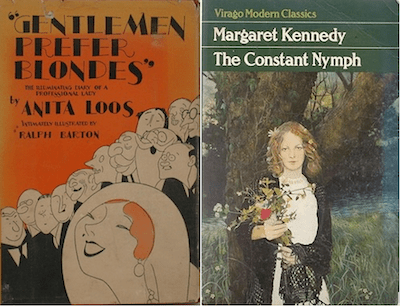
But it is not only poetry that the heroes of yesteryear committed to memory in large chunks – some mastered prose in a similar way, which always seems to me somehow an even more impressive achievement, though I accept that actors, having to learn their lines, sometimes comprising tremendously long speeches or monologues, would not necessarily find it so. Joseph Conrad and Ford Madox Ford would swap pages of Flaubert or Maupassant, while James Joyce ‘knew by heart whole pages of Flaubert, Newman, de Quincey, E. Quinet, A. J. Balfour and of many others.’[4] And, while Anita Loos’ Gentlemen Prefer Blondes was apparently one of Patrick White’s favourite novels (Joyce, Faulkner and Edith Wharton were also admirers), he knew Margaret Kennedy’s The Constant Nymph ‘practically off by heart.’[5]

‘Heart’ is another of those words with a great many friends, the compounds running over several columns of the dictionary: in one’s mouth or boots or the right place; open, shut, taken; worn on the sleeve; piercing, rending, sore and sick. It has its reasons and is, in many contexts, simply mysterious, as the author of ‘Dover Beach’ wrote:

But often, in the world’s most crowded streets,
But often, in the din of strife,
There rises an unspeakable desire
After the knowledge of our buried life;
A thirst to spend our fire and restless force
In tracking out our true, original course;
A longing to inquire
Into the mystery of this heart which beats
So wild, so deep in us – to know
Whence our lives comes and where they go.[6]

I briefly consider this last poem as a candidate but coming in at around a hundred lines, it may be a stretch too far for me. Sonnets are a handy length, though . . .


Notes

[1] Francis Kilvert, entry for 27 April 1870, Kilvert’s Diary, edited by William Plomer (London: Jonathan Cape, 1938, reissued 1969), I, 119.

[2] Fiona MacCarthy, Eric Gill (London: Faber & Faber, 1990), 26.

[3] The Letters of Edward Fitzgerald, edited by Alfred McKinley Terhune and Annabelle Burdick Terhune, four volumes (Princeton: Princeton University Press, 1980), I, 676.

[4] Frank Budgen, James Joyce and the Making of ‘Ulysses’ and other writings, enlarged edition (1934; London: Oxford University Press, 1972), 181. Edgar Quinet was a French historian; by A. J. Balfour is meant, presumably, the British Prime Minister (1902-1905) – who also published works of philosophy.

[5] David Marr, Patrick White: A Life (London: Vintage, 1992), 85.

[6] Matthew Arnold, ‘The Buried Life’, Poetry and Criticism of Matthew Arnold, edited by A. Dwight Culler (Boston: Houghton Mifflin, 1961), 114.

Rosemary, responsibility


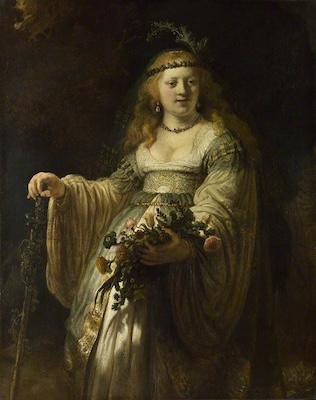
(Rembrandt van Rijn, Saskia van Uylenburgh in Arcadian Costume: National Gallery, London)

In the other park, which we traverse quite often, there are rosemary bushes to be discreetly ransacked – for potatoes, fish, meat, as well as for remembrance. ‘“There’s rosemary, that’s for remembrance”’, Ophelia says. And Laura Cumming notes that when Rembrandt’s wife Saskia van Uylenburgh died in 1642, at the age of 29 and after less than eight years of their marriage, Rembrandt ‘put a sprig of rosemary in her hand: rosemary for remembrance.’[1]

The weather forecast offers a 70% chance of rain. I add an umbrella to my tote bag and am soon walking uphill – in warm sunshine. Yes, the forecasts are more sophisticated these days, with many technical advances – on the other hand, I seem to remember that, in the days before we broke the weather, things were a bit more definite. Or did conditions appear to change every ten minutes then as well?


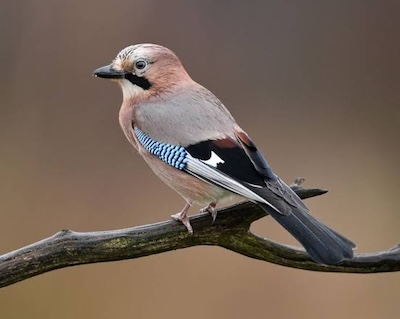
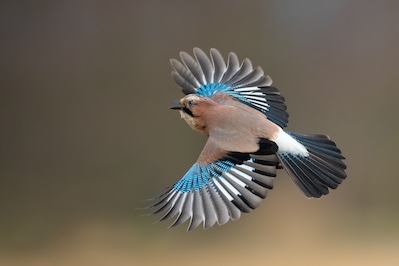
Under an abruptly darkening sky, I enter the park and the uncertain terrain of rosemary-picking. Plants in a public park: it would never occur to me to pick flowers in one and take them home since they’re for everybody to look at and enjoy. But a bush, herbs, green, largely unnoticed, simply wasted if not used. . . the case is altered, surely. Nevertheless, I aim for discretion and scan the park. Two women with dogs on the grassy slope; a woman with a child in a pushchair walking towards me on the path. Progress is arrested by the sight of a jay, landing on a nearby wooden post. It lingers for ten, fifteen seconds. I stand and stare. Eventually, it moves, I move. The woman says, in passing: ‘Pretty birds, aren’t they?’ Always the loquacious Englishman, I say ‘Yes, very’, moving on to stock up on rosemary and continue my walk into a sunshine resuming its humorous campaign.


In another campaign, the fallout from the presidential debate in Philadelphia on Tuesday night was still dominating the media, and I could still amuse the Librarian by abruptly announcing: ‘They’re eating the dogs!’ but the joke, if that’s what it is, is a dark one. Like a great many other people – at least I hope so, I’m baffled by this stuff much of the time, by those ‘undecided voters’, let alone those determined to make America hate again.

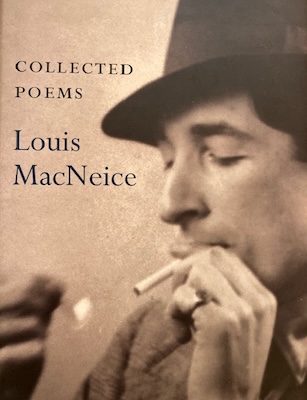
I realised later that it was the birthday of Louis MacNeice, a fine poet who also kept a wary eye on the political weather and who died at the absurdly young age of 55. Thinking of how the wrong things keep happening and the wrong people ending up on top almost invariably, and how far, how much, if at all, the rest of us can be said to bear responsibility, I noted the lines in his Autumn Journal:


And at this hour of the day it is no good saying
            “Take away this cup”;
Having helped to fill it ourselves it is only logic
            That now we should drink it up.
Nor can we hide our heads in the sand, the sands have
            Filtered away;
Nothing remains but rock at this hour, this zero
            Hour of the day.[2]

‘Responsibility’ is a handy word. Delmore Schwartz’s famous short story, ‘In Dreams Begin Responsibilities’, which gave his first volume its title, has the narrator watching, on a movie screen, the time just before the beginning of his own life, his parents moving towards their disastrous marriage, which will have a lasting and damaging effect on the poet. He’s ejected from the cinema after shouting at the screen—’“What are they doing?”’—and wakes up ‘into the bleak winter morning of my twenty-first birthday, the windowsill shining with its lip of snow, and the morning already begun.’[3]

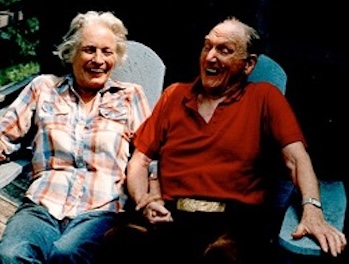
But I was thinking too of the close of Robert Penn Warren’s fine novel, All The King’s Men : ‘soon now we shall go out of the house and go into the convulsion of the world, out of history into history and the awful responsibility of Time.’[4] The connection is with MacNeice, because of that poet’s relationship with Eleanor Clark in 1939-40. When MacNeice was invited by F. R. Higgins to join the Irish Academy of Letters, it was to Eleanor that he wrote about it, saying that ‘The Irish Academy of Letters meets once a year in Dublin’s only decent restaurant and gets so drunk they have to send the waiters away.’[5] Clark grew up in Connecticut, went to  Vassar in the 1930s, and worked on their literary magazine with Elizabeth Bishop and Mary McCarthy, among others. She wrote for left-leaning magazines and journals such as The Partisan Review, thought of herself for a while as a ‘Trotskyite sympathizer’ and went to Mexico in the late 1930s. Apparently, she did some translating for Trotsky and was married for a while to his Czech secretary, Jan Frankl. She wrote novels, essays and reviews, children’s books and a memoir, but was probably best-known for her travel books, Rome and a Villa and The Oysters of Locmariaquer. She married Robert Penn Warren in 1952 and died in 1996, aged 82, seven years after Warren himself.


(Eleanor Clark and Robert Penn Warren at their summer home in West Wardsboro, Vermont, 1986: Kentucky Library and Museum)

The novelist Nicholas Mosley once wrote that ‘Humans can either learn – or refuse to believe that humans are responsible for themselves.’[6] My favourite use of ‘responsibility’, though, is probably that of the hugely influential Trinidadian radical historian, journalist and political theorist, C. L. R. James, who adopted, in his early years, William Makepeace Thackeray’s Vanity Fair as the book: ‘By the time I was fourteen I must have read the book over twenty times’. And he adds, a little later: ‘Thackeray, not Marx, bears the heaviest responsibility for me.’[7]

That radical, Thackeray!

Notes


[1] William Shakespeare, Hamlet, IV. v.; Laura Cumming, Thunderclap: A memoir of art and life & sudden death (London: Chatto & Windus, 2023), 61.

[2] Louis MacNeice, Collected Poems, edited by Peter McDonald (London: Faber, 2007), 111.

[3] Ilan Stavans, editor, The Oxford Book of Jewish Short Stories (New York: Oxford University Press, 1998), 165.

[4] Robert Penn Warren, All The King’s Men (1946; Harmondsworth: Penguin, 2007), 661.

[5] Louis MacNeice, Letters of Louis MacNeice, edited by Jonathan Allison (London: Faber, 2010), 351.

[6] Nicholas Mosley, Efforts at Truth: An Autobiography (London: Minerva , 1996), 299.

[7] C. L. R. James, Beyond a Boundary (1963; London: Vintage, 2019), 24, 52.

Wording, birding


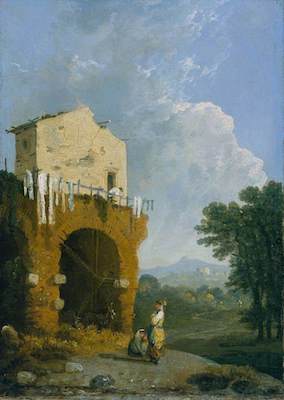
(Robert Wilson, Hadrian’s Villa, c.1765: Tate)

‘At night I trailed from one window recess to another’, the Emperor Hadrian recalls in Marguerite Yourcenar’s novel, ‘from balcony to balcony through the rooms of that palace where the walls were still cracked from the earthquake, here and there tracing my astrological calculations upon the stones, and questioning the trembling stars. But it is on earth that the signs of the future have to be sought.’[1]

So it is. ‘Ghosts await you in the future if they do not follow you from the past’, Sarah Moss wrote, and: ‘No one who knows what happens in the world, what humans do to humans, has any claim to contentment.’[2] Yes. I write pages and delete them, since they serve no real purpose except to relieve my feelings for a short while. The past is not always a foreign country and they do not always do things differently there. As Pankaj Mishra said in his recent ‘Winter Lecture’: ‘It hardly seems believable, but the evidence has become overwhelming: we are witnessing some kind of collapse in the free world.’[3]

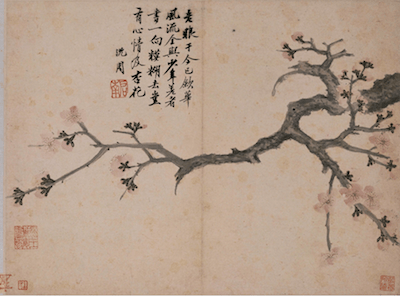
Early summer creeps on, though fitfully. Watching rose petals fall from the bush in a light wind, I remembered Pound’s Canto XIII, the first in which Confucius appears, and which ends:

The blossoms of the apricot
            blow from the east to the west
And I have tried to keep them from falling.[4]


(Shen Zhou, ‘Apricot Blossom’, leaf from the album, Dreaming of Travelling While in Bed: Palace Museum, Beijing)

Ronald Bush observed that: ‘To keep the blossoms of the apricot from falling is to keep nature in a permanent vernal bounty.’[5] It also seems to me to signify cultural contact, the free exchange of ideas, without the limits of borders or nationalism. At that stage, Pound was using Guillaume Pauthier’s translation of Confucian texts in Confucius et Mencius: les quatre livres de philosophie morale et politique de la Chine and had written in ‘Exile’s Letter’:

Intelligent men came drifting in from the sea and from the west border,
And with them, and with you especially
There was nothing at cross purpose,
And they made nothing of sea-crossing or of mountain crossing,
If only they could be of that fellowship,
And we all spoke out our hearts and minds, and without regret.[6]

On the daily walks we speak our minds but, just lately, exchanges are punctuated by information from our newly downloaded Merlin app, available from Cornell University, which draws on a huge database of bird sounds, sightings and photographs to identify what you’re probably hearing in that nearby tree or passing overhead.


So we stroll along narrow paths thus:

Politics, dinner, politics. . .
‘Blue tit. Carrion crow. Wren.’
Politics, domestic details, politics, cat, literary chuntering. . .
‘Dunnock. Blackcap. Chiffchaff.’
Ash dieback, politics, university gossip, politics. . .
‘Blackbird. Herring gull. Great tit. Jay!’

Excuse me, sir, let me just ask about the birdsong: in a world both literally and metaphorically on fire, democracies hanging by a thread, war crimes, liars and knaves in public places – does it help?

Why, yes, a little – rather more than a little, in fact. . .


Notes

[1] Marguerite Yourcenar, The Memoirs of Hadrian, translated by Grace Frick, with Yourcenar (1951; Penguin Books, 2000), 82.

[2] Sarah Moss, Signs for Lost Children (London: Granta Books, 2016), 88-89, 97.

[3] Pankaj Mishra, ‘The Shoah after Gaza’ [Winter Lecture], London Review of Books 46, 5 (7 March 2024).

[4] The Cantos of Ezra Pound, fourth collected edition (London: Faber and Faber, 1987), 60.

[5] Ronald Bush, The Genesis of Ezra Pound’s Cantos (Princeton: Princeton University Press, 1989), 251.

[6] ‘Exile’s Letter’, Ezra Pound: Poems and Translations, edited by Richard Sieburth (New York: Library of America, 2003), 255.

Passing the critical stage, or not


RSPB: https://www.rspb.org.uk/birds-and-wildlife/jay

The highlight of yesterday morning was the jay, garrulus glandarius, briefly perched on the high roof of the shed beyond our back fence, a bird we’ve seen high up in the trees of the Victorian cemetery but never so close to home. The lowlight, in the wake of the announcement of a forthcoming General Election, now a little over five weeks away, was probably the reported Tory proposals to cut taxes for the rich again and to bring back National Service. This last appears to be an attempt to outflank satirists with a first strike of absurdity and anachronism. We await with bated breath the reintroduction to the statute books of the death penalty for stealing a pocket handkerchief, damaging Westminster Bridge or impersonating a Chelsea Pensioner.

Reading the stories of  Somerville and Ross lately, I alighted on Major Sinclair Yeates, together with Flurry Knox and the visiting Englishman Leigh Kelway, taking refuge from the rain in a public-house, having failed to get to the country races: ‘The bread tasted of mice, the butter of turf-smoke, the tea of brown paper, but we had got past the critical stage.’[1]

On occasion, we – or certainly I – don’t get to the critical stage, much less past it. Some things, moments, sights, sounds, are merely to be experienced and enjoyed (or, occasionally, suffered), without evaluation or ranking or even attempted analysis. And sometimes, writing so good or so distinctive that it delays or disarms criticism.

After a recent lunch, the librarian lingered at the table, extending her familiarity with the work of Olivia Laing, occasionally pausing to tell me how good it—The Garden Against Time—was. On my side of the table, I was extending my familiarity with the work of Anne Carson (Wrong Norma), frowning occasionally, laughing often and muttering, not at all rarely, ‘Wonderful!’ None of which, I suppose, passes muster as incisive literary analysis or exegesis. Not all the world’s a critical stage, you might say. (I’ve since read the Olivia Laing myself, muttering ‘Wonderful’ from time to time.)


The authors: from Irish Memories (1919)

‘It has been said of Ireland that the inevitable never happens, and that the impossible invariably occurs.’[2]

The volume that contains the Somerville and Ross story was published 125 years ago and is dense with hunting and hunting lore: horses, hounds, whips, drags and the rest. I could hardly be further from the imagined target audience if an interest in, or sympathy with, hunting were assumed. But that, of course, is not the point. The point is the writing, the humour, the sharply drawn characters, the thorough, detailed knowledge of Irish people and culture with which it deals, the politics of the time not made central but subtly pointed up from time to time.

In the Laing book, in fact, there are hundreds of plant names that meant nothing to me, functioning rather as sound poetry, mantra or music. But then, as more than one critic has pointed out, you don’t need detailed knowledge of baccarat or poker to take pleasure in Ian Fleming’s Casino Royale and, more broadly, the narrator or central character of a novel with whom we don’t sympathise, empathise, agree or even like at all is pretty standard. So too the frequent apparent gap between the maker and the made, and the recurrent agonising over how one can possibly read X’s writings or look at Y’s pictures or listen to Z’s music because they were such awful people doesn’t really connect with me. . .

On hunting, Walter de la Mare had a neat little poem:

Hi! Handsome hunting man,
Fire your little gun,
Bang! Now that animal
Is dead and dumb and done.
Never more to peep again, creep again, leap again,
Eat or sleep or drink again, oh, what fun![3]

In a New York Times Book Review piece, W. H. Auden quotes it and concludes: ‘A child brought up on such verses may break his mother’s heart or die on the gallows but he will never suffer from a tin ear.’[4]

Tin ears are very widely rampant just now (if ears can in fact ramp). But then, in the cemetery this morning: two jays in the same tree, quite close together. I doubt if the Tories, in their distorting lowlight mirror, can rival that.


Notes

[1] E. Œ. Somerville & Martin Ross, ‘Lisheen Races, Second-Hand’, in The Irish R. M. (London: Abacus, 1989), 102-103.

[2] ‘Major Apollo Riggs: Part III’, The Irish R. M., 518.

[3] Walter de la Mare, Rhymes and Verses: Collected Poems for Children (New York: Holt, 1988), 86.

[4] W. H. Auden, ‘An Appreciation of the Lyric Verse of Walter de la Mare’ (NYTBR, 26 February 1956), reprinted in Prose, Volume IV: 1956-1962, edited by Edward Mendelson (Princeton: Princeton University Press, 2010), 8. He noted that Randall Jarrell’s was ‘the only good American article about de la Mare’s recent work that I have come across’. This must be the piece published in The Nation (1946) and included in Poetry and the Age (1955; London: Faber and Faber, 1973), 137-141.

Roses (almost) all the way


‘What a lovely thing a rose is’, Sherlock Holmes remarks, adverting to the necessity of deduction in religion – and goes on to add that: ‘Our highest assurance of the goodness of Providence seems to me to rest in the flowers.’ Client and client’s fiancée view this demonstration ‘with surprise and a good deal of disappointment’ but Holmes, with the moss-rose between his fingers, has fallen into a reverie. Not unusually, all turns out well in the end.[1] Oddly, I see that, in the language of flowers, the moss-rose was associated with ‘voluptuous love’, not the first thing that comes to mind in Holmes’s case.

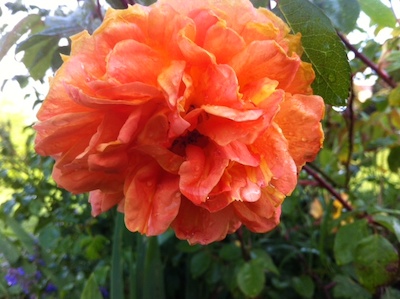
It’s that time of the morning when there are no workmen yet hammering, drilling or sawing, and the park and the cemetery are peaceful enough even for me. The Librarian photographs a good many flowers and trees while I stand gazing into middle distances, though I succumb to the orange specimen in the park on the way back home.


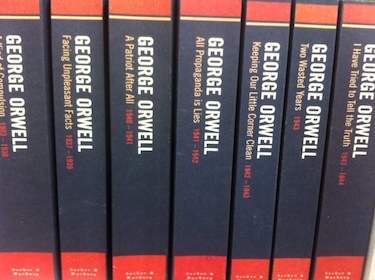
Reading Rebecca Solnit earlier, I was reminded again of how much George Orwell’s short life (forty-six and a half years) was hampered by respiratory disease: bronchitis, pneumonia, tuberculosis.[2] Set against that are the plump volumes of Peter Davison’s scholarly edition of Orwell’s work: twenty of them in all. Of the ones I have, the 600-page extent of the first volume is not unrepresentative. But then Orwell’s productivity, given his state of health and his honest confrontation of it, the long-held knowledge that his life would not be a long one, is not itself unique: the example that comes quickest to mind is D. H. Lawrence, also hugely prolific, his letters alone filling eight fat volumes, his life two years shorter than Orwell’s.


‘If war has an opposite’, Solnit writes, ‘gardens might sometimes be it, and people have found a particular kind of peace in forests, meadows, parks and gardens’ (5). Orwell’s life was, as she says, shot through with wars. The German writer Ernst Jünger, born almost a decade before Orwell and in a markedly different cultural tradition, recalled that: ‘Grown up in an age of security, we shared a yearning for danger, for the experience of the extraordinary. We were enraptured by war, We had set out in a rain of flowers, in a drunken atmosphere of blood and roses. Surely the war had to supply us with what we wanted: the great, the overwhelming, the hallowed experience.’[3]

This theme of roses conjured up for me not Ruskin, Pound, Gertrude Stein, Sappho, Shakespeare or Sir John Mandeville but, not for the first time, Patrick White, a young child in the First World War, an intelligence officer in the Second, serving in Egypt, Palestine, Greece. His books are dense with roses. A dozen references, more, in The Tree of Man, as motif, symbol, marker of passing time, from the moment when Stan and Amy Parker arrive at the house after the wedding:

‘Once I saw a house’, she said, in the even dreamlike voice of inspiration, ‘that had a white rosebush growing beside it, and I always said that if I had a house I would plant a white rose. It was a tobacco rose, the lady said.’
‘Well’, he said, laughing up at her, ‘you have the house.’[4]

The black rose on Theodora Goodman’s hat in The Aunt’s Story; Waldo and Arthur talking of the white rose in The Solid Mandala; and, in Riders in the Chariot: ‘Where Himmelfarb was at last put down, roses met him, and led him all the way. Had he been blind, he could have walked by holding on to ropes of roses.’[5] Among the stories, ‘Dead Roses’ calls attention to itself while ‘The Letters’, another  mother-son relationship leading to mental disintegration, has some lovely flowers but, alas, ‘this morning something was eating the roses.’ In ‘A Cheery Soul’, the dreadful Miss Docker doesn’t care for the rector’s wife, who ‘accused her of pruning Crimson Glory to death. “I only did it as a gesture,” Miss Docker had defended herself, “and nobody knows for certain the rose did not die a natural death.”’[6] Most poignantly, perhaps, in Voss, Laura picks roses while the pregnant Rose Portion holds the basket: ‘But the girl was dazed by roses.’ Laura will later find Rose dead in her bed: ‘the girl who had arrived breathless, blooming with expectation and the roses she had pinned at her throat, was herself turned yellow by the hot wind of death.’[7]

White had met Manoly Lascaris, with whom he would live for the rest of his life, in the apartment of Charles de Menasce in Alexandria, in July 1941.[8] They would spend a good deal of time in Greece and, appropriately, White remembered, decades later, Athens after the German occupation: ‘The smell of those days remains with me – the perfume of stocks in the Maroussi fields, chestnuts roasting at street corners, Kokkoretsi turning on spits in open doorways. And the roses, the crimson roses. . . ’[9]

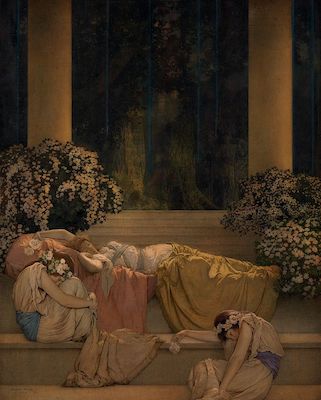
Maxfield Parrish, ‘Sleeping Beauty’, Colliers (1912)

No rose without a thorn, the saying goes – unless you’re that lucky. Or perhaps in the right sort of story, say ‘Briar Rose’, where, the hundred years of the curse having expired precisely on the day that the prince comes breezing along, the briar hedge is transformed into beautiful flowers. The bride is won with minimal effort—no giants or dragons—just impeccable timing, ‘illustrating’, as Maria Tatar observes, ‘how good fortune often trumps heroic feats in fairy tales.’[10]

Remembering the appearance of the early romances of H. G. Wells, Ford Madox Ford wrote: ‘Fairy tales are a prime necessity of the world’.[11] So they are, so they are.


Notes

[1] Arthur Conan Doyle, ‘The Naval Treaty’, The New Annotated Sherlock Holmes, 2 volumes, edited with notes by Leslie S. Klinger (New York and London: W.W. Norton and Company 2005), I, 686, 687.

[2] Rebecca Solnit, Orwell’s Roses (London: Granta Books, 2021), 25-26.

[3] Ernst Jünger, Storm of Steel, translated by Michael Hofmann (Harmondsworth: Penguin, 2004), 5.

[4] Patrick White, The Tree of Man, (Harmondsworth: Penguin Books, 1961), 28.

[5] Patrick White, Riders in the Chariot (Harmondsworth: Penguins Books, 1964), 383.

[6] Patrick White, The Burnt Ones (1964; Harmondsworth: Penguin Books, 1968), 231, 180.

[7] Patrick White, Voss (London: Eyre & Spottiswoode, 1957), 170, 250.

[8] David Marr, Patrick White: A Life (London: Vintage, 1992), 213.

[9] ‘Greece – My Other Country’ (1983), in Patrick White Speaks, edited by Paul Brennan and Christine Flynn (London: Jonathan Cape, 1990), 134.

[10] Maria Tatar, editor, The Annotated Brothers Grimm (New York: W. W. Norton, 2004), 238.

[11] Ford Madox Ford, Portraits from Life (Boston: Houghton Mifflin, 1937), 109.

Gilbert White of Selborne

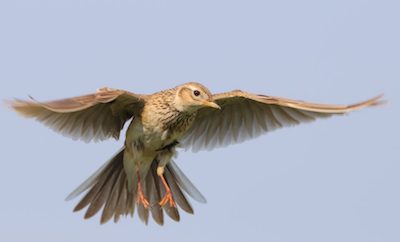
Skylark

(Skylark: https://findingnature.co.uk/animal/skylark/ )

In Great Trade Route, Ford Madox Ford, recalling a visit to a New Jersey truck farm in the company of William Carlos Williams, commented on the behaviour of a snipe which was distracting the men from the nest to protect its young, an example of what Gilbert White famously termed storgé, using the Greek word for familial or ‘natural’ affection, one of the four Greek terms for ‘love’, along with philia, agape and eros: all were discussed in C. S. Lewis’s book, The Four Loves (1960).[1]

Ford often mentioned Gilbert White of Selborne (born 18 July 1720), the ‘parson-naturalist’, in both fictional and non-fictional contexts. In Parade’s End, White crops up in the first volume, Some Do Not. . .  as Christopher Tietjens spars with Valentine Wannop on their night-ride.

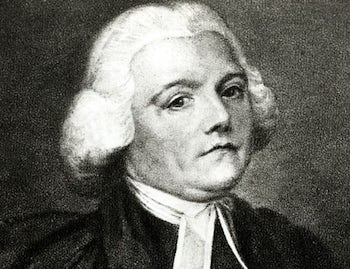
Gilbert-White

(Gilbert White)

‘He said:
“Where do you get your absurd Latin nomenclature from? Isn’t it phalæna …
She had answered:
“From White . . . The Natural History of Selborne is the only natural history I ever read….
“He’s the last English writer that could write,” said Tietjens.
“He calls the downs ‘those majestic and amusing mountains,’” she said. “Where do you get your dreadful Latin pronunciation from? Phal i i na! To rhyme with Dinah!”
“It’s ‘sublime and amusing mountains,’ not ‘majestic and amusing,’” Tietjens said. “I got my Latin pronunciation, like all public schoolboys of to-day, from the German.”’[2]

Later, in the third volume, A Man Could Stand Up—, Tietjens is in the trenches, where his Sergeant enthusiastically praises the skylark’s ‘Won’erful trust in yumanity! Won’erful hinstinck set in the fethered brest by the Halmighty!’

Tietjens says ‘mildly’ that he thinks the Sergeant has ‘got his natural history wrong. He must divide the males from the females. The females sat on the nest through obstinate attachment to their eggs; the males obstinately soared above the nests in order to pour out abuse at other male skylarks in the vicinity.’

‘“Gilbert White of Selbourne,” he said to the Sergeant, “called the behaviour of the female STORGE: a good word for it.” But, as for trust in humanity, the Sergeant might take it that larks never gave us a thought. We were part of the landscape and if what destroyed their nests whilst they sat on them was a bit of H[igh].E[xplosive]. shell or the coulter of a plough it was all one to them.’

The sergeant is highly sceptical of such sentiments:

‘“Ju ’eer what the orfcer said, Corporal,” the one said to the other. Wottever’ll ’e say next! Skylarks not trust ’uman beens in battles! Cor!”
The other grunted and, mournfully, the voices died out.’

Later in the same volume, Ford recurs to White in Valentine’s own reflections – Ford uses the image or allusion echoed in the thoughts of multiple characters to frequently brilliant effect:

‘Her mother was too cunning for them. With the cunning that makes the mother wild-duck tumble apparently broken-winged just under your feet to decoy you away from her little things. STORGE, Gilbert White calls it!’[3]

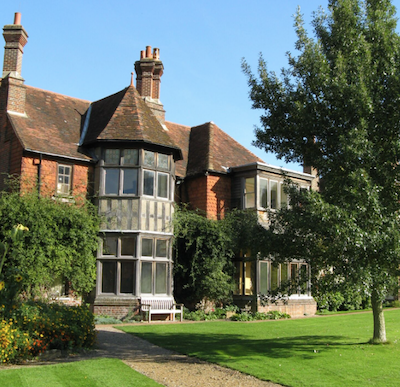
White-The-Wakes

(The Wakes, Gilbert White’s house:
http://gilbertwhiteshouse.org.uk/?venue=gilbert-whites-house)

In The Farther Shore: A Natural History of Perception, 1798-1984, a superb, rich study of how technological developments since the eighteenth century have affected the ways in which we interpret the world, Don Gifford wrote of how, for Samuel Johnson and Samuel Taylor Coleridge, the ambition to be generally well read, that is, to have a reasonable grasp of all that was being published and made available, ‘was within reach’, and that a community of those sharing that distinction or at least that ambition was ‘at least imagined to be a given among educated men and women.’ His footnote mentions the assumption evident in Gilbert White’s letters that his correspondents shared his acquaintance with Dryden, Pope, Addison, Swift, Gray, Johnson, Hume, Gibbon, Sterne – as well as with the Bible, Virgil, Homer, Horace, the Koran, Chaucer, Shakespeare and Milton. By the mid-80s (when he was writing this book), Gifford adds, ‘the idea of being well read and of belonging to such a community is a joke we have politely learned not to mention except with a shrug of self-deprecation.’

Of course, White’s acquaintance with Pope was not only with the man’s work: he was presented with a copy of Pope’s six-volume translation of the Iliad by the poet himself, when graduating with distinction from Oriel College, Oxford, in 1743.[4]

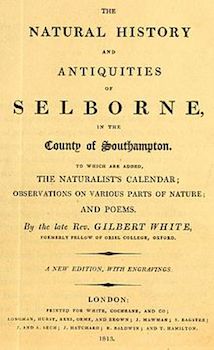
White’s fascinating and deceptively simple work has embedded itself in English culture in numerous contexts. His genius, as Ronald Blythe remarks, was ‘to revolutionise the study of natural history by noting what exactly lay outside his own back-door.’[5] In his first letter to the Honourable Daines Barrington in June 1769, White wrote, ‘I see you are a gentleman of great candour, and one that will make allowances; especially where the writer professes to be an out-door naturalist, one that takes his observations from the subject itself, and not from the writings of others’ (Selborne 104). He produced hundreds of pages, records of looking and listening and remembering and wondering. Birds, plants, insects, weather, animals, not least the human. ‘My musical friend, at whose house I am now visiting, has tried all the owls that are his near neighbours with a pitch-pipe set at concert-pitch, and finds they all hoot in B flat. He will examine the nightingales next spring’ (Selborne 127).

White's_Selborne_1813_title_page

The local as the universal. A hundred and eighty years after White’s death, William Carlos Williams would note that the poet’s business was ‘to write particularly, as a physician works, upon a patient, in the particular to discover the universal.’ He quoted the line of John Dewey’s that he had come upon by chance, ‘The local is the only universal, upon that all else builds’, commenting elsewhere that, ‘in proportion as a man has bestirred himself to become awake to his own locality he will perceive more and more of what is disclosed and find himself in a position to make the necessary translations.’[6] Williams in Rutherford; Thoreau in Concord; White in Selborne.

Don Gifford points out that, ‘In effect, White’s perspective differs radically from our own because he had no a priori basis for distinguishing between trivial and significant things.’ So, in addition to seeing with his own eyes, White ‘had to see cumulatively, a second order of seeing’. He tells the story of Henry Thoreau reducing Ellery Channing to tears when the two men went out into the woods together: Channing knew so little about what to record that he returned with an empty notebook, desperate and frustrated.[7]

White’s journals were published in 1931 and, Alexandra Harris comments, ‘his work was tirelessly reissued over the next decade.’ But then, in addition to being valued for his ‘timeless qualities’, White was ‘also being used as someone relevant to the present time precisely because the world he knew was disappearing.’[8]

When we read those writers detailing the current decline or disappearance of so much British wildlife, through environmental damage, farming practices and government policies, the parallels hardly need stressing.

On the matter of White’s journals, let your fingers do the running, to this superb resource:
http://naturalhistoryofselborne.com/

House and garden, café and shop?
http://www.gilbertwhiteshouse.org.uk/


References

[1] Ford Madox Ford, Great Trade Route (London: Allen & Unwin, 1937), 184; Gilbert White, The Illustrated History of Selborne (London: Macmillan, 1984), 114, 133-134.

[2] Ford Madox Ford, Some Do Not. . . (1924; edited by Max Saunders, Manchester: Carcanet Press, 2010), 163-164.

[3] Ford Madox Ford, A Man Could Stand Up— (1926; edited by Sara Haslam, Manchester: Carcanet, 2011), 63, 64, 65, 201.

[4] Don Gifford, The Farther Shore: A Natural History of Perception (London: Faber and Faber, 1990), 158 and n., 5.

[5] Ronald Blythe, Aftermath: Selected Writings 1960-2010, edited by Peter Tolhurst (Norwich: Black Dog Books, 2010), 226.

[6] William Carlos Williams, The Autobiography of William Carlos Williams (New York: New Directions, 1967), 391; Selected Essays (New York: New Directions, 1969), 28.

[7] Gifford, Farther Shore, 10, 11.

[8] Alexandra Harris, Romantic Moderns: English Writers, Artists and the Imagination from Virginia Woolf to John Piper (London: Thames & Hudson 2010), 171, 173.