In the Scales

On 25 August 1773, in an indifferent inn at Banff, James Boswell watched Samuel Johnson pen a long letter to Mrs Thrale. ‘I wondered to see him write so much so easily. He verified his own doctrine that “a man may always write when he will set himself doggedly to it.”’[1]

Dogged, yes: ‘sullen’ I don’t quite see but ‘pertinacious’, holding obstinately to an opinion or a purpose, unyielding, we can certainly settle for. So that

Writing of April in the Scotland uplands, of mainly grey days, cold and snow, the 20-year-old John Buchan remarked: ‘Nor have we any of the common associations of spring, like the singing of birds. A mavis or a blackbird may on occasion break into a few notes, and there is, for certain, an increasing twitter among the trees. But the clear note of the lark as yet is not; the linnet does not pipe; the many named finches are still silent.’[2]

We have also been in the hills this April, though further south, with not a hint of snow. A few days in the Black Mountains, the border country, with its panoramic vistas and the River Wye looking sleek and animated and glossy, and where, on some roads, you move from England to Wales and back again with dizzying ease and frequency. That was in a foreign country. . .

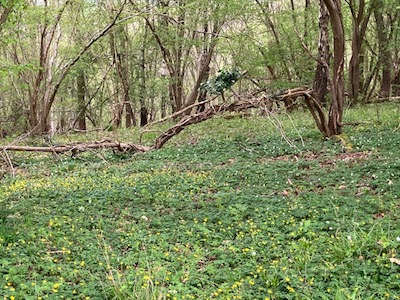
As for birds. . . . In a few days and in a limited area, we saw or heard (frequently both), skylark, chaffinch, blackbird, robin, blackcap, sparrow, wood pigeon, linnet,  chiffchaff, wren, dunnock, crow, goldfinch and song thrush (Buchan’s ‘mavis’).[3] Many of these in the trees and the grass outside the living-room or kitchen windows of the farmhouse we were renting, others on walks through fields and woods.
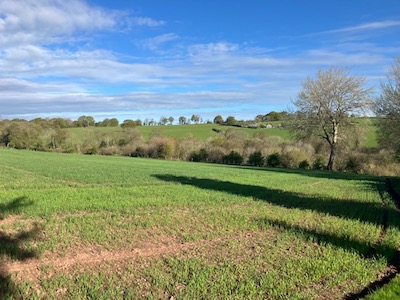
Birds we had, then, in abundance. Space and grass and sheep and silence also. Wi-Fi, broadband, not so much. ‘I’ve rebooted it and logged on several times, it seems fine now’, the housekeeper said before leaving. The blue light lasted for at least a minute. The Librarian tried resetting it a few times, quite a few times, over the next few days with the same result. But we had food, wine, books and packs of cards. There were mobile phones too, in the event of an emergency. We survived. And what lengths would we go to, should we go to, for the latest news? After all, given the current state of things, should you not warm to neo-fascist extremism or the aggressive erasure of history or the continuing mass murder of civilians or the vicious suppression of non-violent protest, there’s little in daily bulletins to lift the spirits. Some people, though—and I have it on the best authority—can find it oddly cheering to see, as they cross a field from stile to stile, a pheasant strolling to and fro in that field, apparently without a care in the world.
So Inspector Jules Maigret sweltered in August heat or remained on edge when ‘no one had ever known such a damp, cold gloomy March.’[4] Virginia Woolf did not go to the party at Gordon Square where the d’Aranyi sisters, Adila, Hortense and Jelly (‘great-nieces of the renowned Hungarian violinist Joachim’) would be playing, because Leonard arrived home too late, ‘& it rained, & really, we didn’t want to go.’[5] And I was glad to learn about the Society of Dilettanti, concerned with practical patronage of the arts, whose members included Sir Joshua Reynolds, David Garrick and Charles James Fox, and to be told of Horace Walpole’s writing that, while the nominal qualification for membership of the Society was having been to Italy, the real one was being drunk.[6]
After the diversions of fictional Paris and historical Brighton, I am now with James Boswell, young Boswell on his Grand Tour, after Holland, currently in Germany, soon to be in Switzerland. He is still often preposterous, still wholly irresistible—and still battling with the Black Dog (‘The fiend laid hold of me’). But he finds diversions enough: ‘I must not forget to mark that I fell in love with the beauteous Princess Elizabeth. I talked of carrying her off from the Prince of Prussia, and so occasioning a second Trojan War.’[7]

We are back, then, via taxi and train among Good Friday crowds, walking again in the park amidst hurtling spaniels rather than quietly to and fro along a secluded lane with teeming hedgerows, remarkable trees and glimpses of an unfamiliar breed of sheep, which gave rise to a good deal of highly technical agricultural vocabulary: ‘God, they’re chunky!’ Too far away for a convincing photograph but, scanning various sheep breeders’ websites, we agree that they were probably Zwartbles.

As confirmed by such remarks, we are now returned to what E. M. Forster termed the world of ‘telegrams and anger’—minus the telegrams, of course, and seemingly with many times the anger. We are also back, that is to say, in the firm grip of the internet. Does that warrant one cheer or two?


Notes

[1] James Boswell, The Journal of a Tour to the Hebrides with Samuel Johnson, LL.D., edited by Ian McGowan (1785; Edinburgh: Canongate Books, 1996), 234-235.

[2] John Buchan, ‘April in the Hills’, in Scholar-Gipsies (1896; London: John Lane The Bodley Head, 1927), 28.

[3] Apparently derived from the French mauvis (though, confusingly, this seems to mean ‘redwing’, turdus iliacus rather than turdus philomelos). ‘It is still used for the bird in Orkney and survives elsewhere in Scotland’: Mark Cocker and Richard Mabey, Birds Britannica (London: Chatto & Windus, 2005),  358-359.

[4] Georges Simenon, Maigret’s Failure, translated by William Hobson (Penguin Books, 2025), 1; August heat in Maigret Sets a Trap, translated by Siân Reynolds (London: Penguin Books, 2017).

[5] The Diary of Virginia Woolf, Volume 1: 1915-19, edited by Anne Olivier Bell (with the Asheham Diary, London: Granta, 2023), 11-12.

[6] Venetia Murray, High Society in the Regency Period: 1780-1830 (London: Penguin Books, 1999), 165.

[7] Boswell on the Grand Tour: Germany and Switzerland 1764, edited by Frederick A. Pottle (London: William Heinemann, 1953), 12, 67.
Wording, birding


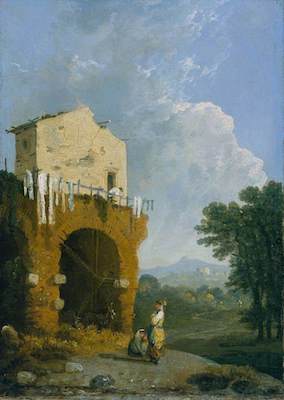
(Robert Wilson, Hadrian’s Villa, c.1765: Tate)

‘At night I trailed from one window recess to another’, the Emperor Hadrian recalls in Marguerite Yourcenar’s novel, ‘from balcony to balcony through the rooms of that palace where the walls were still cracked from the earthquake, here and there tracing my astrological calculations upon the stones, and questioning the trembling stars. But it is on earth that the signs of the future have to be sought.’[1]

So it is. ‘Ghosts await you in the future if they do not follow you from the past’, Sarah Moss wrote, and: ‘No one who knows what happens in the world, what humans do to humans, has any claim to contentment.’[2] Yes. I write pages and delete them, since they serve no real purpose except to relieve my feelings for a short while. The past is not always a foreign country and they do not always do things differently there. As Pankaj Mishra said in his recent ‘Winter Lecture’: ‘It hardly seems believable, but the evidence has become overwhelming: we are witnessing some kind of collapse in the free world.’[3]

Early summer creeps on, though fitfully. Watching rose petals fall from the bush in a light wind, I remembered Pound’s Canto XIII, the first in which Confucius appears, and which ends:

The blossoms of the apricot
            blow from the east to the west
And I have tried to keep them from falling.[4]


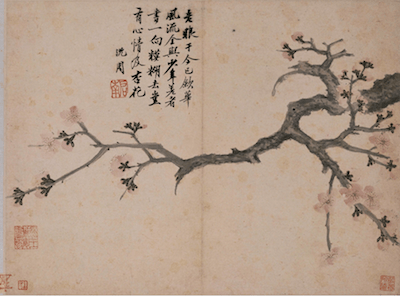
(Shen Zhou, ‘Apricot Blossom’, leaf from the album, Dreaming of Travelling While in Bed: Palace Museum, Beijing)

Ronald Bush observed that: ‘To keep the blossoms of the apricot from falling is to keep nature in a permanent vernal bounty.’[5] It also seems to me to signify cultural contact, the free exchange of ideas, without the limits of borders or nationalism. At that stage, Pound was using Guillaume Pauthier’s translation of Confucian texts in Confucius et Mencius: les quatre livres de philosophie morale et politique de la Chine and had written in ‘Exile’s Letter’:

Intelligent men came drifting in from the sea and from the west border,
And with them, and with you especially
There was nothing at cross purpose,
And they made nothing of sea-crossing or of mountain crossing,
If only they could be of that fellowship,
And we all spoke out our hearts and minds, and without regret.[6]

On the daily walks we speak our minds but, just lately, exchanges are punctuated by information from our newly downloaded Merlin app, available from Cornell University, which draws on a huge database of bird sounds, sightings and photographs to identify what you’re probably hearing in that nearby tree or passing overhead.


So we stroll along narrow paths thus:

Politics, dinner, politics. . .
‘Blue tit. Carrion crow. Wren.’
Politics, domestic details, politics, cat, literary chuntering. . .
‘Dunnock. Blackcap. Chiffchaff.’
Ash dieback, politics, university gossip, politics. . .
‘Blackbird. Herring gull. Great tit. Jay!’

Excuse me, sir, let me just ask about the birdsong: in a world both literally and metaphorically on fire, democracies hanging by a thread, war crimes, liars and knaves in public places – does it help?

Why, yes, a little – rather more than a little, in fact. . .


Notes

[1] Marguerite Yourcenar, The Memoirs of Hadrian, translated by Grace Frick, with Yourcenar (1951; Penguin Books, 2000), 82.

[2] Sarah Moss, Signs for Lost Children (London: Granta Books, 2016), 88-89, 97.

[3] Pankaj Mishra, ‘The Shoah after Gaza’ [Winter Lecture], London Review of Books 46, 5 (7 March 2024).

[4] The Cantos of Ezra Pound, fourth collected edition (London: Faber and Faber, 1987), 60.

[5] Ronald Bush, The Genesis of Ezra Pound’s Cantos (Princeton: Princeton University Press, 1989), 251.

[6] ‘Exile’s Letter’, Ezra Pound: Poems and Translations, edited by Richard Sieburth (New York: Library of America, 2003), 255.

Passing the critical stage, or not


RSPB: https://www.rspb.org.uk/birds-and-wildlife/jay

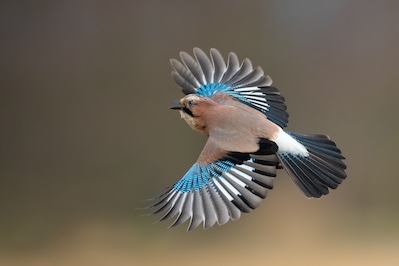
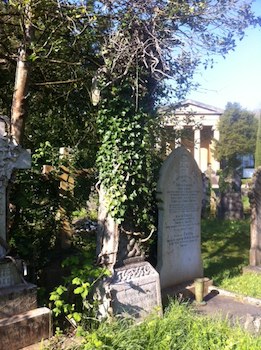
The highlight of yesterday morning was the jay, garrulus glandarius, briefly perched on the high roof of the shed beyond our back fence, a bird we’ve seen high up in the trees of the Victorian cemetery but never so close to home. The lowlight, in the wake of the announcement of a forthcoming General Election, now a little over five weeks away, was probably the reported Tory proposals to cut taxes for the rich again and to bring back National Service. This last appears to be an attempt to outflank satirists with a first strike of absurdity and anachronism. We await with bated breath the reintroduction to the statute books of the death penalty for stealing a pocket handkerchief, damaging Westminster Bridge or impersonating a Chelsea Pensioner.

Reading the stories of  Somerville and Ross lately, I alighted on Major Sinclair Yeates, together with Flurry Knox and the visiting Englishman Leigh Kelway, taking refuge from the rain in a public-house, having failed to get to the country races: ‘The bread tasted of mice, the butter of turf-smoke, the tea of brown paper, but we had got past the critical stage.’[1]

On occasion, we – or certainly I – don’t get to the critical stage, much less past it. Some things, moments, sights, sounds, are merely to be experienced and enjoyed (or, occasionally, suffered), without evaluation or ranking or even attempted analysis. And sometimes, writing so good or so distinctive that it delays or disarms criticism.

After a recent lunch, the librarian lingered at the table, extending her familiarity with the work of Olivia Laing, occasionally pausing to tell me how good it—The Garden Against Time—was. On my side of the table, I was extending my familiarity with the work of Anne Carson (Wrong Norma), frowning occasionally, laughing often and muttering, not at all rarely, ‘Wonderful!’ None of which, I suppose, passes muster as incisive literary analysis or exegesis. Not all the world’s a critical stage, you might say. (I’ve since read the Olivia Laing myself, muttering ‘Wonderful’ from time to time.)


The authors: from Irish Memories (1919)

‘It has been said of Ireland that the inevitable never happens, and that the impossible invariably occurs.’[2]

The volume that contains the Somerville and Ross story was published 125 years ago and is dense with hunting and hunting lore: horses, hounds, whips, drags and the rest. I could hardly be further from the imagined target audience if an interest in, or sympathy with, hunting were assumed. But that, of course, is not the point. The point is the writing, the humour, the sharply drawn characters, the thorough, detailed knowledge of Irish people and culture with which it deals, the politics of the time not made central but subtly pointed up from time to time.

In the Laing book, in fact, there are hundreds of plant names that meant nothing to me, functioning rather as sound poetry, mantra or music. But then, as more than one critic has pointed out, you don’t need detailed knowledge of baccarat or poker to take pleasure in Ian Fleming’s Casino Royale and, more broadly, the narrator or central character of a novel with whom we don’t sympathise, empathise, agree or even like at all is pretty standard. So too the frequent apparent gap between the maker and the made, and the recurrent agonising over how one can possibly read X’s writings or look at Y’s pictures or listen to Z’s music because they were such awful people doesn’t really connect with me. . .

On hunting, Walter de la Mare had a neat little poem:

Hi! Handsome hunting man,
Fire your little gun,
Bang! Now that animal
Is dead and dumb and done.
Never more to peep again, creep again, leap again,
Eat or sleep or drink again, oh, what fun![3]

In a New York Times Book Review piece, W. H. Auden quotes it and concludes: ‘A child brought up on such verses may break his mother’s heart or die on the gallows but he will never suffer from a tin ear.’[4]

Tin ears are very widely rampant just now (if ears can in fact ramp). But then, in the cemetery this morning: two jays in the same tree, quite close together. I doubt if the Tories, in their distorting lowlight mirror, can rival that.


Notes

[1] E. Œ. Somerville & Martin Ross, ‘Lisheen Races, Second-Hand’, in The Irish R. M. (London: Abacus, 1989), 102-103.

[2] ‘Major Apollo Riggs: Part III’, The Irish R. M., 518.

[3] Walter de la Mare, Rhymes and Verses: Collected Poems for Children (New York: Holt, 1988), 86.

[4] W. H. Auden, ‘An Appreciation of the Lyric Verse of Walter de la Mare’ (NYTBR, 26 February 1956), reprinted in Prose, Volume IV: 1956-1962, edited by Edward Mendelson (Princeton: Princeton University Press, 2010), 8. He noted that Randall Jarrell’s was ‘the only good American article about de la Mare’s recent work that I have come across’. This must be the piece published in The Nation (1946) and included in Poetry and the Age (1955; London: Faber and Faber, 1973), 137-141.

Blackbird, macaroni

(Edward Atkinson Hornel, The Blackbird Song: Dundee Art Galleries and Museum Collection)

I thought for a moment that the blackbird in the tree that reaches over the back neighbour’s fence into our garden had sung itself hoarse. It’s certainly dwindled, unsurprisingly, since it was already in full flow when I came downstairs, cheered on by the cat, at 05:30 this morning. There is even a tentative sunlight, flickering a little, as if unsure of itself, a faltering connection – and who can wonder, at the end of an 18-month period (since October 2022) which is the wettest in Met Office recorded history? Of course, they only started collecting the data in 1836 (Guardian, 10 April 2024), so it’s not even 200 years yet.

The weekly journals arrive, still a little light on the good news. ‘Easy stories drive out hard ones. Simple paradigms prevail over complicated ones.’[1] Well, yes, though sometimes it really is that simple and, hearing some of the voices currently uplifted in the world, brings the sentiment expressed in the Goncourt Journal vividly to mind: ‘If there is a God, atheism must strike Him as less of an insult than religion.’[2]

The ice-cream van drifts into hearing, still a few streets off, playing ‘Yankee Doodle went to town’. I used to be rather baffled by the line, ‘Stuck a feather in his cap / and called it macaroni.’ Now, along with anyone that has access to the internet, and, presumably, millions of Americans, I’m no longer baffled, at least by that. As the incomparable Opie team has it: ‘Young dandies, who had been on the Tour, wore fantastical clothes, and affected Continental habits, were dubbed “Macaronis”; there was, indeed, a Macaroni Club flourishing in 1764.’[3] By 1772, a year before the Boston Tea Party and three years before the American War of Independence began, the Macaronis ‘were distinguished especially by an immense knot of artificial hair worn at the back but with the peruke flat on top’.[4] The story goes that the British forces sang it to mock those unsophisticated colonials but the Yankees took it up anyway. And, come to think of it, they won that war.

Philip Dawe, ‘The Macaroni. A Real Character at the Late Masquerade’ (1773)

Later, the rain still holding off – and now I can hear the bees. The tulips are open and not yet fallen; the cherry tree in its strong pot some seven feet high; branches above the high fence nodding; faint tones of the Italian near-neighbour and the laughter of a few guests, their windows must be ajar, the season’s premier opening; less faint tones of scaffolders a few houses along; Harry the Cat nodding on an outside blanket; all this is the first real scent of summer. I remember Sarah Bakewell noting that Plutarch’s Moralia, translated into French in the same year in which Montaigne began writing Essays, touched on the question of how to achieve peace of mind: ‘Plutarch’s advice was the same as Seneca’s: focus on what is present in front of you, and pay full attention to it.’[5] No doubt both Plutarch and Seneca had their difficulties to contend with – but one of those was not the internet, with its clamorous, competing and often lethal versions of the world. Reading of Elizabeth I’s ‘innate disposition to hedge’ in ‘the face of peril or hostility’, I noted Strachey’s later remarks about Robert Cecil: ‘But passivity, too, may be a kind of action – may, in fact, prove more full of consequence than action itself.’[6] Indeed. Or, too often, alas.


Notes

[1] Phyllis Rose, Parallel Lives: Five Victorian Marriages (London: Chatto & Windus, 1984), 9.

[2] Edmund and Jules de Goncourt, entry for 24 January 1868,  Pages From the Goncourt Journal, edited and translated by Robert Baldick (New York: New York Review Books, 2006), 135.

[3] The Oxford Dictionary of Nursery Rhymes, edited by Iona and Peter Opie, second edition (Oxford: Oxford University Press, 1997), 532.

[4] James Stevens Cox, An Illustrated Dictionary of Hairdressing and Wigmaking (London: Batsford, 1984), 99.

[5] Sarah Bakewell, How To Live: A Life of Montaigne in one question and twenty attempts at an answer (London: Vintage 2011), 32.

[6] Lytton Strachey, Elizabeth and Essex: a Tragic History (1928; Oxford: Oxford University Press, 1981), 114, 140.

May Day, jay day


Our local Victorian cemetery is pretty quiet, certainly early on a Saturday—Mayday—morning. Good walking, orchestral birdsong. The sparrows en route are noisy, even clamorous in two or three specific bushes, but it’s chatter, sociability. Some of the cemetery birdsong smacks more of performance.

At one point, the Librarian and I conduct a highly technical ornithological exchange.

—What’s that bird up there?
—Where? Oh, just a pigeon, isn’t it?
—Is it? I thought there was something about the beak.
—Oh yes, looks like a finch.
—I thought perhaps a jay.
Tiring of this, the bird launches itself into space.
—Oh yes! You can see now. Beautiful colours. It is a jay.

In Ford Madox Ford’s 1923 novel, The Marsden Case, the narrator is found ‘gazing through a plate-glass window set in granite at a blue straw hat trimmed with jay’s wings pointing backwards so that it resembled a helmet of Mercury’.[1] ‘The jay, the “British Bird of Paradise”, displaying his vari-coloured feathers at a spring-time gathering’, W. H. Hudson wrote in one of his catalogues of the birds which ‘give most delight to the aesthetic sense’.[2]


(Benjamin Haughton, Jay:  Portsmouth Museums and Visitor Services)

Ford was a great admirer of—and well acquainted with—Hudson, who devoted a great deal of time in his later years to combatting the barbaric treatment of birds, which slaughtered hundreds of thousands and drove many species to extinction. ‘Rare visitors were shot on sight. In May 1870 a flock of forty golden orioles, arriving in woods near Penzance, was quickly wiped out: “everyone in the place was up and after them.”’ This ‘spirit of destruction prevailed everywhere’, in town and country and ‘running through all classes.’ Fashionable women wore hats ‘trimmed with gulls’ wings or the plumes of great crested grebes, or a ball dress set off by a spray of goldfinches or robins.’ Hudson was closely involved with the founding in the late 1880s of the Society for the Protection of Birds, which was incorporated by Royal charter in 1904.[3]


‘The wilderness is near as well as dear to every man’, Henry Thoreau wrote, ‘The very uprightness of the pines and maples asserts the ancient rectitude and vigor of nature. Our lives need the relief of such a background, where the pine flourishes and the jay still screams.’[4]

As well it might.


Notes


[1] Ford Madox Ford, The Marsden Case (London: Duckworth, 1923), 22-23.

[2] Hudson, Birds and Man, (1901); see  Ruth Tomalin, W. H. Hudson: A Biography (Oxford: Oxford University Press, 1984), 150.

[3] Tomalin, 144, 145, 146-149; RSPB website: https://www.rspb.org.uk/

[4] Thoreau, A Week on the Concord and Merrimack Rivers (New York: Crowell, 1961; Apollo, 1966; Library of America edition, 1985), 138.

Owl’s Eyes

Owls

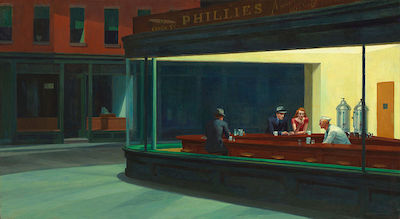
My daughter’s flight from Barcelona, due late in the evening, is delayed by two hours, so I sit up, well beyond my usual bedtime. ‘Night-owl’, people used to say, certainly my mother used to say, of those who kept late hours, though Edward Hopper’s famous 1942 painting of four people in a diner keeping very late hours, ‘the classic film noir Hopper’, as Robert Hughes calls it, is entitled Nighthawks.[1]

Nighthawks

(Edward Hopper, Nighthawks: The Art Institute of Chicago; Friends of American Art Collection)

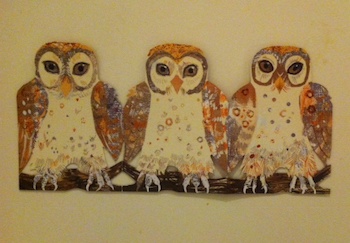
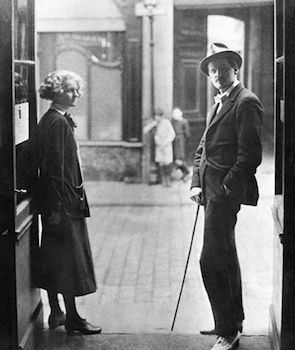
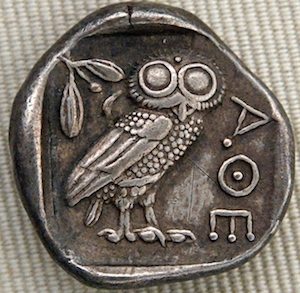
Owls, though, I associate with at least three firsts in my life: in the pages of the brief travel journal I kept on my first trip to Greece some twenty years ago, I see several mentions of the call of the Scops owl, the Eurasian (or Common) Scops owl, known to a generation of young (and older) readers of J. K. Rowling’s Harry Potter books because Ron Weasley’s owl is a Scops. Similar in some ways to a Scops and, apparently, sometimes mistaken for it, is the Little Owl, Athene noctua, sacred owl of Athena. The goddess with the grey eyes, she was traditionally described as. When James Joyce talked to Sylvia Beach of his eye problems and mentioned glaucoma, Beach remembered: ‘It was the first time I had ever heard of this disease, with its beautiful name. “The gray owl eyes of Athena,” said Joyce.’[2] So said the author of Ulysses but, apparently, while Homer uses the word for an ‘owl’ (skops) only once, glaukopis—derived from glaux, the generic term for ‘owl’—occurs some ninety times in his work. It may have meant ‘sharp-eyed’ or ‘with gleaming eyes’.[3]

SB-JJ

(Sylvia Beach and James Joyce via The Washington Times)

I was working on my thesis when my supervisor, the poet Charles Tomlinson, mentioned in conversation that John Ruskin had discussed the meaning of glaukopis in a book called The Queen of the Air (1869). ‘In her prudence, or sight in darkness, she is “Glaukopis,” owl-eyed’, he wrote of Athena. And a little later, Glaukopis ‘chiefly means grey-eyed: grey standing for a pale or luminous blue; but it only means “owl-eyed” in thought of the roundness and expansion, not from the colour; this breadth and brightness being, again, in their moral sense, typical of the breadth, intensity, and singleness of the sight in prudence’.[4]

I’d been reading Ezra Pound on Allen Upward and the pages to which Charles had directed me evolved into a large part of my first published essay.[5] Upward regarded with a severely critical eye the attempts of scholars thus far ‘to understand the word glaukopis, given to the goddess Athene. Did it mean blue-eyed, or gray-eyed, or—by the aid of Sanskrit—merely glare-eyed? And all the time they had not only the word glaux staring them in the face, as the Athenian name for owl, and the name of ox-eyed Hera to guide them, but they had the owl itself cut at the foot of every statue of Athene, and stamped on every coin of Athens, to tell them that she was the owl-eyed goddess, the lightning that blinks like an owl. For what is characteristic of the owl’s eyes is not that they glare, but that they suddenly leave off glaring, like lighthouses whose light is shut off. We may see the shutter of the lightning in that mask that overhangs Athene’s brow, and hear its click in the word glaukos. And the leafage of the olive, whose writhen trunk bears, as it were, the lightning’s brand, does not glare, but glitters, the pale under face of the leaves alternating with the dark upper face, and so the olive is Athene’s tree, and is called glaukos. Why need we carry owls to Oxford?’[6] (The many owls that were in Athens gave rise to the saying, ‘To bring owls to Athens’, an early forerunner of the English phrase, ‘to take coals to Newcastle’.)

Athenes-Owl

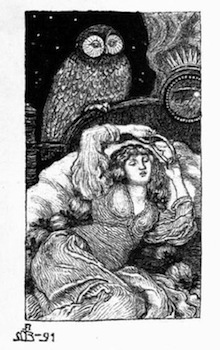
The novelist Violet Hunt, who often received Ezra Pound at South Lodge, her home on Campden Hill Road, had an owl named Ann Veronica, after the novel by H. G. Wells, ‘a very pretty little owl’ but—‘She died untimely.’[7] The owl was part of a menagerie that included a bulldog, nine Persian cats, and several parrots that ‘shrieked “Ezra! Ezra!” whenever they saw him bouncing up the walk.’[8] Hunt’s partner for a decade was, of course, Ford Madox Ford, the other main focus of my research: the rest of my essay linked Upward and his double vortex, or waterspout, with Ford’s 1913 novel The Young Lovell. Ford published almost eighty books in his lifetime but the first of them all was a fairy tale called The Brown Owl, its frontispiece created by his grandfather, the painter Ford Madox Brown.

Brown_Owl_FMB

The mountains being so tall
And forcing the town on the river,
The market’s so small
That, with the wet cobbles, dark arches and all,
The owls
(For in dark rainy weather the owls fly out
Well before four), so the owls
In the gloom
Have too little room
And brush by the saint on the fountain
In veering about.[9]

 
References

[1] Robert Hughes, American Visions: The Epic History of Art in America (London: The Harvill Press, 1997), 427.

[2] Sylvia Beach, Shakespeare and Company, new edition (Lincoln: University of Nebraska Press, 1991), 39.

[3] Michael Ferber, A Dictionary of Literary Symbols (Cambridge: Cambridge University Press, 1999), 146. Liddell and Scott’s Greek Lexicon has ‘epithet of Minerva’—Roman goddess identified with Greek Athene—‘with gleaming eyes’.

[4] The Works of John Ruskin, Library Edition, Volume XIX: The Cestus of Aglaia and The Queen of the Air with Other Papers and Lectures on Art and Literature, 1860–1870, edited by E. T. Cook and Alexander Wedderburn (London: George Allen, 1905), 306, 381.

[5] Paul Skinner, ‘Of Owls and Waterspouts’, Paideuma, 17, 1 (Spring 1988), 59-68.

[6] Allen Upward, The New Word: An Open Letter addressed to the Swedish Academy in Stockholm on the meaning of the word IDEALIST (New York: Mitchell Kennerley, 1910), 238.

[7] Violet Hunt, The Flurried Years (London: Hurst and Blackett, 1926), 109.

[8] Barbara Belford, Violet: The Story of the Irrepressible Violet Hunt and her Circle of Lovers and Friends—Ford Madox Ford, H. G. Wells, Somerset Maugham, and Henry James (New York: Simon and Schuster, 1990), 166-167.

[9] Ford Madox Ford, ‘In the Little Old Market-place’, Selected Poems, edited and introduced by Max Saunders (Manchester: Carcanet Press, 1997), 68.


Lesbia’s lively guest

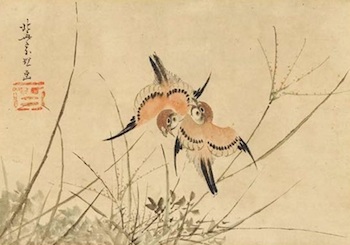
hokusai-sparrows

(Hokusai, Sparrows)

Snow still on the ground from the falls of Thursday night, which produced enough to satisfy the Librarian’s appetite for such things and to allow for taking impressive photographs of a crow in the park. Nothing much since but the temperature hasn’t climbed enough to clear it. And still no sign of the robin – which, I gather, doesn’t do well in cold weather. I clear the water dish each morning of its solid disc of ice and refill it, and have scraped off the hillocks of snow from the seed tray and feeder, but I’ve noticed only one pigeon and one sparrow turn up so far.

The sparrow has been the more persistent: two visits on Friday and three on Saturday. Long ones too, perched in the seed tray for up to ten minutes. Apart from their inherent attractiveness, I’ve always felt particularly sympathetic towards sparrows since reading about how they were regarded as unusually lustful by earlier ages. Apparently, the Greek strouthos (sparrow) could mean ‘lewd fellow’ or ‘lecher’.[1] Sappho had Aphrodite’s chariot pulled by them:

In that chariot pulled by sparrows reined and bitted,
Swift in their flying, a quick blur aquiver,
Beautiful, high. They drew you across steep air
Down to the black earth[2]

More famous is Catullus, first detailing the interaction between Lesbia — Clodia Metelli – and her pet sparrow. In Walter Savage Landor’s version:

Sparrow! Lesbia’s lively guest,
Cherish’d ever in her breast!
Whom with tantalizing jokes
Oft to peck her she provokes:
Thus in pretty playful wiles
Love and absence she beguiles.

Oft, like her, to ease my pain,
I thy little fondness gain.
Dear to me as, bards have told,
Was the apple’s orb of gold
To the Nymph whose long-tied zone
That could loose, and that alone.[3]

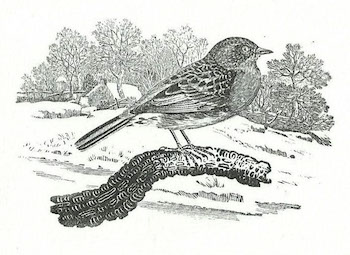
Bewick-Dunnock

(Thomas Bewick’s Dunnock, or Hedgesparrow)

In the following poem, Catullus responds to the sparrow’s death. It has ‘now hopped solitarily/ down that dark alleyway of no returns’, its loss ‘swelling my girl’s veiled eyes/ which redden with tears.’[4]

There’s a remarkable Scots version of Catullus 3 by G. S. Davies (1912):

Weep, weep, ye Loves and Cupids all,
And ilka Man o’ decent feelin’:
My lassie’s lost her wee, wee bird,
And that’s a loss, ye’ll ken, past healin’.

The lassie lo’ed him like her een:
The darling wee thing lo’ed the ither,
And knew and nestled to her breast,
As only bairnie to her mither.

Her bosom was his dear, dear haunt—
So dear, he cared na lang to leave it;
He’d nae but gang his ain sma’ jaunt,
And flutter piping back bereavit.

The wee thing’s gane the shadowy road
That’s never traveled back by ony:
Out on ye, Shades! Ye’re greedy aye
To grab at aught that’s brave and bonny.

Puir, foolish, fondling, bonnie bird,
Ye little ken what wark ye’re leavin’:
Ye’ve bar’d my lassie’s een grow red,
Those bonnie een grow red wi’ grieving.[5]

I’ve just found it quoted too in a post by the poet and translator A. E. Stallings on the Poetry Foundation website, where she discusses several version of Catullus, including those of Louis and Celia Zukofsky:

https://www.poetryfoundation.org/harriet/2007/09/miss-her-catullus

Then again, there’s this post by Katherine Langrish:

http://the-history-girls.blogspot.com/2018/04/lesbias-sparrow-katherine-langrish.html

In short, once again, a small bird (or its equivalent in other contexts) expands into flocks, squadrons, gigantic murmurations, up and out into limitless stretches of space and light.

I’m still keeping an eye open for the robin.


References

[1] Michael Ferber, A Dictionary of Literary Symbols (Cambridge: Cambridge University Press, 1999), 198.

[2] Sappho 1, in Guy Davenport, Seven Greeks (New York: New Directions, 1995), 69.

[3] Walter Savage Landor, ‘To the Sparrow of Lesbia’, in Charles Tomlinson, editor, Eros English’d: Classical Erotic Poetry in Translation: from Golding to Hardy (London: Bristol Classical Press, 1992), 203.

[4] The Poems of Catullus, translated with an introduction by Peter Whigham (Harmondsworth: Penguin Books, 1966), 52.

[5] The Oxford Book of Classical Verse, edited by Adrian Poole and Jeremy Maule (Oxford: Oxford University Press, 2000), 265-266.


The persistence of gulls

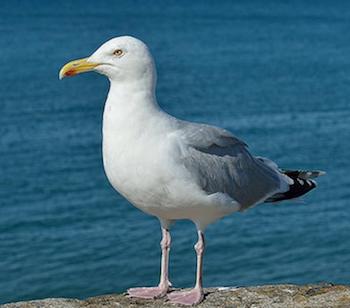
Herring-Gull

A crisp, cold morning and, walking up through the park, I see two sets each of four magpies but mainly wonder at the unusual number of common gulls, black-headed gulls and herring gulls. I recall, though, a day last year when the Librarian and I saw almost a hundred gulls scattered across the grass on either side of the park. Towards the centre of one large group of them on the left-hand side, a gathering of sparrows; towards the rear and again to one side, two loose groups of wood pigeons. All of them feeding, grazing, pecking, circling. Wet weather, the grass recently cut and still rich green. The upshot: a bad day to be a worm. That note to be scrawled in countless earthy diaries and gardening journals against the date of 16th November: Bad Worm Day.

Yes, we may outnumber the rats by six to one in this country – but there are always the gulls. . . Just a few weeks ago, walking along the front at Lyme Regis, holding tightly shut the box containing fish and chips, I was dive-bombed by a gull, its beak thumping against the lid. At Lyme these days the fish and chips stallholders routinely warn you about the gulls as they hand over your order but I’d naively thought that holding the box closed was a reasonable response to that warning.

Years ago, in my room at the top of an eighteenth-century townhouse in Bath, I would hear the gulls circling and crying outside the window. Later, living in a seaside town where gulls were, unsurprisingly, common, I would be reminded of Bath. Moving again, years later, I would recall the seaside town as a place in which I heard gulls and was reminded of Bath. And so on. On a day when their flight paths seem higher than usual, their calls still sometimes bring back a long ago holiday in Wales, in a cottage set back from the cliff edge above the beach, where gulls would ride the currents of air and be flung high up above the wall at the end of the thin garden, laughing like maniacs.

So immediately and unmistakeably evoking the sea; yet now perhaps even more familiar in urban settings, certainly in parks and on rubbish tips. As a child when I asked about seagulls spotted on pavements or rooftops, I was told: ‘It’s rough at sea.’ That was the assumption: seagulls unable to find food at sea had been driven inland, to try their luck in the cities. Now, of course, there’s so much rubbish in the streets, smeared with sugar and salt and sauces, with chunks of rotting meat and fish, why would they bother to do an honest day’s work out at sea?

Always the gulls. Certainly with the poets, through whose work they wheel and wail endlessly. Jack Bevan’s translations of the Sicilian poet Salvatore Quasimodo, who won the 1959 Nobel Prize for Literature, were published in the Penguin European Poets series in the mid-1960s (my copy’s worn but dourly resilient). Here’s ‘Again I Hear The Sea’

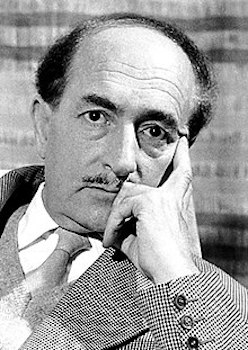
Quasimodo

(Salvatore Quasimodo)

Many nights now I have heard the sound of the sea
once more, lightly rising and falling on smooth beaches.
A voice’s echo shut away in the mind,
rising from time; and, too, this persistent
crying of gulls; perhaps of
tower birds that April
is tempting onto the plains. Once
you, with that voice, were near me;
and I wish now that there could come to you
also an echo memory of me,
like that dark ocean murmur.[1]

There was a period in bookselling when a certain kind of reader would buy a sort of starter pack: this would include Gibran’s The Prophet and Richard Bach’s Jonathan Livingston Seagull. Then, as their reading muscles toughened, they’d move on to Trout Fishing in America and Siddhartha. And then – did they all train to be therapists or did it only seem so? Perhaps only the more disturbed ones.

Elizabeth-Smart

(Elizabeth Smart)

The poet George Barker published a novel, described somewhere as ‘tortuously symbolic’, called The Dead Seagull, which drew heavily on his relationship with the novelist and poet Elizabeth Smart. A paperback, published by Panther, I believe, with heavier perhaps silk coated paper and line drawings but this could be invention. I lent it to the poet Tony Lopez decades ago and didn’t see it again. That much is not invention. These poets…

A Roman amphitheatre
crumbling in bright sunlight

no christians or lions
only the brittle dried
body of a cat

He sits, halfway up the stalls
listening to the gulls
resting his eyes

listening to the sea, so sleepy
this damned heat and the flies

startled
by the fast train to Figueras
crashing through the arches[2]

William Carlos Williams observed, conscripted or devised some symbolically peaceable gulls:

And the next thing I say is this:
I saw an eagle once circling against the clouds
over one of our principal churches—
Easter, it was—a beautiful day!
three gulls came from above the river
and crossed slowly seaward!
Oh, I know you have your own hymns, I have heard them—
and because I knew they invoked some great protector
I could not be angry with you, no matter
how much they outraged true music—

You see, it is not necessary for us to leap at each other,
and, as I told you, in the end
the gulls moved seaward very quietly.[3]

John Masefield’s Billy had his own notions about them:

‘Goneys an’ gullies an’ all o’ the birds o’ the sea
They ain’t no birds, not really,’ said Billy the Dane.
‘Not mollies, nor gullies, nor goneys at all,’ said he,
‘But simply the sperrits of mariners livin’ again.’

[Goneys: albatrosses.
Gullies: seagulls.
Mollies: mollyhawks or fulmar petrels.][4]

Mariners living again. Some poetic sailors stay dead: like T. S. Eliot’s Phlebas, whose lapse of memory seems entirely reasonable in these circumstances, death having intervened:

Phlebas the Phoenician, a fortnight dead,
Forgot the cry of gulls, and the deep sea swell
And the profit and loss.

Eliot wrote a little gloomily to Ezra Pound, who was editing what began as ‘He Do the Police in Different Voices’ and ended as The Waste Land, cutting out long passages of Eliot’s draft, ‘Perhaps better omit Phlebas also???’ Pound replied: ‘I DO advise keeping Phlebas. In fact I more’n advise. Phlebas is an integral part of the poem; the card pack introduces him, the drowned phoen. sailor. And he is needed ABSOlootly where he is. Must stay in.’[5]

Phlebas stayed in, ten lines salvaged from a great many more. And the forgotten gulls stayed in too. Hardly forgotten now, though, neither gulls nor Phlebas.

 
References

[1] Quasimodo: Selected Poems, translated with an introduction by Jack Bevan (Harmondsworth: Penguin Books, 1965), 80.

[2] Antony Lopez, Snapshots (London: Oasis Books, 1976), 22.

[3] William Carlos Williams, ‘Gulls’, The Collected Poems, Volume 1: 1900-1939, edited by A. Walton Litz and Christopher MacGowan (Manchester: Carcanet Press, 1987), 67.

[4] John Masefield, ‘Sea-Change’, in The Puffin Book of Salt-Sea Verse, compiled by Charles Causley (Harmondsworth: Penguin Books, 1978), 172.

[5] T. S. Eliot, The Waste Land: a facsimile and transcript of the original drafts including the annotations of Ezra Pound, edited by Valerie Eliot (London: Faber and Faber, 1971), 143, 129.

Gammon and spinach. Ha!

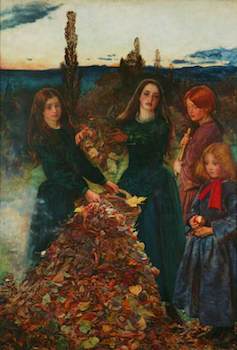
Millais, John Everett, 1829-1896; Autumn Leaves

(John Everett Millais, Autumn Leaves, 1856: Manchester Art Gallery)

Autumn Leaves. Autumn, on the contrary, now definitely arrives in a flurry of contradictory weather, though, really, we need to borrow the American term, ‘fall’.

‘Let us stop this war’, Edmund Blunden wrote, ‘and walk along to Beaucourt before the leaves fall. I smell autumn again.’[1]

‘But, my Marguerite, how strange it all is!’, Colette wrote to her friend Marguerite Moreno, ‘I have the fleeting confidence of people who fall out of a clock tower and for a moment sail through the air in a comfortable fairy-world, feeling no pain anywhere . . . ’[2]

‘What are the chances’, the Librarians wonders aloud, ‘of an adult standing up and saying: This Brexit business was a terrible, terrible idea, which everyone surely realises by now, if they didn’t know already. So let’s just scrap the whole thing.’ Not good, I think, the chances are not so good. I recall the note I came across a few days ago, from a William Faulkner novel: ‘They all talked at once, their voices insistent and contradictory and impatient, making of unreality a possibility, then a probability, then an incontrovertible fact, as people will when their desires become words.’[3]

Magpie

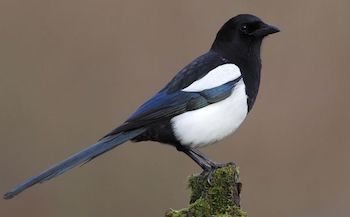
I was also remembering the magpies in the park last week. It began with an evident squabble between two birds, who kept fluttering a few feet off the ground, jabbing at one another and coming to earth again: a couple of minutes later, they were racing around above my head, one obviously pursuer and one pursued but keeping only inches apart, however abruptly the lines of their flight paths veered and soared. But the most striking thing was the way in which the dispute spread and the speed at which it did so: at least two more pairs were scuffling with one another almost immediately, while more and more magpies kept arriving, then gathered in groups of three or four in the branches of surrounding trees. And all the while, their distinctive chatter, more than twenty of them by the end, scattered over four or five locations. They all had something to shout about, they all insisted on outshouting others and weren’t above getting physical if they disagreed.

Doctor-maggotty

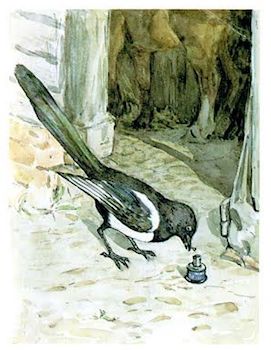
I stood on the path for a good ten minutes, thinking: magpie Brexit? In Beatrix Potter’s The Tale of the Pie and the Patty-Pan, the local doctor is a magpie by the name of Dr Maggotty. He has the disconcerting habit of shouting ‘Gammon!’ or ‘Spinach!’ and, ultimately, ‘Gammon and spinach! Ha ha HA!’ Why does that last ejaculation oddly suggest a sly commentary on our current political woes?

Still, I’ve always liked magpies and been impressed by their acumen, as well as the wealth of folklore and superstition associated with them. Patrick White’s biographer reveals that, by the end of his second year at university, White realised that he didn’t have ‘a scholar’s mind’ and wouldn’t get a brilliant degree. ‘This discovery hurt him at first’, Marr writes, ‘and he was nagged by a sense of intellectual inadequacy until he came to see that he had another kind of intelligence, a “magpie mind” that found ideas as he needed them and seized any image that caught his eye.’[4]

Magpies-Bagpipe

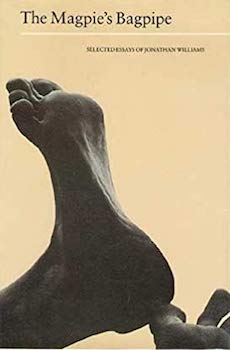
Then, very recently, in the Jonathan Williams festschrift I was reading, I came across the writer and folklorist Gary Carden’s remark that, over the years, he had ‘often searched for a fitting icon or symbol’ for Williams. Carden focused on Williams’ ability to perceive talent and to spot what others missed. ‘Finally, I can pick my icon’, Carden announced. ‘Jonathan is a magpie!’ He wrote of watching a magpie stalking through a landfill site and extracting something that caught his eye, to carry home and give it ‘a choice setting’, while Williams, he added, did much the same thing, having ‘waded through the wreckage of our culture’, sometimes finding ‘the real thing’.[5]

Indeed, Williams published his first book of essays under the title of The Magpie’s Bagpipe (1982) – and the avian theme continued with his second essay collection, Blackbird Dust (2000).

‘Gammon and spinach! Ha ha HA!’ Hold that thought. I am certainly holding that thought.

 
References

[1] Edmund Blunden, Undertones of War (1928; Harmondsworth: Penguin, 1982), 90.

[2] Letter of 11 June 1925: Letters from Colette, selected and translated by Robert Phelps (London: Virago Press, 1982), 90.

[3] William Faulkner, The Sound and the Fury (1929), in Novels 1926-1929, edited by Joseph Blotner and Noel Polk (New York: Library of America, 2006), 967.

[4] David Marr, Patrick White: A Life (London: Vintage, 1992), 128.

[5] Gary Carden, ‘The Bard of Scaly Mountain’, in Jeffery Beam and Richard Owens, editors, Jonathan Williams: The Lord of Orchards, (Westport: Prospecta Press, 2017), 49.