Prince of morticians

Beddoes

In an article in Future in 1917, Ezra Pound wrote in praise of Thomas Lovell Beddoes (who died on this day, 26 January, in 1849), ‘Elizabethan’, he argued, ‘that is, if by being “Elizabethan” we mean using an extensive and Elizabethan vocabulary full of odd and spectacular phrases: very often quite fine ones.’[1] (Before and after this date, Ford Madox Ford was arguing – frequently – that Joseph Conrad was ‘Elizabethan’).[2]

Pound owned a two-volume set of Beddoes’ writings (1890) and was obliged to offer thanks to its editor Edmund Gosse, of whom he had rather less than complimentary things to say on other occasions.

Beddoes published relatively little in his lifetime (he committed suicide at the age of forty-five) and it was the posthumously-published Death’s Jest-Book which Pound was focused upon.

‘Tremble not, fear me not
The dead are ever good and innocent,
And love the living.’ (IV, iii, 111-113)[3]

Pound was concerned to ask ‘why so good a poet should have remained so long in obscurity’. Was it largely a matter of chronology, of which poets are still alive and flourishing or lately dead and widely mourned?

‘No more of friendship here: the world is open:
I wish you life and merriment enough
From wealth and wine, and all the dingy glory
Fame doth reward those with, whose love-spurned hearts
Hunger for goblin immortality.

Live long, grow old, and honour crown thy hairs,
When they are pale and frosty as thy heart.
Away. I have no better blessing for thee.’ (I, ii, 291-298)

‘The patter of his fools,’ Pound says, ‘is certainly the best tour de force of its kind since the Elizabethan patter it imitates’:

‘My jests are cracked, my coxcomb fallen, my bauble confiscated, my cap decapitated. Toll the bell; for oh, for oh! Jack Pudding is no more.’ (I, i, 9-11)

Hanswurst-Jack-Pudding

Jack Pudding
(The Traditional Tune Archive: http://tunearch.org/wiki/Annotation:Jack_Pudding )

‘I try to set out his beauties without much comment, leaving the reader to judge, for I write of a poet who greatly moved me at eighteen, and for whom my admiration has diminished without disappearing.’

Thirty years later, at Pisa, Pound wrote:

Curious, is it not, that Mr Eliot
has not given more time to Mr Beddoes
(T. L.) prince of morticians
where none can speak his language[4]

That last line remembers Death’s Jest-Book once more (quoted in Pound’s essay):

‘Thou art so silent, lady; and I utter
Shadows of words, like to an ancient ghost,
Arisen out of hoary centuries
Where none can speak his language.’ (I, ii, 141-144)

As to our local connection: Beddoes was born in 1803, at 3 Rodney Place, Clifton, Bristol. His father, the eminent medical man, Dr Thomas Beddoes was married to Anna Edgeworth, sister of the novelist, Maria Edgeworth. Four years before the birth of his son, Dr Beddoes had succeeded in establishing the Pneumatic Institution in Hotwells, Bristol, concerned with treatment through the inhalation of various gases. At Hotwells, the first superintendent was Humphry Davy, whose experimental work included investigation of the properties of nitrous oxide (laughing gas). Alethea Hayter suggests that Samuel Taylor Coleridge’s ‘first real habitation to opium’ may have resulted from a recommendation in Dr Thomas Brown’s Elements of Medicine, edited by none other than Dr Beddoes.[5]

If there were dreams to sell,
What would you buy?
Some cost a passing bell;
Some a light sigh,
That shakes from Life’s fresh crown
Only a roseleaf down.
If there were dreams to sell,
Merry and sad to tell,
And the crier rung the bell,
What would you buy?   (Dream-Pedlary, in Poetical Works, I, 46)

The Thomas Lovell Beddoes website is here: http://www.phantomwooer.org/

The poet Alan Halsey, who ran the Poetry Bookshop in Hay-on-Wye for nearly twenty years, has written on Beddoes and edited the 2003 edition of the later text of Death’s Jest-Book. He runs West House Books as both publisher and bookseller. His secondhand catalogue has some very choice items indeed:
http://www.westhousebooks.co.uk/

References

[1] ‘Beddoes (and Chronology)’, reprinted (with incorrect publication year of 1913) in Ezra Pound, Selected Prose 1909-1965, edited by William Cookson (London: Faber and Faber, 1973), 348-353. All Pound quotations from this essay.

[2] See ‘Joseph Conrad’, English Review (December 1911), 69, 70; ‘Literary Portraits – XLI. Mr. Richard Curle and “Joseph Conrad”’, Outlook, XXXIII (20 June 1914), 848, 849; Thus to Revisit (London: Chapman & Hall, 1921), 100; ‘Mr Conrad’s Writing’, Literary Supplement to The Spectator, 123 (17 November 1923), in Critical Essays, edited by Max Saunders and Richard Stang (Manchester: Carcanet Press, 2002), 230; Joseph Conrad (London: Duckworth, 1924), 18, 25; Letters of Ford Madox Ford, edited by Richard M. Ludwig (Princeton: Princeton University Press, 1965), 127.

[3] References to Death’s Jest Book in The Poetical Works of Thomas Lovell Beddoes, edited by Gosse (Dent, 1890), Volume II, 5-158.

[4] ‘Canto 80’, The Cantos of Ezra Pound, fourth collected edition (London: Faber and Faber, 1987), 498.

[5] Alethea Hayter, Opium and the Romantic Imagination (London: Faber and Faber, 1971), 27.


Noises off, spell checkers on

Burne-Jones, Edward, 1833-1898; Love Among the Ruins

(Edward Burne-Jones, Love Among the Ruins
National Trust, Wightwick Manor: photo credit National Trust)

A few days ago, I could hear a frequent but unidentifiable noise: upstairs as well as downstairs. Washing-machine? Sewing-machine? Drill? Just at the edge of the range of my hearing, so that I couldn’t identify the source of it either. Surely from one of the neighbouring houses but which one? Mechanical or electrical; varying duration; it had stopped; no, it hadn’t, it kept on happening. I finally decided that it was workmen taking down the scaffolding from a house thirty or forty metres along the road. But the salient point was that, once aware of the sound, even though it was barely audible, I couldn’t ignore it: the fact of it had lodged in my head and wouldn’t be shifted.

Now an impressive commotion at the door heralds the arrival of a copy of the 1975 edition of Penelope Fitzgerald’s Edward Burne-Jones: A Biography, supplied with promptness and efficiency by G. & J. Chesters of Tamworth. After finishing, The Knox Brothers, Penelope Fitzgerald’s remarkable group biography of her father and three uncles, the only one of her books that I’d not read was Edward Burne-Jones: I’d dipped into it but never read it through properly. Having determined to reread all her fiction—which I’d thought wonderful the first time around even while I was convinced that I’d missed at least half of what there was to see—I added the biographies, intending to start at the beginning.

Penelope_Fitzgerald_A_Life

I had the paperback edition, published by Sutton in 2003, with a brief preface by Christopher Wood. By the time I reached page twenty-five, which mentioned the French city of ‘Chatres’, I was so aware of the errors in the text that it had become as serious a distraction as bolt-removing workmen. But was it just a case of errors carried forward from the original publication? I found a limited preview of that on Google Books and checked a couple of examples. No, these were all Sutton’s own work, so I placed an order for the first edition. Just after I’d done so, I found an endnote in Hermione Lee’s superb biography of Fitzgerald, which mentioned the publishing history of her life of Burne-Jones: it had ‘two reissues, by Hamish Hamilton in 1989, and by Sutton Publishing in 2003, a bad edition full of misprints.’[1] Ah yes.

Long before I did any editorial work, I was a freelance proof-reader for a few years, always desperate for a little extra money. If you take to proofreading and sub-editing, and you have the type of eye and mind that lock on to errors of that sort, it’s impossible to shake the habit off (sometimes tiresome, no doubt, to those not afflicted in the same way). I was once moved to write to the American publisher of an edition of William Faulkner’s Collected Stories that I was reading, pointing out the appalling state of the text; on another occasion, I wrote to John Calder about a Wyndham Lewis novel, suggesting that Lewis’s writing was quite challenging enough without  the addition of occasional gibberish because the proof-reader (if there was one) had nodded off or had recourse to the bottle. In neither case did I hear back. Years later, when I read Pursuit, subtitled ‘The Uncensored Memoirs of John Calder’, I thought ‘unedited too: you should have let me—or, at least, somebody—proofread this, Mr Calder.’[2]

Spalding-Piper

Most recently dispiriting was the case of Frances Spalding’s joint biography of John and Myfanwy Piper, published by Oxford University Press.[3] It’s a beautiful book, six hundred pages long, with an extensive range of illustrations, both in colour and in black and white, well-designed and produced (although, despite my care, several of the colour plates were working themselves loose by the time I’d finished the book). A successful and highly-regarded biographer and art historian; an eminent university press; yet, in the first three pages, I read of a ‘Librian’ (this may be something vaguely astrological but it isn’t a keeper of books and manuscripts) and a sentence that started: ‘After this begun book was begun’, which seemed overgenerous with beginnings. Subsequently, among other delights, there was an antiquarian named William Stukley (referred to again, correctly spelt, within a few lines), an institution called the Royal Collage and a novelist named Henry Greene. Indefinite articles were missed out several times, there was an unsettling reference to Piper’s ‘panting’, Keynsham was shunted into another county and a village named Layock, near Melksham, was  invented for the occasion.

All of which, once again, only served to distract this reader from the text. It is, I know, an open secret that, while publishers generally used to see to this sort of thing, a great many now. . . don’t. Perhaps there’s some uncertainty as to where the burden of responsibility ultimately lies, which makes it all very twenty-first century—but there, I feel a bit of politics coming on. Perhaps better not. . .

References

[1] Hermione Lee, Penelope Fitzgerald: A Life (London: Chatto and Windus, 2013), 457, n.25.

[2] Looking back now, I note Michael Horowitz’s comment, when reviewing the book in The Telegraph (18 March 2002): ‘Calder’s unimpeachable commitment to the defence of literature is heavily sabotaged by misspellings and glaring errors of fact, grammar, punctuation and attribution throughout the memoirs.’ I see that a paperback edition came out at the end of 2016, perhaps proofread for the occasion.

[3] Frances Spalding, John Piper, Myfanwy Piper: Lives in Art (Oxford: Oxford University Press, 2009).


‘I suppose they think I don’t notice’: Ford Madox Ford on enemies

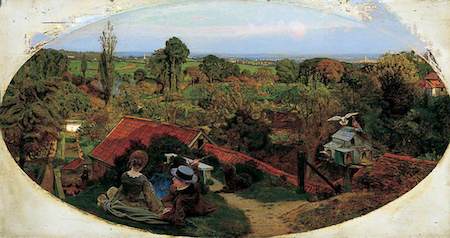
Brown, Ford Madox, 1821-1893; An English Autumn Afternoon

(Ford Madox Brown, English Autumn Afternoon: Birmingham Museum Trust)

On 16 January 1915, Ford Madox Ford (or Ford Madox Hueffer as he then still was) published ‘Enemies’, in his regular series of articles for the weekly periodical Outlook. His editor having signified to Ford that his writing about ‘German culture and the nature of the Prussian State’ (which became his first propaganda book, When Blood is Their Argument) had grown ‘monotonous’ to his readers. Ford now considered the subject of how one should act ‘when one discovers that one is hated’. He had, he said, awoken to the facts that ‘he has been seven times denounced to the British authorities as a German spy, and that the German papers clamorously demand the hanging of the poor present writer as a British variety of the observant tribe.’ And he added: ‘I seem all my life to have been helping over stiles lame dogs who, having recovered the use of their legs, used them for kicking me in the eye.’[1]

Ford_Madox_Brown

(Ford Madox Brown)

That habit was based on advice imparted to him by his much-loved grandfather, the painter Ford Madox Brown: ‘Fordie, never refuse to help a lame dog over a stile. Never lend money; always give it. . . ’[2] It was an attitude that, unsurprisingly, led to occasional difficulties. Alan Judd opens his biography with the story of a Georgian prince (‘every Georgian in Paris was a prince in those days’) who, in 1930s Paris, tapped the impoverished Ford for some cash. ‘Ford had never met the man before but let him have a cheque. The prince was outraged by the smallness of the sum and never visited Ford again, though he kept the cheque. It was for one half of the money Ford owned.’[3]

Literature, particularly, demanded such sacrifices. Ford’s first editorial venture, the English Review, was a critical triumph but a financial disaster. When he was editing his second periodical, the transatlantic review, Ford wrote to Gertrude Stein, ‘indeed I really exist as a sort of half-way house between nonpublishable youth and real money—a sort of green baize swing door that everyone kicks both on entering and on leaving.’[4]

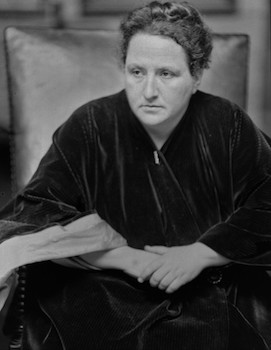
Gertrude_Stein_by_Alvin_Langdon_Coburn

(Gertrude Stein by Alvin Langdon Coburn: Eastman Collection)

It was not just money, of course, but personal relations, the seemingly inevitable rows for various reasons and of various sorts: with Conrad, with Arnold Bennett, with A. E. Coppard, with Hemingway. Ford seemed constantly beset by betrayals or, at least, beset by the suspicion or conviction of betrayals. Violet Hunt forged his name on cheques. A journalist ‘from one of Mr Hearst’s papers’, who terrified both Ford and the bailiff-handyman Standing by his deranged handling of an axe when set to chopping wood, in the end ‘took down by shorthand my best story and sold it to a London magazine for £16 that I could well have done with myself. . . . I don’t know why people do things like that to me. I suppose they think I don’t notice. . . . ’[5]

‘I suppose they think I don’t notice.’ This could be the political slogan stitched on a million tee-shirts. ‘They must think we’re stupid,’ the Librarian murmurs as the latest idiocy is announced. I used to assent but now I hesitate. Marvelling anew at some of the people who still have ministerial jobs and the sheer brass neck of some of the responses to the crisis in the National Health Service, I suspect, rather, that ‘they’ no longer bother, that they have stopped even bothering to pretend. With another major scandal currently in the news, observers can only wonder at the weight of each of the usual factors: greed, gross incompetence, corruption, blindness brought on by ideological dazzlement. Even if you’re relaxed about the constant outsourcing of public service provision to private companies—which I’m not since it seems to me nothing more than governmental evasion of responsibility—it must be pretty obvious even to the true believers that the current system doesn’t actually work.

And it seems that it’s still possible, even usual, more than twenty-five years after the Maxwell debacle, for pension funds to be depleted so that the money can be shovelled into the pockets of the usual corpulent suspects. Remarkable.

‘I am not a combative person,’ Ford writes in his Outlook article. Many of us might say the same. But perhaps we could be made so?


References

[1] Ford Madox Ford, ‘Literary Portraits—LXXI: Enemies’, Outlook (16 January 1915), 79.

[2] Ford Madox Ford, Ancient Lights and Certain New Reflections (London: Chapman and Hall, 1911), 197.

[3] Alan Judd, Ford Madox Ford (London: Collins, 1990), 1.

[4] Letter of 18 September 1924: Letters of Ford Madox Ford, edited by Richard M. Ludwig (Princeton: Princeton University Press, 1965), 162.

[5] Ford Madox Ford, It Was the Nightingale (London: Heinemann, 1934), 148, 150-151.


A matter of fact, a matter of error

Evoe .

(‘Evoe’, Edmund Knox via Jot101: http://www.jot101.com/ )

On my way through the park, I pass four people, each accompanied by an average of 2.75 dogs. It seems a little excessive but the total is dominated by the woman gripping five leads, to each of which is attached to a dog of such slender proportions that, taken all together, they would barely comprise a single, ordinary-sized dog.

Perhaps I was taking refuge in such arithmetical precision because I’d been thinking of error, specifically of writers’ errors, even more specifically of novelists’ errors and wondering whether that was a contradiction in itself.

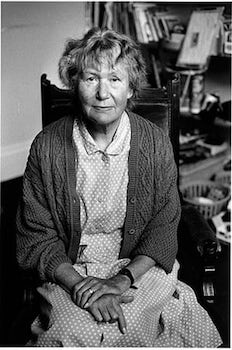
Penelope-Fitzgerald-Guardian

(Penelope Fitzgerald via The Guardian)

Edmund Knox, later ‘Evoe’ of Punch and father of Penelope Fitzgerald, began his editorial career as a boy, taking charge of the family newspaper, The Bolliday Bango. His brothers, ‘Dilly’, classical scholar and later code breaker, Wilfred, priest and teacher, and Ronald, the celebrated Catholic theologian, translator and writer of detective stories, all contributed to the Bango’s production. One venture was the detection of ‘a number of inaccuracies, even downright contradictions, in the Sherlock Holmes stories’. They sent a list of these to Arthur Conan Doyle, ‘in an envelope with four dried orange pips, in allusion to the threatening letter in The Sign of Four’, but received no reply.

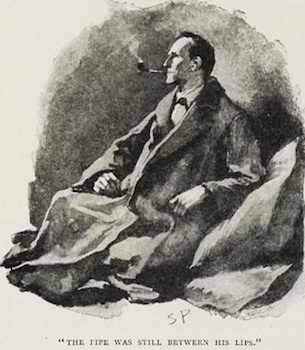
Later, in 1911, Ronnie Knox expanded that original letter into a paper given to the Gryphon Club in Trinity College, Oxford. ‘A satire on all higher scholarship, including his brother’s work on Herondas and his correspondence with German textual experts’, which entailed Ronnie’s invention of Professors Ratzegger and Sauwosch. ‘He set out to show, strictly from internal evidence, that the Return stories are clumsy inventions by Watson, who had taken to drink. This would account, for instance for his neglect of his practice, and the ludicrous errors he makes in the colour of Holmes’s dressing-gown.’

Holmes-dressing-gown

(Sherlock Holmes by Sidney Paget)

It also prompted a letter from Conan Doyle to Ronnie, expressing ‘the amusement – and also the amazement’ with which he had read the article, going on to explain ‘the vexed point’ about the bicycle tracks in ‘The Adventure of the Priory School’.[1]

Studies in the Literature of Sherlock Holmes, the title under which it was published the following year and reprinted several times since, is widely credited with inaugurating Sherlockian studies, ‘The Game’, the world in which Holmes and Watson are real people and Conan Doyle a useful agent. Knox pointed out that the incident of Percy Trevor’s bulldog biting Holmes on his way down to chapel was ‘clearly untrue, since dogs are not allowed within the gates at either University’, while an Oxford scholarship paper including ‘only half a chapter of Thucydides’ was also absurdly improbable. ‘And, worst of all, the dummy in the Baker Street window is draped in the old mouse-coloured dressing-gown! As if we had forgotten that it was in a blue dressing-gown that Holmes smoked an ounce of shag tobacco at a sitting, while he unravelled the dark complication of The Man with the Twisted Lip![2]

A remarkable proportion of the annotations in Leslie Klinger’s edition of the Holmes canon are concerned with inconsistencies or contradictions while the majority of the ‘capsule’ entries on individual stories in Dick Riley and Pam McAllister’s compilation refer to ‘Oddities and Discrepancies’.[3]

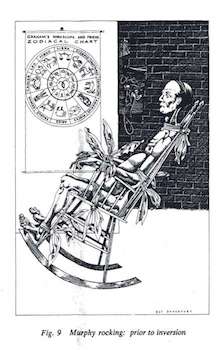
There are degrees and types of ‘error’, of course: firstly, internal, those inconsistencies within the Holmes canon, a man writing prolifically and often hurriedly, over long periods of time and great stretches of material, with occasional lapses hardly surprising. An ‘error’ of a slightly different kind is in the opening passage of Samuel Beckett’s Murphy, where a man has tied himself to a rocking-chair with seven scarves: their positions are detailed but total only six. There are other practical improbabilities and impossibilities (how the last scarf was tied, for instance), concerning which Hugh Kenner remarks: ‘A novel, in short, is a novel, not a map of the familiar world, and Beckett’s novels differ from most in the consistency of their insistence upon this principle.’[4]

Davenport-Murphy-rocking

(Guy Davenport, ‘Murphy rocking: prior to inversion’. Drawing in Hugh Kenner’s The Stoic Comedians: Flaubert, Joyce, and Beckett, facing p. 98)

Indeed. But many novels, not excluding Joyce’s Ulysses, occupy a space so close to that familiar world that their breaths mingle. Joyce said he wanted ‘to give a picture of Dublin so complete that if the city one day disappeared from the earth it could be reconstructed out of my book.’[5] That implies a certain documentary accuracy, a topographical precision – even in a work whose hero is an advertising canvasser based on Homer’s ‘man of many devices’.

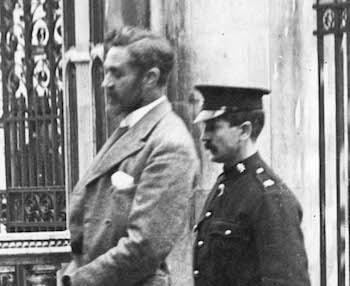
In Ford Madox Ford’s Some Do Not. . ., Christopher Tietjens, home on leave, proposes as spiritual adviser to their son the priest who has appeared earlier in the novel: ‘Sylvia stood up, her eyes blazing out of a pallid face of stone: “Father Consett,” she said, “was hung on the day they shot Casement. They dare not put it into the papers because he was a priest and all the witnesses Ulster witnesses. . . . And yet I may not say this is an accursed war.”’[6]

casement-Irish-Post

(Roger Casement via The Irish Post)

Roger Casement was hanged, not shot, in August 1916. A reviewer of Some Do Not. . . took Ford to task for his ‘inaccuracy’, as Ford noted in his dedicatory letter to the second volume in the sequence, No More Parades, where he discussed his reasons for referring to Casement’s being hanged, specifically his conversation with a woman who could not, she said, bear the thought that the English had hanged him.[7] In his Joseph Conrad: A Personal Remembrance, also published in 1924, Ford wrote about Conrad’s encounter with Casement in Africa and remarked that it was ‘as unspeakably painful to him when later Casement, loathing the Belgians so much for their treatment of the natives on the Congo, took up arms against his own country and was, to our eternal discredit, hanged, rather than shot in the attempt to escape’.[8]

Joyce went to enormous trouble to get the details of 1904 Dublin ‘right’. Ford too worried about factual accuracy in, particularly, the constituent parts of Parade’s End. He had always had ‘the greatest contempt’ for novels that were written with an obvious moral purpose. ‘But when I sat down to write that series of volumes, I sinned against my gods to the extent of saying that I was going—to the level of the light vouchsafed me—to write a work that should have for its purpose the obviating of all future wars.’ Given that intention, the rest followed: ‘So it was my duty to be sure of my details. For technical facts as facts I have no respect whatever. Normally I rather despise myself for playing for factual accuracy in a novel. It did no harm to Shakespeare not to know that Bohemia has no sea-coast or even to believe in the fabled virtues of the mandrake. I would just as gladly make such slips as not. But they give weapons to fools and if, in this case, I failed in factual correctness, I should betray the cause for which I was working.’[9]

One more. ‘It is my sense’, Guy Davenport wrote, ‘that I am always telling a story rather than projecting an illusory, fictional world. I am aware of the trap in argument whereby we can seem to square a story with reality, and I felt wonderfully helpless when various critics jumped on my “mistakes.” One brave Boston soul swore he was at that air show in Brescia, that Kafka wasn’t there (the crowd was estimated by La Sentinella Bresciana to be 50,000), and that Blériot did not look like my description. A Russian has written to know why I have Lenin speaking in a dialect he wouldn’t have used. And so on.’[10]

‘Wonderfully helpless’. Yes, in which world do you start? Or rather, when you’re standing up to your waist in water, in a strong current: which bank do you push for? A great many novelists now begin with ‘research’; some, alas, seem never to leave it, while the fiction is swept downstream.

As to facts, among other inhabitants of that borderland. . .

‘Facts do not find their way into the world in which our beliefs reside; they did not produce our beliefs; they do not destroy them; they may inflict on them the most constant refutations without weakening them.’[11]


References

[1] Penelope Fitzgerald, The Knox Brothers (London: Macmillan, 1977), 50, 105-106.

[2] Studies in the Literature of Sherlock Holmes, reprinted in Blackfriars, I, 3 (June 1920), 156, 158, 159 – essay downloadable here: https://www.lib.umn.edu/pdf/holmes/Blackfriars_v1n3_1920_RA_Knox.pdf

[3] Arthur Conan Doyle, The New Annotated Sherlock Holmes, 2 volumes, edited with notes by Leslie S. Klinger (New York and London: W.W. Norton and Company 2005); Dick Riley and Pam McAllister, The Bedside, Bathtub and Armchair Companion to Sherlock Holmes (New York: Continuum, 1999).

[4] Hugh Kenner, A Reader’s Guide to Samuel Beckett (1973; Syracuse: Syracuse University Press, 1996), 58.

[5] Frank Budgen, James Joyce and the Making of ‘Ulysses’ and other writings, enlarged edition (1934; London: Oxford University Press, 1972), 69.

[6] Ford Madox Ford, Some Do Not. . . (1924; edited by Max Saunders, Manchester: Carcanet Press, 2010), 218.

[7] Ford Madox Ford, No More Parades (1925; edited by Joseph Wiesenfarth, Manchester: Carcanet Press, 2011), 5-6.

[8] Ford Madox Ford, Joseph Conrad (London: Duckworth, 1924), 101, 129. All this and more elucidated by Max Saunders’ note in Some Do Not. . ., 218.

[9] Ford Madox Ford, It Was the Nightingale (London: Heinemann, 1934), 205, 206.

[10] Guy Davenport, ‘Ernst Machs Max Ernst’, The Geography of the Imagination (Boston: David R. Godine, 1997), 376.

[11] Marcel Proust, The Way by Swann’s, translated by Lydia Davis (London: Allen Lane, 2002), 149.


Sweet Thames, run softly

Callow, William, 1812-1908; The Rialto Bridge, Venice

(William Callow, Rialto Bridge, Venice. Photo credit: Williamson Art Gallery and Museum, Birkenhead)

Sunday. Slower breakfast, slower survey of the morning’s paper, just to see how hugely 2018 is improving on the previous year. Alas, alas. There seem to be remarkable numbers of people that our rich, highly developed democracy is failing in its basic duty of care. Taking in, among others, the very young, the very old, the poor, the sick, the mentally unwell, the homeless and, oh, women, we appear to be looking at the larger part of the population. Clearly, I must have miscalculated. Then a glance at the foreign news prompts the reflection that, were someone to announce in my hearing that he was a stable genius, I would be simultaneously checking the exits, counting the spoons and making very sure that I didn’t turn my back on him. But again, others clearly take a different view.

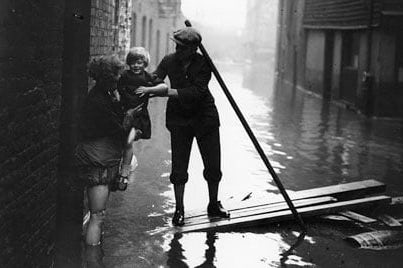
Still on the subject of floods and deluges. . . Ninety years ago, I was reading just recently, in the early hours of 7 January 1928, the River Thames flooded, as a result of a storm in the North Sea, which ‘created a tidal surge that raised the waters of the river to their highest recorded level.’[1]

‘As the river wall opposite Tate Britain collapsed the water surged across the road flooding the nine lower ground floor galleries and the basement.’ As for the artworks stored there, 18 were ‘damaged beyond repair, 226 oil paintings were badly damaged and a further 67 slightly damaged. The J. M. W. Turner works on paper stored in the basement were saturated and covered in mud although fortunately their colours hadn’t run. Incredibly, the newly completed Whistler mural in the Tate Restaurant remained undamaged although it too had been completely submerged.’
http://www.tate.org.uk/context-comment/blogs/day-thames-broke-its-banks-and-flooded-tate-britain

Tate Britain after flood of 1928

© Tate Archive, 2003

Thomas Dilworth mentions that Jim Ede (H. S. Ede), then assistant curator at the Tate—subsequently an early biographer of Henri Gaudier-Brzeska and founder of the wonderful Kettle’s Yard in Cambridge—was keeping some of David Jones’s watercolours in that basement, as well as the drawings and watercolours by Turner. They were ‘submerged but kept dry by ark-tight carpentry of a set of cabinets.’ Jones, he adds, ‘appreciated the feat of carpentry as only a poor carpenter can.’

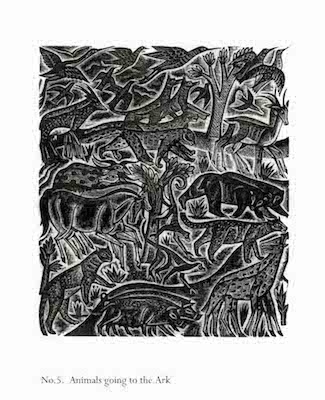
In this context, Dilworth also discusses Jones’s commission for The Chester Play of the Deluge—‘one of the great illustrated books but not as printed in 1927’—asserting that Jones ‘cannot have worked on these engravings for half a year without associating the biblical flood with the Thames flood’—but he then gives the date of the flood as January 1926, which I take to be a simple error.[2]

The Golden Cockerel Press edition appeared in 1927 but it was 1977 before Clover Hill Editions ‘for the first time printed Jones’s wood engravings with the care they should have received (and did not) in the Golden Cockerel edition of 50 years earlier.’[3]

david-jones-animals-going-to-the-ark

(David Jones, engraving number 5, ‘Animals going into the Ark’, via https://chesterculture.wordpress.com/ )

The casualties were not, of course, only among artworks. The Houses of Parliament and the Tower of London were also swamped, as were ‘many of the crowded basement dwellings into which the city’s poorest families were crammed.’
(Jon Kelly, ‘The great 1928 flood of London’: http://www.bbc.co.uk/news/magazine-26153241 )

An estimated four thousand people were left homeless and, as Sylvia Townsend noted in her diary the following day: ‘Fourteen people were drowned in basements, poor souls, and a fish was caught in the kitchen of Battersea police-station. The basement of the Tate Gallery was filled, which may help to settle the question of the 20,000 Turner sketches. In the basement also were some Rowlandsons, and I suspect my Callow of Venice. Very watery and homelike for it.’[4]

Flood-1928-rescue-via-Guardian

(Flood of 1928 via The Guardian)

‘My Callow of Venice’ puzzled me a little. William Callow was a watercolour painter who died in 1908. The Tate now shows only an 1880 ‘Grand Canal Venice’, watercolour and graphite on paper, ‘presented by the artist’s widow’ in 1909. There is, though, a letter from Sylvia to David Garnett, which elucidates ‘my Callow’:

‘Talking of slighted works of art, have you ever been in the underground of the Tate? A long time ago I lent the Tate a small William Callow, and in 1964 I felt it my duty to see how it was getting on. So I wrote to the Curator and was given an appointment. There was a proper person, who took me down in a lift, and led me through this extraordinary graveyard, crammed with marble nudes wrapped in sheets of cellophane, great furry seascapes and lowering landscapes, portraits of pop-eyed children, blessed damozels, Derby winners; and paused in front of a very incompetent late Victorian nymph clutching some shred of muslin and made entirely of vinolia soap, saying, This, I think, is yours. There was a moment of black panic when I thought I should find myself obliged to make her mine. But in the end my William Callow was found in excellent condition, and quietly on show.
‘If you should ever feel inclined for a little Mortality, behold and fear, do go to the Tate underground.’[5]


References

[1] Peter Ackroyd, Thames: sacred river (London: Chatto and Windus, 2007), 227.

[2] Thomas Dilworth, David Jones: Engraver, Soldier, Painter, Poet (London: Jonathan Cape, 2017), 97-98.

[3] Roderick Cave, The Private Press, Second Edition (New York: R. R. Bowker, 1983), 227; see Arianne Bankes and Paul Hills, The Art of David Jones: Vision and Memory (Farnham: Lund Humphries, 2015), 34-37.

[4] The Diaries of Sylvia Townsend Warner, edited by Claire Harman (London: Virago Press, 1995), 10.

[5] Letter of 3 March 1968: Richard Garnett, editor, Sylvia and David: The Townsend Warner/ Garnett Letters (London: Sinclair-Stevenson, 1994), 139.


Delirium, poetry, snacks

There was a time when Penguin published a series of modern European poets (and Penguin Modern Poets and a lot of anthologies). They still publish poets, of course, but they were giants in those days, and a great many people read for the first time, in slim Penguin paperbacks, such luminaries as Akhmatova, Apollinaire, Prévert, Miroslav Holub, Ungaretti, Quasimodo, Yevtushenko, Montale, Rilke, Blok, a volume of four Greek poets—and who could fault the selection of Cavafy, Elytis, Gatsos and Seferis?

Even in such glittering company, Miroslav Holub stood out a little for me. A scientist (immunologist), a Czech, writing often in very short lines, sometimes reminiscent of William Carlos Williams’ ‘three-ply line’.[1] The Penguin edition came out fifty years ago but a later Bloodaxe collection included some of the translations from that edition, by George Theiner and Ian Milner. Some of the older translations have stuck in my head for years: ‘In the microscope’, ‘The root of the matter’, Žito the magician’, ‘Wings’ and, perhaps particularly, ‘Love’.

Two thousand cigarettes.
A hundred miles
from wall to wall.
An eternity and a half of vigils
blanker than snow.

Tons of words
old as the tracks
of a platypus in the sand.

A hundred books we didn’t write.
A hundred pyramids we didn’t build.

Sweepings.
Dust.

Bitter
as the beginning of the world.

Believe me when I say
it was beautiful.[2]

I lay in bed roughing out another version during my recent bout of flu, from which I’m gradually emerging: ‘Two thousand tissues/ a hundred hacking coughs from hour to hour/ Believe me when I say/ it was delirious’. The Librarian, still recovering from her own bad case of flu, was shoved unceremoniously into the role of nurse-helper. Initially a little shell-shocked by such unaccustomed role reversal, she rose to the occasion to the extent of coffees, hot lemon drinks and a visually spectacular sandwich, delivered to the accompaniment of eloquent words of encouragement (‘Good luck with that’).

Macdonald-Four-Later      Lowry-Under

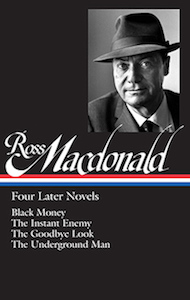
The coughing, the delirium, the headaches, even the catarrh, all finally diminish. But time is often out of joint. Taking to my bed mid-evening, seemingly on the point of collapse, I get up again at 01:30, having woken at fifteen-minute intervals for the past hour and now feeling wide awake. Downstairs, I rotate hot drinks and snacks, and tuck into a Ross Macdonald novel. ‘Late afternoon sunlight spilled over the mountains to the west. The light had a tarnished elegiac quality, as if the sinking sun might never rise again. On the fairway behind the house the golfers seemed to be hurrying, pursued by their lengthening shadows.’[3]

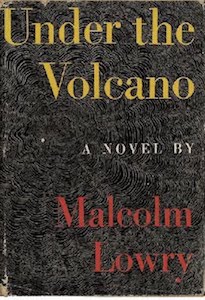
Suit the book to the illness or at least to the stage on the road to wellness. I remember being ill and feverish, many years ago, while reading Malcolm Lowry’s Under the Volcano. Coincidentally, there was a dramatisation of the book on the radio and I lay in bed listening to it—deliriously. Lowry’s novel is itself hallucinatory and to the voices already in my head were added those coming over the airwaves. Altogether that accumulation of deliriums, if that’s the right plural, produced a pronouncedly weird effect. I wasn’t sure who was in the worst state, Lowry or his central character Geoffrey Firmin or me. I’ve since read Under the Volcano again (when in rude health) and whittled those candidates down a bit.

References

[1] Paul Mariani, William Carlos Williams: A New World Naked (New York: W. W. Norton, 1990), 539-540; Hugh Kenner, The Pound Era (London: Faber and Faber, 1972), 542.

[2] ‘Love’, translated by Ian Milner, in Miroslav Holub, The Fly (Newcastle upon Tyne: Bloodaxe Books, 1987), 40.

[3] Ross Macdonald, The Instant Enemy, in Four Later Novels, edited by Tom Nolan (New York: Library of America, 2017), 413.


Walking with a purpose


You pass them everywhere in Bristol now—and in what town or city do you not? In residential porches and corporate doorways, on benches and in bus shelters, living in tents, living in vans. Homelessness, the raw, incontrovertible evidence of fractured social policies and failed governance, is visibly, palpably increasing. A man that my wife spoke to had just been discharged from hospital. Though a friend had kindly paid for one night’s stay at a bed and breakfast, his address thereafter was, once again, a tent pitched on a strip of grass above the river. The hospital staff knew he would have no roof over his head but had no choice in the matter. The Secretary of State for Health assures us that there’s no crisis in the National Health Service and, since the United Kingdom is currently the world’s fifth largest economy by GDP, it can’t be a question of money—so it’s a puzzling business. It’s also a moral quandary for the individual walker. With my limited resources, if I give change to this person, what about the next—and what about the fifth and the tenth and the twentieth after that? Who do I choose—and how? And should I really have to?

There’s a moment in Richard Cobb’s essay, ‘Pre-Revolutionary Paris’, when he remarks of the abbé Germain Brice, author of the early eighteenth-century Description de la ville de Paris, that he ‘provided a completely comprehensive tour of the city; and he was not afraid of exposing his more delicate princelings to some of the filthiest, most stinking, and most overcrowded quarters of Paris; it was not just a Tournée des Grandes Ducs of the high spots, of the new centres of luxury. Perhaps his walks were also to have a moral purpose.’[1]

‘A moral purpose.’ Yes, this in turn recalls George Eliot, in a letter of 3 November 1851, telling the anecdote of Thomas Carlyle, ‘angry with [Ralph Waldo] Emerson for not believing in a devil’, in a determined effort ‘to convert him took him amongst all the horrors of London – the gin shops etc. – and finally to the House of Commons, plying him at every turn with the question “Do you believe in a devil noo?”’[2]

‘More delicate princelings’? Certainly, some of those wealthy and cushioned politicians so enthusiastic about penalising the undeserving poor or forcing invalids into morale-boosting work as roadmenders or steeplejacks, should be forcibly steered around a few choice areas of our inner cities.

‘Do you believe in a devil noo?’ Devils, like angels, are difficult to disentangle from religion. ‘The devil’, Hugh Kenner wrote, ‘it used to be thought, could only move in straight lines; pious Christians could thwart him by moving in zigzags. They did that on their knees, praying their way along labyrinths diagrammed on the floors of churches: there are still fine ones in Chartres cathedral and in the parish church of St. Quentin, in the Loire Valley. Meant to humble but not bewilder the faithful, such mazes have no branchings. They spiral haltingly inward, as if to Jerusalem.’[3]

The Simoniac Pope 1824-7 by William Blake 1757-1827

(William Blake, Dante’s Simoniac Pope: Tate)

Though often in touch with religious concerns, evil can, like good, occupy determinedly secular territory. Great wickedness and immorality, the dictionaries say, especially—but not necessarily—when regarded as a supernatural force. And to be sure, from time to time, in my agnostic fashion, I picture the architect of the pernicious Universal Credit scheme (among many others, admittedly) placed by Gustave Doré or William Blake in an extremely hot environment, illuminated by a luridly flickering light, and subject to the relentless and gleeful attention of gigantic figures wielding toasting forks.

And what might we set against the intellectual vacuity so demonstrably prevailing in several citadels of power as the year closes? There’s always poetry, of course.

emily-dickinson

The Devil – had he fidelity
Would be the best friend –
Because he has ability –
But Devils cannot mend –
Perfidy is the virtue   
That would he but resign
The Devil – without question
Were thoroughly divine[4]

Yes, devilish tricky things, devils. Stories, then, perhaps the inexhaustibly quotable Sylvia Townsend Warner, writing to William Maxwell, 31 December 1966:

‘It was the kind of hotel which has a great many old ladies in it, and as a writer of short stories I was enthralled to discover how a single sentence can place a character—“Mrs Walker has China tea”—or rouse one’s deepest curiosity, as when one of the two Miss Grays (sisters but they don’t often meet) said informingly to the other, pointing to an empty table with a paper napkin in a tumbler on it, “That’s Mrs. Washbourne.” Valentine said it was like living in one of my stories but worse.’[5]

Whose story we are living in just now will no doubt become clearer as we lurch or tiptoe into 2018. I’ve heard several people say that next year can’t be worse than 2017. I hope they’re right. Always remembering that resistance is fertile, as I think I heard somebody say.

 
References

[1] Richard Cobb, ‘Pre-Revolutionary Paris’, in Paris and Elsewhere: Selected Writings, introduction by Richard Gilmour, preface by Julian Barnes (New York: New York Review Books, 2004), 154.

[2] Mentioned by Rupert Christiansen, The Visitor: Culture Shock in Nineteenth-Century Britain (London: Chatto & Windus, 2000), 118.

[3] Hugh Kenner, the title essay (1986) of Mazes (Athens: University of Georgia Press, 1995), 250.

[4] The Complete Poems of Emily Dickinson, edited by Thomas H. Johnson (Boston: Little, Brown, 1961), 624-625.

[5] Michael Steinman, editor, The Element of Lavishness: Letters of Sylvia Townsend Warner and William Maxwell, 1938-1978 (Washington: Counterpoint, 2001), 169.


Blue writing on the wall

unknown artist; Writing on the Wall

(The Writing on the Wall, Unknown artist: Southampton City Art Gallery)

I’ve been thinking a bit about blue just lately. Not just because of capricious and mercurial weather, clear brilliance lurching to rain or snow or hail but also because of the death earlier this month of William Gass. He wrote a book some forty years ago called On Being Blue: A Philosophical Inquiry and offered a strikingly honest answer to the question of why he wrote: ‘I write because I hate. A lot. Hard.’[1]

I never read much of his work, apart from a couple of stories, and was occasionally guilty of mixing him up with William Gaddis, whose gargantuan novel, The Recognitions, I wrestled with decades ago, but Gass did write a very distinctive essay about Ford Madox Ford’s Fifth Queen trilogy and I was familiar with that.[2]

Then came the recent excitement over the plan to reintroduce the blue passport for United Kingdom citizens. Predictably, while the Prime Minister referred to it as an expression of ‘independence and sovereignty’ that reflected ‘citizenship of a proud, great nation’, and other right wing politicians made similar noises, neither they nor the tabloid press made clear that Britain could have simply retained the blue passport while in the EU, nor that it was the Conservative government under Margaret Thatcher that elected to adopt the burgundy EU passport in 1988—though never obliged to do so. Several commentators have pointed this out while wondering about the fuss over such a detail, prompting the Daily Mail, for example (26 December), to huff: ‘How typical of such people to deride something that will be a potent, everyday symbol of Britain’s independence from the EU come 2019.’ Yup.

Blue-passport

Passport size is mandated by the International Civil Aviation Organization, an agency of the UN. Most of the recent changes to British passports have been at the behest of the United States, sometimes via the EU, and this includes its imposition of more stringent photo requirements and biometric features, as the historian James Baldwin explained last week:
https://www.theguardian.com/commentisfree/2017/dec/22/blue-passports-taking-back-control-imposed-league-of-nations-burgundy-passport-eu

Woke up this morning with the passport blues. Was it really worth inflicting this scale of damage on the country to change the colour of something that its government chose thirty years ago? Blue, bleu, blau. George Dangerfield wrote of the occasion when David Lloyd George, addressing a group of bankers at the Guildhall, assured them that, ‘In the matter of external affairs the sky has never been more perfectly blue.’[3] The date of that confident assertion? 17 July, 1914.

So this is where we are; this is what we’ve come to. The sense of an ending—and let’s hope the ending is just of 2017, a year remarkably light on laughter but heavy on bad manners, bad faith, bad politics and bad economics.

In Ragnarok: The End of the Gods, A. S. Byatt wrote of the god Loki that he was ‘the god of endings. He provided resolutions for stories – if he chose to. The endings he made often led to more problems.’ Loki was, of course, the trickster, a figure that recurs in countless stories in most cultures, from creation myths to cinema screens, from Brer Rabbit, Crow and Puck to the Pink Panther and The Joker.

In ‘Thoughts on Myths’, a final section of Ragnarok, Byatt comments: ‘But if you write a version of Ragnarök in the twenty-first century, it is haunted by the imagining of a different end of things. We are a species of animal which is bringing about the end of the world we were born into. Not out of evil, or malice, or not mainly, but because of a lopsided mixture of extraordinary cleverness, extraordinary greed, extraordinary proliferation of our own kind, and a biologically built-in short-sightedness.’[4]

Stone-wall

Indeed. The Librarian drew my attention to two online items this morning, just to confirm that the writing is truly on the wall—one from a Conservative politician who evidently shouldn’t be allowed near social media without medical supervision, both for her sake and for ours; and one from the current President of the United States.

And that writing on the wall? Mene, Mene, Tekel, Upharsin. As Daniel interpreted those words for the king, Belshazzar: God hath numbered thy kingdom and finished it; thou art weighed in the balances, and art found wanting; Thy kingdom is divided. and given to the Medes and Persians.[5]

We’re currently a little light on Medes and Persians in this neck of the woods but, apart from that slight anomaly, it’s clearly a Brexit thing.

References

[1] Interview with Thomas LeClair in Paris Review, 70 (Summer 1977).

[2] William Gass, ‘The Neglect of The Fifth Queen’, in Sondra J. Stang, editor, The Presence of Ford Madox Ford (Philadelphia: University of Pennsylvania Press 1981), 25-43.

[3] George Dangerfield, The Strange Death of Liberal England (1935; London: Granada Publishing, 1970), 358.

[4] A. S. Byatt, Ragnarok: The End of the Gods (Edinburgh: Canongate Books Ltd., 2011), 44, 167.

[5] Daniel 5, 26-28.

The Heights of Poetry

Haydon-WW-Helvellyn
(Wordsworth by Benjamin Haydon, © National Portrait Gallery, London)

‘Great writers in our time have tended to be tall,’ the six-feet-four Hugh Kenner remarks in the context of his first meeting with the five-feet-ten Ezra Pound. ‘T. S. Eliot, five-eleven-and-a-half—a figure I obtained after bumping my head on his six-foot office door. W. B. Yeats and James Joyce, each five-eleven; Sam Beckett, six-two. Save for psychic height, the physical Pound was a midget among giants.’[1]

Such considerations have cropped up before. I find—dear, dear, the Internet again—that Havelock Ellis, physician, sexologist, eugenicist, in an 1897 article, ‘Genius and Stature’, and his 1904 book, A Study of English Genius, asserted that men of genius—sorry, women, not this time—tended to be either shorter than average or, more frequently, taller than average. Those of average height scored markedly less well and the findings were complicated by the social class of the subjects (the poorer classes, unsurprisingly, tended to be physically smaller). In 1885, a certain Henry Troutbeck claimed to have examined Chaucer’s remains during the preparations for Robert Browning’s burial: he was five feet six inches (not bad for the fourteenth century, surely). Alas, further investigation showed that Browning’s grave was far enough away from Chaucer’s to to make this a bit implausible; then, too, it seems that, in any case, ‘the location of Chaucer’s bones remains somewhat doubtful.’[2]

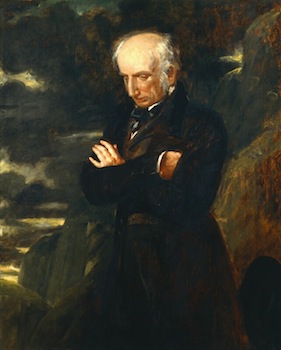
Certainly, poets come in all sizes. Measuring them precisely is a tricky business, though Benjamin Haydon, when beginning his portrait of Wordsworth on Helvellyn, surveyed the poet in detail and found him to be exactly 5 feet 9⅞ inches tall. (He also did a drawing of him ‘with and without his false teeth.’)[3] Alexander Pope, apparently, came in at four feet six inches, while Edith Sitwell measured around six feet—or five feet eleven inches, by official reckoning.[4] On 20 October 1915, Wilfred Owen underwent his second medical examination at the Artists’ Rifles headquarters. A year earlier, his height of five feet five inches would have disqualified him but the standard had been lowered since then. He officially entered the British Army the following day.[5] Keats was around five feet and one inch—‘around’? Timothy Hilton has him at 5’ 0¾” , as does Robert Gittings, while Andrew Motion has ‘five feet and a fraction of an inch’—but what fraction?[6] And Keats was how much shorter than Charles Olson?

charles_olson_writing_at_black_mountain_college
(Charles Olson writing at Black Mountian College)

Olson (born 27 December 1910) was roughly six foot eight or nine, Robert Creeley wrote; or six feet seven inches, as some say; twenty-one inches taller than Keats, Guy Davenport remarks (‘in his stocking feet taller by half again than Alexander the Great’), which would make him six feet ten inches.[7] Damned tall, anyway, large, everything about him large, the ambition, the format of the volumes of Maximus poems from Cape Goliard, vocabulary, geographical and historical reach.

Sometimes he’s absurdly overpitched, sometimes opaque, sometimes just crazy, sometimes inspired, sometimes visionary. Sometimes he’s just on the money.

Try:

What has he to say?
In hell it is not easy
to know the traceries, the markings
(the canals, the pits, the mountings by which space
declares herself, arched, as she is, the sister,
awkward stars drawn for teats to pleasure him, the brother
who lies in stasis under her, at ease as any monarch or
a happy man[8]

or

It is undone business
I speak of, this morning,
with the sea
stretching out
from my feet

or

I am not at all aware
that anything more than that
is called for. Limits
are what any of us
are inside of

or, ah:

The upshot is
(and this the books did not tell us) the race
does not advance, it is only
better preserved[9]

George Butterick, the Olson scholar who edited the Collected Poems (nearly 650 pages of non-Maximus poems) and The Maximus Poems for the University of California Press, cites in this connection Emerson’s ‘Self-Reliance’: ‘Society never advances. It recedes as fast on one side as it gains on the other. It undergoes continual changes [… ] but this change is not amelioration. For every thing that is given, something is taken.’[10]

T. S. Eliot, along similar—though not the same—lines wrote that the artist must ‘be quite aware of the obvious fact that art never improves, but that the material of art is never quite the same’. And that the mind of Europe ‘is a mind which changes, and that this change is a development which abandons nothing en route, which does not superannuate either Shakespeare, or Homer, or the rock drawing of the Magdalenian draughtsmen.’[11]

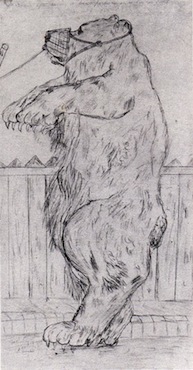
On a more individual note, David Jones, putting on his wall in 1958 a drawing of a dancing bear he’d produced in 1903, at the age of seven, wrote to a friend: ‘“It’s much the best drawing I’ve ever done, which shows how, in the arts, there ain’t no such thing as getting better as you get older!”’ Again, in 1967, Jones wrote of this drawing, ‘there are few of my subsequent works which I prefer to that.’[12] The assertion held in a wider perspective in Jones’s case too. Though moved and impressed by books that he read by Teilhard de Chardin, he thought Teilhard’s ‘idea of evolution towards union with God naïve — like any belief in general progress. In art, for example, “Picasso is no improvement over Lascaux.”’[13]

Jones-dancing-bear
(David Jones, ‘The Bear’ (1903), via Apollo magazine)

Is that true? Individually, the issue is complicated by a general acceptance of the fact that advancing age must inevitably be accompanied by a loss of powers—but it’s a fact often confounded by extraordinary artistic performances from writers and painters in their seventies, eighties and even nineties: among others, Georgia O’Keeffe, Charles Tomlinson, Rose Macaulay, Sybille Bedford, W. B. Yeats, Titian, Thomas Hardy, Penelope Fitzgerald, Isak Dinesen, Louise Bourgeois, Ezra Pound—and David Jones himself.

And more generally? Those of us who grew up with the unexamined optimism common enough in those days, a version of the Whig interpretation of history (the inevitable and continuing advance of progress over the forces of reaction) have had rude awakenings enough in this new age of unreason. As for the arts—it’s a good, a constant question. In the essay already quoted, Eliot wrote: ‘Someone said: “The dead writers are remote from us because we know so much more than they did”. Precisely, and they are that which we know.’ That actually accounts for a large part of the confident assertion that painters, poets, novelists—and critics—are better or smarter or more profound than those in earlier periods: they are simply positioned later in history. Our own age knows a great deal that people in the early twentieth and nineteenth and eighteenth centuries didn’t know; but we’d be fools to think that those earlier ages didn’t know a great many other things that are completely lost to us now.

It has to be said, though, that, as a general rule, we’re taller than they were.

References

[1] Hugh Kenner, The Elsewhere Community (New York: Oxford University Press, 2000), 35.

[2] Thomas A. Prendergast, Chaucer’s Dead Body: From Corpse to Corpus (London: Routledge, 2003), 106, 108, 59.

[3] See Alethea Hayter, A Sultry Month: Scenes of London Literary Life in 1846 (London: Robin Clark 1992), 142-143.

[4] Pope mentioned in Hugh Kenner’s review of Maynard Mack’s Alexander Pope: A Life (1986), in Historical Fictions (Athens: University of Georgia Press, 1995), 253; ‘Sitwell’s passport recorded her height as five feet eleven but she was often reported as being well over six feet’: Rosemary Hill, ‘No False Modesty’, a review of Richard Greene, Edith Sitwell: Avant-Garde Poet (London: Virago Press, 2011), in London Review of Books, 33, 20 (20 October 2011), 25.

[5] Dominic Hibberd, Wilfred Owen: A New Biography (London: Weidenfeld & Nicolson, 2002), 164.

[6] Timothy Hilton, Keats and his World (London: Thames & Hudson, 1971), 56; Robert Gittings, John Keats (Harmondsworth: Penguin Books, 1971), 135; Andrew Motion, Keats (London: Faber and Faber, 1997), 36.

[7] Robert Creeley, ‘Introduction’ to Charles Olson, Selected Writings (New York: New Directions, 1966), 1; Guy Davenport, ‘Olson’, in The Geography of the Imagination (Boston: David R. Godine, 1997), 80.

[8] Charles Olson, ‘In Cold Hell, in Thicket’, in The Collected Poems of Charles Olson, edited by George F. Butterick (Berkeley: University of California Press, 1997), 155. The reference here is to the Egyptian sky-goddess Nut, arching over and around her earth-god brother and lover Geb (‘her starry belly was painted inside the sarcophagi of Egyptian kings’): Robert von Hallberg, Charles Olson: The Scholar’s Art (Cambridge: Harvard University Press, 1978), 145.

[9] Charles Olson, The Maximus Poems, edited by George F. Butterick (Berkeley: University of California Press, 1985), 57, 21, 59.

[10] George Butterick, A Guide to the Maximus Poems of Charles Olson (Berkeley: University of California Press, 1980), 86. See Ralph Waldo Emerson, Essays and Lectures, edited by Joel Porte (New York: Library of America, 1983), 279—I’ve quoted very slightly more than Butterick does.

[11] Eliot, ‘Tradition and the Individual Talent’, in Selected Essays, third enlarged edition (London: Faber and Faber, 1980), 16.

[12] Thomas Dilworth, David Jones: Engraver, Soldier, Painter, Poet (London: Jonathan Cape, 2017), 11; David Jones, ‘A Note to the Illustrations’, Agenda, Vol. 5, Nos. 1-3, Special David Jones issue (Spring-Summer, 1967), 2.

[13] Dilworth, David Jones, 314.


Winter solstice; nothing political

Lights2

Winter solstice. The shortest, least lighted day. The darkest hour before the dawn, and all that. So we can expect some brightening soon? Answers on a speck of dust, please, to a post office box located somewhere out in mid-ocean.

Is it possible, on such a day, not to stray into political lament or harangue in this new age of unreason, at the end of what feels like a very long year or rather, eighteen months, which is how long it is since, in Jonathan Meades’ summary, ‘[t]he aim of the 52 per cent that shot itself in the foot was so poor that it also shot the 48 per cent.’?[1]

Face-to-the-world

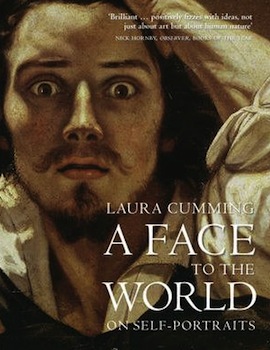
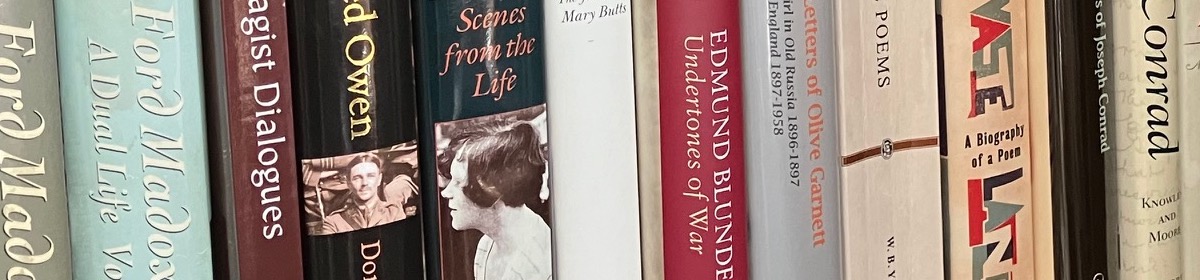
It’s possible. Difficult but possible, if only by concentrating on quite other things, such as the obvious advantage of new bookshelves in the kitchen being the option of browsing while the kettle boils or the grill heats up. You might gather useful, or useless, or at least diverting facts such as that Gustave Courbet had himself photographed more than any other nineteenth-century French painter.[2] Or, say, insights into the problems of novel-writing:

Unstrung-Harp

‘Several weeks later, the loofah trickling on his knees, Mr Earbrass mulls over an awkward retrospective bit that ought to go in Chapter II. But where? Even the voice of the omniscient author can hardly afford to interject a seemingly pointless anecdote concerning Ladderback in Tibet when the other characters are feverishly engaged in wondering whether to have the pond at Disshiver Cottage dragged or not.’[3]

Or, say, this cheering news of the use to which Mary Cassatt put her share of the 1879 Impressionist exhibition’s earnings: ‘[ . . . ] Mary bought a Monet and a Degas; by that time she already owned pictures of Pissarro, Renoir, Sisley, and Monet; her impulse, like Degas’, was ever to put money not earmarked for necessities, into pictures.’[4] I’m thinking how pleasant it would be: not needing to be rich, simply having the good taste to want ‘a Monet and a Degas’ and, of course, to have that sense of priorities.

21 December, something cheering. Let me see. Yes, that day in 1944, Sylvia Townsend Warner writes to Ben Huebsch of Viking Press about her wonderful novel The Corner That Held Them, reviewed by Kate Macdonald earlier this year here:

https://katemacdonald.net/2017/05/22/sylvia-townsend-warner-the-corner-that-held-them/

‘At this moment you should have up to p.182. I have killed off a lot more ladies in the next bit you will get, so much creating and killing off makes me feel as providential as Providence. Ralph, however, is still with us. He is to live into an old age serene and bright and die without a pang of conscience.’ Four months later, she writes to him to say: ‘It will be long—about 180,000 I believe. It is also what one calls powerful. If dropped from a suitable height it would wipe out the state of Vermont.’[5]

confucius

(Confucius: K’ung Fu-Tse)

Meanwhile, reflecting—obviously, not at all in a political way—on the news of the day, of altogether too many recent days, an extract from Ezra Pound’s ‘Canto XIII’ pops into my head:

And Kung raised his cane against Yuan Jang,
Yuan Jang being his elder,
For Yuan Jang sat by the roadside pretending to
be receiving wisdom.
And Kung said “You old fool, come out of it,
“Get up and do something useful.”
And Kung said
“Respect a child’s faculties
“From the moment it inhales the clear air,
“But a man of fifty who knows nothing
Is worthy of no respect.”[6]

References

[1] Jonathan Meades, ‘In the loop: The gulf between the arts and art: a personal view’ (edited text of a speech given at the annual dinner of the Royal Academy of Arts in London), Times Literary Supplement (20 October 2017), 14.

[2] Laura Cumming, A Face to the World: On Self-Portraits (London: Harper Press, 2010), 194.

[3] Edward Gorey, The Unstrung Harp; or, Mr Earbrass Writes a Novel, in Amphigorey: Fifteen Books by Edward Gorey (New York: Perigee Books, 1981), unpaginated.

[4] Nancy Hale, Mary Cassatt: A biography of the great American painter (New York: Doubleday, 1975), 94.

[5] Sylvia Townsend Warner, Letters, edited by William Maxwell (London: Chatto & Windus, 1982), 88, 92.

[6] The Cantos of Ezra Pound, fourth collected edition (London: Faber and Faber, 1987), 58-59.