Ardent and enraged: Ford among the Suffragettes

VH_FMF_Selsey

(Ford Madox Ford and Violet Hunt at Selsey)

On 9 February 1911, The New Age published a letter to the editor from Giessen, in Germany, outlining the writer’s reasons for supporting women’s suffrage:

‘As for the question of militant tactics, I am certainly in favour of them. It is the business of these women to call attention to their wrongs, not to emphasise the fact that they are pure as the skies, candid as the cliffs of chalk, unsullied as the streams, or virginal as spring daffodils. They are, of course, all that—but only in novels. This is politics, and politics is a dirty business. They have to call attention to their wrongs, and they will not do that by being “womanly.” Why should we ask them to be? We cannot ourselves make omelettes without breaking eggs. Why should we ask them to?’[1]

Ford Madox Ford was in Giessen, enmeshed in the maze of the country’s civil law, as part of a ludicrous scheme to secure German citizenship and thus obtain a divorce from his wife Elsie, so that he might marry the novelist (and suffragette) Violet Hunt. His letter came just three months after ‘Black Friday’, 18 November 1910, when the police had physically – and, in some cases, sexually – assaulted the women demonstrators marching on Parliament.
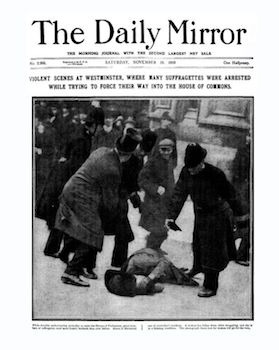
Daily-Mirror-Front-Page-Published-Saturday-19th-November-1910

In his Ancient Lights, which appeared the following month, Ford would assert that, ‘Personally I am an ardent, an enraged suffragette.’[2] He was certainly a productive one. The previous year, he had published, in an English Review editorial, several pages on ‘Women’s Suffrage’, primarily an attack on the Liberal government’s pig-headedness, in particular the devious methods and bad faith shown by Asquith, and the press’s refusal to publish details of abuses together with its readiness to publish more sensational accounts based on dubious sources.[3]

‘In one of His Majesty’s gaols, the doctor officiating at the forcible feeding of one of the women caught her by the hair of the head and held her down upon a bed whilst he inserted—in between her teeth that, avowedly, he might cause her more pain—the gag that should hold her mouth open, and there was forced down her throat one quart of a mixture of raw oatmeal and water. In the barbarous and never to be sufficiently reprehended Middle Ages this punishment was known as the peine forte et dure.’

Ford granted the urgency of some of the major legislation that Winston Churchill and David Lloyd George wished to push through but pointed out, ‘that very urgency makes the necessities of the women by ten times the more urgent. For the reforms that Mr. Lloyd George and his friends desire are precisely social reforms and social reforms precisely concern women even more than men.’ There had been proposals to abolish the House of Lords’ legislative veto: ‘this may be for the good of the people or it may prove the people’s bane. But there can be no doubting that in making these demands Mr. Lloyd George and his friends are asking to be allowed to become the autocratic rulers of the immense body of voiceless and voteless women. As far as the men of the country are concerned the Cabinet will be at least nominally popularly elected. For women they will be mere tyrants.’[4]

Later that year, in four issues of The Vote, Ford published ‘The Woman of the Novelists’, in the form of ‘an open letter’, which became the seventh chapter of his The Critical Attitude (1911).[5] He remarked that, much of the time, when men talked about women, they were, in fact, talking about ‘the Woman of the Novelist!’[6] As readers and consumers of books, women could exert a significant influence over the ways in which male authors portrayed them; but, Ford suggested, ‘it should be a self-evident proposition that it would be much better for you to be, as a sex, reviled in books. Then men coming to you in real life would find how delightful you actually are, how logical, how sensible, how unemotional, how capable of conducting the affairs of the world. For we are quite sure that you are, at least we are quite sure that you are as capable of conducting them as are men in the bulk. That is all we can conscientiously say and all, we feel confident, that you will demand of us.’[7]

Six years after the Representation of the People Act, in the first part of Some Do Not. . ., which can be confidently dated to 1912, Ford has the Tory younger son of a Yorkshire landowning family discuss matters in general, and the Pimlico army clothing factory case in particular, with the young suffragette, Valentine Wannop:

Parades End. Call Sheet #14

(Adelaide Clemens as Valentine Wannop in the BBC/HBO/VRT television adaptation of Parade’s End)

‘Now, if the seven hundred women, backed by all the other ill-used, sweated women of the country, had threatened the Under-Secretary, burned the pillar-boxes, and cut up all the golf greens round his country-house, they’d have had their wages raised to half-a-crown next week. That’s the only straight method. It’s the feudal system at work.’

‘Oh, but we couldn’t cut up golf greens,’ Miss Wannop said. ‘At least the W.S.P.U. debated it the other day, and decided that anything so unsporting would make us too unpopular. I was for it personally.’

Tietjens groaned:

‘It’s maddening,’ he said, ‘to find women, as soon as they get in Council, as muddleheaded and as afraid to face straight issues as men! . . .[8]

Certainly by the following year, golf greens, along with tennis courts, bowling greens and racecourses, were among the casualties as Suffragette protest increased in militancy. It was in 1913 that the Women’s Freedom League published Ford’s pamphlet entitled This Monstrous Regiment of Women.[9] His title derives from the fervid Protestant John Knox, whose First Blast of the Trumpet Against the Monstrous Regiment of Women appeared in 1558, damning rule by women as unnatural and repugnant. It was directed primarily against the Catholic Mary Tudor (as well as the Scots queen Mary Stuart and her mother) but, with monstrously bad timing, appeared just months before the accession to the English throne of Elizabeth – who was not amused.

Portrait-of-Mary-Tudor

(Mary Tudor)

Ford begins his pamphlet, in fact, with the great gains made for England in wealth and power during Elizabeth’s reign, following it with the rejuvenation of the institution of the British throne under Victoria, though he warns against running the theory too hard, given that another queen in that period was Mary, ‘who is generally known as “bloody”’, and also Anne, ‘who is principally known because she is dead’, though her reign, at least at home, ‘was one of comparative peace’. He concludes that, appealing to the reader’s common sense, rather than ‘to prove romantic notions’, he has merely set out to prove, and has surely proved, ‘that in England it has been profitable to have women occupying the highest place of the State.’

One of Ford’s critics remarks, sharply but perhaps not entirely unjustifiably, that Ford ‘took pleasure in feeling more qualified to diagnose the problems with women than women themselves’.[10] It’s certainly arguable that, while his support for women’s suffrage was genuine and sustained, he was often prone to wanting to have his cake and eat it. He was hardly unusual in that: indeed, there have been recent attempts to present such wanting as a coherent political strategy. As Joseph Wiesenfarth remarks, ‘Ford’s personal life suggests that he treated women as equals. He treated them as well and as badly as he treated men’.[11]

Treated – and was treated, at least in Ford’s own view. While at Giessen, he also began writing Women and Men: ‘I have personally been treated badly by men who behaved as if they were wolves. On the other hand I have been badly treated by women who behaved as if they were hyenas.’[12]

On the one hand, wolves; on the other, hyenas. It’s not just the BBC that knows about balance.

References

[1] The New Age, VIII (9 February 1911), 356-357; see Letters of Ford Madox Ford, edited by Richard M. Ludwig (Princeton: Princeton University Press, 1965), 49.

[2] Ford Madox Ford, Ancient Lights and Certain New Reflections (London: Chapman and Hall, 1911), 294.

[3] Ford Madox Ford, ‘The Critical Attitude’, English Review, IV (January, 1910), 332-338.

[4] Ford, ‘The Critical Attitude’, 333, 336.

[5] ‘The Woman of the Novelists’, The Vote, II (27 August, 3 September, 10 September, 17 September, 1910).

[6] Ford Madox Ford, The Critical Attitude (London: Duckworth, 1911), 151, 152.

[7] Ford, The Critical Attitude, 168-169.

[8] Ford Madox Ford, Some Do Not. . . (1924; edited by Max Saunders, Manchester: Carcanet Press, 2010), 145.

[9] The pamphlet is reprinted in Sondra Stang, editor, The Ford Madox Ford Reader (Manchester: Carcanet Press, 1986), 304-317.

[10] James Longenbach, ‘The Women and Men of 1914’, in Helen M. Cooper, Adrienne Auslander Munich and Susan Merrill Squier, editors, Arms and the Woman: War, Gender, and Literary Representation (Chapel Hill: University of North Carolina Press, 1989), 108.

[11] Joseph Wiesenfarth, Ford Madox Ford and the Regiment of Women: Violet Hunt, Jean Rhys, Stella Bowen, Janice Biala (Madison: University of Wisconsin Press, 2005), 27.

[12] Ford Madox Ford, ‘Women and Men—I’, Little Review, IV (January, 1918), 27.

Prince of morticians

Beddoes

In an article in Future in 1917, Ezra Pound wrote in praise of Thomas Lovell Beddoes (who died on this day, 26 January, in 1849), ‘Elizabethan’, he argued, ‘that is, if by being “Elizabethan” we mean using an extensive and Elizabethan vocabulary full of odd and spectacular phrases: very often quite fine ones.’[1] (Before and after this date, Ford Madox Ford was arguing – frequently – that Joseph Conrad was ‘Elizabethan’).[2]

Pound owned a two-volume set of Beddoes’ writings (1890) and was obliged to offer thanks to its editor Edmund Gosse, of whom he had rather less than complimentary things to say on other occasions.

Beddoes published relatively little in his lifetime (he committed suicide at the age of forty-five) and it was the posthumously-published Death’s Jest-Book which Pound was focused upon.

‘Tremble not, fear me not
The dead are ever good and innocent,
And love the living.’ (IV, iii, 111-113)[3]

Pound was concerned to ask ‘why so good a poet should have remained so long in obscurity’. Was it largely a matter of chronology, of which poets are still alive and flourishing or lately dead and widely mourned?

‘No more of friendship here: the world is open:
I wish you life and merriment enough
From wealth and wine, and all the dingy glory
Fame doth reward those with, whose love-spurned hearts
Hunger for goblin immortality.

Live long, grow old, and honour crown thy hairs,
When they are pale and frosty as thy heart.
Away. I have no better blessing for thee.’ (I, ii, 291-298)

‘The patter of his fools,’ Pound says, ‘is certainly the best tour de force of its kind since the Elizabethan patter it imitates’:

‘My jests are cracked, my coxcomb fallen, my bauble confiscated, my cap decapitated. Toll the bell; for oh, for oh! Jack Pudding is no more.’ (I, i, 9-11)

Hanswurst-Jack-Pudding

Jack Pudding
(The Traditional Tune Archive: http://tunearch.org/wiki/Annotation:Jack_Pudding )

‘I try to set out his beauties without much comment, leaving the reader to judge, for I write of a poet who greatly moved me at eighteen, and for whom my admiration has diminished without disappearing.’

Thirty years later, at Pisa, Pound wrote:

Curious, is it not, that Mr Eliot
has not given more time to Mr Beddoes
(T. L.) prince of morticians
where none can speak his language[4]

That last line remembers Death’s Jest-Book once more (quoted in Pound’s essay):

‘Thou art so silent, lady; and I utter
Shadows of words, like to an ancient ghost,
Arisen out of hoary centuries
Where none can speak his language.’ (I, ii, 141-144)

As to our local connection: Beddoes was born in 1803, at 3 Rodney Place, Clifton, Bristol. His father, the eminent medical man, Dr Thomas Beddoes was married to Anna Edgeworth, sister of the novelist, Maria Edgeworth. Four years before the birth of his son, Dr Beddoes had succeeded in establishing the Pneumatic Institution in Hotwells, Bristol, concerned with treatment through the inhalation of various gases. At Hotwells, the first superintendent was Humphry Davy, whose experimental work included investigation of the properties of nitrous oxide (laughing gas). Alethea Hayter suggests that Samuel Taylor Coleridge’s ‘first real habitation to opium’ may have resulted from a recommendation in Dr Thomas Brown’s Elements of Medicine, edited by none other than Dr Beddoes.[5]

If there were dreams to sell,
What would you buy?
Some cost a passing bell;
Some a light sigh,
That shakes from Life’s fresh crown
Only a roseleaf down.
If there were dreams to sell,
Merry and sad to tell,
And the crier rung the bell,
What would you buy?   (Dream-Pedlary, in Poetical Works, I, 46)

The Thomas Lovell Beddoes website is here: http://www.phantomwooer.org/

The poet Alan Halsey, who ran the Poetry Bookshop in Hay-on-Wye for nearly twenty years, has written on Beddoes and edited the 2003 edition of the later text of Death’s Jest-Book. He runs West House Books as both publisher and bookseller. His secondhand catalogue has some very choice items indeed:
http://www.westhousebooks.co.uk/

References

[1] ‘Beddoes (and Chronology)’, reprinted (with incorrect publication year of 1913) in Ezra Pound, Selected Prose 1909-1965, edited by William Cookson (London: Faber and Faber, 1973), 348-353. All Pound quotations from this essay.

[2] See ‘Joseph Conrad’, English Review (December 1911), 69, 70; ‘Literary Portraits – XLI. Mr. Richard Curle and “Joseph Conrad”’, Outlook, XXXIII (20 June 1914), 848, 849; Thus to Revisit (London: Chapman & Hall, 1921), 100; ‘Mr Conrad’s Writing’, Literary Supplement to The Spectator, 123 (17 November 1923), in Critical Essays, edited by Max Saunders and Richard Stang (Manchester: Carcanet Press, 2002), 230; Joseph Conrad (London: Duckworth, 1924), 18, 25; Letters of Ford Madox Ford, edited by Richard M. Ludwig (Princeton: Princeton University Press, 1965), 127.

[3] References to Death’s Jest Book in The Poetical Works of Thomas Lovell Beddoes, edited by Gosse (Dent, 1890), Volume II, 5-158.

[4] ‘Canto 80’, The Cantos of Ezra Pound, fourth collected edition (London: Faber and Faber, 1987), 498.

[5] Alethea Hayter, Opium and the Romantic Imagination (London: Faber and Faber, 1971), 27.


‘I suppose they think I don’t notice’: Ford Madox Ford on enemies

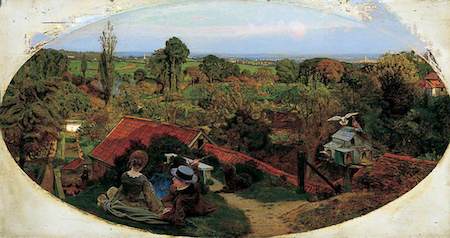
Brown, Ford Madox, 1821-1893; An English Autumn Afternoon

(Ford Madox Brown, English Autumn Afternoon: Birmingham Museum Trust)

On 16 January 1915, Ford Madox Ford (or Ford Madox Hueffer as he then still was) published ‘Enemies’, in his regular series of articles for the weekly periodical Outlook. His editor having signified to Ford that his writing about ‘German culture and the nature of the Prussian State’ (which became his first propaganda book, When Blood is Their Argument) had grown ‘monotonous’ to his readers. Ford now considered the subject of how one should act ‘when one discovers that one is hated’. He had, he said, awoken to the facts that ‘he has been seven times denounced to the British authorities as a German spy, and that the German papers clamorously demand the hanging of the poor present writer as a British variety of the observant tribe.’ And he added: ‘I seem all my life to have been helping over stiles lame dogs who, having recovered the use of their legs, used them for kicking me in the eye.’[1]

Ford_Madox_Brown

(Ford Madox Brown)

That habit was based on advice imparted to him by his much-loved grandfather, the painter Ford Madox Brown: ‘Fordie, never refuse to help a lame dog over a stile. Never lend money; always give it. . . ’[2] It was an attitude that, unsurprisingly, led to occasional difficulties. Alan Judd opens his biography with the story of a Georgian prince (‘every Georgian in Paris was a prince in those days’) who, in 1930s Paris, tapped the impoverished Ford for some cash. ‘Ford had never met the man before but let him have a cheque. The prince was outraged by the smallness of the sum and never visited Ford again, though he kept the cheque. It was for one half of the money Ford owned.’[3]
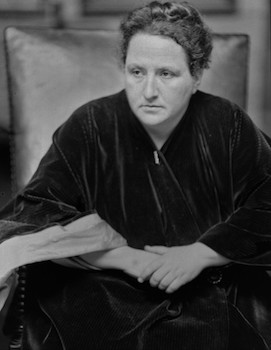
Literature, particularly, demanded such sacrifices. Ford’s first editorial venture, the English Review, was a critical triumph but a financial disaster. When he was editing his second periodical, the transatlantic review, Ford wrote to Gertrude Stein, ‘indeed I really exist as a sort of half-way house between nonpublishable youth and real money—a sort of green baize swing door that everyone kicks both on entering and on leaving.’[4]

Gertrude_Stein_by_Alvin_Langdon_Coburn

(Gertrude Stein by Alvin Langdon Coburn: Eastman Collection)

It was not just money, of course, but personal relations, the seemingly inevitable rows for various reasons and of various sorts: with Conrad, with Arnold Bennett, with A. E. Coppard, with Hemingway. Ford seemed constantly beset by betrayals or, at least, beset by the suspicion or conviction of betrayals. Violet Hunt forged his name on cheques. A journalist ‘from one of Mr Hearst’s papers’, who terrified both Ford and the bailiff-handyman Standing by his deranged handling of an axe when set to chopping wood, in the end ‘took down by shorthand my best story and sold it to a London magazine for £16 that I could well have done with myself. . . . I don’t know why people do things like that to me. I suppose they think I don’t notice. . . . ’[5]

‘I suppose they think I don’t notice.’ This could be the political slogan stitched on a million tee-shirts. ‘They must think we’re stupid,’ the Librarian murmurs as the latest idiocy is announced. I used to assent but now I hesitate. Marvelling anew at some of the people who still have ministerial jobs and the sheer brass neck of some of the responses to the crisis in the National Health Service, I suspect, rather, that ‘they’ no longer bother, that they have stopped even bothering to pretend. With another major scandal currently in the news, observers can only wonder at the weight of each of the usual factors: greed, gross incompetence, corruption, blindness brought on by ideological dazzlement. Even if you’re relaxed about the constant outsourcing of public service provision to private companies—which I’m not since it seems to me nothing more than governmental evasion of responsibility—it must be pretty obvious even to the true believers that the current system doesn’t actually work.

And it seems that it’s still possible, even usual, more than twenty-five years after the Maxwell debacle, for pension funds to be depleted so that the money can be shovelled into the pockets of the usual corpulent suspects. Remarkable.

‘I am not a combative person,’ Ford writes in his Outlook article. Many of us might say the same. But perhaps we could be made so?


References

[1] Ford Madox Ford, ‘Literary Portraits—LXXI: Enemies’, Outlook (16 January 1915), 79.

[2] Ford Madox Ford, Ancient Lights and Certain New Reflections (London: Chapman and Hall, 1911), 197.

[3] Alan Judd, Ford Madox Ford (London: Collins, 1990), 1.

[4] Letter of 18 September 1924: Letters of Ford Madox Ford, edited by Richard M. Ludwig (Princeton: Princeton University Press, 1965), 162.

[5] Ford Madox Ford, It Was the Nightingale (London: Heinemann, 1934), 148, 150-151.


A matter of fact, a matter of error

Evoe .

(‘Evoe’, Edmund Knox via Jot101: http://www.jot101.com/ )

On my way through the park, I pass four people, each accompanied by an average of 2.75 dogs. It seems a little excessive but the total is dominated by the woman gripping five leads, to each of which is attached to a dog of such slender proportions that, taken all together, they would barely comprise a single, ordinary-sized dog.

Perhaps I was taking refuge in such arithmetical precision because I’d been thinking of error, specifically of writers’ errors, even more specifically of novelists’ errors and wondering whether that was a contradiction in itself.

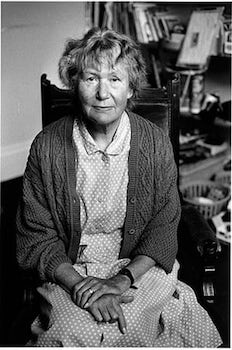
Penelope-Fitzgerald-Guardian

(Penelope Fitzgerald via The Guardian)

Edmund Knox, later ‘Evoe’ of Punch and father of Penelope Fitzgerald, began his editorial career as a boy, taking charge of the family newspaper, The Bolliday Bango. His brothers, ‘Dilly’, classical scholar and later code breaker, Wilfred, priest and teacher, and Ronald, the celebrated Catholic theologian, translator and writer of detective stories, all contributed to the Bango’s production. One venture was the detection of ‘a number of inaccuracies, even downright contradictions, in the Sherlock Holmes stories’. They sent a list of these to Arthur Conan Doyle, ‘in an envelope with four dried orange pips, in allusion to the threatening letter in The Sign of Four’, but received no reply.

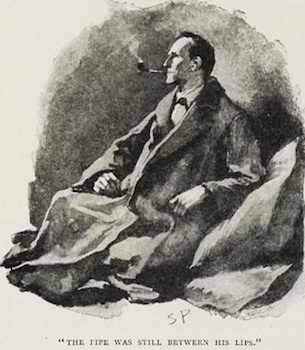
Later, in 1911, Ronnie Knox expanded that original letter into a paper given to the Gryphon Club in Trinity College, Oxford. ‘A satire on all higher scholarship, including his brother’s work on Herondas and his correspondence with German textual experts’, which entailed Ronnie’s invention of Professors Ratzegger and Sauwosch. ‘He set out to show, strictly from internal evidence, that the Return stories are clumsy inventions by Watson, who had taken to drink. This would account, for instance for his neglect of his practice, and the ludicrous errors he makes in the colour of Holmes’s dressing-gown.’

Holmes-dressing-gown

(Sherlock Holmes by Sidney Paget)

It also prompted a letter from Conan Doyle to Ronnie, expressing ‘the amusement – and also the amazement’ with which he had read the article, going on to explain ‘the vexed point’ about the bicycle tracks in ‘The Adventure of the Priory School’.[1]

Studies in the Literature of Sherlock Holmes, the title under which it was published the following year and reprinted several times since, is widely credited with inaugurating Sherlockian studies, ‘The Game’, the world in which Holmes and Watson are real people and Conan Doyle a useful agent. Knox pointed out that the incident of Percy Trevor’s bulldog biting Holmes on his way down to chapel was ‘clearly untrue, since dogs are not allowed within the gates at either University’, while an Oxford scholarship paper including ‘only half a chapter of Thucydides’ was also absurdly improbable. ‘And, worst of all, the dummy in the Baker Street window is draped in the old mouse-coloured dressing-gown! As if we had forgotten that it was in a blue dressing-gown that Holmes smoked an ounce of shag tobacco at a sitting, while he unravelled the dark complication of The Man with the Twisted Lip![2]

A remarkable proportion of the annotations in Leslie Klinger’s edition of the Holmes canon are concerned with inconsistencies or contradictions while the majority of the ‘capsule’ entries on individual stories in Dick Riley and Pam McAllister’s compilation refer to ‘Oddities and Discrepancies’.[3]

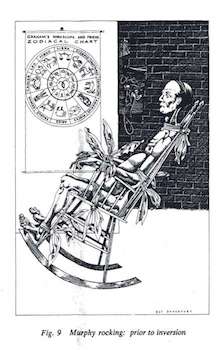
There are degrees and types of ‘error’, of course: firstly, internal, those inconsistencies within the Holmes canon, a man writing prolifically and often hurriedly, over long periods of time and great stretches of material, with occasional lapses hardly surprising. An ‘error’ of a slightly different kind is in the opening passage of Samuel Beckett’s Murphy, where a man has tied himself to a rocking-chair with seven scarves: their positions are detailed but total only six. There are other practical improbabilities and impossibilities (how the last scarf was tied, for instance), concerning which Hugh Kenner remarks: ‘A novel, in short, is a novel, not a map of the familiar world, and Beckett’s novels differ from most in the consistency of their insistence upon this principle.’[4]

Davenport-Murphy-rocking

(Guy Davenport, ‘Murphy rocking: prior to inversion’. Drawing in Hugh Kenner’s The Stoic Comedians: Flaubert, Joyce, and Beckett, facing p. 98)

Indeed. But many novels, not excluding Joyce’s Ulysses, occupy a space so close to that familiar world that their breaths mingle. Joyce said he wanted ‘to give a picture of Dublin so complete that if the city one day disappeared from the earth it could be reconstructed out of my book.’[5] That implies a certain documentary accuracy, a topographical precision – even in a work whose hero is an advertising canvasser based on Homer’s ‘man of many devices’.

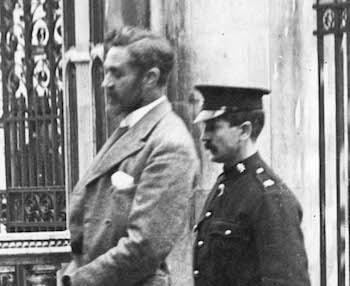
In Ford Madox Ford’s Some Do Not. . ., Christopher Tietjens, home on leave, proposes as spiritual adviser to their son the priest who has appeared earlier in the novel: ‘Sylvia stood up, her eyes blazing out of a pallid face of stone: “Father Consett,” she said, “was hung on the day they shot Casement. They dare not put it into the papers because he was a priest and all the witnesses Ulster witnesses. . . . And yet I may not say this is an accursed war.”’[6]

casement-Irish-Post

(Roger Casement via The Irish Post)

Roger Casement was hanged, not shot, in August 1916. A reviewer of Some Do Not. . . took Ford to task for his ‘inaccuracy’, as Ford noted in his dedicatory letter to the second volume in the sequence, No More Parades, where he discussed his reasons for referring to Casement’s being hanged, specifically his conversation with a woman who could not, she said, bear the thought that the English had hanged him.[7] In his Joseph Conrad: A Personal Remembrance, also published in 1924, Ford wrote about Conrad’s encounter with Casement in Africa and remarked that it was ‘as unspeakably painful to him when later Casement, loathing the Belgians so much for their treatment of the natives on the Congo, took up arms against his own country and was, to our eternal discredit, hanged, rather than shot in the attempt to escape’.[8]

Joyce went to enormous trouble to get the details of 1904 Dublin ‘right’. Ford too worried about factual accuracy in, particularly, the constituent parts of Parade’s End. He had always had ‘the greatest contempt’ for novels that were written with an obvious moral purpose. ‘But when I sat down to write that series of volumes, I sinned against my gods to the extent of saying that I was going—to the level of the light vouchsafed me—to write a work that should have for its purpose the obviating of all future wars.’ Given that intention, the rest followed: ‘So it was my duty to be sure of my details. For technical facts as facts I have no respect whatever. Normally I rather despise myself for playing for factual accuracy in a novel. It did no harm to Shakespeare not to know that Bohemia has no sea-coast or even to believe in the fabled virtues of the mandrake. I would just as gladly make such slips as not. But they give weapons to fools and if, in this case, I failed in factual correctness, I should betray the cause for which I was working.’[9]

One more. ‘It is my sense’, Guy Davenport wrote, ‘that I am always telling a story rather than projecting an illusory, fictional world. I am aware of the trap in argument whereby we can seem to square a story with reality, and I felt wonderfully helpless when various critics jumped on my “mistakes.” One brave Boston soul swore he was at that air show in Brescia, that Kafka wasn’t there (the crowd was estimated by La Sentinella Bresciana to be 50,000), and that Blériot did not look like my description. A Russian has written to know why I have Lenin speaking in a dialect he wouldn’t have used. And so on.’[10]

‘Wonderfully helpless’. Yes, in which world do you start? Or rather, when you’re standing up to your waist in water, in a strong current: which bank do you push for? A great many novelists now begin with ‘research’; some, alas, seem never to leave it, while the fiction is swept downstream.

As to facts, among other inhabitants of that borderland. . .

‘Facts do not find their way into the world in which our beliefs reside; they did not produce our beliefs; they do not destroy them; they may inflict on them the most constant refutations without weakening them.’[11]


References

[1] Penelope Fitzgerald, The Knox Brothers (London: Macmillan, 1977), 50, 105-106.

[2] Studies in the Literature of Sherlock Holmes, reprinted in Blackfriars, I, 3 (June 1920), 156, 158, 159 – essay downloadable here: https://www.lib.umn.edu/pdf/holmes/Blackfriars_v1n3_1920_RA_Knox.pdf

[3] Arthur Conan Doyle, The New Annotated Sherlock Holmes, 2 volumes, edited with notes by Leslie S. Klinger (New York and London: W.W. Norton and Company 2005); Dick Riley and Pam McAllister, The Bedside, Bathtub and Armchair Companion to Sherlock Holmes (New York: Continuum, 1999).

[4] Hugh Kenner, A Reader’s Guide to Samuel Beckett (1973; Syracuse: Syracuse University Press, 1996), 58.

[5] Frank Budgen, James Joyce and the Making of ‘Ulysses’ and other writings, enlarged edition (1934; London: Oxford University Press, 1972), 69.

[6] Ford Madox Ford, Some Do Not. . . (1924; edited by Max Saunders, Manchester: Carcanet Press, 2010), 218.

[7] Ford Madox Ford, No More Parades (1925; edited by Joseph Wiesenfarth, Manchester: Carcanet Press, 2011), 5-6.

[8] Ford Madox Ford, Joseph Conrad (London: Duckworth, 1924), 101, 129. All this and more elucidated by Max Saunders’ note in Some Do Not. . ., 218.

[9] Ford Madox Ford, It Was the Nightingale (London: Heinemann, 1934), 205, 206.

[10] Guy Davenport, ‘Ernst Machs Max Ernst’, The Geography of the Imagination (Boston: David R. Godine, 1997), 376.

[11] Marcel Proust, The Way by Swann’s, translated by Lydia Davis (London: Allen Lane, 2002), 149.


That public-school frame of mind – perhaps

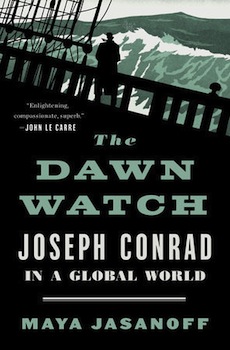
Dawn-Watch

‘So the great need of our time being the saving of time, any soul that can give us very quick, irrefutable and consummate pictures confers a great boon on humanity’, Ford Madox Ford wrote. ‘Joseph Conrad gave you Malaysia, South American republics, the Secret Service, the pre-Soviet efforts of Russian revolutionaries, the Congo, the Sea — and above all the English public school frame of mind.’[1]

Ah yes, that frame of mind. Conrad was a little less than six months dead when this essay appeared but a decade earlier, in the first year of the Great War, Ford had written of how he was ‘in a sense an unfortunate man—unfortunate in the sense that all men of forty and less, the world over, are unfortunate. For I came into, and took very seriously, English public-school life at a time when the English public-school spirit—in many ways the finest product of a civilisation—was already on the wane. I took its public traditions with extraordinary seriousness—the traditions of responsibilities, duties, privileges, and no rights.’[2] This was in a work of propaganda, written for his friend, the Liberal politician Charles Masterman, then in charge of the War Propaganda Bureau at Wellington House, its team of writers primarily concerned to oppose German propaganda in the United States. Ford had in fact attended a boarding-school in Folkestone, then, as a day-boy, University College School in Gower Street—but that tradition, that frame of mind, yes, he was probably familiar enough with it, one way or another.

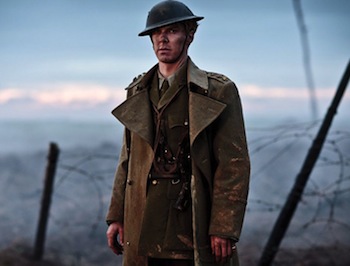
Cumberbatch-Tietjens

(Benedict Cumberbatch as Christopher Tietjens in the BBC/HBO series of Parade’s End)

Christopher Tietjens, in his rather unhinged exchange with General Campion, states that ‘it is not a good thing to belong to the seventeenth or eighteenth centuries in the twentieth. Or really, because it is not good to have taken one’s public-school’s ethical system seriously. I am really, sir, the English public schoolboy. That’s an eighteenth-century product.’[3]

‘Have you read The Dawn Watch?’ my wife’s sister asked as we circled the piles of books in Waterstones. I said I hadn’t, though I’d looked at it several times, most recently in the past few minutes, and seen a couple of reviews. ‘I just don’t know if I’d read it’, I said, ‘I think it’s a bit peripheral to what really interests me at the moment.’ She regarded me steadily. ‘You’ve already bought it, haven’t you?’ I said, hearing the laboured grinding of my brain’s gears and wondering why I’d been so slow. And, when she nodded, ‘Well, that’s different’, I said hurriedly, ‘if it’s a present.’ She said helpfully: ‘It absolves you of the responsibility—’ ‘Exactly’, I said, ‘exactly.’

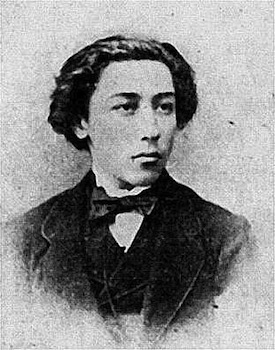
Conrad_1874

(Conrad, aged sixteen, 1874)

My slight reluctance might seem odd, given my intense interest in the period of history in which Conrad flourished, the writers with whom he associated, the themes that his work is concerned with, the fact that some of my Fordian friends are also card-carrying Conradians. Because of those things, in turn, I’ve read, over many years, all of Conrad’s fiction and some of his other writings too; plus a handful of biographical and critical works. Come to think of it, I’m pretty sure that I actually taught a Conrad text once—inevitably Heart of Darkness, which is, I have to say, an ideal seminar text: how can you not have an opinion about it? Still, the fact remains that he’s one of those writers that I’ve never liked quite as much as I think I should—given all the reasons for reading him in the first place. Entirely my fault, no doubt, no doubt. And there’s another thing. . .

After a certain age—it must vary wildly, depending on character—one begins to think in finite terms. Not calculating at every point, I mean, but in certain contexts, trips, holidays, meetings with friends or relatives who live inconveniently far off. . . books. Some book people, mainly but not exclusively male, I suppose, have lists. Books to read, books to reread, books to buy or borrow. They estimate, approximate, do sums. This many a year and say, this many years, that means. . . To those not similarly afflicted—or those that have not yet reached that certain age—such appraisal and conjecture can seem a little morbid. So it’s best not to say, when a title is suggested,  well I have a list of one thousand seven hundred and ninety-three titles and that’s not on it. There are books that will be published over the next ten or fifteen or twenty years and you need a margin. But it’s a fine balance. Like those people who are inundated with invitations at Christmas or New Year, hold out for even better offers, miscalculate and spend the evening at home with a bottle of indifferent wine, you must take care not to overplay your hand. . .

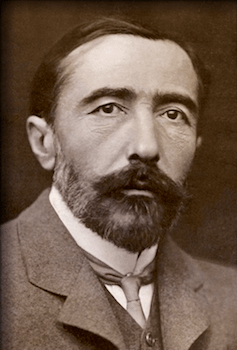
Joseph_Conrad

And so I’ve just begun to read Maya Jasanoff’s The Dawn Watch: Joseph Conrad in a Global World. And, needless to say, I am already hooked. Jasanoff is an award-winning historian—‘History is like therapy for the present: it makes it talk about its parents’—and you can see why: so I feel I’m in safe hands. And, early on, she remarks that ‘Conrad’s novels are ethical injunctions. They meditate on how to behave in a globalizing world, where old rulebooks are becoming obsolete, but nobody’s yet written new ones.’[4] And that ‘ethical injunctions’ is pretty close to some of Ford’s pronouncements about his old friend and collaborator. So, now embarked with Jasanoff, I still feel within hailing distance of Fordian shores. But there’s a goodish distance to go and I may yet find myself in quite uncharted waters. . .

References

[1] Ford Madox Ford, ‘From a Paris Quay (II)’, New York Evening Post Literary Review, 3 January 1925, 1-2, reprinted in Critical Essays, edited by Max Saunders and Richard Stang (Manchester: Carcanet Press, 2002), 269-271 (269).

[2] Ford Madox Ford, When Blood is Their Argument: An Analysis of Prussian Culture (London: Hodder and Stoughton, 1915), 301.

[3] Ford Madox Ford, No More Parades (1925; edited by Joseph Wiesenfarth, Manchester: Carcanet Press, 2011), 236.

[4] Maya Jasanoff, The Dawn Watch: Joseph Conrad in a Global World (London: William Collins, 2017), 6, 9.

Happy Birthday, Mr Ford

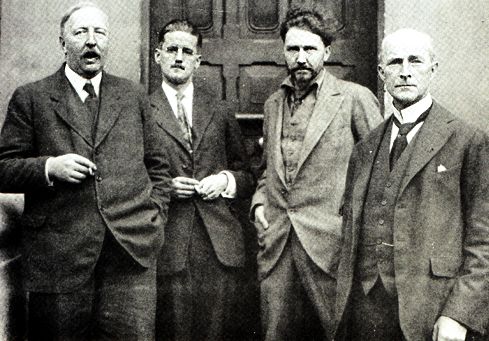
ford-joyce-pound-quinn

(Messrs Ford, Joyce, Pound and Quinn: Paris, 1923)

Today is the birthday of Ford Madox Ford, born Ford Madox Hueffer in Merton, Surrey, 17th December 1873. Even excluding the several pseudonyms he used, there are plenty of other versions of his name, many of them—such as ‘Forty-Mad-Dogs Hueffer’—traceable to the always inventive Ezra Pound.[1]

I tend to mention Ford a lot because he comes easily to mind, my mind anyway (among an increasing number of other minds). But then anyone interested in modern literature will probably have read his The Good Soldier; anyone really interested in modern literature will probably have read, or intended to read, or at least know something about, Parade’s End, his superb tetralogy about England before, during and after the Great War. ‘About England’—that is to say, about landscape, class, gender, love, sex, history, politics, social conventions, religion, psychological breakdown—and other things.

Ford was always attentive to anniversaries, Saints’ days—and birthdays, not excluding his own. According to the dates given at the back of the book, he began writing When the Wicked Man—not one of his best novels, by a country mile—in Paris, on 17 December 1928 (he went on with it in New York and finished it aboard R.M.S. Mauretania, off the Scillies, 1 December 1930.) More famously, we find this claim in the ‘Dedicatory Letter’, addressed to Stella Bowen, which first appeared in the 1927 Albert & Charles Boni edition of The Good Soldier: A Tale of Passion:

‘Until I sat down to write this book—on the 17th December 1913—I had never attempted to extend myself, to use a phrase of race-horse training. Partly because I had always entertained very fixedly the idea that—whatever may be the case with other writers—I at least should not be able to write a novel by which I should care to stand before reaching the age of forty; partly because I very definitely did not want to come into competition with other writers whose claim or whose need for recognition and what recognitions bring were greater than my own. I had never really tried to put into any novel of mine all that I knew about writing. I had written rather desultorily a number of books—a great number—but they had all been in the nature of pastiches, of pieces of rather precious writing, or of tours de force. But I have always been mad about writing—about the way writing should be done and partly alone, partly with the companionship of Conrad, I had even at that date made exhaustive studies into how words should be handled and novels constructed.
‘So, on the day I was forty I sat down to show what I could do—and The Good Soldier resulted.’[2]

FMF_SB_Corr

In his lifetime, Ford published almost eighty books: say seventy-eight if we don’t count The Panel and its slight revision for American publication, Ring for Nancy, as separate items. For numerologists, 2017 has been the seventy-eighth year since his death. (Ford studies take many forms, some of them a little worrying. Mais passons.)

And I see that I read my first Ford book – good grief! – forty years ago. (Acutely numerate Ford scholars might narrow their eyes at this point, suspecting a massaging of the figures—‘Really? Exactly forty?’—but you can trust me on this.)

People occasionally ask, ‘Are there any others that are really good?’ I try to be scrupulous in separating the ones that I think are ‘really good’, say a dozen or so, maybe more, from those that have points of interest for the Ford specialist (just about all of them). Keeping it tight: if historical novels, particularly set in the Tudor period, are your thing, you may already have come across The Fifth Queen trilogy. It centres on Katharine Howard and on a chap called Thomas Cromwell, not an unfamiliar name these days. Then I’ve always had a fondness for The Young Lovell, set in 1486, concerning magic and a belle dame sans merci; and Ladies Whose Bright Eye, set in the fourteenth century (though with one foot in the twentieth), which might just edge it, because of its high spirits.

FMF_EE

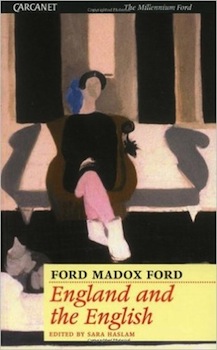
Then England and the English, which is cheating slightly since this is another trilogy, comprising The Soul of London, The Heart of the Country and The Spirit of the People. Joseph Conrad: A Personal Remembrance was written at speed in the months following Conrad’s death. Ford refers to it as a novel but it gives a much more vivid sense of how Conrad actually was than many scrupulous biographies of him. No Enemy, written mostly in 1919, was published in America ten years later (and first published in the UK seventy-three years after that). Dancing along the border between fiction and autobiography, it has folded into it many of Ford’s experiences and perceptions of the recent war: suffering from shell-shock, he had, in effect, to learn to write again.

From Ford’s final decade, I’d probably pick It Was the Nightingale just ahead of the outrageously enjoyable Return to Yesterday; and Provence would just edge out the slightly more eccentric Great Trade Route, so Ford’s beloved adopted home rather than the embodied idea and the sometimes uneasy grappling with the American South.

That, of course, leaves out of account entirely the poetry, the critical essays, the letters, the fairy tales, the art criticism. . . Still, it’s a start.

And of the two heavyweights? People sometimes ask: Coleridge or Wordsworth? Eliot or Pound? Lennon or McCartney? The Good Soldier or Parade’s End? I say: both, though acknowledging that, on the quiet, one leans this way or that.

Val-Christopher

(Adelaide Clemens as Valentine Wannop, Benedict Cumberbatch as Christopher Tietjens
in the BBC/HBO adaptation of Parade’s End)

‘The day of her long interview with Tietjens, amongst the amassed beauties of Macmaster furnishings, she marked in the calendar of her mind as her great love scene. That had been two years ago: he had been going into the army. Now he was going out again. From that she knew what a love scene was. It passed without any mention of the word “love”; it passed in impulses; warmths; rigors of the skin. Yet with every word they had said to each other they had confessed their love; in that way, when you listen to the nightingale you hear the expressed craving of your lover beating upon your heart.’[3]

Yes.

References

[1] This one crops up in Pound’s interview with D. G. Bridson, in New Directions 17, edited by James Laughlin (New York: New Directions, 1961), 166. Another version was ‘Freiherr von Grumpus ZU und VON Bieberstein’: Brita Lindberg-Seyersted, editor, Pound/Ford: The Story of a Literary Friendship (London: Faber & Faber 1982), 141.

[2] Ford Madox Ford, The Good Soldier: A Tale of Passion (1915; edited by Max Saunders (Oxford: Oxford University Press, 2012), 3.

[3] Ford Madox Ford, Some Do Not. . . (1924; edited by Max Saunders, Manchester: Carcanet Press, 2010), 322.


The Last of England; or London; Sinclair, Sebald, Ford

Morning-West-Bay

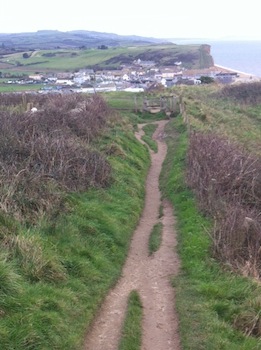
I was sitting at the dining table of a rented holiday cottage in West Bay, idly totting up the senses in which the title of Iain Sinclair’s chapter might be read: ‘After Sebald’ is the title of chapter four of The Last London: True Fictions from an Unreal City. Grant Gee’s 2012 film Patience is subtitled (parenthetically) After Sebald; and Sinclair follows in Sebald’s footsteps, to an extent, in company with the poet Stephen Watts, a friend of Sebald’s, who sometimes walked with him. Chronologically, Sinclair is, of course, after—later than—Sebald; he is also pursuing him, or an image of him. Much of his writing draws on similar tropes of memory and deep autobiography to those of Sebald: again, this is, in a sense, ‘after’ him. He also touches on the Sebaldian afterlife of conference, festschrift, memorial, tribute: and the influence of Sebald, as man, walker and writer, as presence, as image of ‘writer’, on others, including the writer Rachel Lichtenstein, with whom Sinclair has collaborated in the past. And the afterworld is an abiding concern in Sinclair’s fictional or metafictional world, not least here in the moving elegiac conjuring of Martin Stone. ‘Slow down. Lose yourself among walks laid out with sufficient complexity to confuse the dead. To keep them to allocated spaces. To the chipped ballast of memorial slabs holding them in the ground.’[1]

Post-lunch, convalescing from such mental exertions, I trip over Sinclair’s mention of a book called The Last of England (2004) by Randall Swingler. Now, to a close reader of Ford Madox Ford, that title, The Last of England, sets dogs barking and bell ringers swinging on their ropes.

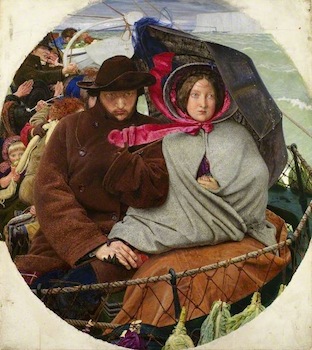
Brown, Ford Madox, 1821-1893; The Last of England

(Ford Madox Brown, The Last of England: Birmingham Museums Trust)

By way of brief explanation, for those immune to such infections, The Last of England is a famous painting by Ford Madox Brown, maternal grandfather of Ford Madox Ford. It exists in two versions—or three, counting the watercolour replica in the Tate—the oil on panel of 1855 (Birmingham Museums Trust) and the 1860 version (oil on canvas: The Fitzwilliam Museum), which seems entirely suitable in the context of any discussion of a writer whose name, nationality and status are far from stable and are strongly marked by doubleness, trebleness—or more. (Sentences like that sometimes appear to be occupational hazards for those with ambitions to write about Ford.)

As well as his several unsurprising references to the picture’s title in his 1896 biography of grandfather Brown, Ford used the phrase in his great postwar tetralogy, Parade’s End, twice in the opening volume and once in the final one. There is a finer symmetry than is at first apparent: the single mention in the closing volume is balanced by the fact that Last Post is itself ‘the last of England’ for Ford in several senses. The whole of the tetralogy had been written abroad but constituted his most searching fictional analysis of this country, while Last Post moved on from recent history to glance at possible futures. Thereafter, the material of his fiction lay elsewhere, in France and the United States. And, arguably, Last Post, his last ‘English’ novel, was the last of his books to be aimed at a primarily British audience.

FMF_IWN

Ford used the phrase twice more, in It Was the Nightingale, the autobiographical volume most closely related in its themes and treatment to his great novel. Once, because of the restrictions that were being brought in against immigration:

‘What then was to become of England of the glorious traditions? It had been political fugitives and martyrs that had given England her place among the nations. It had been the Flemish weavers, the Anabaptists, the Huguenots, the ceaseless tide of the discontented from every nation that had given England, not alone her tradition of freedom, but her crafts, her system of merchanting, her sense of probity, her very security. . . . This then was the last of England, the last of London. . . . ’

(Cue two minutes’ silence here, looking around us, as we must.)

The second instance concerns Ford’s leaving England for France in November 1922: ‘There was, as I passed through Trafalgar Square, a dense fog and the results of a general election coming in. . . . an immense shouting mob in a muffled and vast obscurity. The roars made the fog sway in vast curtains over the baffled light-standard. That for me was the last of England.’[2]

So, for a moment, familiar with the poet Ted Walker’s memoir and Derek Jarman’s film, plus a couple of other uses of the phrase in book titles, I paused, breathing a little heavily. Had I missed something really significant? I’d heard of Randall Swingler, come across him in a couple of literary histories, in memoirs by several figures, including E. P. Thompson and Julian Symons, which appeared in PN Review—which had also published George Barker’s ‘Elegy’ (‘Randall Swingler, that most honest man’)—and especially in Swingler’s ‘The Right to Free Expression’, published in Polemic, with annotations by George Orwell.[3] As a committed Communist, Swingler was never going to hit it off with Orwell: taking such exception to Orwell’s ‘The Prevention of Literature’ and referring to its author as ‘singularly independent of factual evidence’ made sure of that.

The 2004 publication date Sinclair mentioned made me pause, even within my pausing, though reprints or revised editions of Swingler, who died in 1967, were plausible. Then I suddenly registered the reference to J. H. Prynne, which pointed pretty definitely to Randall Stevenson’s volume in The Oxford English Literary History, Volume 12: 1960-2000: The Last of England?

Last-London
Not to suggest for a moment that Sinclair’s bracing, exhilarating and often extremely funny book should be defined by a tiny error—but while some errors are merely errors, others exist for just such occasions, to connect with, and stimulate, those ready for such connection. In the past, I’ve commented to others about books particularly poorly proofread who turn out not to have noticed any errors at all; on the other hand, often having read a book I then see a review of it which points in tones of thunder to outrageous shortcomings, blunders and misrepresentations that completely passed me by. Swingler for Stevenson would be puzzling or a speck of grit in the eye for a minority of Sinclair’s readers, I suspect. Even if they noticed, would it really matter to them? Not unless they too had a selection of phrases like ‘the last of England’ wired up to the alarm system of their memory banks.

Besides, that ‘error’ (which already seems to need the qualification of quotation marks) seems quite at home in Sinclair’s chronicle of complex networks of connection and affiliation, all of a piece with a universe of chance encounters, names slightly misheard, images glimpsed through the interstices of blurry weather. ‘We impose connections in a futile attempt to find meaning in a maelstrom of possibilities.’ Elsewhere, he writes: ‘In the state that manifests itself when projects are launched, and when they dictate their terms by way of coincidences and excited discoveries, unexpected phone calls, emails from strangers, I found it difficult to sleep. The streets had become a displacement dream.’ And one more: ‘What I was groping towards was the conviction that different writers, laying down different maps of the same place, enlarge the potentialities of the city. Geography shifts. Individuals dissolve. Place is burnished and dissolved.’[4]

There’s a fascinating video on the London Review of Books website at the moment: Stewart Lee interviewing Iain Sinclair. The fact that Lee several times refers to Sinclair’s book as The Last of London seems to fit as well. . .

https://www.lrb.co.uk/audio-and-video


References

[1]
Iain Sinclair, The Last London: True Fictions from an Unreal City (London: Oneworld, 2017), 58.

[2] Ford Madox Ford, It Was the Nightingale (London: Heinemann, 1934), 86, 137. One of the book’s later editors describes it, in fact, as ‘a companion volume to Parade’s End, reiterating the concerns of the tetralogy with renewed urgency’. See John Coyle, editor, Ford Madox Ford, It Was the Nightingale (1934; Manchester: Carcanet Press, 2007), xiv.

[3] George Orwell, Smothered Under Journalism: 1946, edited by Peter Davison, revised and updated edition (London: Secker and Warburg, 2001), 432-443. Davison’s footnote (443) mentions Swingler’s volumes of poetry and his editorial involvement with several journals in the 1930s and 1940s. Barker’s poem is in PN Review 27, volume 9, number 1 (September-October 1982).

[4] Sinclair, The Last London, 18 (I see I’ve quoted this once before but think it’s earned a repeat), 42, 54.


A feather in the wind

Sea-1

Between Eype and West Bay, a fierce wind rocks us on the cliff path. A couple of days later, at lunch in the Watch House Café, the sound is almost deafening at times, sails flapping on high and rolling seas. On the slope above the shore, you can lean steeply and confidently into the wind. The sea is foaming, furious, tiny tumbleweeds of spume blown in cartwheels across the sand, thinning to threads of washing suds, smears along the beach.

In a high wind, I often feel as I do when watching a raging sea: a sense of awe at such naked strength and power but also extreme pleasure in the knowledge that they are, precisely, irresistible. No matter how misdirected, demented and destructive human behaviour becomes, the wind will blow, the sea will rise and fall. In such a wind, resistant, your feet solidly planted, you feel your body’s strength but also sense its limits.

Back-to-West-Bay

In An Affair of the Heart, Dilys Powell, the celebrated film critic who also wrote several fine books about Greece, remembered a people called the Perachorans. She was married to the archaeologist Humfry Payne, who, in 1929, was appointed director of the British School of Archaeology in Athens. A year later, he initiated an excavation at Perachora, a settlement on the Gulf of Corinth, and Powell spent a good deal of time in and around the area. She wrote, ‘They grow old, they die, but they are the same. And I reflected with astonishment – for in imagination it is always oneself who is stable in an inconstant world – that I was the feather in the wind.’[1]

It’s a resonant image. Sixty years on, the world is a little more inconstant, a little less stable. Just a little. Still, it’s hardly surprising that the wind has always been a favourite literary symbol, from Homer through to the Romantic poets and beyond, seemingly apposite in a staggering variety of contexts, wind as god, wind as breath, wind as inspiration or omen or threat or simply impersonal force.

‘My thoughts were a great excitement’, W. B. Yeats remembered, ‘but when I tried to do anything with them, it was like trying to pack a balloon into a shed in a high wind.’[2] Indeed, we’ve all experienced that, no doubt. Or something like it. Or vaguely resembling it. Although lately it seems that, even when just a little excited, people tend to take to social media. Sometimes, they bring along thoughts with that excitement.

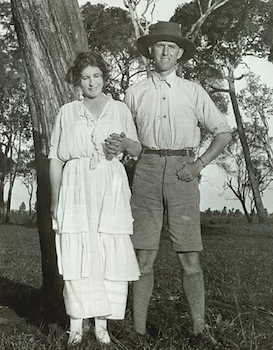
Karen_Blixen_and_Thomas_Dinesen_1920s

(Karen Blixen with her brother Thomas on the family farm in Kenya in the 1920s)

Karen Blixen, writing of her farm at the foot of the Ngong Hills, sited at an altitude of over six thousand feet that ‘the wind in the highlands blows steadily from the north-north-east. It is the same wind that down the coasts of Africa and Arabia, they name the Monsoon, the East Wind, which was King Solomon’s favourite horse.’[3] And it may well have been: he seems to have had 4000 to choose from, or 40000, depending on the version you settle on. A great many horses, in either case; and a great many wives and concubines too.

Having made our effortful way back from the beach—at an angle of something less than ninety degrees—we sit listening to the howling in the chimney, raising our voices a little. That in turn recalls (of course) the narrator of Ford’s The Good Soldier: ‘And I shall go on talking, in a low voice while the sea sounds in the distance and overhead the great black flood of wind polishes the bright stars.’[4] And it occurs to me to wonder, given the level of noise in this wind, just how much the narrator (‘talking in a low voice’) wanted to be heard; or rather, how much it mattered. Without getting too detailed, if his listener is the now-mad Nancy Rufford it probably doesn’t matter much at all: the murmur of a voice amidst the chorus of the wind will do.

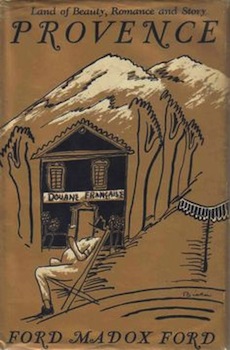
‘Wind in the Work of Ford Madox Ford’. That could be worked up into something, surely. The sentence from The Good Soldier has its traceable ancestry, primarily Ford’s own poem, ‘On Heaven’, which includes the line ‘Through the roar of the great black winds, through the sound of the sea!’[5] And more than twenty years later, at the close of Provence: From Minstrels to the Machine, another strong wind—the mistral this time—plays a central role in the drama, unless it’s a comedy:

Provence.dj

‘And leaning back on the wind as if on an up-ended couch I clutched my béret and roared with laughter. . . .We were just under the great wall that keeps out the intolerably swift Rhone. . . . Our treasurer’s cap was flying in the air. . . . Over, into the Rhone. . . . What glorious fun. . . . The mistral sure is the wine of life. . . . Our treasurer’s wallet was flying from under an armpit beyond reach of a clutching wind . . . . Incredible humour; unparalleled buffoonery of a wind . . . . The air was full of little capricious squares, floating black against the light over the river. . . . Like a swarm of bees: thick. . . . Good fellows, bees. . . .’

A ‘delirious, panicked search’ then begins, for the scattered banknotes (those ‘little capricious squares’), for passports, for citizenship papers. The money that was to finance a year or two of rest has mostly gone. ‘But perhaps the remorseless Destiny of Provence desires thus to afflict the world with my books’, Ford concluded—as if he would ever have willingly stopped writing, mistral or no.[6]

Back in Bristol, it’s oddly calm today. Hardly a flicker in the heaped brown leaves. I type at the top of a page: ‘Calm in the Work of Ford Madox Ford’. Nothing’s come yet.

References

[1] Dilys Powell, An Affair of the Heart (London: Souvenir Press, 1958), 173.

[2] W. B. Yeats, Autobiographies (London: Macmillan, 1955), 41.

[3] Karen Blixen, Out of Africa (1937; Harmondsworth: Penguin 1987), 14.

[4] Ford Madox Ford, The Good Soldier: A Tale of Passion (1915; edited by Max Saunders, Oxford: Oxford University Press, 2012), 18.

[5] Ford Madox Ford, Collected Poems (New York: Oxford University Press, 1936), 8.

[6] Ford Madox Ford, Provence (London: Allen & Unwin, 1938), 367-368.


‘Depressed by the world but better in ourselves’.

Letters-LM

In a letter of 3 November 1961, Louis MacNeice wrote to Allen Tate and his wife Isabella: ‘We get more & more depressed by the world but better in ourselves.’[1]

(I could write that to any number of people right now: so half of it is optimistic, no?)

MacNeice had recently moved to a half-time contract with the BBC. He’d begun an affair with Mary Wimbush the previous year and, shortly after he and Mary were involved in a car crash that autumn, MacNeice asked his wife Hedli for a divorce. She refused, supposedly on the advice of ‘their mutual friend’, Allen Tate, who had told Hedli that his wife wouldn’t give him a divorce for five years and he was ‘so grateful to her!’[2]

Tate divorced Isabella Gardiner in 1966 and married Helen Heinz, who survived him (he died in 1979); MacNeice died in 1963. So Tate’s extensive experience of marriage and divorce in late 1961 derived from his relationship with the novelist Caroline Gordon. They married in May 1925, divorced in 1945, remarried the next year and finally divorced again in 1959.

caroline-gordon

(Caroline Gordon via http://porterbriggs.com/)

Gordon’s early mentor was Ford Madox Ford, whom she worked for as secretary in New York in the mid-1920s and remained friends with, in Paris, Provence and Tennessee, for the rest of his life. ‘A few days later Ford heaved a sigh and asked me if I had done any writing. I told him that I had started a novel but that I was going to have to throw it away. He heaved another sigh and said, “You had better let me see it.” I brought him the manuscript a few days later. He read the manuscript through, then said: “Why has nobody told me about this? What were you going to say next?” I recited the sentence. He said, “That is a beautiful sentence. I will write it down.” This procedure was repeated several times. It ended with Ford taking my dictation for three weeks. The result was a novel called Penhally.’[3] Or, as she wrote to her friend Sally Wood, a little nearer to the time: ‘Ford took me by the scruff of the neck about three weeks before I left, set me down in his apartment every morning at eleven o’clock and forced me to dictate at least five thousand words, not all in one morning, of my novel to him. If I complained that it was hard to work with everything so hurried and Christmas presents to buy he observed “You have no passion for your art. It is unfortunate” in such a sinister way that I would reel forth sentences in a sort of panic. Never did I see such a passion for the novel as that man has.’[4]

Ford-Gordon-Biala-Tate

Caroline Gordon; Janice Biala; Ford Madox Ford; Allen Tate: Summer 1937, via Cornell University Library: https://digital.library.cornell.edu/catalog/ss:550910

Gordon would publish eight more novels, as well as several volumes of short stories and criticism, including A Good Soldier: A Key to the Novels of Ford Madox Ford, based on a lecture she gave at the University of California, Davis, in which, recalling her first reading of Ford’s 1913 historical romance, The Young Lovell, she remarked: ‘I have since come to feel that this novel, which is almost unobtainable and has been read by comparatively few people, is the key to Ford’s life work.’[5]

Gordon_Coll_Stories

I find this, in my current reading: ‘We impose connections in a futile attempt to find meaning in a maelstrom of possibilities.’[6]

True enough. Last word for MacNeice, then: with such an embarrassment of riches to choose from, try this, which I only came across the other day and have a liking for, ‘Prologue (to The Character of Ireland)’:

‘Facts have their place of course but should learn to keep it. The feel
Of a body is more than body. That we met
Her, not her, is a chance; that we were born
Here, not there, is a chance but a chance we took
And would not have it otherwise.’[7]


References

[1] Letters of Louis MacNeice, edited by Jonathan Allison (London: Faber, 2010), 687.

[2] Jon Stallworthy, Louis MacNeice (London: Faber and Faber, 1996), 457.

[3] ‘Caroline Gordon’, in Sondra Stang, editor, The Presence of Ford Madox Ford (Philadelphia: University of Pennsylvania Press, 1981), 200; see also Brita Lindbergh-Seyersted, A Literary Friendship: Correspondence Between Caroline Gordon & Ford Madox Ford (Knoxville: The University of Tennessee Press, 1999).

[4] Sally Wood, editor, The Southern Mandarins: Letters of Caroline Gordon to Sally Wood, 1924-1937 (Baton Rouge and London: Louisiana State University Press, 1984), 51.

[5] Caroline Gordon, The Good Soldier: A Key to the Novels of Ford Madox Ford (Davis: University of California Library, 1963), 19.

[6] Iain Sinclair, The Last London: True Fictions from an Unreal City (London: Oneworld, 2017), 18.

[7] Louis MacNeice, Collected Poems, edited by Peter McDonald (London: Faber, 2007), 781.


Ezra Pound, Stella Bowen and ‘the stylist’

Ford-_E_Pound_Rapallo_1932 Stella-Bowen-photo

(Ford Madox Ford and Ezra Pound, Rapallo, 1932; Stella Bowen, 1920s, Cornell)

On 30 October 1885 Ezra Pound was born in Hailey, Idaho. (‘Here he lies, the Idaho kid,/ The only time he ever did.’)[1] On 30 October 1947, Stella Bowen, painter and writer, died at the age of fifty-four, three weeks after the birth of her grandson, leaving her last painting (‘Still Life with Grapes’) unfinished.[2]

Stella met Pound during the First World War, when the studio she shared with her friend Phyllis Reid was lent for a party, to which Pound came. ‘To me’, Stella remembered, ‘he was at first an alarming phenomenon. His movements, though not uncontrolled, were sudden and angular, and his droning American voice, breaking into bomb-shells of emphasis, was rather incomprehensible as he enlightened us on the Way, the Truth, and the Light, in Art.’[3] Thereafter, largely through Pound, she and Phyllis met everyone: Eliot, Yeats, Wyndham Lewis, May Sinclair, Violet Hunt, Arthur Waley, Edward Wadsworth and others, including Ford Madox Ford.

Solitaire

Stella Bowen, Ford Playing Solitaire, Paris 1927
(Private collection: via https://www.awm.gov.au/visit/exhibitions/stella )

By the autumn of 1917, Stella was exchanging letters with Ford, she in London, he still stationed in Redcar, on the Yorkshire coast. They would live together for almost ten years. The first cottage they shared was Red Ford, in Pulborough, ‘a leaky-roofed, tile-healed, rat-ridden, seventeenth-century, five-shilling a week, moribund labourer’s cottage.’[4] ‘Penny, (not Pound) the goat, the sweet corn, Mrs Ford and the hole in the roof are still, here, going strong’, Ford wrote to Herbert Read in June 1920.[5] That summer, they moved to Bedham, ten miles away, while the indispensable Mr Hunt was still working on Coopers Cottage. Pound visited them there, ‘once, just before he and Dorothy migrated to Paris’, Stella remembered.[6] Or, in Ford’s own, lengthier version: ‘And Mr Pound appeared, aloft on the seat of my immense high dog-cart, like a bewildered Stuart pretender visiting a repellent portion of his realms. For Mr Pound hated the country, though I will put it on record that he can carve a sucking pig as few others can.’[7]

Two months before Pound’s visit to Bedham, the poet John Rodker published at The Ovid Press, in a limited edition of 200 copies, Hugh Selwyn Mauberley by ‘E. P.’ The press’s backers included May Sinclair and Pound himself but was primarily financed by Mary Butts, then married to Rodker.[8] Butts was one of the first friends that Stella made when she moved to London, when they both worked on a Children’s Care Committee in the East End.

Mary_Butts

Mary Butts (Photo by Bertram Park, 1919: Beinecke Library, Yale University)

Hugh Selwyn Mauberley is a long poem or suite of poems, numbering eighteen in all. The centre of the work (poems IX and X) is occupied by two poems contrasting different types of writer. The first, ‘Mr Nixon’, is often taken to refer to Arnold Bennett. Pound wrote to Ford that Rodker ‘thinks both he and I will be murdered by people making personal application of necessary literary constructions verging too near to photography.’ He went on: ‘My defence being that “Mr Nixon” is the only person who need really see red, and go hang himself in the potters field or throw bombs through my window.’[9]

A ‘potter’s field’ is generally applied to a burial place for paupers and unidentified strangers but Bennett, famously, was from ‘the Potteries’, his most celebrated novels (certainly up to 1920) all focusing on the ‘Five Towns’, centres of the pottery industry. In his prose collection Instigations, published in April 1920, Pound wrote of Wyndham Lewis’s Tarr (1918): ‘What we are blessedly free from is the red-plush Wellsian illusionism, and the click of Mr Bennett’s cash-register finish.’ When this essay was reprinted many years later, Pound added a footnote to the effect that he’d ‘rather modified his view of part of Bennett’s writing’ when he finally got around to reading The Old Wives’ Tale.[10] Still, three years before Virginia Woolf’s famous essay ‘Mr Bennett and Mrs Brown’, Pound has the same realist novelists in his sights; and there is a clear imputation to Bennett of predominantly mercenary motives.

HSB-Ovid

What other ‘people making personal application of necessary literary constructions verging too near to photography’ might Pound’s poem suggest? The second type of writer in that central pair of poems, is termed ‘the stylist’:

Beneath the sagging roof
The stylist has taken shelter,
Unpaid, uncelebrated,
At last from the world’s welter

Nature receives him,
With a placid and uneducated mistress
He exercises his talents
And the soil meets his distress.

The haven from sophistications and contentions
Leaks through its thatch;
He offers succulent cooking;
The door has a creaking latch.[11]

‘Unpaid, uncelebrated’: a pretty stark contrast with the famous and successful ‘Mr Nixon’. If this draws—as it surely does—on Ford and Stella in their first Sussex cottage, just what does this imply about Pound’s view of Ford at this juncture? There’s sympathy—as you’d expect in a friendship that extended over thirty years—even an acknowledgement of the justification for that withdrawal, that ‘taking shelter’. But I think there are indications of something more, a taking leave, a sense of retrospect or valediction, for all the prominent use here of the present tense.

For himself, Pound feels, despite all the usual frustrations of shrinking periodical outlets, paltry funding, uncooperative editors and the rest, a sense of burgeoning strength after a hugely productive few years, culminating in Homage to Sextus Propertius (1919) and now Hugh Selwyn Mauberley, with the Cantos too definitely under way. As for the others, the ones who mattered to Pound: T. S. Eliot had published Prufrock and Other Observations (1917) and Poems (1919); Wyndham Lewis, like Ford, had been to the war but had also just published Tarr while, since March 1918, The Little Review had been serialising Ulysses by James Joyce, whose A Portrait of the Artist had appeared in 1916 and his Exiles in 1918. And Ford? Since 1915 and his entry into the British army, he had published only a handful of articles and stories, and one volume of poems, On Heaven and Poems Written on Active Service (April 1918). Pound’s brief review of that book was not a positive one (‘Time was when he held a brief for good writing’).[12]

Poem X is a subtle and artful performance, with its long first sentence and feminine rhymes; the polysyllabic ‘sophistications and contentions’ enacting just what ‘the stylist’ has retreated from, set against the plain language in which the—leaking—‘haven’ is described; these, together with the choice of verbs and the forms those verbs take, combine to suggest passivity and diminution. In fact, this is part of a long-running story, Pound always urging the active, the intense, the harder edge against what he felt to be Fordian impressionism’s softer, vaguer character and reliance on the visual. Still, there are hints here that, in Pound’s eyes, Ford’s strongest creative period might be over. Of course, as David Moody remarks, Pound ‘could not know that growing in the stylist’s mind was the best English novel of the Great War, a work of wide-angled and deep truth-telling that would cut to the heart of the war and culminate in a brilliantly written act of post-war reconstruction based on his life in that Sussex country cottage.’[13]

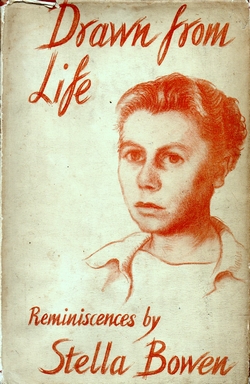
stellabowen-drawnfromlife

But then – a ‘placid and uneducated mistress’. Really? Stella? We may be tempted to see in ‘placid’ further hints of passivity or self-effacement or male constructions of ‘desirable’ qualities, considering at the word’s origins in the verb ‘to please’. And yet. . . the dictionary gives only ‘calm’, ‘not easily upset or excited’. As for education: Stella wrote that Pound ‘took the trouble to occupy himself with our joint education’—Phyllis Reid and Stella herself—and, wondering about his and others’ efforts, she remarked: ‘I can only suppose that they found my complete lack of education something of a novelty! The clean slate.’ Then too, reviewing her relationship with Ford, she recalled that, while he got his cottage, domestic peace and a baby daughter, she herself got out of it ‘a remarkable and liberal education, administered in ideal circumstances’.[14]

In the autumn of 1917, in Imaginary Letters, a series begun by Wyndham Lewis, Pound wrote of an ‘eminently cultured female’ named Elis—and her cousin, ‘who knows “nothing at all” and is ‘ten times better educated.’ She asks him ‘sane’ questions. She is ‘“wholly uneducated”. That is to say I find her reading Voltaire and Henry James with placidity.’[15] In the summer of 1914, Lewis had written that ‘[e]ducation (art education and general education) tends to destroy the creative instinct’ while Pound, in another 1917 piece, wrote that ‘[t]his little American had rotten luck; he was educated – soundly and thoroughly educated’.[16]

No, ‘uneducated’, for both Stella and Pound at this juncture, was not a particularly simple matter. In any case, the friendships continued, apparently untroubled by poems about stylists, mistresses and leaky havens.

References

[1] Rex Lampman’s ‘Epitaph’ is in Pound’s Pavannes and Divagations (1958; New York: New Directions, 1974), vii.

[2] Drusilla Modjeska, Stravinsky’s Lunch (New York: Farrar, Straus and Giroux, 2000), 169: the painting is reproduced as Plate 15.

[3] Stella Bowen, Drawn From Life (London: Collins, 1941), 48.

[4] Ford Madox Ford, It Was the Nightingale (London: Heinemann, 1934), 9.

[5] Ford, Letters of Ford Madox Ford, edited by Richard M. Ludwig (Princeton: Princeton University Press, 1965), 103.

[6] Bowen, Drawn From Life, 81.

[7] Ford Madox Ford, It Was the Nightingale, 138.

[8] See Mary Butts, The Journals of Mary Butts, edited by Nathalie Blondel (New Haven: Yale University Press, 2002), 132 and fn.; Nathalie Blondel, Mary Butts: Scenes from the Life (New York: McPherson & Co., 1998), 71-72.

[9] Brita Lindberg-Seyersted, Pound/Ford: The Story of a Literary Friendship (London: Faber & Faber 1982), 36-37.

[10] Literary Essays of Ezra Pound, edited by T. S. Eliot (London: Faber and Faber, 1960), 429 and footnote. In 1937, a letter to Michael Roberts included a reference to ‘nickle [sic] cash-register Bennett’: Ezra Pound, Selected Letters, 1907-1941, edited by D. D. Paige (New York: New Directions, 1971), 296.

[11] Ezra Pound: Poems and Translations, edited by Richard Sieburth (New York: Library of America, 2003), 555.

[12] Lindberg-Seyersted, Pound/Ford, 27.

[13] A. David Moody, Ezra Pound: Poet: A Portrait of the Man and His Work: Volume I: The Young Genius 1885–1920 (Oxford: Oxford University Press, 2007), 404.

[14] Bowen, Drawn From Life, 50, 52, 64.

[15] Pound, Pavannes and Divagations, 59, 60.

[16] Lewis, ‘Long Live the Vortex!’, Blast: Review of the Great English Vortex, I (20 June 1914), 7; Pound, ‘Stark Realism: This Little Pig Went to Market’, Pavannes and Divagations, 105.