Belief: a world of a word

Knox, Archibald, 1864-1933; 'In preachings of apostles faiths of confessors'

(Archibald Knox, ‘“In preachings of apostles faiths of confessors” (from Knox’s illuminated manuscript “The Deer’s Cry” or “Saint Patrick’s Hymn”’: Manx Museum, Douglas, Isle of Man)

Sitting before the evening news, the Librarian remarks that, if we’d been told ten or fifteen years ago that the world would be like this—the Artic and the Amazon forest on fire, the extreme Right resurgent in Europe again, the widespread mainstream dissemination of racist and supremacist views, this country’s prolonged and painful foundering, the President of the United States in a snit because he couldn’t buy another country and suggesting nuclear strikes to combat hurricanes—we wouldn’t have believed it.

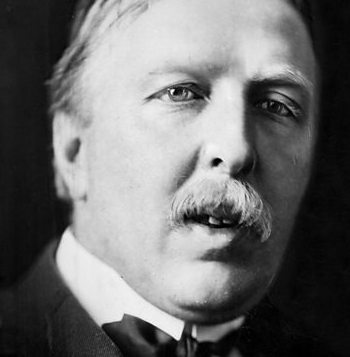
Believe. What a world of a word. ‘I do not believe in Belief’, E. M. Forster wrote in his 1939 essay, ‘What I Believe’. And, ‘Faith, to my mind, is a stiffening process, a sort of mental starch, which ought to be applied as sparingly as possible. I dislike the stuff’.[1] I also own a curious volume called What I Believe, edited by Mark Booth, ‘curious’ not in its contributors (W. H. Auden, Albert Einstein, Jacques Maritain, Rebecca West, Bertrand Russell and, yes, Martin Sheen among them) but in its publishing history, issued in Britain by Firethorn Press, ‘an imprint of Waterstone and Company Limited’, of 193 Kensington High Street, London W8. A Waterstones branch is still at that address, thirty-five years on.

What-I-Believe

‘The brute necessity of believing something so long as life lasts does not justify any belief in particular’, George Santayana wrote.[2] And Shirley Jackson’s observation seems increasingly pertinent: ‘The question of belief is a curious one, partaking of the wonders of childhood and the blind hopefulness of the very old; in all the world there is not someone who does not believe something. It might be suggested, and not easily disproven that anything, no matter how exotic, can be believed by someone.’[3] These days, of course, that ‘anything’ is believed with greater volume and stridency.

T. S. Eliot famously declared of the essays in For Lancelot Andrewes: Essays on Style and Order, that: ‘The general point of view may be described as classicist in literature, royalist in politics, and anglo-catholic in religion.’[4] The previous year, he had published ‘A Note on Poetry and Belief’, responding to an essay by I. A. Richards: ‘But I cannot see that poetry can ever be separated from something which I should call belief, and to which I cannot see any reason for refusing the name of belief, unless we are to reshuffle names altogether.’[5] Responding to Eliot’s musing about what his friend ‘believed’, Ezra Pound recommended reading Confucius and Ovid, but advanced a few years later to a more precise statement: ‘I believe the Ta Hio.’[6] This—The Great Learning—became, some years later, Ta Hsio: The Great Digest, its most often quoted lines (certainly by me) perhaps: ‘Things have roots and branches; affairs have scopes and beginnings. To know what precedes and what follows, is nearly as good as having a head and feet.’[7]

Certain beliefs—and I pause on the ironic savour of the word ‘certain’ in this context—are, or have been, pretty well obligatory. Northrop Frye writes that: ‘The Christian mythology of the Middle Ages and later was a closed mythology, that is, a structure of belief, imposed by compulsion on everyone. As a structure of belief, the primary means of understanding it was rational and conceptual, and no poet, outside the Bible, was accorded the kind of authority that was given to the theologian. Romanticism, besides being a new mythology, also marks the beginning of an “open” attitude to mythology on the part of society, making mythology a structure of imagination, out of which beliefs come, rather than directly one of compulsory belief.’[8]

I recall, quite specifically, the moment in which I ceased to be a Christian believer, though I may not have then become a Romantic. It was a bright, dry Sunday morning in a village a few miles from Bath. I boarded at a nearby college, though continuing to attend school in the city and, every Sunday morning, the boarders were ferried by the college’s ramshackle coach to the village church. While I stood on the side of the hot road, that belief fell off me like a solid object, as though I’d dropped a stone or a coin, one I wouldn’t bend to pick up again.

‘Lord, I believe’, the father cries out in St Mark’s Gospel, ‘help thou mine unbelief’ (Mark 9: 24).

Palma il giovane, Jacopo, 1544/1548-1628; Saint Mark

(Jacopo Palma il giovane, Saint Mark: Hatton Gallery)

Anne Carson writes:

‘Where does unbelief begin?
When I was young

there were degrees of certainty.
I could say, Yes I know that I have two hands.
Then one day I awakened on a planet of people whose hands
occasionally disappear—’[9]

Religious belief clearly doesn’t require buildings and clerical collars. In Of Human Bondage, Somerset Maugham’s Norah tells Philip that she doesn’t believe in ‘churches and parsons and all that’ – but, she adds, ‘I believe in God, and I don’t believe He minds much about what you do as long as you keep your end up and help a lame dog over a stile when you can.’[10] There are, too, very individual manifestations of God. ‘Binding up these sheaves of oats’, Ronald Duncan wrote in his record of wartime smallholding, ‘I am certain I believe in oats. The stalks falling behind the cutter which we draw behind an old car, the monk binding methodically, the new members binding enthusiastically, women with coloured scarves round their heads are gleaning and one cannot glean ungracefully. If one cannot see God in an oatfield one will never see. For, here is the whole of it.’[11]
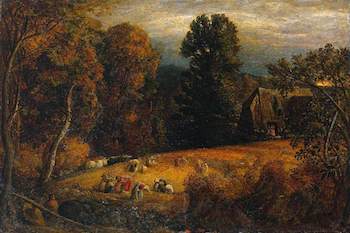
Palmer, Samuel, 1805-1881; The Gleaning Field

(Samuel Palmer, The Gleaning Field: Tate)

Kate Atkinson writes of Jackson Brodie in her recent novel: ‘He didn’t let the fact that he was brought up as a Catholic interfere with his beliefs.’[12] Beliefs or faith? In what I suspect has now become my favourite Penelope Fitzgerald novel, she writes of the feast of St Modestus, patron saint of printing, and the blessing of the ikons by the parish priest. ‘Because I don’t believe in this, Frank thought, that doesn’t mean it’s not true.’ Then: ‘Perhaps, Frank thought, I have faith, even if I have no beliefs.’[13]

As to the secular world, who can say? Faith in facts, in political systems, in international law, in human rights? Belief seems sometimes rampant, sometimes inert, stunned, left for dead. It’s a long time since Proust wrote: ‘Facts do not find their way into the world in which our beliefs reside; they did not produce our beliefs; they do not destroy them; they may inflict on them the most constant refutations without weakening them.’[14] Remembering the Queen’s Silver Jubilee, now more than forty years ago, Lavinia Greenlaw asserted that ‘England was no longer England, at least not the England it persisted in believing itself to be.’[15]

And now? Here we are. There they are. So I turn to the Librarian and say yes, I believe you’re right.


Notes

[1] E. M. Forster, Two Cheers for Democracy (London: Edward Arnold, 1951), 77.

[2] W. H. Auden and Louis Kronenberger, The Faber Book of Aphorisms: A Personal Selection (London: Faber and Faber, 1964), 334.

[3] Shirley Jackson, The Sundial (1958; London: Penguin, 2015), 33.

[4] T. S. Eliot, ‘Preface’, For Lancelot Andrewes: Essays on Style and Order (London: Faber and Gwyer, 1928), ix.

[5] T. S. Eliot, ‘A Note on Poetry and Belief’, The Enemy, 1 (January 1927) 15-17.

[6] Ezra Pound, ‘Credo’ (1930) in Selected Prose 1909-1965, edited by William Cookson (London: Faber and Faber, 1973), 53; ‘Date Line’ (1934) in Literary Essays of Ezra Pound, edited by T. S. Eliot (London: Faber and Faber, 1960), 86.

[7] Ezra Pound, Confucius. The Unwobbling Pivot; The Great Digest; The Analects (New York: New Directions, 1969), 29.

[8] Northrop Frye, A Study of English Romanticism (Brighton: The Harvester Press, 1983), 16

[9] Anne Carson, ‘The Glass Essay’ in Glass, Irony & God (New York: New Directions, 1995), 31.

[10] Somerset Maugham, Of Human Bondage (1915; Penguin Books, 1963), 318. Readers of Ford Madox Ford nod sagely at this point—‘I remember my grandfather laying down a rule of life for me. He said: “ Fordie, never refuse to help a lame dog over a stile.”’ See Ancient Lights and Certain New Reflections (London: Chapman and Hall, 1911), 197.

[11] Ronald Duncan, Journal of a Husbandman (London: Faber 1944), 52-53.

[12] Kate Atkinson, Big Sky (London: Transworld, 2019), 10.

[13] Penelope Fitzgerald, The Beginning of Spring (London: Everyman, 2003), 378.

[14] Marcel Proust, The Way by Swann’s, translated by Lydia Davis (London: Allen Lane, 2002), 149.

[15] Lavinia Greenlaw, The Importance of Music to Girls (London: Faber & Faber, 2017), 114.

Plus ça change: editing, comedy, politics

Harry-dozing 1

A flurry of activity, since we are—finally!—in the last throes of preparing for the printer the second issue of Last Post: A Literary Journal from the Ford Madox Ford Society. Before that – days of depressing weather and weathering depression as British politicians plot, plod, falsify, feint and fail, some of them apparently paralysed while others are clearly willing to jeopardise not only the wellbeing of the United Kingdom as a whole but the still fragile peace in Northern Ireland too.

Still, there was my elder daughter’s birthday, though on the actual day she was—not exactly abroad but offshore, that region so favoured by the rich—aboard a small train bound for Laxey in the Isle of Man, and then on another train up a mountain. On the other hand, her sister, who lives in Barcelona, arrived in Bristol to stay with the Librarian and I—and, crucially, Harry the house cat—for a few days before heading off to Scotland to unleash some stand-up comedy at the Edinburgh Festival Fringe with a group of friends. (Such familial displays of extrovert behaviour might offset, to a degree, my increasingly wary view of the world out there and the people in it.)

The second issue of Last Post includes a reprinted article by Ford, dating from 1936, when he revisited London, a relatively rare event in the post-war years, since he lived first in Sussex, then Paris, then Toulon, with trips to New York and other parts of the United States – but not often to London.

Fordie-BBC

http://www.fordmadoxfordsociety.org/last-post-journal.html

In the world-before-the-war, he’d been based in London for a decade and his first commercially successful book (at least since his first, a fairy tale illustrated by his grandfather Ford Madox Brown) was devoted to the city: The Soul of London appeared in 1905. And, though Ford didn’t live there much after 1915, he continued to write about the city or to draw upon it in many of his later books. More than eighty years old, then, that article but I was struck by his characterisation of the politicians of the day:

‘It was impossible to imagine a more impressive collection of dumb-bells and left-overs than were provided by H. M. Government and H. M. Opposition between them. A photograph of the lot of them impressed you with the idea that you were looking at a group-picture of the better-behaved inmates of Bellevue—as who should say Bethlem Hospital. And their political records were none of them more cheerful.’

Plus ça change, plus c’est la même chose, as they say in some quarters, I believe.


Getting rid of her annoyance: Penelope Fitzgerald’s ‘The Golden Child’

LA_Egyptian_life_304

(Detail from a wall-painting in the tomb-chapel of Nebamun, Thebes, Egypt, late 18th Dynasty, around 1350 BC: British Museum)

‘I’ll send you a copy of my poor British Museum mystery when it comes out in paperback’, Penelope Fitzgerald wrote to her friend Mary Lago (E. M. Forster scholar and also author of books on Rabindranath Tagore, William Rothenstein, Max Beerbohm and others), ‘although it’s scarcely worth reading’.[1]

The Golden Child was Fitzgerald’s third published book and her first novel. It appeared in 1977, a year after the death of her husband: the book had been written, Fitzgerald said, ‘to entertain him’.[2] She gave other versions of what had prompted its writing: ‘I did write this mystery story, largely to get rid of my annoyance: 1. about the Tutankhamen Exhib: as I’m certain everything in it was a forgery, and : 2. about someone who struck me as particularly unpleasant when I was obliged to go to a lot of museums & c. to find out about Burne-Jones’.[3]

tutankhamun

Set in the British Museum (not explicitly so), it creates, as Frank Kermode remarked, ‘the impression that the author was at least as familiar with the workings of that institution as its Director could possibly be.’[4] Nevertheless, it’s often viewed as standing apart from Fitzgerald’s other fiction, partly because of its generic character, seeming to fall into the category of ‘detective fiction’, and partly because, not least due to Fitzgerald’s own dismissive or self-deprecating comments, it’s seen as somehow unachieved, a trial run, a dead end quickly perceived and thereafter avoided. One other factor is the extensive cuts made to the novel, earlier called ‘The Golden Opinion’, by its publisher. Duckworth: some original materials, in Fitzgerald’s notebooks, are included in the archive of her work now held by the British Library:
https://blogs.bl.uk/english-and-drama/2019/07/penelope-fitzgeralds-archive-a-human-connection.html

A common response in such circumstances is to stress that the interest in the book under discussion is that it connects with so much else in the life and work of its author. And there are certainly connections that can be and have been traced: Fitzgerald’s enduring interest in closed institutions, with their peculiarities of structure and habit (the British Museum, the BBC, a drama school); cryptography, language games, mysteries; suspicion of authority and distrust of hierarchies; an affection for outsiders, those conventionally perceived as ‘failures’ or simply ‘ordinary’.

Golden-Child

(Penelope Fitzgerald, The Golden Child)

As Hermione Lee in particular has shown, there are a great many links between the novel and the research into her own family that Fitzgerald was conducting at the time she was writing it: ‘Her head was full of the characters of the four brothers, now all dead, whom she had known as odd, unworldly, formidably clever older men, with the enigmas of their lives cocooned in layers inside them. Unravelling their secrets was like following a thread from the present back into the underworld.’[5]

Her uncle Dillwyn’s involvement in cryptography in both World Wars and his work on ancient Greek texts, particularly the mimes of Herondas, are pertinent here, while the inability of Waring Smith to tell a lie, even to avoid distressing his wife,[6] recalls another Knox uncle, Wilfred, who ‘never told a lie in his entire life – he never saw the necessity’.[7]

Wilfred-Knox-via-Wikipedia

(Wilfred Knox via Wikipedia)

Then, although this was her first published novel, there were earlier fictional efforts, one of them, ‘A Letter from Tisshara’, dating back to 1951, when she was editing the World Review with her husband. This is probably the clearest forerunner of much of The Golden Child.[8]

The Golden Child uses the occasion of an extraordinary exhibition at a major museum to set in motion an exploration of the uses and misuses of power and the ways in which human types come together or damage those around them. When the possibility of fakery arises, the Director will not consult Sir William—the obvious candidate to settle the question of authenticity—in case of disclosure. ‘The Director’s voice trembled with the pride and bitter jealousy which is the poetry of museum-keeping’ (85). Of the novel’s ‘three musketeers’,[9] the significantly-named Professor Untermensch is an Austrian or German Jew, who hasn’t seen his wife since 1935 and whose skill in clearing up the floor of the Exhibition Hall at the end of the novel is traced back to 1937 when Nazis forced him to ‘do the street-sweeping in Vienna’ (256). Len Coker is self-educated, actively devoted to left-wing causes, a craftsman. Waring Smith is a junior exhibition officer, ‘not an exceptional young man’ (29). Their collective strength and the combination of their separate talents and qualities will suffice to solve the mystery and force the confession of the murderer. Its ‘villains’ are those with their own agendas and priorities: the Museum, though ‘nominally a place of dignity and order’, is experienced by those who work there as ‘a free-for-all struggle of the crudest kind’, marked by ‘the ferocious efforts of the highly cultured staff trying to ascend the narrow ladder of promotion’ (13). The class division is strongly marked.

Penelope_Fitzgerald_A_Life

In retrospect, noting the elements of the book that dated it—Russian villains, French structuralists—Fitzgerald added: ‘But I think of The Golden Child as a historical novel. All novels, in fact, are historical.’[10] That point had been made by Ford Madox Ford’s prefatory letter (addressed to the publisher William Bird) in No More Parades, the second volume of his Parade’s End tetralogy. Ford wrote there, ‘All novels are historical, but all novels do not deal with such events as get on to the pages of history.’[11] It has been made by others since. Marguerite Yourcenar wrote, ‘Those who put the historical novel in a category apart are forgetting that what every novelist does is only to interpret, by means of the techniques which his period affords, a certain number of past events; his memories, whether consciously or unconsciously recalled, whether personal or impersonal, are all woven of the same stuff as History itself. The work of Proust is a reconstruction of a lost past quite as much as is War and Peace.’[12]

Marguerite_Yourcenar-Bailleul-1982

(Bernhard De Grendel, Marguerite Yourcenar, 1982)

One noticeable feature of The Golden Child is the obvious extent to which the author is enjoying herself, not only in the more farcical elements of the plot, nor even the satirical sharpness with which art historians and cultural aristocrats are drawn but also on a smaller scale, in the whimsical humour of the Garamantian pictographs (188, 192-194) or sly literary jokes such as Sir William Simpkin’s enquiry as to the whereabouts of Waring Smith, elegantly sidestepping Browning’s poem to ask ‘What’s become of Smith?’ (28).[13] The investigating police officer is an Inspector Mace—the Egyptologist Arthur Cruttenden Mace was a member of Howard Carter’s excavation team, and died from arsenic poisoning six years after the opening of Tutankhamen’s tomb—and Fitzgerald also enjoys puns, Mace’s assistant, Sergeant Riddell and the Hopeforth-Best tobacco company among them. Telling the story of Waring Smith’s marriage to Haggie, she comments, ‘They went out once a week to see films by leading French and Italian directors about the difficulties of making a film’ (29), while the restaurant close to the Museum, to which Waring takes Dousha at Sir William’s request, ‘having been formerly called the Bloomsbury Group, Lytton Strachey Slept Here, the Cook Inn, Munchers, and Bistro Solzhenitsyn, now bore the name of the Crisis’ (63).

Carter-1925-via-Guardian

(Howard Carter with the sarcophagus of Tutankhamen, c. 1925, via The Guardian)

One of Fitzgerald’s critics writes of The Golden Child leaving us ‘with the sense that this first novel raises questions of a “supernatural” order that would also characterize Fitzgerald’s later fiction, to the degree that it might be said that all of her fiction can be viewed as a form of detective fiction, if by this we understand that there is a mystery – spiritual in nature – that challenges us and does not readily admit of solution.’[14]

Yes. As Le Mesurier says to Voss in Patrick White’s novel: ‘“The mystery of life is not solved by success, which is an end in itself, but in failure, in perpetual struggle, in becoming.”’[15]


Notes

[1] Letter of 9 July [1994], in So I Have Thought of You: The Letters of Penelope Fitzgerald, edited by Terence Dooley (London: Fourth Estate, 2008), 319.

[2] Several instances of this statement noted by Hermione Lee, Penelope Fitzgerald: A Life (London: Chatto and Windus, 2013), 458 n.44.

[3] To Richard Garnett, 16 September 1977, So I Have Thought of You, 240. Her biography of Edward Burne-Jones was published in 1975.

[4] Frank Kermode, ‘Introduction’ to the Everyman’s Library edition of three Fitzgerald novels: The Bookshop; The Gate of Angels; The Blue Flower (London: Everyman, 2001), ix.

[5] Lee, Penelope Fitzgerald, 239; The Knox Brothers, Fitzgerald’s study of her father and his three brothers, also appeared in 1977.

[6] Penelope Fitzgerald, The Golden Child (1977; London: Harper Collins, 2004), 199: page numbers of this edition given hereafter.

[7] See Penelope Fitzgerald, A House of Air: Selected Writings, edited by Terence Dooley with Mandy Kirkby and Chris Carduff (London: Harper Perennial, 2005), 470.

[8] See Dean Flower and Linda Henchey
, ‘Penelope Fitzgerald’s Unknown Fiction’
, The Hudson Review, 61, 1 (Spring, 2008), 53-55.

[9] Lee, Penelope Fitzgerald, 243.

[10] Penelope Fitzgerald, Independent Books (24 September 1994).

[11] Ford Madox Ford, No More Parades (1925; edited by Joseph Wiesenfarth, Manchester: Carcanet Press, 2011), 3.

[12] Marguerite Yourcenar, The Memoirs of Hadrian, translated by Grace Frick, with Yourcenar (1951; London: Penguin Books, 2000), 275-276.

[13] Robert Browning’s ‘Waring’ begins: ‘What’s become of Waring/ Since he gave us all the slip’. Fitzgerald’s 1995 review of Peter Levi’s Edward Lear: A Life, ends by asking, in response to his highlighting of Tennyson and Hardy, ‘What’s become of Browning?’ See A House of Air, 90.

[14] Christopher J. Knight, ‘Penelope Fitzgerald’s Beginnings: The Golden Child and Fitzgerald’s Anxious Relation to Detective Fiction’, Cambridge Quarterly, 41, 3 (September 2012), 364.

[15] Patrick White, Voss (London: Eyre & Spottiswoode, 1957), 289.


Betwixt and between

Tart

‘A perfect tart to weave together spring and summer’, Anna Jones wrote of her roast tomato and asparagus tart with rosemary.

https://www.theguardian.com/lifeandstyle/2018/may/28/anna-jones-vegetable-tart-recipes

And so it is. While asparagus is available (so long as it’s not flown thousands of miles), I make it every week or so, the cherry tomatoes slowly roasting, the eggs coming slowly to room temperature, the lemons warily eyeing the zester and the Librarian sometimes bringing home the crème fraîche that I’ve forgotten to replace.

Meteorologically speaking, we are a little over halfway through our British Spring. The bright sky lures and the brisk wind bites; today is briefly alluring in between the showers, though yesterday the wind repeatedly lurched into explosive rages, scattering recycling bins along the street and wrecking the Librarian’s mini-greenhouse, spilled plant pots slewing soil across the gravel.

Wind breaking, then, rather breaking wind. Alluding to national habits of hat-tipping in a letter to James Laughlin, Guy Davenport noted that, ‘The French removed the chapeau and swept the air with it. The Elizabethan English swept the ground, after three twirls while making a leg.’ He added: ‘It is told of a provincial mayor that whilst so saluting Elizabeth I, he broke wind. He was thrown into confusion and slunk away. He later received a gracious note from his sovereign, saying, “I have forgot the fart.”’[1]

Salome-Rilke

Seasonally, then, we’re betwixt and between, as Ford Madox Ford wrote to his agent James Pinker about the genre of the manuscript that became No Enemy. ‘For what is going on here, heaven knows, has for three or four days not been spring any more, has been dense, young summer’, Rainer Maria Rilke wrote to Lou Andreas-Salomé from Rome in April 1904:

The hyacinths in my little bed, which have long been hesitating, are flinging open their blossom eyes like one hammered awake by an alarm-clock, and have already been standing there quite long and straight. The elms and oaks by my house are full, the Judas tree has shed its blossoms, and all its leaves will be ready overnight; and a syringa tree that stretched out its clusters only three days ago is already in process of fading and scorching. The nights are scarcely cool any more, and the busy clamor of frogs is their voice. The owls call less often, and the nightingale still hasn’t begun. Will she still sing now that it is summer?[2]

Winter

Yes, good question. What is that song we hear so indistinctly – nightingale or Siren? Nationally, we are, along with a good many other countries suffering political rupture, very much between: in our case, divergent forces wrenched between Little Britain and the wider world. I sense in myself, on some days, that ‘armchair reformist’ Louis MacNeice wrote of, who ‘sits between two dangers–wishful thinking and self-indulgent gloom.’[3] Things are, in some senses, quieter at the moment but the building is still subsiding, the body still nearing the ground at a troubling speed.

As for Ford Madox Ford’s phrase, ‘betwixt and between’: does that imply movement or simply the state of being stranded, neither one thing nor t’other? Ford himself had identified an historical moment when, ‘The old order, in fact, is changing; the new has hardly visibly arrived.’[4]

ER1

Ford was writing towards the end of the reign of Edward VII—you might say ‘Edwardian’ but things get complicated around then, not helped by some of the connotations of the word ‘Georgian’—a juncture anyway to which critics and literary historians are prone to referring as ‘transitional’. Of Ford’s journal The English Review, Malcolm Bradbury once observed: ‘the magazine marks a moment of strong literary transition.’[5] Well, yes: December 1908 to February1910, that phrase seems reasonable enough, so it may be unsurprising—and I’m not sure how ironic—that the word, certainly the idea, of transition, is applied to Ford himself with remarkable frequency. I confess to doing it myself all the time.

Of a slightly later period—a decade or so—Laurence Rainey wrote that ‘by now it should be clear that the publication of The Waste Land marked the crucial moment in the transition of modernism from a minority culture to one supported by an important institutional and financial apparatus.’[6] The avant-garde journal Transition was founded by Eugene Jolas and Maria McDonald in 1927 and ran for a decade; English Literature in Transition, 1880-1920, began in 1957 and remains one of the leading literary journals today.

Macaulay-Told-Idiot

Critics and literary historians, then, find ‘transition’ everywhere, though Stephen Kern sternly declares that, ‘One of the greatest fallacies of historical reconstruction is the characterization of events as transitional.’[7] In her 1923 novel, Told by an Idiot, Rose Macaulay writes ‘Stanley always reflected her time and it was, people said, a time of transition. For that matter, times always are, and one year is always rather different from the last.’ And later in the same book: ‘A queer time! Perhaps a transition time; for that matter, this is one of the things times always are.’[8]

Safe to say, then, that we are probably betwixt and between – and almost certainly in a time of transition.

 
References

[1] W. C. Bamberger, editor, Guy Davenport and James Laughlin: Selected Letters (New York: W. W. Norton & Co., 2007), 165.

[2] Letters of Rainer Maria Rilke, 1892-1910, translated by Jane Bannard Greene and M. D. Herter Norton (New York: Norton, 1969), 148.

[3] Louis MacNeice, The Strings are False: An Unfinished Autobiography, edited E. R. Dodds (Faber paperback 1996), 134.

[4] Ford Madox Ford, The Critical Attitude (London: Duckworth, 1911), 128-129.

[5] Malcolm Bradbury, The Modern British Novel (London: Penguin Books, 1994), 81.

[6] Lawrence Rainey, Institutions of Modernism: Literary Elites and Public Cultures (New Haven and London: Yale University Press, 1998), 91.

[7] Stephen Kern, The Culture of Time and Space 1880-1918 (Harvard University Press, 1983), 142.

[8] Rose Macaulay, Told by an Idiot (1923; Harmondsworth, Penguin, 1940), 55, 150.

Letting in water

Durer-ill-ShipFools

(Albrecht Dürer, illustration to The Ship of Fools)

There was a piece in The Guardian a few days back, which rounded up some foreign views of the state the United Kingdom is in, reminding us, if we needed reminding, that to many people outside this country, such a spectacle must seem extraordinary.

The Washington Post had a piece called ‘Brexit will mark the end of Britain’s role as a great power’, which observed that the UK, ‘famous for its prudence, propriety and punctuality, is suddenly looking like a banana republic’. Here was a country ‘determined to commit economic suicide but unable even to agree on how to kill itself’, led by ‘a ship of fools’ unwilling to ‘compromise with one another and with reality’. The result was an ‘epic failure of political leadership’, Friedman said: scary stuff, but ‘you can’t fix stupid’.

‘Ship of fools.’ That was an adaptation (1509) by the poet Alexander Barclay of a 1494 allegory by the German satirist Sebastian Brant; also the title of an allegorical novel by Katherine Anne Porter, published in 1962. The nautical theme recurs, not only in the header illustration by the Guardian design team, showing the HMS Britain steeply angled in an unfriendly-looking sea, but in one or two other comments. Sreeram Chaulia, dean of the Jindal School of International Affairs, said many Indians saw Brexit as the latest chapter in a ‘sharp decline in the place Britain commands as a great power’. The UK ‘is not a gold standard to look up to’, he said. ‘We get a feeling of a sinking ship, and everybody wants to leave a sinking ship.’

https://www.theguardian.com/politics/2019/apr/06/a-shambles-on-which-the-sun-never-sets-how-the-world-sees-brexit

I was reminded of that stout phrase, ‘the Ship of State’, which I see is traced back to Book Six of Plato’s The Republic. In the old Jowett translation, one section caught my eye: ‘The sailors are quarrelling with one another about the steering—every one is of opinion that he has a right to steer, though he has never learned the art of navigation and cannot tell who taught him or when he learned, and will further assert that it cannot be taught, and they are ready to cut in pieces any one who says the contrary.’

No contemporary parallel there, obviously. Precisely in the middle of the nineteenth century, Henry Wadsworth Longfellow waxed optimistic:

‘Thou, too, sail on, O Ship of State!
Sail on, O UNION, strong and great!’

And:

‘In spite of rock and tempest’s roar,
In spite of false lights on the shore,
Sail on, nor fear to breast the sea!’[1]

Traffic-Hole-Shoe

That of course, was another Union, which, eleven years later, didn’t seem so solid; while ours is certainly lower-case and seems to be letting in water. In another lifetime, Traffic had a hit with a Dave Mason song, ‘Hole in My Shoe’ (‘And all that I knew/ The hole in my shoe/ Was letting in water’) – only a shoe then, so the situation’s clearly deteriorated.

I’ve never been in a shipwreck before—certainly not one caused by the crew and passengers together scuttling the ship—so, while the joy is hardly unconfined, there is at least an element of novelty.

I remembered poor Owen Chase, first mate of the Essex, sunk by a sperm whale in 1820.[2] The survivors in their small boats were finally reduced to eating the bodies of the dead; the next stage, once those supplies were exhausted, was the drawing of lots and the shooting of those who lost. In Captain Pollard’s boat, the man shot was the captain’s own nephew, named Owen Coffin. In later life, Chase apparently developed an obsessive fear of starvation, ‘never wasting a morsel at the dinner table, and frequenting the market to buy supplies that he larded [stuffed] in his attic.’[3] We can perhaps glimpse certain elements of his story in our own too likely future—but not, we hope, all of them.

Turner, Joseph Mallord William, 1775-1851; The Shipwreck

(J. M. W. Turner, The Shipwreck: Tate Britain)

More relevant, perhaps, is Declan Kiberd’s comment on Homer’s epic: ‘The logic of the Odyssey is that of many tales involving shipwreck – the answers to problems will be found only after the act of destruction. The catastrophe must precede clarification.’

And he adds a little later that resurgences, such as modern Ireland’s, ‘often come after a period of trauma – what Gaelic poets called longbhriseadh (shipwreck), a terrible but challenging disaster which becomes the precondition of a change to a new future.’[4] ‘Resurgence’: rising again, basically resurrection which, as I recall, requires death as a precondition. So that’s another cheering thought.

Thoreau queried the sort of impulses that have been driving a number of political developments lately: ‘Why should we be in such desperate haste to succeed, and in such desperate enterprises? If a man does not keep pace with his companions, perhaps it is because he hears a different drummer. Let him step to the music which he hears, however measured or far away. It is not important that he should mature as soon as an apple-tree or an oak. Shall he turn his spring into summer? If the condition of things which we were made for is not yet, what were any reality which we can substitute? We will not be shipwrecked on a vain reality. Shall we with pains erect a heaven of blue glass over ourselves, though when it is done we shall be sure to gaze still at the true ethereal heavens far above, as if the former were not?’[5]

Walden_1854_cover_image

Elsewhere, he suggests that ‘A book should contain pure discoveries, glimpses of terra firma, though by shipwrecked mariners, and not the art of navigation by those who have never been out of sight of land.’[6]

‘In our time’, Guy Davenport’s Dutch philosopher Adriaan van Hovendaal writes in his notebook, ‘we long not for a lost past but for a lost future.’[7] Thirty-five years on, that is true of some of us—but clearly not of others, which at least partly explains how we got here. Wherever here might be.

 
References

[1] ‘The Building of the Ship’, The Poetical Works of Henry Wadsworth Longfellow (London: Ward, Lock: n.d.), 103.

[2] His account was published in 1821. Herman Melville saw him, though not to speak to, in 1841; he did meet Chase’s son, who gave him a copy of his father’s Narrative: Melville, Moby Dick (1851; edited by Harold Beaver, Harmondsworth: Penguin Books, 1972), 17; and ‘Appendix: The Earliest Sources’, 971-979.

[3] Paul Lyons, introduction to Owen Chase, Shipwreck of the Whaleship Essex (London: Pimlico, 2000), xxvii.

[4] Declan Kiberd, Ulysses and Us: The Art of Everyday Living (London: Faber and Faber, 2009), 283, 307.

[5] Henry David Thoreau, Walden, edited by J. Lyndon Shanley (Princeton University Press: Princeton and London, 1974), 326.

[6] Henry David Thoreau, A Week on the Concord and Merrimack Rivers (New York: Library of America, 1985), 80.

[7] Guy Davenport, Apples and Pears (San Francisco: North Point Press, 1984), 63.

Terrible things

goya

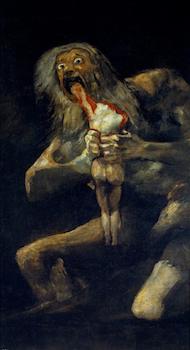
(Francisco Goya, Saturn Devouring His Son)

A correspondent writes: ‘You will remember that Ford Madox Ford quote you often used—“Terrible things—for those to whom terrible things occur in their lives—happen in the last days of January”—and will no doubt trot it out again and try to connect it with that bloody damnable Brexit thing.’

No, Cornelius, I won’t trot it out again. Here, instead, is Edmund Blunden, the poet and prose writer, who served in France, was gassed and won the Military Cross, who died on this day forty-five years ago that. Early in his classic memoir, Undertones of War, he writes: ‘One of the first ideas that established themselves in my enquiring mind was the prevailing sense of the endlessness of the war. No one here appeared to conceive any end to it.’

Will we get to the end of this catastrophic farce—and, if we do, will it only be a beginning anyway? It’s not a comfortable or edifying spectacle, this watching your country eat its own intestines, though difficult to look away from, provoking as it does a kind of appalled fascination. There has been an avalanche of essays and articles on the theme of ‘how to break the impasse’, most managing to say nothing of much value. And with such rigidity and posturing, with so many people talking of ‘the national interest’ while actively pursuing something quite other, the signs are not promising.

milkman

Still, intelligence, imagination, tolerance, an understanding of history and knowledge of the human heart are readily available elsewhere, so thanks to – among others this month so far – Colm Tóibín, Anna Burns, Deborah Levy, Dorothy Baker and Henry James.

‘People can be extraordinarily slipshod whenever already they have made up their minds’, Anna Burns writes in Milkman, her very funny—and scary—Man Booker Prize-winning novel.

Indeed they can.

Transports of Delight

Bus-376

On the way to Wells, I’m reminded of the bus ride we took on the Jurassic Coast service from Chideock to Lyme Regis last month. I ride on buses so rarely these days, mostly walking, occasionally driving, so had almost forgotten just how different the world looks from the upper deck of a bus. Simply, you see more, partly because of the slower speed but largely because of the height – and the frequency with which you stop, not only at traffic lights, in a queue of cars, but at bus stops, pulled tightly in to the side of the road, next to garden fences, house fronts, road signs, shops and cafés, peering into people’s lives in a way you can’t from a car or even a train. So, on the section of road I’d driven on scores of times, between Bristol and Yeovil, I’d noticed Featherbed Lane but had missed Sleep Lane and, worse, Gibbet Lane too. Passing the point where we used to gauge our progress by the first glimpse of the single wind turbine, in the weeks when we drove often to Glastonbury to see my mother in the hospital, I realised a bus top view made it visible for longer and from varying angles. Seeing a truncated version of it complicated my sense of its movement, so that it came to seem not unlike an acrobat tirelessly performing cartwheels.

So, four recent bus journeys. In every case, a failure to sit in the very front seats because these are always the first to be taken. But my clearest memory of a bus ride is precisely of sitting in that front seat and going, a little too fast, over a humpbacked bridge near Bath, so that I was facing vertiginously downwards for an abrupt, disorientating moment, my breath forced jerkily from my nose and mouth. J. R. Ackerley recalled visiting his sister Nancy in Worthing and going into one of the seaside cafés to order a cup of coffee that they didn’t need to drink. There they ‘talked of this and that – the gale that had raged on the south coast on Friday and Saturday and blown a bus full of people over a bridge’.[1] In my case, it wasn’t a gale, just a driver that had mistaken his route for Silverstone or Brands Hatch.

Ackerley_Aunt_EMF

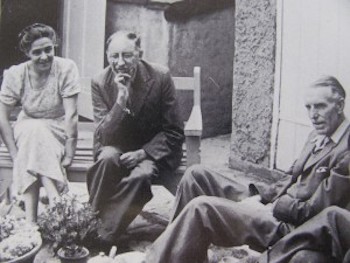
(J. R. Ackerley with his aunt and E. M. Forster)

In those far-off days, I’d been working on a novel and that momentary, violent loss of control, of helplessness in the face of whatever happened next (and that vivid presentiment of the bus not righting itself but continuing to tip forward), the sense of ‘Too late now!’, like realising as the train pulls away from the station that you left the gas on, gave me a title: A Sense of Omission. Safely unpublished, of course. I see that even that far back, I loved a pun.

Tony Judt has the bus in equal second place: ‘I was never so happy as when I was going somewhere on my own, and the longer it took to get there, the better. Walking was pleasurable, cycling enjoyable, bus journeys fun. But the train was very heaven.’[2] Today, after finding that the Prime Minister had found herself in a very hostile environment, I set off to collect an undelivered parcel from what seemed at times to be a galaxy far, far away, though I’d travelled there on foot. So the bus is in equal second place for me too: first place still goes to walking: stop whenever you want to, no traffic jams, fix your own timetable. Take back control, as they say.

 
References

[1] J. R. Ackerley, My Sister and Myself: The Diaries of J. R. Ackerley, edited by Francis King (London: Hutchinson 1982), 69.

[2] Tony Judt, The Memory Chalet (London: Heinemann, 2010), 66.


Remembering to forget

Fuseli-night_hag

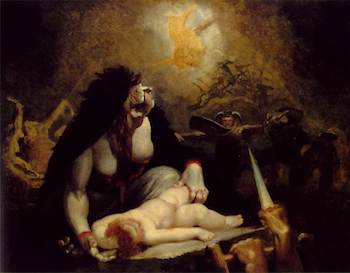
Henry Fuseli, The Night-Hag Visiting Lapland Witches (Metropolitan Museum of Art)

‘Towards morning I was possessed by a kind of nightmare; I felt the fiend’s grasp in my neck and could not free myself from it; groans and cries rang in my ears. My father, who was watching over me, perceiving my restlessness, awoke me; the dashing waves were around, the cloudy sky above, the fiend was not here: a sense of security, a feeling that a truce was established between the present hour and the irresistible, disastrous future imparted to me a kind of calm forgetfulness of which the human mind is by its structure peculiarly susceptible.’[1]

A ‘calm forgetfulness’ (I lightly pass over that ‘irresistible, disastrous future’, on the fish-in-a-barrel principle) – in 1938-39, Henry Green was clear about the dangers of forgetting, of ageing and acceptance: ‘As I write now a war, or the threat of war, while still threatening seems more remote; a change of wind and the boat is blown in, there is nothing to do but tie up and call it a day. That is the pity of sobering down to middle age, there must be a threat to one’s skin to wake what is left of things remembered into things to die with. The crime is to forget.’[2]

Still, we know well enough the dangers, if not the crimes and misdemeanours, of selective remembering too. We’ve just passed the centenary of the end of the Great War Armistice and, as John Greening remarked recently in the TLS, ‘After four years of remembering the First World War, remembrance itself is being commemorated.’[3] There has been a lot of attention rightly paid to personal stories, men surviving only in blurry photographs or in fragmentary family histories. Meanwhile, the arguments about what actually brought the war about, the competence of various military leaders, the emergence and maintenance of myths that drive nations into further wars or into disastrous political decisions, continue and will continue.

In John Le Carré’s novel, A Most Wanted Man, Dr Abdullah remarks: ‘“That’s one of the great problems of the modern world, you know. Forgetting. The victim never forgets. Ask an Irishman what the English did to him in 1920 and he’ll tell you the day of the month and the time and the name of every man they killed. Ask an Iranian what the English did to him in 1953 and he’ll tell you. His child will tell you. His grandchild will tell you. And when he has one, his great-grandchild will tell you too. But ask an Englishman—?” He flung up his hands in mock ignorance. “If he ever knew, he has forgotten.”’[4]

‘The victim never forgets.’ Indeed. But who is the victim? In earlier catastrophes, from the Armenian genocide through Soviet purges to the Holocaust, the identity of the victims was not in doubt. But now? Afghanistan, Syria, Iraq, Yemen, Nigeria, Somalia, Kashmir, Ukraine. Everyone claims victimhood. In some countries, angry white men claim that the only real victims are angry white men. The only inevitability is that innocent civilians, particularly women and children, will continue to bear the brunt of murderous violence and aggression.

opium-eater_quincey

And sometimes, the need to forget, at least for a while, is more urgent, more desperate, than the need to remember. ‘Life’, Balzac wrote, ‘cannot go on without a great a deal of forgetting.’[5] Julia Blackburn remarks that, ‘sometimes we need to remember things because only then can we forget’,[6] while, in a similar vein, the critic Frank Kermode observed that, ‘in the ordinary course of his written narrative, as of the interminable day-to-day account he gives himself of himself, the autobiographer will remember only in order to forget what he cannot bear to remember.’[7]

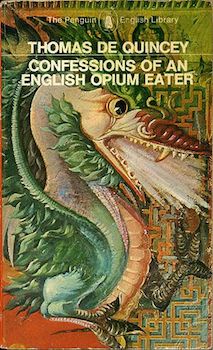
How easy is it to forget? Is it subject to the usual vagaries of the human mind and will – we unfailingly remember what we seek to forget while what we urgently need to remember falls immediately away? ‘Of this, at least, I feel assured’, Thomas De Quincey firmly asserted, ‘that there is no such thing as forgetting possible to the mind; a thousand accidents may, and will interpose a veil between our present consciousness and the secret inscriptions on the mind; accidents of the same sort will also rend away this veil; but alike, whether veiled or unveiled, the inscription remains for ever; just as the stars seem to withdraw before the common light of day, whereas, in fact, we all know that it is the light which is drawn over them as a veil — and that they are waiting to be revealed, when the obscuring daylight shall have withdrawn.’[8]

Yes: you may think you’ve forgotten – but it’s in there somewhere. . .

 
References

[1] Mary Shelley, Frankenstein; or, the Modern Prometheus, in Three Gothic Novels, edited by Peter Fairclough (Harmondsworth: Penguin, 1968), 455.

[2] Henry Green, Pack My Bag: A Self-Portrait (1940; The Hogarth Press, 1992), 50.

[3] John Greening, ‘Pity War Distilled: Poetry and the act of remembering’ (review of three recent books), Times Literary Supplement No. 6032 (9 November 2018), 9.

[4] John Le Carré, A Most Wanted Man (London: Hodder and Stoughton, 2009), 341.

[5] Honoré de Balzac, Cousin Bette, translated by Marion Ayton Crawford (London: Penguin Books, 2004), 442.

[6] Julia Blackburn, Thin Paths: Journeys In and Around an Italian Mountain Village (London: Jonathan Cape, 2011), 193.

[7] Frank Kermode, Not Entitled: A Memoir (London: Harper Collins, 1996), 156.

[8] Thomas De Quincey, Confessions of an English Opium Eater, edited by Alethea Hayter (Harmondsworth: Penguin Books, 1971), 104.

Electricity and beefsteak

Sky-through-stone

‘His eyes followed the high figure in homespun, beard and bicycle, a listening woman at his side. Coming from the vegetarian. Only weggebobbles and fruit. Don’t eat a beefsteak. If you do the eyes of that cow will pursue you through all eternity. They say it’s healthier. Windandwatery, though. Tried it. Keep you on the run all day.’ So James Joyce writes in Ulysses. Apparently this passage refers to George Russell (‘AE’) but it’s a figure that makes me think of George Bernard Shaw. In Richard Garnett’s biography of his grandmother, Constance Garnett: A Heroic Life, he tells the story of Shaw inheriting £100 from his ‘ne’er-do-well’ father, who died in 1885. £15 was spent on a new suit produced by Dr Jaeger’s Sanitary Woollen System Company Limited. ‘Thereafter he looked like a toy made for a child by an inexpert knitter.’

As for the beefsteak. Ford Madox Ford, a great lover of wine – especially red wine – tried to persuade Joyce to drink it. Joyce preferred to drink white, comparing it to ‘electricity’ while regarding red wine as ‘liquid beefsteak’.

We’re fairly open-minded on the question in this house, though tending to Ford’s view of the matter rather than Joyce’s. There was a recent Q & A with Jodie Whittaker, the new Doctor Who, which included:

Jodie-Whittaker

What is your guiltiest pleasure?
Drinking wine every day. I have half a bottle a day. There’s a lot of pleasure in it and a lot of guilt, so it ticks both boxes.

https://www.theguardian.com/lifeandstyle/2018/sep/22/jodie-whittaker-q-and-a-drinking-wine-doctor-who

At that point, my wife made the noise that Librarians make when they come across a kindred spirit, though the word ‘guilt’ caused a moment’s bafflement.

Let me raise a glass, anyway, to my friends in America and send them all best wishes for tomorrow – and many tomorrows thereafter.


Paying respects

Angels

Sweet day, so cool, so calm, so bright—so it was, and is. Passing the open front door of a house along our street, cement sacks propped against the wall, the whole building masked by scaffolding—one of several at the moment—I’m struck by how many workers in the building trade believe they can sing – I mean sing well, of course. The song that’s spilling from the radio is almost drowned out by their own near-miss whoops and roars. But then my standards have been skewed since work on the back of our house transformed them. For months, along with the drilling and hammering downstairs, I could hear Mark singing along with the radio. Not only could he sing in tune – and hold a tune – but he seemed to know the words and the melody of every song that came over the airwaves. More, he could sing every part and, frankly, anyone who can do all that and harmonise with himself, has earned respect, certainly mine.

That’s a word that detains me from time to time. ‘Respect’ – for the person, for the achievement, for the office. The last of these has fallen out of favour of late, tangled up with ‘the end of deference’, ‘deference’ being one of those trigger words that creates a certain restlessness in the room. In many countries, of course, respect continues to be accorded a particular office even if the holder is manifestly wholly unfitted for it and may even have brought the office itself into disrepute.

My own position is that, while respect has to be earned, so too does disrespect. Neither praising nor dispraising until the one or the other is warranted, by word or action; and, in the meantime, walk on by. Browsing in dictionaries, I’m fine with ‘a feeling of deep admiration for someone elicited by their qualities or achievements’, so too ‘due regard for the feelings or rights of others’: that’s ‘due regard’.

Vansittart

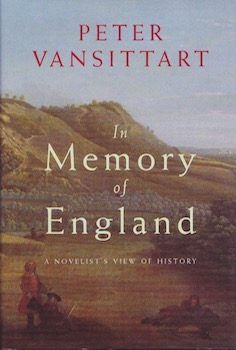
On the matter of balance between respect for the person and for the position held by that person, I like this from Peter Vansittart: ‘Classics, of course, have no monopoly of pertinent stories, and any age can learn from a French provincial governor, François de Montmain, replying to King Charles IX: “Sire, I have received an order from Your Majesty directing me to kill all Protestants in my province. I respect Your Majesty too much to believe that this order is genuine. But if, which God forbid, it should indeed be, I respect Your Majesty too greatly to feel it in my power to obey it.” Courage, dignity, wit and humanity in a handful of words.’[1]

Bridging the gap – Catholic to Protestant; king to commoner; invader to ‘native’. In his introduction to Francis Parkman’s The Oregon Trail, David Levin noted that ‘unlike Melville’s narrator, Parkman never learns to respect the people whose life he observes.’ He added: ‘He cannot transcend the invaders’ point of view.’ Indeed, for Parkman, the Native Americans he encountered and whose lands he ranged over, could only be ‘savages’: at one point, he writes, ‘No civilized eye but mine had ever looked upon that virgin waste.’[2]

In our time, it is the politicians who have most visibly and undeniably lost respect – which is hardly surprising, given current and recent events in the United Kingdom, the United States, Hungary, Italy, Brazil, Turkey, Yemen and Saudi Arabia—among many others. There seems no real likelihood of this changing any time soon.

There used to be a common phrase, less common now, I think, ‘paying respects’, a visit of a semi-formal or at least polite kind, while ‘paying one’s last respects’ expresses those sentiments through attending a person’s funeral—or, perhaps, visiting their graves. ‘During a quarter century of poetic folly’, Jonathan Williams muses, ‘I have become more and more goliardic, peripatetic, and simply bizarre.’ Poet, publisher and photographer, he carefully recorded his funerary pilgrimages: ‘I must have by now 300 slides of the resting places of human beings I much revere and whose works and persons nourish me.’[3]

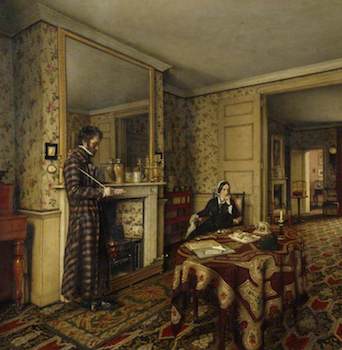
Tait, Robert Scott, c.1816-1897; 'A Chelsea Interior' (The Carlyles at Home with Their Dog, 'Nero')

Robert Scott Tait, A Chelsea Interior (the Carlyles’ house)
© National Trust images

‘Never speaking ill of the dead’ is often used to enforce silence about failings, or used to be. Victorian ‘lives and letters’ were notoriously eulogistic if not sycophantic, one reason why J. A. Froude’s life of Carlyle was so controversial, with its revelation of what Froude viewed as Carlyle’s abrasive character and Jane Carlyle’s unhappiness. But, as Adam Sisman wrote of Samuel Johnson, ‘If biography was to teach men and women how to live, it followed that it should be realistic. Johnson did not share the general belief that respect for the dead required that their faults should be suppressed or glossed over.’[4]

Still, if you’re embarking on a biography, it’s surely advisable to harbour positive feelings—even respect—for your subject. Penelope Fitzgerald, biographer of Edward Burne-Jones, Charlotte Mew and her own extraordinary family, remarked in a letter to her American publisher Chris Carduff: ‘I also write novels (on the whole I think you should write biographies of those you admire and respect, and novels about human beings who you think are sadly mistaken)’.[5]

beachandjoyce-newyorker

(Sylvia Beach and James Joyce via The New Yorker)

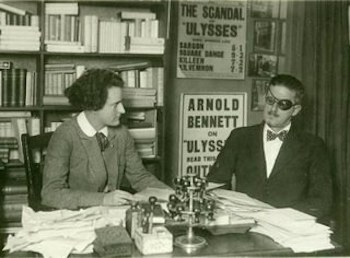
Not that respect is, or need be, focused always on persons. It might be a text: Sylvia Beach recalled that Sergei Eisenstein was ‘an ardent admirer of Joyce. He would have liked to make a film from Ulysses but he had too much respect for the text, he told me, to sacrifice it for the sake of the picture.’[6] It might be something more mundane: ‘Whether religious or not (that was something she would not have breathed about, not even to Mrs Hunter asleep) Sister de Santis admitted to a belief in common objects. If you depend on something to any extent, you might as well learn to respect it; so she never kicked the furniture or threw the crockery about.’[7]

Lately, even given the profound and relentless provocation afforded me by the world’s destroyers and their useful idiots, I’ve managed to leave the crockery alone.

 
References

[1] Peter Vansittart, In Memory of England: A Novelist’s View of History (London: John Murray, 1998), 3.

[2] Francis Parkman, The Oregon Trail (1849; edited by David Levin, Harmondsworth: Penguin Books, 1982), 18, 21, 321.

[3] Jonathan Williams, ‘Paying Respects’ (1976), in Blackbird Dust: Essays, Poems, and Photographs (New York: Turtle Point Press, 2000), 11, 12.

[4] Adam Sisman, Boswell’s Presumptuous Task (London: Hamish Hamilton, 2000), 165.

[5] Letter of 7 December 1987: So I Have Thought of You: The Letters of Penelope Fitzgerald, edited by Terence Dooley (London: Fourth Estate, 2008), 490.

[6] Sylvia Beach, Shakespeare and Company (1959; Lincoln: University of Nebraska Press, 1991), 109.

[7] Patrick White, The Eye of the Storm (London: Penguin Books, 1975), 165.