Not outrunning the Constable

Cottage-Cornfield-VandA

(John Constable, The Cottage in a Cornfield: V & A)

(To outrun the constable: to go too fast or too far—Eric Partridge, A Dictionary of Slang and Unconventional English)

What might we have recourse to, after a week of prime ministerial rabble-rousing and incitement to violence and the continued, programmatic fracturing of a nation? Le vin, ça va sans dire—or a visit to Bristol Old Vic, to see six talented women play twenty-one roles in Pride and Prejudice* (Sort of)*, at which I laughed like a lunatic—perhaps even a slightly morose thinking about Englishness—‘“Englishness”, however, is a term that has no fixed meaning but is instead made and re-made in and through history’.[1]

I was browsing through art books and looking at the pictures of John Constable. The combative Geoffrey Grigson once asserted that Constable ‘remains the artist the English have most reason to be proud of and thankful for, without reservation.’[2]

Constable, in his quietly revolutionary way, painted what was in front of his eyes, usually in localities that he knew intimately and loved greatly. And the local, to a greater or larger extent, containing the universal is a familiar enough theme, from Gilbert White through Thomas Hardy to William Faulkner and William Carlos Williams.

‘How much I wish I had been with you on your fishing excursion in the New Forest!’ Constable wrote in 1831 to his close friend, John Fisher. ‘What river can it be? But the sound of water escaping from mill-dams, etc., willows, old rotten planks, slimy posts, and brickwork, I love such things. Shakespeare could make everything poetical; he tells us of poor Tom’s haunts among “sheep cotes and mills” [King Lear]. As long as I do paint, I shall never cease to paint such places. They have always been my delight [ . . . ] Still, I should paint my own places best; painting is with me but another word for feeling, and I associate “my careless boyhood” with all that lies on the banks of the Stour’.[3]

Born in the village of East Bergholt, on the River Stour in Suffolk, son of a prosperous corn merchant, who owned Flatford Mill in East Bergholt and, later, Dedham Mill, Constable painted many pictures of East Bergholt and of Dedham Vale, pictures too of mills, clouds, cottages, cornfields, Hampstead, Brighton, Salisbury Cathedral, and even clouds above cottages in cornfields. He was a great student of clouds.
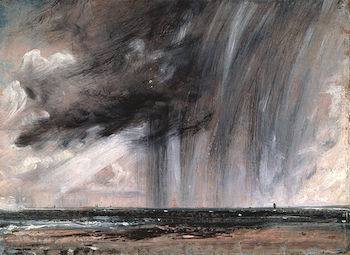
Constable-Seascape-Raincloud

(John Constable, Seascape Study with Raincloud: Royal Academy of Arts)

During his lifetime, Constable had no great success, not, at least, with an English audience. As late as the last decade of his life, he wrote to his future biographer: ‘Varley, the astrologer, has just called on me, and I have bought a little drawing of him. He told me how to “do landscape,” and was so kind as to point out all my defects. The price of the drawing was “a guinea and a half to a gentleman, and a guinea only to an artist,” but I insisted on his taking the larger sum, as he had clearly proved to me that I was no artist’.[4] Still, though unsold at the 1821 Royal Academy show, The Hay Wain (shown together with View on the Stour Near Dedham and one of Constable’s views of Yarmouth Jetty) was awarded a gold medal at the Paris Salon of 1824, presented by Charles X. The Hay Wain hugely impressed Théodore Géricault and influenced Eugène Delacroix.[5] Originally called Landscape: Noon and produced over a relatively short space of time to meet an exhibition deadline, it has permeated the national consciousness to the extent that a 2005 BBC poll to determine the most popular painting in any British gallery placed it second behind Turner’s Fighting Temeraire.

Constable has certainly suffered more than most from over-familiarity with what are regarded in his work as a quintessential Englishness and scenes of a timeless and untroubled rural world. Peter Kennard’s famous Hay Wain with Cruise Missiles (Chromolithograph and photographs on paper, 1980: Tate) derived much of its power from precisely those perceived qualities. Inevitably, such popularity had its negative effects. In ‘Going to the Pictures’, Alan Bennett remembered that, ‘Besides the Dutch landscapes, which I was exposed to too young, there were other casualties of inept or promiscuous reproduction. I don’t like The Hay Wain because it featured on a table mat at home.’[6]

The Hay Wain

(John Constable, The Hay Wain: National Gallery)

‘The first time I met him was in the year 1844 at the Academy on one of the varnishing days. I am enabled to fix the date because of the picture he exhibited that year, which was that entitled “Rain, Steam and Speed.” I watched him working on this picture. He used rather short brushes, a very messy palette, and, standing very close up to the canvas, appeared to paint with his eyes and nose as well as his hand. Of course he repeatedly walked back to study the effect. Turner must, I think, have been fond of boys, for he did not seem to mind my looking on at him; on the contrary, he talked to me every now and then, and pointed out the little hare running for its life in front of the locomotive on the viaduct. This hare, and not the train, I have no doubt he intended to represent the “Speed” of his title; the word must have been in his mind when he was painting the hare, for close to it, on the plain below the viaduct, he introduced the figure of a man ploughing, “Speed the plough” (the name of an old country dance) probably passing through his brain.’[7]

Turner-Rain-Steam-NG

(J. M. W. Turner, Rain, Steam and Speed: National Gallery)

This is George Dunlop Leslie, RA, genre painter and illustrator—son of Constable’s biographer Charles Robert Leslie—nine years old at the time of which he writes. In fact, the National Gallery website notes that: ‘Turner lightly brushed in a hare roughly midway along the rail track to represent the speed of the natural world in contrast to the mechanised speed of the engine. The animal is now invisible as the paint has become transparent with age, but it can be seen in an 1859 engraving of the painting.’
https://www.nationalgallery.org.uk/paintings/joseph-mallord-william-turner-rain-steam-and-speed-the-great-western-railway

Turner and Constable. Writing to Harman Grisewood in 1972, the poet and artist David Jones wrote of a chance acquaintance that ‘his cut of suit suggested the turf—but then so did that of Sickert, which did not prevent him from being the best English painter since Turner (in my view).’ Still, eleven years earlier, Jones had remembered: ‘I was encamped very near Stonehenge early in the First War, before going to France, and must confess to not finding it very impressive. I like Constable’s picture of it, though.’[8]
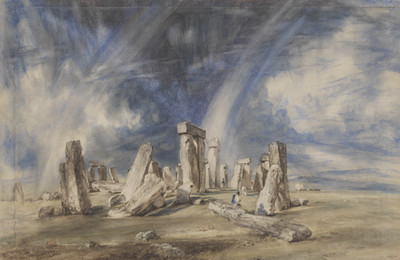
2015HW5111

(John Constable, Stonehenge: Victoria and Albert Museum)

‘I have made a beautiful drawing of Stonehenge’, John Constable wrote to Leslie in September 1836, and made several other studies before producing the watercolour now in the Victoria and Albert Museum collection. ‘He always kept the influence of earlier masters on his own work under close control’, Raymond Lister writes, ‘and though Stonehenge, for instance, contains a suggestion of Meindert Hobbema in the plein air rendering, it remains Constable’s conception and could not have been painted by any other artist.’[9]

It was, apparently, in 1819—the birth year of Turner’s great champion, John Ruskin—that a critic first compared Constable’s painting with Turner and, ‘again for the first time a critic attempted to liken Constable’s painting with the great tradition of rustic landscape associated with Ruisdael and Meindert Hobbema.’[10]

Hobbema: painter of trees, mills, woods and cottages. Constable was not uncritical of him but, replying to Fisher’s advice to ‘diversify your subject this year as to time of day’—‘People get tired of mutton at top, mutton at bottom, and mutton at the side, though the best flavour and smallest size’—he wrote that he himself didn’t enter into ‘that notion of varying one’s plans to keep the public in good humour.’ He went on: ‘Change of weather and effect will always afford variety. What if Vander Velde had quitted his sea pieces, or Ruysdael his waterfalls, or Hobbema his native woods. The world would have lost so many features in art’ (Leslie 131). Half a century after Constable’s death, Vincent van Gogh wrote to his brother Theo, then in London:

‘Now I for my part have always remembered some English pictures such as “Chill October” by Millais and, for instance, the drawings by Fred. Walker and Pinwell. Just notice the Hobbema in the National Gallery; you must not forget a few very beautiful Constables there, including “Cornfield,” nor that other one in South Kensington called “Valley Farm.”’[11]
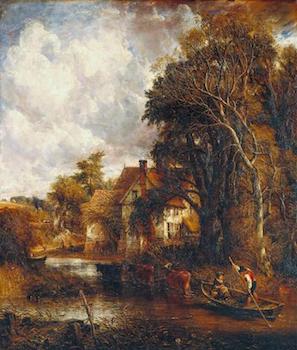
The Valley Farm 1835 by John Constable 1776-1837

(John Constable, Valley Farm: Tate)

Unfortunately for Constable, Ruskin, who became the most influential art critic in the country, was consistently highly critical of him, claiming that he could not draw and was not accurate or specific enough in rendering the details of the natural world. A major factor in this evaluation was that he was combatting the great claims made by C. R. Leslie who, by setting Constable higher than Turner, prompted Ruskinian counter-attacks.

‘Unteachableness seems to have been a main feature of his character, and there is corresponding want of veneration in the way he approaches nature herself’, Ruskin asserted. Having found no signs of Constable ‘being able to draw’, this resulted in ‘even the most necessary details’ being ‘painted by him inefficiently.’ Then: ‘His works are also eminently wanting both in rest and refinement: and Fuseli’s jesting compliment[12] is too true for the showery weather, in which the artist delights, misses alike the majesty of storm and the loveliness of calm weather; it is great-coat weather, and nothing more. There is strange want of depth in the mind which has no pleasure in sunbeams but when piercing painfully through clouds, nor in foliage but when shaken by the wind, nor in light itself but when flickering, glistening, restless and feeble. Yet, with all these deductions, his works are to be deeply respected, as thoroughly original, thoroughly honest, free from affectation, manly in manner, frequently successful in cool colour, and realizing certain motives of English scenery with perhaps as much affection as such scenery, unless when regarded through media of feeling derived from higher sources, is calculated to inspire.’[13]

That ‘want of veneration’ and ‘feeling derived from higher sources’ hint at some of the criteria Ruskin was applying – though he would suffer a temporary loss of faith in the next decade, at this stage the recognition and appreciation of beauty was inseparable—and indispensable—in his eyes from the worship of God. Constable was not reverent enough and his painting did not explicitly transfigure. ‘The great vice of the present day is bravura, an attempt to do something beyond the truth’, he wrote to John Dunthorne (Leslie 15) and that ‘truth’ remained his concern, even if this makes his pictures seem undramatic to his audience, too easy at first glance to interpret and digest, We might occasionally wonder ‘where is it?’ when looking at a Constable landscape – but rarely ‘what is it?’ as prompted by some Turner canvases and sketches. There is surely room for both: the viewer, after all, moves through different ages, moods, states of mind, of knowledge, of experience, of taste. We should be able to manage Turner, Constable – and John Ruskin too.

 
Notes

[1] Frances Spalding, John Piper, Myfanwy Piper: Lives in Art (Oxford: Oxford University Press, 2009), 189.

[2] Geoffrey Grigson, Britain Observed: The Landscape Through Artists’ Eyes (London: Phaidon Press, 1975), 93.

[3] Constable to Archdeacon John Fisher, 23 October 1831: C. R. Leslie, Memoirs of the Life of John Constable: Composed Chiefly of His Letters (1845; edited by Jonathan Mayne, London: Phaidon Press, 1951), 85-86.

[4] Leslie, Memoirs of the Life of John Constable, 194.

[5] Constable: The Great Landscapes, edited by Anne Lyles (London: Tate Publishing, 2006), 140, 142.

[6] Alan Bennett, Untold Stories (London: Faber and Faber and Profile Books, 2005), 463.

[7] G. D. Leslie, The Inner Life of the Royal Academy (London: John Murray, 1914), 144-145.

[8] Letter to Juliet and Richard Shirley Smith, 17 August 1961: Anthony Hyne, David Jones: A Fusilier at the Front (Bridgend: Seren, 1995), 30.

[9] Raymond Lister, British Romantic Painting (Cambridge: Cambridge University Press, 1989), Plate 37.

[10] Anne Lyles, ‘Soliciting Attention: Constable, the Royal Academy and the Critics’, in Constable: The Great Landscapes, 36.

[11] The Complete Letters of Vincent van Gogh, second edition, three volumes (London: Thames & Hudson, 1978), II, 300.

[12] ‘Speaking of me, he says, “I like de landscapes of Constable; he is always picturesque, of a fine colour, and de lights always in de right places; but he makes me call for my greatcoat and umbrella.”’ Constable, letter of 9 May 1823: Leslie, 101.

[13] John Ruskin, Modern Painters, Volume 1, edited by E. T. Cook and Alexander Wedderburn (London: George Allen, 1903), 191.
 

Endings also

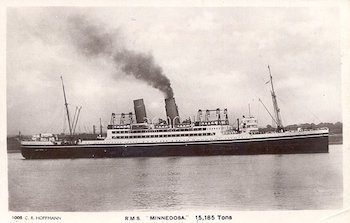
Minnedosa

(The Minnedosa via www.greatships.net )

On the night of 22 September 1927, off Labrador, aboard Canadian Pacific S. S. Minnedosa, Ford Madox Ford wrote to Stella Bowen in Paris: ‘Darling: I finished Last Post ten minutes ago: I am tired out but quite well and awfully happy!’

The fourth and last part of his masterpiece Parade’s End, Last Post, while concerned with new beginnings—for Christopher Tietjens, for Valentine Wannop and the child she is carrying, and for England—is deeply engaged with endings also, both within and without the book itself, not least, the closing of his ten-year life with Stella. She would write to him in New York a few months later, ‘But your letter, & the “Last Post” together, seem to mark the end of our long intimacy, which did have a great deal of happiness in it for me’[1]

stella-bowen

(Stella Bowen: https://www.nationaltrust.org.au )

Exactly thirty-seven years later, 22 September 1964, Hugh Kenner wrote to Guy Davenport that he was reading Evelyn Waugh’s authorized biography of the Catholic theologian and author Ronald Knox. Knox was ‘the darling child of the gone world’ and ‘like so many Englishmen of that generation was the end of something. Literally every single Oxford crony of his fell in W.W.I, having enjoyed only a few months of free manhood and commenced, with Ronnie, to found the future.’ He went on: ‘We are apt to forget how devastated was the landscape over which the Pound Era seized hegemony.’ While Pound and Eliot, as Americans, were noncombatants, the Irish Joyce had sat out the war in Europe and Wyndham Lewis (British mother, American father) had served in the war but survived, ‘the English generation corresponding to theirs was annihilated: how thoroughly, till I read Knox’s life, I had never before realized.’

Kenner and his first wife, Mary-Jo, were received into the Catholic Church that month: Mary-Jo was in her final illness, suffering from spinal cancer, and though she was at home when Kenner wrote again on 28 September, he feared it would be temporary. ‘The statistical likelihood is of course that it has metastasized already. We are all dying, but at different rates.’[2] She died six weeks later.

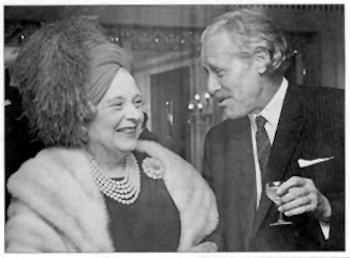
wheeler-cartland

(Sir Mortimer Wheeler with Barbara Cartland)

Then too, ‘every single Oxford crony’ reminded me of Charlotte Higgins writing about Mortimer Wheeler, who became the archaeologist best-known to the British public, not least because of his appearances on the 1950s television show, Animal, Vegetable, Mineral: in 1954, he was the BBC’s first television personality of the year.

Wheeler, Higgins observed, ‘had a good war and emerged a major. But by 1918 his generation, he recalled in his memoir, “had been blotted out”. He wrote: “Of the five university students who worked together in the Wroxeter excavations, only one survived the war. It so happened that the survivor was myself.” The “Oxford Blues” were dead.’ Wheeler himself was not an Oxford man but had studied at University College London, taught Latin by the poet and classicist A. E. Housman.[3]

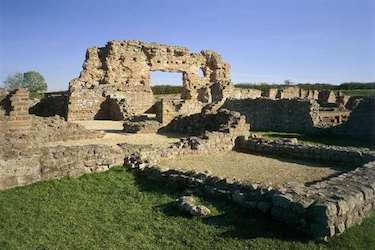
One visitor to the Wroxeter excavations—the village occupies a portion of what was once Uriconium, the fourth largest Roman town in Britain—in the summer of 1913 was Wilfred Owen. He met several of those working there, probably including Wheeler, though he felt ‘miserably jealous of two of them, who were from Oxford.’[4]

Wroxeter-English-Heritage

(Wroxeter via English Heritage)

It lieth low near merry England’s heart
Like a long-buried sin; and Englishmen
Forget that in its death their sires had part.
And, like a sin, Time lays it bare again
To tell of races wronged,
And ancient glories suddenly overcast,
And treasures flung to fire and rabble wrath.[5]

Owen’s end came just five years later on 4 November 1918 as he crossed the Oise-Sambre canal in northern France—the telegram announcing his death arrived at the family home on Armistice Day, one week later.

Before all else, though, the date on the calendar prompts thoughts of my sister. Had she lived, she would have been seventy-four today, so, though there is hardly a need for more reasons to raise a glass in these benighted times – santé, Penny.


Notes

[1] Correspondence of Ford Madox Ford and Stella Bowen, edited by Sondra J. Stang and Karen Cochran (Bloomington: Indiana University Press, 1993), 320, 373.

[2] Questioning Minds: The Letters of Guy Davenport and Hugh Kenner, edited by Edward M. Burns, two volumes (Berkeley: Counterpoint Press, 2018), I, 618, 620. Kenner’s phrase, ‘the gone world’, occurs, of course, in the opening line of The Pound Era (1971), which he first mentioned to Davenport in October 1961. The famous closing line, ‘Thought is a labyrinth’, came from Davenport.

[3] Charlotte Higgins, Under Another Sky: Journeys in Roman Britain (London: Jonathan Cape, 2013), 80.

[4] Dominic Hibberd, Wilfred Owen: A New Biography (London: Weidenfeld & Nicolson, 2002), 106.

[5] Wilfred Owen, opening of ‘Uriconium – An Ode’ (1913): The Poems of Wilfred Owen, edited by Jon Stallworthy (London: Chatto & Windus, 1990), 42; and see Stallworthy’s note (45).


Backward glances

Backward-Glance

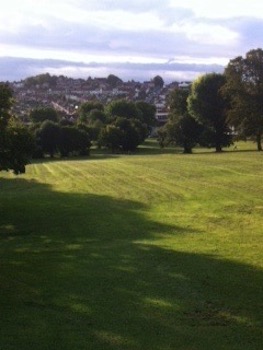
(My local backward glance)

Not far into Edith Wharton’s The Spark, one of the novellas in her 1924 volume, Old New York, I came across the young narrator’s query to Jack Alstrop about what Harvey Delane, a figure of great interest to him, has done in his life: ‘Alstrop was forty, or thereabouts, and by a good many years better able than I to cast a backward glance over the problem.’[1]

I was reading Old New York just then because of a hint from Guy Davenport (this story, ‘about a man who had known Whitman in the war’), and my attention had snagged on that phrase ‘backward glance’.[2]

In 1962, Allen Tate published an article responding to a new book of poems, The Long Street, by his friend of long standing, Donald Davidson. Its title was ‘The Gaze Past, The Glance Present: Forty Years After The Fugitive’. This last was the influential journal, published in the early twenties, which centred on poets and scholars at Vanderbilt University in Tennessee. Several of those writers associated with it (Davidson, Tate, Robert Penn Warren) were later part of the group called the Agrarians.

Ford-Gordon-Biala-Tate
(Caroline Gordon; Janice Biala; Ford Madox Ford; Allen Tate: Summer 1937, via Cornell University Library: https://digital.library.cornell.edu/catalog/ss:550910 )

Tate’s title indicated what he regarded as the disproportionate extent of Davidson’s steady backward gazing, his ‘opposition of an heroic myth to the secularization of man in our age’ – though Tate himself tended to see the fall of the South very much in mythic terms.[3]

Nearly twenty years earlier, another piece by Tate, ‘The New Provincialism’, had asserted that, ‘With the war of 1914-1918, the South re-entered the world—but gave a backward glance as it stepped over the border: that backward glance gave us the Southern renascence, a literature conscious of the past in the present.’[4]

That phrase in turn perhaps looked back a decade to Edith Wharton’s 1934 autobiography, A Backward Glance, which itself looked back to Walt Whitman. ‘A Backward Glance O’er Travel’d Roads’ appeared in 1888 as a preface to November Boughs and was incorporated into the collected volume, Leaves of Grass, in the following year.

Wharton-Backward-Glance

Remembering an occasion on which someone had spoken of Whitman in the company of Henry James and herself, Wharton recounts how it was ‘a joy to discover that James thought him, as I did, the greatest of American poets. “Leaves of Grass” was put into his hands, and all that evening we sat rapt while he wandered from “The Song of Myself” to “When lilacs last in the door-yard bloomed” (when he read “lovely and soothing Death” his voice filled the hushed room like an organ adagio), and thence let himself be lured on to the mysterious music of “Out of the Cradle”, reading, or rather crooning it in a mood of subdued ecstasy till the fivefold invocation to Death rolled out like the knocks in the opening bars of the Fifth Symphony.’[5]

Wharton-via-BBC

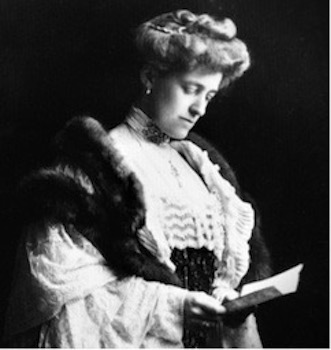
(Edith Wharton via the BBC)

Whitman would die four years after his 1888 essay. ‘So here I sit gossiping in the early candlelight of old age—I and my book—casting backward glances over our travel’d roads.’ The roads are those to and through and from his great book, the difficulties of publication, the financial failure of his work, the critical attacks that have been made upon it. Yet the glance is just that: as so often, Whitman’s gaze is, in fact, to the future. ‘I look upon Leaves of Grass, now finish’d to the end of its opportunities and powers, as my definitive carte visite to the coming generations of the New World, if I may assume to say so.’[6]

Walt-Whitman

In ‘Crossing Brooklyn Ferry’ (1856), Whitman writes:

Others will enter the gates of the ferry and cross from shore to shore,
Others will watch the run of the flood-tide,
Others will see the shipping of Manhattan north and west, and the heights of Brooklyn to the south and east,
Others will see the islands large and small;
Fifty years hence, others will see them as they cross, the sun half an hour high,
A hundred years hence, or ever so many hundred years hence, others will see them,
Will enjoy the sunset, the pouring-in of the flood-tide, the falling-back to the sea of the ebb-tide.

It avails not, time nor place—distance avails not,
I am with you, you men and women of a generation, or ever so many generations hence,
Just as you feel when you look on the river and sky, so I felt,
Just as any of you is one of a living crowd, I was one of a crowd,
Just as you are refresh’d by the gladness of the river and the bright flow, I was refresh’d,
Just as you stand and lean on the rail, yet hurry with the swift current, I stood yet was hurried,
Just as you look on the numberless masts of ships and the thick-stemm’d pipes of steamboats, I look’d. [7]

As the White Queen remarks in Through the Looking-Glass, ‘“It’s a poor sort of memory that only works backwards”.’[8]

Alice_and_white_queen

(Alice and the White Queen by John Tenniel)

People have occasionally remarked in my hearing that there’s ‘no use in looking back’, that they ‘live in the moment, always in the present tense’. Well, that’s just dandy, they might see a tail or a trunk but they won’t be seeing the whole elephant any time soon. The backward glance is indispensable, I think, as resource, as collaborator, as partner; though best not, perhaps, as master. It’s all in the proportions. Francis Bacon observed that ‘There is no excellent beauty that hath not some strangeness in its proportion.’[9] There are, though, strangenesses that appear to have little or no acquaintanceship with beauty.

It has been, in any case, a remarkable few years for backward glances and gazes, and for fixed, demented backward—and forward—stares too. ‘Those who cannot remember the past are condemned to repeat it,’ George Santayana wrote, this famous aphorism inscribed on a plaque at Auschwitz.[10] In that context, of course, it’s very clear what past is being alluded to and the way in which it is and should be viewed. Elsewhere, though, pasts have a great many questions to answer and are subject to warring interpretations. Some of these are unambiguously wrong but others will continue to brawl like rats in a sack. We can only wait with keen interest, if not a great deal of optimism, to see what is glimpsed and held from now in some future backward glance.

 
Notes

[1] Edith Wharton, The Spark, in Novellas and Other Writings, edited by Cynthia Griffin Wolff (New York: Library of America, 1990),451.

[2] Guy Davenport, ‘Walt Whitman and Ronald Johnson’, The Hunter Gracchus and Other Papers on Literature and Art (Washington: Counterpoint, 1996), 250.

[3] Allen Tate, Memories and Essays Old and New 1926-1974 (Manchester: Carcanet, 1976), 36.

[4] Allen Tate, The Man of Letters in the Modern World (London: Thames and Hudson, 1957), 330-331.

[5] Wharton, A Backward Glance in Novellas and Other Writings, 923.

[6] Whitman: Complete Poetry and Collected Prose, edited by Justin Kaplan (New York: Library of America, 1982), 656.

[7] Whitman: Complete Poetry and Collected Prose, 308-309.

[8] Lewis Carroll, The Annotated Alice: The Definitive Edition, edited by Martin Gardner (London: Allen Lane, 2000), 206.

[9] Bacon, ‘Of Beauty’, Essays, edited by Ernest Rhys (London: Dent, 1932), 129.

[10] Santayana, The Life of Reason. I: Reason in Common Sense (New York: Scribner’s, 1905), 284.


Ditching

Richards, Albert, 1919-1945; Anti-Tank Ditch

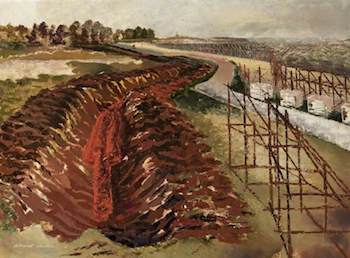
(Albert Richards, Anti-Tank Ditch (1939): © Russell-Cotes Art Gallery & Museum)

In the last few years of my walking to work every day, it became almost as dangerous as crossing the roads. This was only partly to do with the chronic neglect of paths, pavements and walkways by the local council, financially starved as it was by central government; as much, or more, to do with the traffic on the pavement. Almost hit by heedless kids on scooters one morning, I was then almost hit by their mother, who was cycling briskly along the middle of the pavement. Then I had to avoid a small boy fiddling with some game and blind to the world. I remember thinking that it was hardly surprising if heedless kids raised by heedless adults turn into heedless adults themselves. But why, I wondered, sidestepping another heedless fool fiddling with his music selection, do more of these people not simply tumble into ditches? The answer, of course, is was that we have too few ditches. There is so much . . . material, of various kinds, that could be, that should be, tumbled into ditches. I thought then that one of my first reforms, when the time comes, will be to introduce far more ditches.
Old English, of Germanic origin, I gather, related to dyke and, more broadly, both to the trench and the mound of earth produced by the digging.

It was apparently Lord Curzon, ex-Viceroy of India, ‘surely one of the most brilliantly pompous men in England’, who said: ‘We will die in the last ditch before we give in’, when confronting the Parliament Bill which would lessen the power of the House of Lords. This was in May 1911, at the luncheon table of the splendidly-named Lord Willoughby de Broke, who, George Dangerfield commented in his classic The Strange Death of Liberal England, ‘had quite a gift for writing, thought clearly, and was not more than two hundred years behind his time.’[1] The Conservative party would soon divide into Ditchers and Hedgers, the hardliners who refused any compromise and the realists who believed that accepting some reform might avert or at least delay defeat.

A few years later, the narrator of Violet Hunt’s 1918 novel (with many details of interest for those readers closely acquainted with her lover, Ford Madox Ford) remarks: ‘For I suppose we aristocrats are, literally, in the Last Ditch!’[2]

Immodest-Violet

Ditches were on many people’s minds just then, not least those of the survivors of the Western Front. Eric Leed pointed out in his celebrated study No Man’s Land that the soldier was treated ‘as his society customarily treats a corpse – buried, forced to lie immobile in a pit or ditch.’ He is ‘identified with the earth, with pollution and corruption.’ He added that ‘The most unsettling feature of the landscape of war, for many combatants, lay in the constant transgression of those distinctions that preserve both order and cleanliness.’[3]

A hundred years on from the Great War, anyway, ditches are suddenly topical again. Our current Prime Minister, declining to return to Brussels to request an extension beyond 31 October of the United Kingdom’s exiting the European Union, said that he’d ‘rather be dead in a ditch.’ So, somewhere, a ditch is surely being prepared, or furnished or perhaps, as we say far too often these days, curated in readiness for that performance.

 
Notes

[1] George Dangerfield, The Strange Death of Liberal England (London: Constable, 1936), 43, 42. The title of his third chapter is ‘Their Lordships Die in the Dark’.

[2] Violet Hunt, The Last Ditch (London: Stanley Paul, 1918), 14.

[3] Eric J. Leed, No Man’s Land: Combat and Identity in World War I (Cambridge: Cambridge University Press, 1979), 17, 18.


A bit of Turner

Spall-Turner-Guardian

(Timothy Spall as Turner in Mike Leigh’s 2014 Mr. Turner, via The Guardian)

Reading Greg Gerke’s new collection of essays, I came across the opening lines of ‘Mr. Turner, Boyhood, and Criticism’:

‘Let us begin with difficulties. Mike Leigh’s Mr. Turner, a film as rich as an afternoon in the Louvre, presents an austere and bilious portrait of the great English artist and a ridiculous one of a young John Ruskin, a critic who explicated Turner in many works over the course of different works—a critic who drew and painted, lecturing on both activities with a great avidity.’

He adds that, in Leigh’s film, ‘the drama is the classic case of critic as obnoxious foil to the artist’s majesty and magic’, before bringing in Guy Davenport, a great admirer of Leigh—but also of Ruskin, not only as a titanic figure in his own right but a major influence upon much of the modern movement.[1]

Gerke’s essay, as the title suggests, is concerned with setting his ‘adulation’ for Leigh’s film beside his ‘cool reception’ to Richard Linklater’s widely acclaimed Boyhood (preferring several of Linklater’s other films), but also considering the nature and difficulties of criticism. Still, for the moment, I was thinking about Turner and Ruskin.

Back in April this year, after the Don McCullin exhibition and the Van Gogh in Britain show—and the Ruskin Exhibition at 2 Temple Place the day before—we had a couple of hours to spare before our train. We revisited old friends in the Tate Britain galleries, the Librarian often to be found in front of Vanessa Bell, Carrington, Sargent, Gwen John, me turning aside to Nevinson, Bomberg, Spencer, Gaudier-Brzeska, pausing by Holman Hunt’s Our English Coasts (first called ‘Lost Sheep’ and then ‘Strayed Sheep’), with its too obvious applications to the country’s current travails.

Charles-West-Cope-JMWT-NPG

(Charles West Cope, J. M. W. Turner: National Portrait Gallery)

‘Do you fancy some Turner?’
‘I’m always up for a bit of Turner.’

We walked to the Clore Gallery. The Librarian mentioned wanting to see again the 2014 Mike Leigh film, with its gorgeous opening sequence and its tremendous central performance by Timothy Spall, its only false note for me precisely that grotesque depiction of John Ruskin, Turner’s most famous champion, whose first major work was initially conceived with exactly the intention of praising and promoting the painter.[2]

Our visit was just a few days short of the painter’s birthday, I realise now. Joseph William Mallord Turner was born in Covent Garden, 23 April 1775. I’d read a short biography of him by Peter Ackroyd which quoted Samuel Palmer, recalling his first sight of a Turner painting, ‘Entrance of the Meuse: Orange-Merchant on the Bar, going to Pieces’, in 1819 when Palmer was just fourteen: ‘being by nature a lover of smudginess, I have reveled in him from that day to this’. Ackroyd also notes Ruskin’s emergence as ‘Turner’s most eloquent and knowledgeable supporter’, ‘the principal advocate’ of his art, adding: ‘it can be said with some certainty that no artist has ever had a more profound and articulate explicator.’[3]

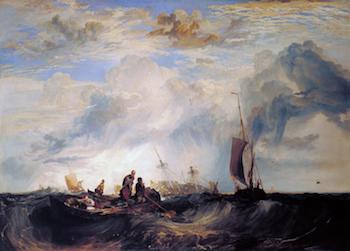
Entrance of the Meuse: Orange-Merchant on the Bar, Going to Pieces; Brill Church bearing S. E. by S., Masensluys E. by S. exhibited 1819 by Joseph Mallord William Turner 1775-1851

(J. M. W. Turner, Entrance of the Meuse: Orange-Merchant on the Bar, going to Pieces: Tate)

John Ruskin was just seventeen when a hostile notice of three paintings by Turner in Blackwood’s Magazine prompted him to draft a reply. Looking back some fifty years later, Ruskin wrote: ‘The review raised me to the height of “black anger” in which I have remained pretty nearly ever since’. In fact, Ruskin’s father deciding that Turner himself should be approached first, the painter wrote back thanking Ruskin but adding: ‘I never move in these matters, they are of no import save mischief’.[4] Ruskin’s reply to the Blackwood’s review was finally printed as an appendix to Modern Painters in the great Cook and Wedderburn library edition—‘Turner may be mad: I daresay he is, inasmuch as highest genius is allied to madness; but not so stark mad as to profess to paint nature. He paints from nature, and pretty far from it, too; and he would be sadly disappointed who looked in his pictures for a possible scene.’[5]

Fifteen years further on, Ruskin famously defended works by the Pre-Raphaelite painters in reaction to the dismissive comments published in notices in The Times.

(The notices together with Ruskin’s letters are gathered together in the superb Rossetti Archive:
http://www.rossettiarchive.org/docs/n.gb1.1851.may.rad.html )

In the famous Thames flood of 6 – 7 January 1926, the waters filled the lower floor of the Tate where Jim Ede (biographer of Henri Gaudier Brzeska and founder of Kettle’s Yard in Cambridge) was keeping 19000 Turner drawings and watercolours, as well as some watercolours by Ede’s friend, the poet and artist David Jones, who had recently completed engravings for a Golden Cockerel Press edition of The Chester Play of the Deluge. The Tate treasures were ‘submerged but kept dry by ark-tight carpentry of a set of cabinets.’

In the following year, Jones spent four weeks, mid-August to September, at Portslade, painting mostly ‘the open sea under an empty sky.’ He was remembering Ruskin writing on Turner, that ‘the sea, however calm, is redolent of storm’. Jones thought this was ‘more than half’ the secret ‘of good painting, of good art . . . it is both peace and war.’[6] Patrick White used to go and look at Turner’s ‘Interior at Petworth’ often when he lived in London, adding to Mary Benson that, ‘besides being a subtle painting, I feel it taught me a lot about writing.’ Late Turners, he told Penny Coleing, made him ‘grow breathless with delight every time I see them’.[7]

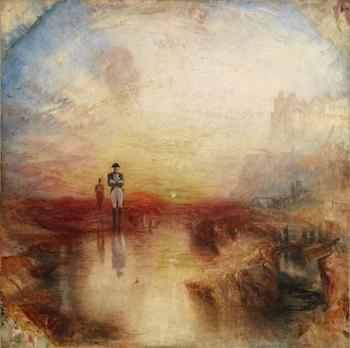
War. The Exile and the Rock Limpet exhibited 1842 by Joseph Mallord William Turner 1775-1851

(J. M. W. Turner, War. The Exile and the Rock Limpet: Tate)

Some of Turner’s pictures are so familiar now that some decrease might seem inevitable in that breathlessness if not the delight. But I don’t know: when I come in sight of Rain, Steam and Speed – The Great Western Railway or The Slave Ship (originally, Slavers Throwing Overboard the Dead and Dying, Typhon coming on), The Fighting Temeraire, War. The Exile and the Rock Limpet or Snow Storm – Steam-Boat off a Harbour’s Mouth, I still catch my breath a little, or articulate that highly technical art-critical term, wow.

Snow Storm - Steam-Boat off a Harbour's Mouth exhibited 1842 by Joseph Mallord William Turner 1775-1851

(J. M. W. Turner, Snow Storm – Steam-Boat off a Harbour’s Mouth: Tate)

‘To understand how the artist felt, however, is not criticism; criticism is an investigation into what the work is good for’, the philosopher George Santayana wrote, a sentence which, Greg Gerke notes, Guy Davenport quotes twice (Gerke also notes how ‘“good for” smacks of the paterfamilias making a pronouncement from 1905’—Reason in Art’s year of publication).[8] An introductory note to one of Davenport’s collections of essays ends: ‘The way I write about texts and works of art has been shaped by forty years of explaining them to students in a classroom. I am not writing for scholars or fellow critics, but for people who like to read, to look at pictures, and to know things.’[9]

Yes.

Near the end of ‘Mr. Turner, Boyhood, and Criticism’, Greg Gerke writes: ‘We all die, so live all you can—if art is good at anything, it’s reminding us of this.’[10]

Yes again.

 
Notes

[1] Greg Gerke, See What I See (Birmingham: Splice, 2019), 315. For Davenport on Ruskin, see particularly ‘The House That Jack Built’ in The Geography of the Imagination (Boston: David R. Godine, 1997) and ‘Ruskin According to Proust’ in The Hunter Gracchus and Other Papers on Literature and Art (Washington: Counterpoint, 1996); but there are references to Ruskin throughout Davenport’s oeuvre.

[2] And see Philip Hoare on both Mike Leigh’s film and Effie Gray, written by Emma Thompson and directed by Richard Laxton: https://www.theguardian.com/artanddesign/2014/oct/07/john-ruskin-emma-thompson-mike-leigh-film-art

[3] Peter Ackroyd, Turner (London: Vintage Books, 2006), 94, 132, 133.

[4] John Ruskin, Praeterita (London: Everyman, 2005), 192.

[5] John Ruskin, Modern Painters, Volume 1, edited by E. T. Cook and Alexander Wedderburn (London: George Allen, 1903), 637.

[6] Thomas Dilworth, David Jones: Engraver, Soldier, Painter, Poet (London: Jonathan Cape, 2017), 98, 107. In ‘Art in Relation to War’, Jones phrases it thus: ‘Ruskin, writing of Turner’s treatment of the sea, says that however calm the sea he painted he always remembered the same sea heavy and full of discontent under storm. That is half the secret, more than half, of good painting, of good art.’ See The Dying Gaul and Other Writings (London: Faber 1978), 140.

[7] Patrick White, Letters, edited by David Marr (London: Jonathan Cape, 1994), 203fn.

[8] Gerke, See What I See, 317; Guy Davenport, Every Force Evolves a Form (Berkeley: North Point Press, 1987), 68, 71.

[9] Guy Davenport, The Hunter Gracchus and Other Papers on Literature and Art (Washington: Counterpoint, 1996), ix.

[10] Gerke, See What I See, 320: he nods here to Lambert Strether in Henry James’s The Ambassadors (‘Live all you can; it’s a mistake not to’). His essay on James’s The Portrait of a Lady, ‘Stylized Despair’, is included here (51-56).

Coups, cakes, canvases

executioner-with-axe

Boris Johnson’s crude assault on parliamentary democracy has, unsurprisingly, provoked hours of interviews, comment and analysis unspooling across various screens, plus the reliably depressing vox populi, shifty Tory ministers hastily backtracking on their previous opinions and a few suited spear-carriers bleating that it was really just business as usual. Among the worst moments was a rather revolting interview, through which the Prime Minister girned and smirked and waffled his way, making it painfully obvious that he thought this whole government thing a bit of a lark. It was, I suppose, the old Bullingdon Club habit: you have a rip-roaring time and smash the place up and somebody else comes along the next day and pays for the damage. Of course, we’ll be the poor sods picking up the bill on this occasion, for decades to come.

Vuillard, Jean Edouard, 1868-1940; Deux ouvrieres dans l'atelier de couture (Two Seamstresses in the Workroom)

(Vuillard, Two Seamstresses in the Workroom, 133mm x 194mm
National Galleries of Scotland, Scottish National Gallery of Modern Art)

We escaped for a while to more civilized things, catching a train to Bath to buy a few books, have coffee and cake, and look at some pictures, the small and appropriately intimate exhibition of around thirty paintings and lithographs from the earlier part of Édouard Vuillard’s career—had I forgotten or did I never know that Vuillard’s Two Seamstresses in the Workroom is tiny? Walks, blackberrying and wine can also help to stave off reminders of the state we’re in. What else is there to do? Sign the petitions, join the protests if you can, cultivate or maintain a sceptical mind. ‘The uncritical mind is a prey to credulity’, Guy Davenport once observed, ‘and without skepticism there can be no democracy.’

I notice that today is the birthday of Raymond Williams, novelist, literary critic and cultural studies scholar. I always think of Williams as a representative figure in a tradition of historical and cultural analysis of which I was almost entirely ignorant until I began a university course as a mature student, never having been exposed to it at school, nor anywhere else. Had that tradition—radical, questioning, clear-sighted—been more widely taught and more centrally positioned, we might all be in a more secure place now, with an electorate rather better-informed about some of the matters that so closely affect them.

The Bank Holiday last week reminded me of the May Bank Holiday on which we went to Clodock, the parish church of St Clydawg, some of it dating back to the 12th century, though the present tower dates from the 15th century and the interior underwent a lot of restoration in the 17th century. On one wall is a decalogue – the ten commandments –which was repainted most recently in the late 1980s, dedicated to Williams (who died in January 1988) by his wife Joyce. They’re now buried together in the new churchyard there.

Decalogue

In a recent column, Nesrine Malik wrote that, over the past few years, there had been many, many opportunities for Trump supporters to see exactly who and what they’d voted for: ‘There really are no more excuses. A Trump voter in 2020 is a voter who can no longer plausibly pretend, to themselves or others, that their reasons are down to economic anxiety or some “left behind” resentment.’
https://www.theguardian.com/commentisfree/2019/aug/26/trump-2020-democrats-identity-politics

And in this country? Are we there yet? Three years ago, many people could reasonably claim that they were frankly lied to and more generally misled (true), that they knew next to nothing about the European Union or what ‘leaving’ would actually entail (also true). But now they do know. Yet the Conservative Party is ahead in the polls and, as John Harris comments today, ‘too much of the country remains uninterested, and plenty of other people have concluded that Johnson has done the right thing.’
https://www.theguardian.com/commentisfree/2019/aug/30/parliament-johnson-prorogue-democracy

Thank all the gods there are, then, for Marina Hyde:
https://www.theguardian.com/commentisfree/2019/aug/30/sajid-javid-dominic-cummings-prorogation-government


Belief: a world of a word

Knox, Archibald, 1864-1933; 'In preachings of apostles faiths of confessors'

(Archibald Knox, ‘“In preachings of apostles faiths of confessors” (from Knox’s illuminated manuscript “The Deer’s Cry” or “Saint Patrick’s Hymn”’: Manx Museum, Douglas, Isle of Man)

Sitting before the evening news, the Librarian remarks that, if we’d been told ten or fifteen years ago that the world would be like this—the Artic and the Amazon forest on fire, the extreme Right resurgent in Europe again, the widespread mainstream dissemination of racist and supremacist views, this country’s prolonged and painful foundering, the President of the United States in a snit because he couldn’t buy another country and suggesting nuclear strikes to combat hurricanes—we wouldn’t have believed it.

Believe. What a world of a word. ‘I do not believe in Belief’, E. M. Forster wrote in his 1939 essay, ‘What I Believe’. And, ‘Faith, to my mind, is a stiffening process, a sort of mental starch, which ought to be applied as sparingly as possible. I dislike the stuff’.[1] I also own a curious volume called What I Believe, edited by Mark Booth, ‘curious’ not in its contributors (W. H. Auden, Albert Einstein, Jacques Maritain, Rebecca West, Bertrand Russell and, yes, Martin Sheen among them) but in its publishing history, issued in Britain by Firethorn Press, ‘an imprint of Waterstone and Company Limited’, of 193 Kensington High Street, London W8. A Waterstones branch is still at that address, thirty-five years on.

What-I-Believe

‘The brute necessity of believing something so long as life lasts does not justify any belief in particular’, George Santayana wrote.[2] And Shirley Jackson’s observation seems increasingly pertinent: ‘The question of belief is a curious one, partaking of the wonders of childhood and the blind hopefulness of the very old; in all the world there is not someone who does not believe something. It might be suggested, and not easily disproven that anything, no matter how exotic, can be believed by someone.’[3] These days, of course, that ‘anything’ is believed with greater volume and stridency.

T. S. Eliot famously declared of the essays in For Lancelot Andrewes: Essays on Style and Order, that: ‘The general point of view may be described as classicist in literature, royalist in politics, and anglo-catholic in religion.’[4] The previous year, he had published ‘A Note on Poetry and Belief’, responding to an essay by I. A. Richards: ‘But I cannot see that poetry can ever be separated from something which I should call belief, and to which I cannot see any reason for refusing the name of belief, unless we are to reshuffle names altogether.’[5] Responding to Eliot’s musing about what his friend ‘believed’, Ezra Pound recommended reading Confucius and Ovid, but advanced a few years later to a more precise statement: ‘I believe the Ta Hio.’[6] This—The Great Learning—became, some years later, Ta Hsio: The Great Digest, its most often quoted lines (certainly by me) perhaps: ‘Things have roots and branches; affairs have scopes and beginnings. To know what precedes and what follows, is nearly as good as having a head and feet.’[7]

Certain beliefs—and I pause on the ironic savour of the word ‘certain’ in this context—are, or have been, pretty well obligatory. Northrop Frye writes that: ‘The Christian mythology of the Middle Ages and later was a closed mythology, that is, a structure of belief, imposed by compulsion on everyone. As a structure of belief, the primary means of understanding it was rational and conceptual, and no poet, outside the Bible, was accorded the kind of authority that was given to the theologian. Romanticism, besides being a new mythology, also marks the beginning of an “open” attitude to mythology on the part of society, making mythology a structure of imagination, out of which beliefs come, rather than directly one of compulsory belief.’[8]

I recall, quite specifically, the moment in which I ceased to be a Christian believer, though I may not have then become a Romantic. It was a bright, dry Sunday morning in a village a few miles from Bath. I boarded at a nearby college, though continuing to attend school in the city and, every Sunday morning, the boarders were ferried by the college’s ramshackle coach to the village church. While I stood on the side of the hot road, that belief fell off me like a solid object, as though I’d dropped a stone or a coin, one I wouldn’t bend to pick up again.

‘Lord, I believe’, the father cries out in St Mark’s Gospel, ‘help thou mine unbelief’ (Mark 9: 24).

Palma il giovane, Jacopo, 1544/1548-1628; Saint Mark

(Jacopo Palma il giovane, Saint Mark: Hatton Gallery)

Anne Carson writes:

‘Where does unbelief begin?
When I was young

there were degrees of certainty.
I could say, Yes I know that I have two hands.
Then one day I awakened on a planet of people whose hands
occasionally disappear—’[9]

Religious belief clearly doesn’t require buildings and clerical collars. In Of Human Bondage, Somerset Maugham’s Norah tells Philip that she doesn’t believe in ‘churches and parsons and all that’ – but, she adds, ‘I believe in God, and I don’t believe He minds much about what you do as long as you keep your end up and help a lame dog over a stile when you can.’[10] There are, too, very individual manifestations of God. ‘Binding up these sheaves of oats’, Ronald Duncan wrote in his record of wartime smallholding, ‘I am certain I believe in oats. The stalks falling behind the cutter which we draw behind an old car, the monk binding methodically, the new members binding enthusiastically, women with coloured scarves round their heads are gleaning and one cannot glean ungracefully. If one cannot see God in an oatfield one will never see. For, here is the whole of it.’[11]

Palmer, Samuel, 1805-1881; The Gleaning Field

(Samuel Palmer, The Gleaning Field: Tate)

Kate Atkinson writes of Jackson Brodie in her recent novel: ‘He didn’t let the fact that he was brought up as a Catholic interfere with his beliefs.’[12] Beliefs or faith? In what I suspect has now become my favourite Penelope Fitzgerald novel, she writes of the feast of St Modestus, patron saint of printing, and the blessing of the ikons by the parish priest. ‘Because I don’t believe in this, Frank thought, that doesn’t mean it’s not true.’ Then: ‘Perhaps, Frank thought, I have faith, even if I have no beliefs.’[13]

As to the secular world, who can say? Faith in facts, in political systems, in international law, in human rights? Belief seems sometimes rampant, sometimes inert, stunned, left for dead. It’s a long time since Proust wrote: ‘Facts do not find their way into the world in which our beliefs reside; they did not produce our beliefs; they do not destroy them; they may inflict on them the most constant refutations without weakening them.’[14] Remembering the Queen’s Silver Jubilee, now more than forty years ago, Lavinia Greenlaw asserted that ‘England was no longer England, at least not the England it persisted in believing itself to be.’[15]

And now? Here we are. There they are. So I turn to the Librarian and say yes, I believe you’re right.


Notes

[1] E. M. Forster, Two Cheers for Democracy (London: Edward Arnold, 1951), 77.

[2] W. H. Auden and Louis Kronenberger, The Faber Book of Aphorisms: A Personal Selection (London: Faber and Faber, 1964), 334.

[3] Shirley Jackson, The Sundial (1958; London: Penguin, 2015), 33.

[4] T. S. Eliot, ‘Preface’, For Lancelot Andrewes: Essays on Style and Order (London: Faber and Gwyer, 1928), ix.

[5] T. S. Eliot, ‘A Note on Poetry and Belief’, The Enemy, 1 (January 1927) 15-17.

[6] Ezra Pound, ‘Credo’ (1930) in Selected Prose 1909-1965, edited by William Cookson (London: Faber and Faber, 1973), 53; ‘Date Line’ (1934) in Literary Essays of Ezra Pound, edited by T. S. Eliot (London: Faber and Faber, 1960), 86.

[7] Ezra Pound, Confucius. The Unwobbling Pivot; The Great Digest; The Analects (New York: New Directions, 1969), 29.

[8] Northrop Frye, A Study of English Romanticism (Brighton: The Harvester Press, 1983), 16

[9] Anne Carson, ‘The Glass Essay’ in Glass, Irony & God (New York: New Directions, 1995), 31.

[10] Somerset Maugham, Of Human Bondage (1915; Penguin Books, 1963), 318. Readers of Ford Madox Ford nod sagely at this point—‘I remember my grandfather laying down a rule of life for me. He said: “ Fordie, never refuse to help a lame dog over a stile.”’ See Ancient Lights and Certain New Reflections (London: Chapman and Hall, 1911), 197.

[11] Ronald Duncan, Journal of a Husbandman (London: Faber 1944), 52-53.

[12] Kate Atkinson, Big Sky (London: Transworld, 2019), 10.

[13] Penelope Fitzgerald, The Beginning of Spring (London: Everyman, 2003), 378.

[14] Marcel Proust, The Way by Swann’s, translated by Lydia Davis (London: Allen Lane, 2002), 149.

[15] Lavinia Greenlaw, The Importance of Music to Girls (London: Faber & Faber, 2017), 114.

Plus ça change: editing, comedy, politics

Harry-dozing 1

A flurry of activity, since we are—finally!—in the last throes of preparing for the printer the second issue of Last Post: A Literary Journal from the Ford Madox Ford Society. Before that – days of depressing weather and weathering depression as British politicians plot, plod, falsify, feint and fail, some of them apparently paralysed while others are clearly willing to jeopardise not only the wellbeing of the United Kingdom as a whole but the still fragile peace in Northern Ireland too.

Still, there was my elder daughter’s birthday, though on the actual day she was—not exactly abroad but offshore, that region so favoured by the rich—aboard a small train bound for Laxey in the Isle of Man, and then on another train up a mountain. On the other hand, her sister, who lives in Barcelona, arrived in Bristol to stay with the Librarian and I—and, crucially, Harry the house cat—for a few days before heading off to Scotland to unleash some stand-up comedy at the Edinburgh Festival Fringe with a group of friends. (Such familial displays of extrovert behaviour might offset, to a degree, my increasingly wary view of the world out there and the people in it.)

The second issue of Last Post includes a reprinted article by Ford, dating from 1936, when he revisited London, a relatively rare event in the post-war years, since he lived first in Sussex, then Paris, then Toulon, with trips to New York and other parts of the United States – but not often to London.

Fordie-BBC

http://www.fordmadoxfordsociety.org/last-post-journal.html

In the world-before-the-war, he’d been based in London for a decade and his first commercially successful book (at least since his first, a fairy tale illustrated by his grandfather Ford Madox Brown) was devoted to the city: The Soul of London appeared in 1905. And, though Ford didn’t live there much after 1915, he continued to write about the city or to draw upon it in many of his later books. More than eighty years old, then, that article but I was struck by his characterisation of the politicians of the day:

‘It was impossible to imagine a more impressive collection of dumb-bells and left-overs than were provided by H. M. Government and H. M. Opposition between them. A photograph of the lot of them impressed you with the idea that you were looking at a group-picture of the better-behaved inmates of Bellevue—as who should say Bethlem Hospital. And their political records were none of them more cheerful.’

Plus ça change, plus c’est la même chose, as they say in some quarters, I believe.


The sneezer as hero – is it ok?

Greek-chorus

(The Bacchai at the National Theatre. Photograph: Tristram Kenton via The Guardian)

The back page ‘N.B.’ column in last week’s Times Literary Supplement (2 August 2019) discussed, not without irony, the question of what is ‘ok’ to read in these days of widespread outrage, citing the recent report that a Professor of History and Philosophy of Biology at University College London had refused to teach in the lecture theatre named after Francis Galton, whose name is ‘linked with racist, misogynist and hierarchical ideologies’. Galton was indeed a pioneer in eugenics and psychometrics. He also developed a method of classifying fingerprints, initiated scientific meteorology, devised the first weather map and invented a means of testing differential hearing ability. He died in 1911. The First International Eugenics Congress, held in London the following year, was dedicated to Galton. Attendees included the First Lord of the Admiralty, the Chief Justice, the ambassadors of France, Greece and Norway, and Winston Churchill who, two years earlier, had written to the Prime Minister: ‘I am convinced that the multiplication of the Feeble-Minded, which is proceeding now at an artificial rate, unchecked by any of the old restraints of nature, and actually fostered by civilised conditions, is a very terrible danger to the race.’

Is it ok, J. C. goes on to ask, to read Vladimir Nabokov (Dan Franklin of Jonathan Cape has said that he wouldn’t publish Lolita now)? Or T. S. Eliot, Ezra Pound, Philip Larkin, William Faulkner? Burroughs, Chester Himes, Mailer, Miller? Mention is made of a recent (very good) TLS piece by Claire Lowdon, which concluded that yes, it is okay to read Updike and, ‘in the course of the article, also cast forgiving glances in the direction of Bellow, Roth and other big male beasts.’ Then how about Maupassant, Flaubert, Kipling, Camus? Céline could certainly have been added, probably Hemingway, D. H. Lawrence and Wyndham Lewis too. ‘Perhaps it’s safer not to read at all’, J. C. concludes, ‘which is what lots of people are doing anyway.’

I know there are some complex questions about commemoration, statuary, flags, the names of buildings, the placement of pictures and poems. Our local example is the Colston Hall, named (but not for much longer) after the philanthropist and member of parliament – who was also a slave trader. But pulling down statues, changing names, I’ve always been uneasy with, preferring less ignorance to more. If it’s really news that human beings do both good and bad things and that people in earlier historical periods seem, from our perspective, to have done more bad things than good, then add plaques and placards, pile on the contextual information, enlighten, educate.

When it comes to policing reading – then no, I have a more definite line and it’s not a complex question. I’ve had my share of people rolling their eyes at my reading Ezra Pound. ‘How can you–?’ Well, I’d think, with a good deal of effort and concentration, reference works and, frankly, cribs of various kinds. But that may not be what they meant.

It’s okay for me to read absolutely anything and anyone I want to since, being an adult, I can make up my own mind about such matters. I don’t read modern literature for political pointers or an ethical framework or tips on manners. And, alas, perhaps a hangover from younger days, any suggestion that it might not be ‘ok’ to read certain authors sends me straight back to them, most recently Philip Roth, whom I’ve been rereading in the Library of America edition. Whenever I don’t read Roth for a while, I forget how funny he is. Today, I enjoyed again The Anatomy Lesson’s Dr Kotler, formerly of Newark, now living in retirement in New York, detailing his current activities to Nathan Zuckerman in the bank queue, beginning with his study of Rembrandt’s masterpieces, ‘a foot at a time’:

Anatomy-Lesson-DrNicolaesTulp

(Rembrandt, The Anatomy Lesson of Dr Nicolaes Tulp: Mauritshuis, The Hague)

‘Also studying Holy Scriptures. Delving into all the translations. Amazing what’s in there. Yet the writing I don’t like. The Jews in the Bible were always involved in highly dramatic moments, but they never learned to write good drama. Not like the Greeks, in my estimation. The Greeks heard a sneeze and they took off. The sneezer becomes the hero, the one who reported the sneeze becomes the messenger, the ones who overheard the sneeze, they became the chorus. Lots of pity, lots of terror, lots of cliff-hanging and suspense. You don’t get that with the Jews in the Bible. There it’s all round-the-clock negotiation with God.’

The ones who overheard the sneeze becoming the chorus. Yes, a pretty neat summary of Greek drama, I thought.

Perhaps one more: ‘Life and art are distinct, thought Zuckerman; what could be clearer? Yet the distinction is wholly elusive. That writing is an act of imagination seems to perplex and infuriate everyone.’

In a world of perplexed and infuriated people, imaginative writing may not be the only culprit, of course.


‘A gathering web of insinuations’: Henry Green

B0KGC2  Loving_Henry_Green

(Henry Green via the TLS; jacket of first edition, Loving)

‘This writer is unique’, Sebastian Faulks remarked. ‘No fiction has ever thrilled me as the great moments in Living and Loving; I have been moved by Tolstoy, Lawrence, Proust and others, perhaps more so, but not in the same way.’[1]

Faulks is writing here about Henry Green, whose admirers have included John Updike, W. H. Auden,  Elizabeth Bowen, Kingsley Amis, Rebecca West, Anthony Burgess, V. S. Pritchett, Angus Wilson, Olivia Manning, L. P. Hartley and Julian Maclaren-Ross.[2] Edmund White apparently rereads Green’s 1950 novel Nothing every year.[3]

Green – real name Henry Yorke – worked in his family’s engineering firm, after Eton and Oxford, eventually becoming its managing director. His second novel, Living (1929), set in a Birmingham iron foundry, cast a cold eye on the definite article and focused closely on the rhythms of its characters’ speech and behaviour.

‘Lily Gates and Jim Dale, who was Mr Craigan’s young man in iron foundry, stood in queue outside cinema on Friday night. They said nothing to each other. Later they got in and found seats. Light rain had been falling, so when these two acting on screen walked by summer night down leafy lane, hair over ears left wet on his cheek as she leant head, when they on screen stopped and looked at each other. [ . . . ] Later her head was leaning on his shoulder again, like hanging clouds against hills every head in this theatre tumbled without hats against another, leaning everywhere.’[4]

Written during the war, when Green served in the Auxiliary Fire Service, his fifth novel—exactly midway in that sequence of nine, spread over twenty-seven years—was Loving, set in an Irish country house, staffed by English servants, during the Second World War. Those circumstances are conveyed early in the book with great economy, as the old butler lies dying: ‘The pointed windows of Mr Eldon’s room were naked glass with no blinds or curtains. For this was in Eire where there is no blackout.’[5]

Green memorably recalled his novel’s genesis—it certainly stuck in my mind anyway—in a 1958 Paris Review interview with Terry Southern:

‘I got the idea of Loving from a manservant in the Fire Service during the war. He was serving with me in the ranks, and he told me he had once asked the elderly butler who was over him what the old boy most liked in the world. The reply was: “Lying in bed on a summer morning, with the window open, listening to the church bells, eating buttered toast with cunty fingers.” I saw the book in a flash.’[6]

Loving’s central character is Charley Raunce, the footman promoted to butler after Eldon’s demise—or rather, one of the central characters, since the novel concerns in large part the coming together of Raunce and Edith, beautiful and sweet-natured, one of the two under-housemaids, who, when we first encounter her, has ‘stuck a peacock’s feather above her lovely head, in her dark-folded hair’ (19). The Tennants’ two hundred peacocks play a recurring part in this novel, as practical elements in the story as much as in symbolic force. Green’s working-class characters are sometimes untruthful or dishonest or selfish or conniving—fully human, that is to say—but they tend to come off immeasurably better than their social ‘superiors’ who, though of Green’s own class, are often mercilessly anatomised to reveal their shallowness, amorality and hypocrisy. Green denied any socio-political programme in his work: with Living, he said, ‘I just wrote what I heard and saw’. A group of workers at the factory put in a penny each and bought a copy. ‘And as I was going round the iron-foundry one day, a loam-moulder said to me: “I read your book, Henry.” “And did you like it?” I asked, rightly apprehensive. He replied: “I didn’t think much of it, Henry.” Too awful.’

Burne-Jones, Edward, 1833-1898; A Peacock

(Edward Burne-Jones, A Peacock: Victoria and Albert Museum)

I’ve always been drawn to Green in part because he seems unlike any other writer (though Ivy Compton-Burnett is sometimes cited: the social class of many characters and the dominance of dialogue); and critics seem not to know where to put him, if they put him anywhere. His first novel appeared in 1926, just four years after Ulysses; his second in 1929, the year of The Sound and the Fury—and, though Green said he hadn’t read Ulysses until after he’d completed Living, he did profess great admiration for Faulkner. So, as a novelist, he was a contemporary of Joyce, Ford, Faulkner, Wyndham Lewis, Woolf—but rarely crops up in discussions of ‘modernism’.[7] In the Paris Review interview, Southern commented on the difficulty of tracing Green’s work to sources of influence, noting that V. S. Pritchett had tried to place it ‘in the tradition of Sterne, Carroll, Firbank, and Virginia Woolf’, while Philip Toynbee had gone for ‘Joyce, Thomas Wolfe, and Henry Miller’. When the question of influence was put directly to him, Green answered rather splendidly: ‘I really don’t know. As far as I’m consciously aware I forget everything I read at once including my own stuff.’ (He then admitted to ‘a tremendous admiration for Céline.’)[8]

Here are Edith and her fellow-maidservant Kate, discovered by Charley dancing in the ballroom, in a part of the great house now closed: ‘They were wheeling wheeling in each other’s arms heedless at the far end where they had drawn up one of the white blinds. Above from a rather low ceiling five great chandeliers swept one after the other almost to the waxed parquet floor reflecting in their hundred thousand drops the single sparkle of distant day, again and again red velvet panelled walls, and two girls, minute in purple, dancing multiplied to eternity in these trembling pears of glass’ (65).

Green-Pack-My-Bag

There are many moments of startling beauty and poignancy in Green’s books – and innumerable moments of comedy. There are, too, tiny, distinctive touches such as Raunce’s regular letters to his mother in Peterborough, first written in pencil—as is the envelope—then carefully inked in (and the money order added).

‘Prose is not to be read aloud but to oneself alone at night, and it is not quick as poetry but rather a gathering web of insinuations which go further than names however shared can ever go’, Green wrote in his ‘mid-term autobiography’. ‘Prose should be a long intimacy between strangers with no direct appeal to what both may have known. It should slowly appeal to feelings unexpressed, it should in the end draw tears out of the stone, and feelings are not bounded by the associations common to place names or to persons with whom the reader is unexpectedly familiar.’[9]

‘A long intimacy between strangers’ sounds about right—and pretty characteristic of its author too. A touch enigmatic and paradoxical, with that hint of contradiction which seems to dissolve on closer inspection.

 
Notes

[1] Sebastian Faulks, introduction to Henry Green, Loving, Living, Party Going (London: Vintage, 2005), 13.

[2] Julian Maclaren-Ross’s Bitten by the Tarantula and other writing (London: Black Spring Press, 2005), includes both his essay on Green ‘A Poet of Fear’ (291-297) and his parody of him (481-484).

[3] Rachel Cooke, review of The Unpunished Vice: A Life of Reading: https://www.theguardian.com/books/2018/jul/02/the-unpunished-vice-life-reading-edmund-white-review

[4] Henry Green, Living, 216-217.

[5] Henry Green, Loving, 13.

[6] The interview is reprinted in Surviving: The Uncollected Writings of Henry Green, edited by Matthew Yorke, introduction by John Updike (London: Chatto and Windus, 1992), 234-250. A headnote quotes a letter from Southern: ‘No, there is no real trouble over our interview. There is some vague and preliminary dissension among the staff over the use of the word “cunty”, but nothing concrete.’ A little later, this exchange occurs: INTERVIEWER: And have you ever heard of an actual case of an Irish household being staffed with English servants? MR GREEN: Not that comes quickly to mind, no. (249).

[7] Although James Wood stated that Lawrence, Woolf and Green ‘were the last great English novelists, the last true magi of language, the last serious European modernists’; see ‘Martin Amis: The English imprisonment’, in The Broken Estate: Essays on Literature and Belief (London: Jonathan Cape, 1999), 186.

[8] Surviving, 236, 243.

[9] Henry Green, Pack My Bag: A Self-Portrait (1940; The Hogarth Press, 1992), 84.

[10] Henry Green, Nothing (1950), in Nothing, Doting, Blindness (London: Vintage 2008), 60.

[11] Henry Green, Loving, 109.