Writing, healing and the First World War at The Authors’ Club

(Vivien Whelpton’s biography; Louisa Garrett Anderson:
https://www.londonremembers.com/subjects/dr-louisa-garrett-anderson )

Yesterday, pausing from doggedly extracting nails and staples from the newly exposed floorboards in the old kitchen, I took a crowded train to London, in the company of Lev Nikolayevich Tolstoy—always impressive but we’ll never be close friends.

I went to the Authors’ Club in London for an event entitled ‘Writing, Healing and the First World War’. There were three panellists: Sara Haslam, Chair of the Ford Madox Ford Society and author of—among other things—Fragmenting modernism: Ford Madox Ford, the novel and the Great War; Vivien Whelpton, who published a recent biography of poet, novelist, translator and biographer Richard Aldington; and Sunny Singh, novelist and lecturer in Creative Writing and English Literature.

Sara Haslam talked about her recent research: first, into the Endell Street Military Hospital started by Louisa Garrett Anderson and Flora Murray, doctors and suffragettes, run and staffed entirely by women and dealing almost exclusively with male patients, revolutionary facts in the context of that time; then into the War Library started by Helen Mary Gaskell to distribute free books to wounded servicemen, a scheme that produced a staggering number of volumes donated by the public, with one individual contribution of 35,000 titles and huge deliveries of new stock that often brought traffic to a standstill.

Vivien Whelpton talked very knowledgeably and engagingly about Aldington, particularly his poetry and his 1929 novel, Death of a Hero; also his marriage to H. D., and association with Ezra Pound, Ford Madox Ford, T. S. Eliot and others, damaged, as was so much else in Aldington’s life, by his experience of war. His 1955 book on T. E. Lawrence, then still idolised by many, effectively wrecked Aldington’s standing with the literary establishment in this country and his autobiography, Life for Life’s Sake, published in the United States in 1941, finally emerged here in 1968.

Sunny Singh discussed a tale by Chandradhar Sharma Guleri, later translated as ‘The Troth’—famous among a domestic audience though little known in this country—apparently the first short story in Hindi, published early in the war (1915) and highly suggestive in its handling of the complex issues around Imperial subjects fighting in a war which did not directly affect them, highlighting too the often degrading treatment suffered by the Indian troops. Perhaps as many as a million and a quarter Indian soldiers served on the Western Front and in Africa, a huge majority of those in combat roles, almost 75,000 of whom were killed.

A fascinating – and informative – evening.

Sara Haslam talking about Endell Street Military Hospital: A Suffragette story, in a short Open University film, is here:
https://www.youtube.com/watch?v=kEDRAv9NlY0

Her recent essay, ‘Reading, Trauma and Literary Caregiving 1914-1918: Helen Mary Gaskell and the War Library’, appeared in the Journal of Medical Humanities: http://oro.open.ac.uk/54285/


‘Feed the brutes’: Rupert Brooke

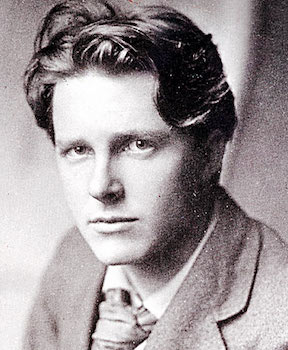
Brooke

In Jane Gardam’s A Long Way from Verona, Jessica Vye tells Florence Bonne about one of the books given to her by Miss Philemon: it includes ‘some poems by a heavenly-looking man (there’s a photo) called Rupert Brooke, but he only seems to write about fish.’[1] ‘Heaven’ is certainly concerned with fish, as is—unsurprisingly—‘The Fish’ but Jessica probably suffered from the oddities of an anthologist’s choices. That ‘heavenly-looking man’, though, was attested to by many, certainly more than the famously smitten, such as Henry James and Sir Edward Marsh. ‘It was in 1913, I think, and I sitting in the Café Royal feeling amazingly grand, when a young man came in who had a great air of beauty and walked like a panther—and the person I was with said, There’s Rupert Brooke. The only time I set eyes on him. [ . . . ] It was a year when everything was happening [ . . . ] but nothing ever got between me and my impression of the young man walking like a panther.’[2]

On this date in 1915 (a popular anniversary: Shakespeare! Wordsworth! Prokofiev! Lee Miller!) Rupert Brooke died of septicaemia aboard a hospital ship in the Aegean, at the age of twenty-seven, and was buried on Skyros. His legacy often seems to have dwindled to a selection of brooding photographs, a few quotations from besotted admirers, occasional ‘iconoclastic’ versions of the life, pointing out that he wasn’t always as nice as he should have been, and a handful of poems loved by a certain kind of reader and dismissed with a sniff by another kind of reader.

Three years ago, in the Times Literary Supplement (24 April, 2015, 13-15), William Wootten, wrote about Brooke’s afterlives, not least those envisaged by Brooke himself, though generally in terms of dust and scuffed earth rather than heavenly light or adoring readers. He traced a line connecting Brooke’s literary interests with those of T. S. Eliot a few years later. Brooke was deeply read in the work of John Webster (the subject of his dissertation) and other Jacobean dramatists, and recognised immediately the significance of Herbert Grierson’s landmark 1912 edition of Donne’s poems. ‘Had Brooke survived the war,’ Wootten commented, ‘he might well have made the gap between Georgian and Modernist seem far smaller than it has been made to appear.’ Of course, Brooke didn’t survive—but would, I suspect, not have made the case for such writers, often by practical demonstration in original poems, as Eliot did.

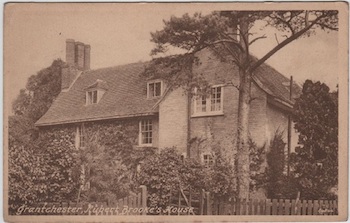
grantchester

https://dmdujour.wordpress.com/2016/06/02/rupert-brooke-the-old-vicarage-grantchester/

In November 1912, Brooke went to Berlin to stay with his Cambridge friend Dudley Ward. A few days later, T. E. Hulme arrived and Brooke met him at the station. They had several conversations about aesthetics, sitting outside the Café des Westens, though the ten days they spent often together didn’t lead to a friendship. In the following year, Hulme was one of the members of the jury that chose Brooke’s ‘The Old Vicarage, Grantchester’ as the best poem to have appeared in The Poetry Review that year, netting Hulme £30.[3] Edward Thomas, though friendly with Brooke and also on the jury, voted for Wilfrid Gibson.[4] The implied place and date of composition—or conception—of the poem, given in parentheses after the title, is ‘Café des Westens, Berlin, May 1912: this was the second of his four trips to Germany that year.

‘[Edward] Marsh gave me a book of English poems [Georgian Poetry]’, Stanley Spencer wrote to his friends, Jacques and Gwen Raverat. ‘I like Rupert Brooke because he knows what teatime is’.[5] ‘Stands the church clock at ten to three? / And is there honey still for tea?’ These are not only two of the best-known lines in British poetry; they are two of the most deceptive, in that they’re often quoted as if comprising almost the entire poem. But that poem contains one hundred and forty lines; and eleven questions precede these two. There is also a lot more humour in the poem than is sometimes allowed for, ‘poor Brooke—he was wittier than I thought’, as Elizabeth Bishop remarked.[6]

I only know that you may lie
Day-long and watch the Cambridge sky,
And, flower-lulled in sleepy grass,
Hear the cool lapse of hours pass,
Until the centuries blend and blur
In Grantchester, in Grantchester. . . .

Before the outbreak of war, Brooke would travel to North America and the Pacific (which produced some of his most interesting work). In 1913, he wrote to Edward Thomas to explain that he hadn’t been able to get down to Hampshire to visit because ‘London gripped me too firmly by the ankle.’ Might Thomas be in the capital the following week? If so, he could charge Brooke with some message for the United States. ‘And I could leave the muses of England in your keeping—I do that anyhow. Feed the brutes. If I don’t see you, farewell.’[7]

Self-Portrait 1914 by Sir Stanley Spencer 1891-1959

(Stanley Spencer, Self-Portrait, 1914, Tate © Estate of Stanley Spencer)

On the last day of July 1914, Brooke wrote to Stanley Spencer (‘Dear Cookham’), ‘But this damned war business. . . . If fighting starts, I shall have to enlist, or go as a correspondent. I don’t know. It will be Hell to be in it: and Hell to be out of it.’[8] Brooke was not really a war poet: his five sonnets are essentially the total of his ‘war poetry’. But he saw the effects of war closely enough, in Antwerp, writing to Leonard Bacon on11 November 1914, ‘That was like Hell, a Dantesque Hell, terrible. But there—and later—I saw what was a truer Hell. Hundreds of thousands of refugees, their goods on barrows and hand-carts and perambulators and waggons, moving with infinite slowness out into the night, two unending lines of them, the old men mostly weeping, the women with hard white drawn faces, the children playing or crying or sleeping.’ And, later in the same letter: ‘It’s a great life, fighting, while it lasts, The eyes grows clearer and the heart. But it’s a bloody thing, half the youth of Europe blown through pain to nothingness, in the incessant mechanical slaughter of these modern battles. I can only marvel at human endurance.’[9]

skyros-brooke-grave

Brooke’s poetic reputation has often struggled to stay alive among ‘serious’ readers, the established image of him and the symbolic burdens he’s been made to bear tending to obscure his writing and the few good poems to be found there. That figure of the naively patriotic, sentimental pastoralist of Edwardian England was not quite him. The narrator of Elizabeth Taylor’s novel writes of Hugo Macmillan, Vesey’s uncle: ‘He had gone on being Rupert Brooke all through the war – a tremendous achievement – and was only now, much later, finding his enthusiasms hardening into prejudices’.[10] The ironic thrust of this (‘all through the war’) is that Brooke’s death was indispensable to his dazzling afterlife, that celebrity in turn often obscuring what was authentic in his work.

References

[1] Jane Gardam, A Long Way from Verona (Penguin Books, 1973), 74,

[2] Sylvia Townsend Warner to Leonard Bacon, 23 August 1952, in Letters, edited by William Maxwell (London: Chatto & Windus, 1982), 136.

[3] Robert Ferguson, The Short Sharp Life of T. E. Hulme (London: Allen Lane, 2002), 134-136; Alun R. Jones, The Life and Opinions of T. E. Hulme (London: Gollancz, 1960), 99.

[4] Jean Moorcroft Wilson, Edward Thomas: From Adlestrop to Arras (London: Bloomsbury, 2015), 202.

[5] Kenneth Pople. Stanley Spencer: A Biography (London: Harper Collins, 1991), 52.

[6] Elizabeth Bishop to Robert Lowell, 30 July 1964, in Words in Air: The Complete Correspondence between Elizabeth Bishop and Robert Lowell, edited by Thomas Travisano with Saskia Hamilton (London: Faber and Faber, 2008), 548.

[7] The Letters of Rupert Brooke, edited by Sir Geoffrey Keynes (London: Faber and Faber, 1968), 459.

[8] Letters of Rupert Brooke, 601.

[9] Letters of Rupert Brooke, 632, 633.

[10] Elizabeth Taylor, A Game of Hide and Seek (1951; New York: New York Review of Books, 2012), 12.

All roses and shadow: Guy Davenport’s Sappho

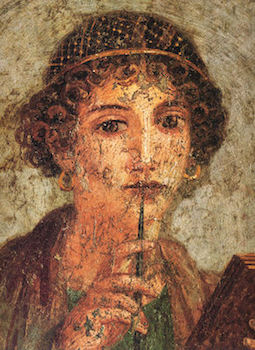
Sappho

Reading Guy Davenport’s poems and translations, I paused on one of Sappho’s addresses to the goddess Aphrodite, liking the directness of its call, a sinewy compound of appeal and command:

Come out of Crete
And find me here,
Come to your grove,
Mellow apple trees
And holy altar
Where the sweet smoke
Of libanum is in
Your praise.

Where Leaf melody
In the apples
Is a crystal crash,
And the water is cold.

All roses and shadow,
This place, and sleep
Like dusk sifts down
From trembling leaves.

I paused even longer, I think, on this:

When death has laid you down among his own
And none remember you in all the years to be,
Know, grey among ghosts in that twilight world,
That, offered the roses of Pieria, you refused,
And wander forever in the dark lord Aida’s house
Reticent still, with the blind dead, unknown.[1]
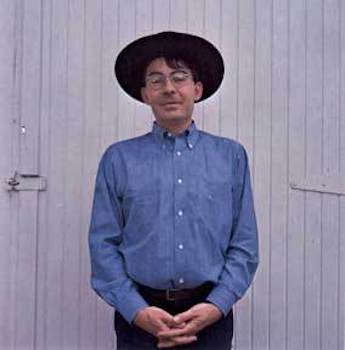
GD-JW-1964

(Guy Davenport, ‘in a somewhat silent, Shakerish mood and garb’, by Jonathan Williams, 1964. Taken from Portrait Photographs , Coracle Press, London, 1979)

Yes. I was reminded of the physical responses to authentic poetry that A. E. Housman famously described in a 1933 lecture. He cites a figure named Eliphaz (in the Book of Job), to whom he ascribes the sentence, ‘A spirit passed before my face: the hair of my flesh stood up.’ He mentions bristling skin, a shiver down the spine; and mentions one of Keats’s letters, in which the poet writes of Fanny Brawne, ‘everything that reminds me of her goes through me like a spear’. Housman is making the point, at some length, that to him poetry seems ‘more physical than intellectual.’[2] Many readers would describe their reactions, rather, as ‘both’, though probably granting that each might apply at different times and in different states of mind or knowing.

Davenport’s translation wears the simple title ‘Vale’, ‘farewell’. The poem is also included in his Seven Greeks, where he gives a little more space to Sappho than to any other of his chosen writers. His note to this poem explains that ‘Aida’ here is Hades and adds: ‘Written, seemingly, to a standoffish girl. Thomas Hardy translates this in a poem called Achtung.’[3]

Achtung? Hardy’s version of Sappho quotes The Rubáiyát of Omar Khayyám and Shakespeare as epigraphs and runs:

Dead shalt thou lie; and nought
Be told of thee and thought,
For thou hast plucked not of the Muses’ tree:
And even in Hades’ halls
Amidst thy fellow-thralls
No friendly shade thy shade shall company![4]

thomas-hardy-portrait

(Thomas Hardy: Dorset County Museum)

There is no poem called ‘Achtung’ in the index to Hardy’s Collected Poems. The title here is ‘Sapphic Fragment’, which seems reasonable. Two anthologies, The Oxford Book of Classical Verse, edited by Adrian Poole and Jeremy Maule, and Charles Tomlinson’s Oxford Book of Verse in English Translation, point me to more versions of the poem, but they too sternly name Hardy’s translation ‘Sapphic Fragment’. Ah, but there’s one more anthology to check: Confucius to Cummings, edited by Ezra Pound and Marcella Spann. Here’s Sappho and here’s that poem, called here, yes, ‘Achtung’.[5] The Pound connection is often useful when reading Davenport.

The Loeb edition offers: ‘But when you die you will lie there, and afterwards there will never be any recollection of you or any longing for you since you have no share in the roses of Pieria; unseen in the house of Hades also, flown from our midst, you will go to and fro among the shadowy corpses.’ The notes cite Stobaeus and Plutarch to the effect that the poem was addressed to ‘an uneducated woman’, ‘a wealthy woman’ or ‘an uncultured, ignorant woman’.[6]

Still, ‘Written, seemingly, to a standoffish girl’, feels about right to me. ‘Her Aphrodite laughs’, Davenport writes of Sappho, adding, with characteristic sharpness, ‘Sexual frenzy was as respectable a passion to Sappho as rapacious selfishness to an American. Few societies have been as afraid of the body as ours, and in the West none has, within history, been as solicitous as the Greek of its beauty.’[7] And elsewhere, ‘Seems to me that Sappho was the poet of desire.’[8]

Desire, yes.

Percussion, salt and honey,
A quivering in the thighs;
He shakes me all over again,
Eros who cannot be thrown,
Who stalks on all fours like a beast.[9]

‘Vale’—or ‘Achtung’—sets the speaker, the poet who has accepted those Pierian roses, who has drunk deep of the Pierian spring, the fountain of the Muses in Thessaly, against that other, who has not embraced, either directly or through the person of the poet, intimate knowledge of the arts and sciences, who will pass into the shadows of Hades, unmourned and unremembered.

‘Pierian roses’ recalls that man Pound again: in Hugh Selwyn Mauberley, ‘The pianola “replaces” / Sappho’s barbitos’, while in Dr Johnson’s old haunts, Fleet Street has gone to the dogs; or, at least, to stallholders with socks to sell:

Beside this thoroughfare
The sale of half-hose has
Long since superseded the cultivation
Of Pierian roses.[10]
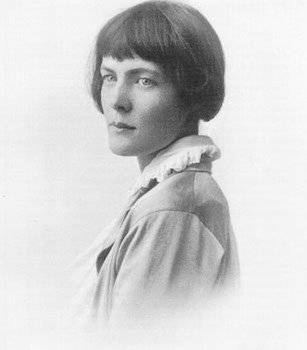
HD

(H. D.)

Sappho’s art, Davenport, comments, ‘belongs to cultural springtimes and renaissance’—hints here of the Persephone theme which increasingly appears to occupy an entire continent in the world of modern literature—and she spoke ‘with Euclidean terseness and authority of the encounters of the loving heart, the infatuated eye’s engagement with flowing hair, suave bodies, moonlight on flowers.’ Her imagery ‘is as stark and patterned as the vase painting of her time’ – ‘Never has poetry been this clear and bright.’ And he quotes, by way of comparison, one of H. D.’s— Hilda Doolittle’s—‘conscious imitations’:

delicate the weave,
fair the thread:

clear the colours,
apple-leaf green,
ox-heart blood-red:

rare the texture,
woven from wild ram,
sea-bred horned sheep:

the stallion and his mare,
unbridled, with arrow pattern,
are worked on
the blue cloth.[11]

This is from a late H. D. poem ‘Fair the Thread’ (topped and tailed), though H. D. did produce translations, or imitations, of several of Sappho’s poems – or, rather, fragments. Sappho’s corpus consists almost entirely of fragments, which are often fleshed out by translators with guesswork and conjecture. They are also used—by poets—as taking-off points for longer, connected poems. One example is Swinburne, whose version of the fragment that Davenport called ‘Vale’ is embedded in the 300-plus lines of ‘Anactoria’, beginning there ‘Thee too the years shall cover’.[12] H. D. herself is another example, though a complicated one: the editor of her Collected Poems cites three early poems which are ‘masked as expansions of fragments of Sappho’, while one of her later critics, referring to those poems explicitly based on Sappho’s ‘fragments’, suggests that H. D.’s ‘textual play’ with Sappho ‘goes far beyond these’.[13]

Sappho’s concision and precision seem peculiarly fitted to excite the minds of the early modernist poets, particularly the Imagists; but then the fragmented state of her work, its blanks and inscrutabilities, bafflements and painstaking decipherments are also very appropriate to the story of modern literature.
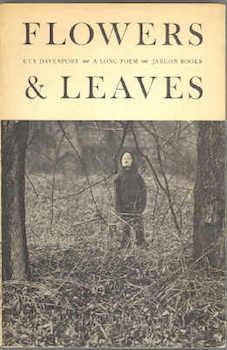
Flowers-Leaves-REM

(Jacket of Davenport’s long poem, Flowers and Leaves, published by Jonathan Williams in 1966: Ralph Eugene Meatyard, ‘Untitled’, 1959. © The Estate of Ralph Eugene Meatyard.)

One more Davenport-Sappho detail. Writing about his friend, the extraordinary photographer Ralph Eugene Meatyard, Davenport remembered that, ‘Greek nor Latin had he, though he once figured out with a modern Greek dictionary that a lyric of Sappho (which he had set out to read as his first excursion into the classics) had something to do with a truck crossing a bridge.’[14]

The art of the possible. Why not?

 
References

[1] Guy Davenport, Thasos and Ohio: Poems and Translations, 1950-1980 (San Francisco: North Point Press, 1986), 32, 33.

[2] A Shropshire Lad and Other Poems: The Collected Poems of A. E. Housman, edited by Archie Burnett, with an introduction by Nick Laird (London: Penguin Books, 2010), 254-255: the whole lecture, ‘The Name and Nature of Poetry’, is reprinted here (231-256). The letter he refers to is to Charles Brown, 1 November 1820: Letters of John Keats, edited by Robert Gittings (Oxford: Oxford University Press, 1979), 397.

[3] Guy Davenport, Seven Greeks (New York: New Directions, 1995), 234 n.6. For his introduction, see 4-14 on Sappho, and for translations of her work, 69-116.

[4] Thomas Hardy, The Complete Poems, edited by James Gibson (Basingstoke: Macmillan, 1976), 181.

[5] Confucius to Cummings: An Anthology of Poetry, edited by Ezra Pound and Marcella Spann (New York: New Directions, 1964), 18.

[6] Greek Lyric I: Sappho and Alcaeus, edited and translated by David A. Campbell (Cambridge, Massachusetts: Harvard University Press, 1990), 99.

[7] Davenport, Seven Greeks, 9.

[8] W. C. Bamberger, editor, Guy Davenport and James Laughlin: Selected Letters (New York: W. W. Norton & Co., 2007), 163.

[9] Davenport, Seven Greeks, 87.

[10] Ezra Pound: Poems and Translations, edited by Richard Sieburth (New York: Library of America, 2003), 550, 556.

[11] Davenport, Seven Greeks, 5.

[12] Algernon Charles Swinburne, Poems and Ballads & Atalanta in Calydon, edited by Kenneth Haynes (London: Penguin Books, 2000), 52.

[13] H. D., Collected Poems 1912-1944, edited by Louis L. Martz (Manchester: Carcanet Press, 1984), xiv; Eileen Gregory, H. D. and Hellenism: Classic Lines (Cambridge: Cambridge University Press, 1997), 148.

[14] Guy Davenport, ‘Ralph Eugene Meatyard’, The Geography of the Imagination (Boston: David R. Godine, 1997), 370.
That Goodbye Look

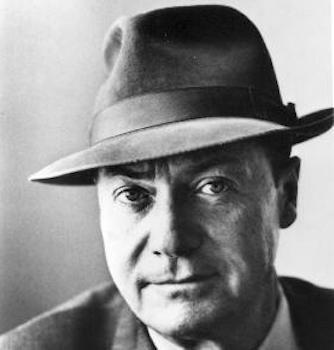
Ross-Macdonald

‘I passed the courthouse on my way downtown. In a cast stone bas-relief above the entrance, a big old Justice with bandaged eyes fumbled at her scales. She needed a seeing-eye man, I told her silently. I was feeling dangerously good.’

Lifting my gaze from Ross Macdonald’s The Goodbye Look, I tried to remember when I’d last felt ‘dangerously good’. As for the world out there – dangerous, if not evidently good – a few ‘seeing-eye’ men and women would certainly come in handy just at the moment. I was hoping that Aldous Huxley might not be right when he wrote in 1946, in Science, Liberty and Peace, ‘The most important lesson of history, it has been said, is that nobody ever learns history’s lessons.’

The title of Macdonald’s novel occurs earlier in the book, when two (male) characters are described as each having a funny look on their faces, as if they were going to die, wanted to kill each other and be killed. ‘I knew that goodbye look,’ Lew Archer says, ‘I had seen it in the war, and too many times since the war.’

Let’s hope that some of the relevant players lose that goodbye look.


Edward Fitzgerald: a Life in Letters

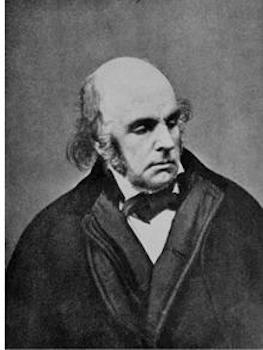
Edward-Fitzgerald

‘Oh this wonderful wonderful world, and we who stand in the middle of it are all in a maze.’—Letter to Bernard Barton, 11 April 1844.

In 1922, modernism’s annus mirabilis, Virginia Woolf confided to her diary that she had made up her mind that she was not going to be popular. ‘My only interest as a writer lies, I begin to see, in some queer individuality: not in strength, or passion, or anything startling; but then I say to myself, is not “some queer individuality” precisely the quality I respect? Peacock, for example: Borrow; Donne; Douglas, in Alone, has a touch of it. Who else comes to mind immediately? FitzGerald’s Letters.’ She added that, ‘People with this gift go on sounding long after the melodious vigorous music is banal.’[1]

People of a bookish bent tend to know one or two things about Edward FitzGerald: the most generally known one is that he translated the Rubáiyát of Omar Khayyám; the second thing, also pretty widely known now, is that A. C. Benson’s book about FitzGerald, published in the English Men of Letters series in 1909, which includes the lines, ‘Here he sits, in a dry month, old and blind, being read to by a country boy, longing for rain’, lay behind the famous beginning of T. S. Eliot’s ‘Gerontion’:

Here I am, an old man in a dry month,
Being read to by a boy, waiting for rain.

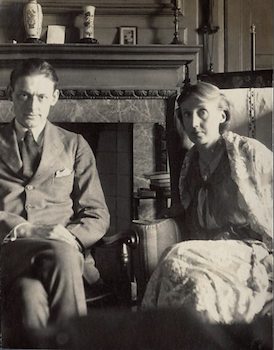
‘I can recall clearly enough’, Eliot wrote, a decade after The Waste Land, ‘the moment when. at the age of fourteen or so, I happened to pick op a copy of Fitzgerald’s Omar which was lying about, and the almost overwhelming introduction to a new world of feeling which this poem was the occasion of giving me. It was like a sudden conversion; the world appeared anew, painted with bright, delicious and painful colours.’[2]

TSE-VW-1924-OM-NPG

(Lady Ottoline Morrell, T. S. Eliot and Virginia Woolf (1924): © National Portrait Gallery)

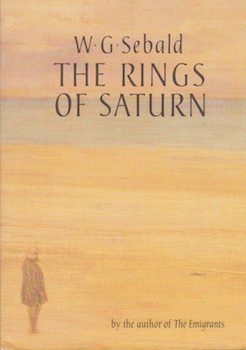
Most recently, I find a small slip of paper lodged in my old proof copy of W. G. Sebald’s Rings of Saturn, scrawled all over with a couple of dozen one- or two-word notes: names, from literature and history, on which Sebald’s mind has seized until the point is made, the connection or association teased out, the story told. Thomas Browne, Rembrandt, Dunwich, Ashburnham, Michael Hamburger, Middleton, sugar and art, Merton, the Ashburys, Chateaubriand, herrings, silk, the storm of 16 October 1897, Felixstowe, Orfordness – and Edward FitzGerald.[3]

sebald-rings-of-saturn-british-edition

(Jacket of UK edition, W. G. Sebald, The Rings of Saturn)

FitzGerald was born on 31 March 1809. On the death of his grandfather in 1818, his mother was reputed to be the wealthiest commoner in England. After grammar school and Cambridge, he eventually furnished a cottage on the edge of the family estate at Boulge Hall in Suffolk. Two years later, after describing a typical day, he could add, with justice, ‘But such as life is, I believe I have got hold of a good end of it.’[4] He married reluctantly – and briefly: less than a year later, he and his wife Lucy concluded that the marriage was a failure and decided to separate. In 1864, FitzGerald moved to Woodbridge. He numbered among his friends, acquaintances and correspondents George Borrow, Thomas Carlyle, the poet George Crabbe’s son (also George), the actress and writer Fanny Kemble, Alfred and Frederick Tennyson, and William Makepeace Thackeray. At Woodbridge, he read, continued to write marvellous letters and visit his circle of friends.

It was in 1856 that one of those friends, E. B. Cowell, had begun transcribing portions of the Ouseley MS of Omar Khayyám’s Rubáiyát, which he’d recently discovered in the Bodleian; in July of that year, he gave FitzGerald the complete transcript. The following year, Cowell, by then in India, sent a transcript of the Calcutta MS of the Rubáiyát. FitzGerald submitted a translation to Fraser’s Magazine but later retrieved it and determined to publish it himself, having two and hundred and fifty copies printed, of which he reserved forty for his own use. It appeared in late March 1859 but failed to sell. It was discovered in the bookseller Bernard Quaritch’s ‘penny-box’ by W. H. Thompson and by Whitley Stokes, a Celtic scholar, who bought other copies and gave one to Dante Gabriel Rossetti. From Rossetti, the circle of appreciation widened, taking in George Meredith, Swinburne, William Morris, Edward Burne-Jones and, through him, his nephew, Rudyard Kipling. Ruskin also read it, quoting a stanza of the poem in a letter to Mrs Simon and remarking, ‘I wish the old Persian could see how much better I write for love of him.’[5] Famously, Ezra Pound would recall, in the context of Burne-Jones and Rossetti that ‘The English Rubaiyat was still-born/ In those days.’[6]

Myself when young did eagerly frequent
Doctor and Saint, and heard great Argument
About it and about: but evermore
Came out by the same Door as in I went.

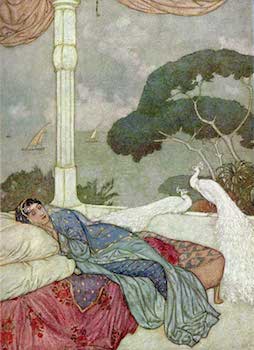
Dulac_Rubaiyat

(Edmund Dulac, one of twenty colour illustrations to the Rubáiyát, 1909)

A second edition of the Rubáiyát appeared in 1866, a third in 1872, a fourth in 1879, resulting in a great many changes over that time; FitzGerald translated other Persian poems, as well as Calderon, Aeschylus and others. Other translations of the Rubáiyát appeared in the 1880s and 1890s.

If a loaf of wheaten bread be forthcoming,
A gourd of wine, and a thigh-bone of mutton,
And then if thou and I be sitting in the wilderness—

This is, apparently, a literal translation by Edward Heron-Allen (1899) of the lines that FitzGerald translated as ‘A Jug of Wine, a Loaf of Bread—and Thou/ Beside me singing in the Wilderness—’ (II, 308 n.11). No wonder, then, that Ezra Pound, who had condensed twelve lines of poetry translated from the Chinese by H. A. Giles to a three-line work plus, indispensably, the title (‘Fan-Piece, for her Imperial Lord’), was so receptive to the qualities of FitzGerald’s Rubáiyát.[7]

Ah, fill the Cup: – what boots it to repeat
How Time is slipping underneath our Feet:
Unborn TO-MORROW, and dead YESTERDAY,
Why fret about them if TO-DAY be sweet![8]

To his friend W. F. Pollock, FitzGerald wrote in 1846: ‘I have been all my life apprentice to this heavy business of idleness; and am not yet master of my craft; the Gods are too just to suffer that I should’ (I, 550). Though no stranger to the capital he was rarely at ease there. ‘Though I had to run to London several times, I generally ran back as fast as I could; much preferring the fresh air and the fields to the smoke and ‘“the wilderness of monkeys”’ in London’ (II, 56). FitzGerald was hit hard by the deaths of two close friends, particularly that of Kenworthy Browne who died in a riding accident, crushed by his horse. It was the death of Browne, the editors of his letters remark, ‘that finally made London intolerable to FitzGerald. The two had visited the city together frequently and the memory of his friend so haunted FitzGerald in streets and taverns as to “fling a sad shadow over all”’(I, 4).

Then too, for all his enjoyment of the English countryside, time could hang heavy even in Suffolk. ‘Oh, if you were to hear “Where and oh where is my Soldier Laddie gone” played every three hours in a languid way by the Chimes of Woodbridge Church, wouldn’t you wish to hang yourself? On Sundays we have the “Sicilian Mariners’ Hymn”—very slow indeed. I see, however, by a Handbill in the Grocer’s Shop that a Man is going to lecture on the Gorilla in a few weeks. So there is something to look forward to.’ (II, 411-412). And one of my favourites, in a letter to Mrs Charles Allen in 1857. ‘I always think a Nation with great Estates is like a Man with them:—more trouble than Profit: I would only have a Competence for my country as for myself’ (II, 296). Hurrah for a Competence.

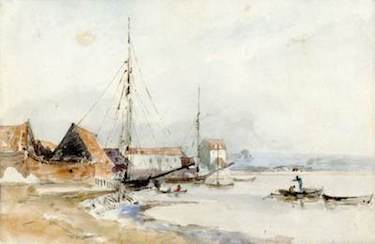
; Old Jessup's Quay, Woodbridge

(Thomas Churchyard, Old Jessup’s Quay, Woodbridge. Photo credit: Colchester and Ipswich Museums Service: Ipswich Borough Council Collection)

His focus was increasingly on sailing, on his boat, on all things maritime—‘My chief amusement in Life is Boating, on River and Sea’ (II, 400). In August 1875, he wrote to Cowell, ‘I have not been very well all this Summer, and fancy that I begin to “smell the Ground,” as Sailors say of the Ship that slackens speed as the Water shallows under her. I can’t say I have much care for long Life: but still less for long Death: I mean a lingering one’ (III, 592-593).

FitzGerald died on 14 June 1883 and is buried in the churchyard of St Michael & All Angels, Boulge, Suffolk.[9]

References

[1] Entry for Saturday 18 February: The Diary of Virginia Woolf, Volume 2: 1920-24, edited by Anne Olivier Bell, assisted by Andrew McNeillie (Harmondsworth: Penguin, 1981), 168. A footnote mentions that Norman Douglas’s Alone had appeared in late 1921; and that Woolf possessed the seven volumes of the 1902 Letters and Literary Remains of Edward Fitzgerald

[2] T. S. Eliot, The Use of Poetry and the Use of Criticism (1933; London: Faber and Faber, 1964), 33.

[3] See W. G. Sebald, The Rings of Saturn, translated by Michael Hulse (London: The Harvill Press, 1998), 195-207, on the FitzGerald family.

[4] To John Allen, 28 April, 1839. The Letters of Edward FitzGerald, edited by Alfred McKinley Terhune and Annabelle Burdick Terhune, four volumes (Princeton: Princeton University Press, 1980), I, 224. All references in text to this edition.

[5] The Letters of John Ruskin: Volume I, 1827-1869, edited by E. T. Cook and Alexander Wedderburn (London: George Allen, 1909), 455.

[6] Ezra Pound, ‘Yeux Glauques’ (Hugh Selwyn Mauberley VI), Personae: The Shorter Poems of Ezra Pound, edited by Lea Baechler and A. Walton Litz (New York: New Directions, 1990), 189.

[7] Hugh Kenner, The Pound Era (London: Faber and Faber, 1972), 197.

[8] Quotations from the first edition, the text used in The Penguin Book of Victorian Verse (London: Allen Lane, 1997), selected and edited by Daniel Karlin, who subsequently produced the Oxford World Classics edition of the Rubáiyát (2009).

[9] A visit to the grave by T. F. Powys is the starting-point for a fascinating discussion of the Fitzgerald–Sebald–Powys connection in Stephen Batty’s ‘“To grasp this sorry Scheme of Things”’: Theodore Francis Powys & the Rubáiyát of Omar Khayyám’, The Powys Journal, XXI (2011), 71-95.

Processions, congresses, crowds

t-e-hulme

In ‘Notes on the Bologna Congress’, dated ‘Bologna 7 April’—it was a philosophical conference held over six days in April 1911, attracting between five and six hundred attendees—T. E. Hulme touched on a conversation with Henri Bergson and a meeting with the French philosopher and essayist Jules de Gaultier but was most concerned with the people in the streets, there apparently to welcome the Duke of the Abruzzi, who had come from Rome to open the Congress, on behalf of his cousin, King Victor Emmanuel III.

Hulme recounted the strong admiration that he felt for that gathering, which had ‘achieved the impossible. It was a crowd without being a crowd. It was simply an aggregation of people who managed the extraordinary feat of coming together without becoming that very low class multicellular organism – the mob.’ He added: ‘If anyone could invent a kind of democracy which includes, as an essential feature, the possession of large and sweeping brown cloaks, then I will be a democrat.’

But circumstances force upon him ‘a frightful dilemma’ since it’s now time for the official opening of the Congress. He should go and hear the opening paper on ‘Reality’. But, if he does, he will miss the street scene and ‘I regard processions as the highest form of art’. In the end, accepting the absurdity of crossing Europe to attend a conference and then watching a procession instead, Hulme goes in. ‘I missed a spectacle I shall never see again. I heard words I shall often hear again – I left the real world and entered that of Reality.’[1]

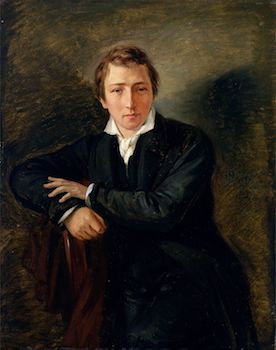
Heinrich_Heine-Oppenheim

(Heinrich Heine: one of those German lyric poets. . . )

Memory snags a little on that word ‘procession’. Here’s Ford Madox Ford talking about the German lyric poets, who ‘sit at their high windows in German lodgings; they lean out; it is raining steadily.  Opposite them is a shop where herring salad, onions and oranges are sold. A woman with a red petticoat and a black and grey check shawl goes into the shop and buys three onions, four oranges and half a kilo of herring salad. And there is a poem! Hang it all ! There is a poem.
‘But this is England—this is Campden Hill, and we have a literary jargon in which we must write. We must write in it or every word will “swear.”

Denn nach Köln am Rheine
Geht die Procession.

“For the procession is going to Cologne on the Rhine.” You could not use the word procession in an English poem. It would not be literary.’[2]

Would it not? Robert Hampson suggested in a 1993 essay that Ford ‘must have forgotten’ Lionel Johnson’s poem to Oliver George Destree (‘Dead’), which includes the lines:

Past the ruinous church door,
The poor procession without music goes.

He points out that Ford’s own poem ‘The Starling’, which opens High Germany (1911), uses ‘procession’ and that Ezra Pound subsequently rises to the challenge with a cluster of processions in the poems of Lustra (1916).[3]

Ford might also have ‘forgotten’ Richard Corbet’s ‘Farewell Rewards and Fairies’:

By which we note the Fairies
Were of the old profession;
Their songs were Ave Marys,
Their dances were procession.

puck

(Puck, via the Kipling Society)

Why would he have known it? Though not, as far as I recall, in the habit of browsing through Percy’s Reliques of Ancient English Poetry, he might well have found it in the first story of Kipling’s Puck of Pook’s Hill (1906), where it’s sung (if not those precise lines) by Puck and Una; while the ‘sequel’ to Puck was, of course, Rewards and Fairies (1910).[4] There was also Ford’s friend Stephen Crane, who once began a poem: ‘There were many who went in huddled procession’.[5]

Hulme died, aged barely thirty-four, on 28 September 1917, literally blown to pieces in the trenches by a direct hit from a shell. He features in many narratives: as the translator of Henri Bergson and Georges Sorel; or, influenced by the German art historian Wilhelm Worringer, influencing in turn the course of early modernism in Britain. His friends and acquaintances included Jacob Epstein, Wyndham Lewis (whom Hulme hung upside-down, by his trouser turn-ups, from the railings of a house in Soho Square), David Bomberg and, of course, Pound. The painter Kate Lechmere, Hulme’s partner during much of this period (and the ostensible occasion of the ruckus that resulted in the railing-suspension), contributed substantially to the start-up costs of Blast, the Vorticist journal edited by Lewis (only two issues ever appeared).

blast1

Hulme wrote and lectured in support of ‘classicism’ as against ‘romanticism’—one critic suggested that ‘man is by nature bad or limited’ was the basis of all Hulme’s thinking—developing and articulating his essentially conservative philosophy in over fifty pieces for A. R. Orage’s influential journal, The New Age, many of them under the heading ‘War Notes’ by ‘North Staffs’ once he was serving in the army.[6] Some of his brief poems were included as an appendix to Pound’s Ripostes (1912) and reprinted in subsequent editions of Pound’s shorter poems.

Above the quiet dock in mid night,
Tangled in the tall mast’s corded height,
Hangs the moon. What seemed so far away
Is but a child’s balloon, forgotten after play.[7]

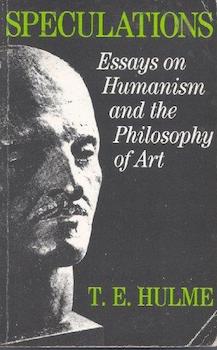
Speculations

Speculations, a collection of essays ‘on humanism and the philosophy of art’, edited by Herbert Read, was highly praised by T. S. Eliot when it appeared in 1924: ‘In this volume he appears as the forerunner of a new attitude of mind, which should be the twentieth-century mind, if the twentieth century is to have a mind of its own.’[8] Competing versions of the ‘origins’ of the Imagist movement have sometimes privileged Hulme as primary source – and sometimes Ford. Ezra Pound remembered Hulme in ‘Canto XVI’ and his ‘Poem: Abbreviated from the Conversation of Mr T. E. H.’ ends:

My mind is a corridor. The minds about me are corridors.
Nothing suggests itself. There is nothing to do but keep on.[9]

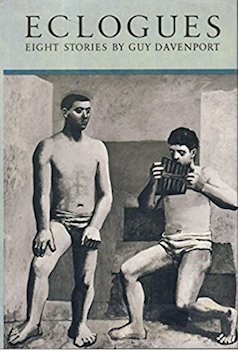
Eclogues

Guy Davenport’s story about Hulme at the Bologna Congress is called ‘Lo Splendore della Luce a Bologna’. It has many slyly wonderful moments; and the first of its seventeen short sections ends with the word ‘procession’.[10]


References

[1] T. E. Hulme, ‘Notes on the Bologna Congress’, New Age, VIII (27 April 1911), 607-608, reprinted in Further Speculations, edited by Sam Hynes (Minneapolis: University of Minnesota Press, 1955), 21-27.

[2] Ford Madox Ford , Collected Poems (New York: Oxford University Press, 1936), 326-327. This was the ‘Preface’ to the 1913 Collected Poems.

[3] Robert Hampson, ‘“Experiments in Modernity”: Ford and Pound’, in Andrew Gibson, editor, Pound in Multiple Perspective: A Collection of Critical Essays (Basingstoke: Macmillan, 1993), 121, n.31 and 32.

[4] Rudyard Kipling, ‘Wieland’s Sword’, in Puck of Pook’s Hill and Rewards and Fairies, edited with an introduction by Donald Mackenzie (Oxford: Oxford University Press, 1993), 10 and 413n.

[5] Stephen Crane, The Black Riders, XVII, in Prose and Poetry , edited by J. C. Levenson (New York: Library of America, 1984), 1304.

[6] Alun R. Jones, The Life and Opinions of T. E. Hulme (London: Gollancz, 1960), 69; some of the ‘War Notes’ are included in Further Speculations.

[7] T. E. Hulme, ‘Above the Dock’, in Personae: The Shorter Poems of Ezra Pound, edited by Lea Baechler and A. Walton Litz (New York: New Directions, 1990), 267.

[8] Eliot reviewed Speculations in The Criterion, II (7 April 1924), 231-232.

[9] Ezra Pound: Poems and Translations, edited by Richard Sieburth (New York: Library of America, 2003), 568.

[10] Guy Davenport, Eclogues: Eight Stories (London: Picador, 1984), 125.


Beetroot, vertigo, re-reading

Beetroot

Someone tweeted the headline of a Daily Mail article by David Pierce about the Jeremy Corbyn not-much-of-a-story (the left-wing Labour leader having accepted an invitation to Passover Seder from a left-wing Jewish group, which he attended in a personal capacity): ‘They raised a beetroot in the air and shouted f*** capitalism’. The Librarian observed, with some justice, that it sounded like an ordinary family lunch at her parents’ house when we visit. Although, at the risk of seeming pedantic—moi?—it sounds, more specifically, like the Librarian at an ordinary family lunch at her parents’ house.

Post-Easter, the hot cross buns are gone but a few bottles of wine have survived thus far, stoically resigned to their fate. While the Librarian paints the newly plastered walls of the Space formerly known as the Kitchen, I make coffee and busy myself elsewhere, precluded from such things, being a reluctant beneficiary of benign paroxysmal positional vertigo. This means that, for instance, tipping my head to look directly upwards can trigger an intense and disorientating giddiness. Painting ceilings or the upper reaches of walls is not, then, the ideal pastime.

Now I recognise the symptoms—and know it’s only temporary—it’s less alarming. The first time it happened, in the early hours of the morning—and it was the worst attack I’ve had—I thought I was having a stroke. Curiously, the two ambulance-men, who arrived very quickly (I doubt if they would be able to do so now), were the only people I’ve had direct contact with whom I thought genuinely deserved—though they were less likely to be interested in—the crazy sums that are routinely paid to business executives, stockbrokers, university vice-chancellors and the like. With most of the latter, too, it’s clear what they’re taking out of the world but often rather less evident what they’re putting in.

Meanwhile, having reached the end of my re-reading Penelope Fitzgerald phase and moved on to my re-reading Elizabeth Bishop one, I still frantically plug gaps or read books that I could have sworn I’d read years ago, currently Antoine Saint-Exupéry and Hannah Arendt’s Eichmann in Jerusalem. Nevertheless, the oh-my-God-have-you-really-not-read-this-yet pile continues, unaccountably, to grow. It would be delusional to pretend I’m winning.


Isaac Rosenberg of Bristol – and Whitechapel – and France

Rosenberg-Self-Portrait-NPG

(Isaac Rosenberg, Self-Portrait 1915: National Portrait Gallery)

Exactly one hundred years ago, at dawn on 1 April 1918, the poet and painter Isaac Rosenberg was killed by a German raiding party. He was twenty-seven years old. He left behind ‘more than one hundred and fifty poems, four plays, three slight volumes of poems that he had published himself, a handful of prose works, and at least two hundred letters’, Vivien Noakes writes. She adds that, ‘Although he is thought of as a war poet, the greatest part of his output has nothing to do with war; when he left for France in the summer of 1916 he had written 137 of the 158 poems that are known to have survived.’[1]

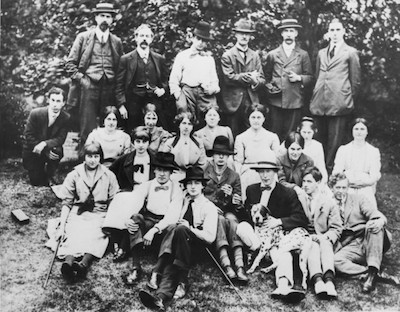
Rosenberg was born a few hundred yards from where I’m sitting. ‘I spent my wild little pick a back days in Bristol’, he wrote to Ruth Löwy in early 1917. His three Bristol homes—in Adelaide Place, Victoria Square and Harford Street—have all been destroyed but the family lived in the city from his birth in November 1890 to 1897.[2] His boyhood in Stepney and Whitechapel was marked by extreme poverty but, in 1911, a patron named Mrs Herbert Cohen funded his first year at the Slade School of Fine Art. The famous photograph of the 1912 Slade picnic, showing Stanley Spencer, Mark Gertler, Dora Carrington, Barbara Hiles, C. W. R. Nevinson, William Roberts, Edward Wadsworth and David Bomberg, among others, includes Rosenberg, kneeling at the far left of the picture, a little apart from the others, his left forearm resting on his knee and so pointing away from the group, out of the frame.

Slade-picnic-1912

(Slade picnic, 1912 via Christie’s)

Before the war, Rosenberg was a part of the group that frequented the Whitechapel Library, ‘the university of the ghetto’, a member of the ‘intellectual elite among the Jewish immigrants’, which included Gertler, John Rodker and Bomberg.[3] In 1914, the Whitechapel Art Gallery’s summer exhibition, ‘Twentieth Century Art: A Review of Modern Movements’, showed fifty-four works in the ‘Jewish Section’, selected by Bomberg and including five by Rosenberg.[4]

In early 1914, Rosenberg’s poor health resulted in a trip to South Africa to stay with his sister Minnie, his fare paid by the Jewish Educational Aid Society. By October of the following year, unable to find a job, he enlisted in the army. Sent first to the Bantam Battalion of the 12th Suffolk Regiment, he was transferred, in January 1916, to the 12th South Lancashire Regiment. Reaching France in June 1916, he was soon in the front line and wrote the first of his ‘trench poems’, ‘Break of Day in the Trenches’:

The darkness crumbles away.
It is the same old Druid Time as ever.
Only a live thing leaps my hand,
A queer sardonic rat,
As I pull the parapet’s poppy
To stick behind my ear.

In a letter postmarked 8 February 1917, Rosenberg told Edward Marsh that his commanding officer, after being contacted by Marsh, had had Rosenberg examined ‘but it appears I’m quite fit.’ He went on: ‘This winter is a teaser for me; and being so long without a proper rest I feel as if I need one to recuperate and be put to rights again. However I suppose we’ll stick it, if we don’t, there are still some good poets left who might write me a decent epitaph.’ In January of the following year, he wrote, again to Marsh,‘ You see I appear in excellent health and a doctor will make no distinction between health and strength. I am not strong.’ And he added (these lines, his editor comments, were excised or censored): ‘What is happening to me now is more tragic than the “passion play”. Christ never endured what I endure. It is breaking me completely.’

And it was to Marsh that Rosenberg wrote on 28 March 1918—the letter was postmarked 2 April 1918, a day after the poet’s death: ‘We are now in the trenches again and though I feel very sleepy, I just have a chance to answer your letter so I will while I may.’[5]

A year later, Stanley Spencer wrote to Gwen and Jacques Raverat, ‘I will always feel sorry for Rosenberg; he was never fit for active service. His suffering must have been terrible.’[6] He was, Robert Graves asserted, ‘one of the three poets of importance killed in the war’, along with Wilfred Owen and Charles Sorley.[7] In 1921, Graves mentioned to Edmund Blunden that he had ‘urged’ Sydney Pawling of Heinemann, ‘to publish Rosenberg before anyone else hears about him.’[8] A few people already had: Gordon Bottomley, Laurence Binyon, R. C. Trevelyan and, of course, Edward Marsh. In 1922, Poems by Isaac Rosenberg appeared, edited by Bottomley and with an introductory memoir by Binyon. It ‘passed almost unnoticed.’[9]

Rosenberg-Portrait-of-Sonia

(Rosenberg, Portrait of Sonia Cohen, 1915: Ben Uri Gallery & Museum)
http://benuri100.org/artwork/portrait-of-sonia/

There have been several biographies – three in 1975 alone – and Jean Moorcroft Wilson’s second life of the poet was published in 2007. The late Vivien Noakes’ superb edition of Rosenberg’s poems, plays, prose and letters (following the collected editions of 1937 and 1979), appeared in 2008, as did Whitechapel at War: Isaac Rosenberg and His Circle, the catalogue accompanying the impressive exhibition of that title at the Ben Guri Galley. And, of course, Rosenberg crops up in dozens of other biographies, memoirs and art histories. Most recently, he’s warranted a good many mentions and entries on the website, A Century Back, which follows an extensive cast of characters, day by day, through the Great War:
http://www.acenturyback.com/

A few years ago, the Guardian reported on the discovery – or probable identification – of film footage of Rosenberg in the trenches:
http://www.theguardian.com/world/2014/dec/07/war-poet-isaac-rosenberg-film-footage

So much critical and biographical and editorial attention. And yet Rosenberg seems never to have been quite accepted at the War Poets’ top table – Owen, Sassoon, Graves – and is not even always found at the next table in the company of, variously, Brooke, Blunden, maybe Sorley and, more and more often now, Ivor Gurney. He certainly doesn’t seem as widely known, even though ‘Break of Day in the Trenches’ and ‘Returning, we hear the larks’ and, perhaps, ‘Dead Man’s Dump’ are so frequently anthologised. Is he seen as just a little off the main track? And is that because he was also a painter (Wyndham Lewis suffers a little from this, in some contexts, I suspect) – two arts! confusing! – or is it to do with his background, his social class, his Jewishness? Or, most likely, a combination of several or all of these?

He may just be one of those figures that doesn’t fit easily into the dominant narrative: but then the interesting figures often turn out to be precisely those that don’t fit the accepted modernist model (from Gurney to Sylvia Townsend Warner with quite a few in between) and that narrative has, in any case, fragmented into many colliding or overlapping stories.

Here, anyway, is ‘Apparition’:

From her hair’s unfelt gold
My days are twined.
As the moon weaves pale daughters
Her hand may never fold.

Her eyes are hidden pools
Where my soul lies
Glimmering in their waters
Like faint and troubled skies.

Dream pure, her body’s grace,
A streaming light
Scatters delicious fire
Upon my limbs and face.

And – why not? – ‘August 1914’, composed in France in the summer of 1916, not least for its opening volley of monosyllables:

What in our lives is burnt
In the fire of this?
The heart’s dear granary?
The much we shall miss?

Three lives hath one life–
Iron, honey, gold.
The gold, the honey gone–
Left is the hard and cold.

Iron are our lives
Molten right through our youth.
A burnt space through ripe fields,
A fair mouth’s broken tooth.[10]


There are manuscript versions, letters, notes and other fascinating material on the outstanding First World War Poetry Digital Archive:
http://www.oucs.ox.ac.uk/ww1lit/collections/rosenberg


References

[1] Vivien Noakes, editor, Isaac Rosenberg, (Oxford: Oxford University Press, 2008), xi, xix.

[2] See Charles Tomlinson, Isaac Rosenberg of Bristol (Bristol: The Historical Association, 1982), 1-4; Jean Moorcroft Wilson, Isaac Rosenberg: The Making of a Great War Poet. A New Life (London: Weidenfeld & Nicolson, 2007), 18-30, on Rosenberg’s Bristol years.

[3] Rachel Lichtenstein, On Brick Lane (London: Hamish Hamilton, 2007), 32; Wilson, Isaac Rosenberg, Chapter 5, ‘The Whitechapel Group’.

[4] Lisa Tickner, Modern Life and Modern Subjects: British Art in the Early Twentieth Century (New Haven: Yale University Press, 2000), 145-146; Sarah MacDougall and Rachel Dickson, editors, Whitechapel at War: Isaac Rosenberg and His Circle (London: Ben Uri Gallery, 2008), 45.

[5] Noakes, Isaac Rosenberg, 327, 356, 364.

[6] Quoted by Kenneth Pople, Stanley Spencer: A Biography (London: Harper Collins, 1991),184.

[7] Robert Graves, Good-bye to All That: An Autobiography (1929; Harmondsworth: Penguin, 2014), 214.

[8] In Broken Images: Selected Letters of Robert Graves, 1914-1946, edited by Paul O’Prey (London: Hutchinson, 1982), 123.

[9] Noakes, Isaac Rosenberg, xviii.

[10] Noakes, Isaac Rosenberg, 91, 106.

Eastering

Rabbits

Easter: ‘the greatest feast of the Church year, celebrating the Resurrection of Christ and the salvation of man’,[1] though it may mean different things to children, to bakers, to rabbits and to chocolatiers. To literary-historical folk, it might mean the death of Edward Thomas or, perhaps more likely, the poetry of William Butler Yeats:

Was it needless death after all?
For England may keep faith
For all that is done and said.
We know their dream; enough
To know they dreamed and are dead;
And what if excess of love
Bewildered them till they died?
I write it out in a verse—
MacDonagh and MacBride
And Connolly and Pearse
Now and in time to be,
Wherever green is worn,
Are changed, changed utterly:
A terrible beauty is born.[2]

The Easter Rising, Declan Kiberd suggests, ‘is the great, unmentionable fact which hovers behind so many episodes of Ulysses’.[3] I remember being surprised by reading that it was under the dispensation of the Defence of the Realm Act (passed a few days after the war began) that the executions after the Easter Rising were carried out.[4] I’d associated that legislation with censorship, the watering-down of beer and, of course, the shortening of pub opening times to discourage munitions workers and those engaged in other crucial wartime activities from whiling away too many hours in the public bar.

Ford Madox Ford termed the act ‘the unlovely Dora’, commenting that, ‘Even during the war she was offensive and stupid in patches, but one bore with her because it was then expedient and necessary to support authority, however stupid Authority might be.’ But ‘after the war Authority itself became an offence to the Realm.’[5]

The poet Ivor Gurney was Gurney wounded on Good Friday night and sent to the hospital at 55th Infantry Base Depot, Rouen.[6] Three days later, on Easter Monday, Siegfried Sassoon was close enough at Basseux to hear the guns at Arras, where Edward Thomas was killed that morning by the blast from a shell.[7]

Gurney_BBC

(Ivor Gurney via BBC)

Gurney’s poem, ‘The Mangel-Bury’, written a few years later, begins:

It was after war; Edward Thomas had fallen at Arras –
I was walking by Gloucester musing on such things
As fill his verse with goodness; it was February; the long house
Straw-thatched of the mangels stretched two wide wings;
And looked as part of the earth heaped up by dead soldiers
In the most fitting place – along the hedge’s yet-bare lines.
West-spring breathed there early, that none foreign divines.[8]

References

[1] Bonnie Blackburn and Leofranc Holford-Strevens, The Oxford Companion to the Year (Oxford: Oxford University Press, 1999), 622.

[2] ‘Easter 1916’, W. B. Yeats, Collected Poems, second edition (London: Macmillan, 1950), 204.

[3] Declan Kiberd, Ulysses and Us: The Art of Everyday Living (London: Faber and Faber, 2009), 156.

[4] Arthur Marwick, The Deluge, 2nd edition (London: Macmillan, 1991), 77.

[5] Ford Madox Ford, It Was the Nightingale (London: Heinemann, 1934), 84.

[6] Michael Hurd, The Ordeal of Ivor Gurney (Oxford: Oxford University Press, 1978)

96.

[7] Harry Ricketts, Strange Meetings: The Poets of the Great War (London: Chatto & Windus, 2010), 101.

[8] Ivor Gurney, Collected Poems, edited with an introduction by P. J. Kavanagh, revised edition (Manchester: Carcanet Press, 2004), 263.


Geoffrey Not Maynard


Geoffrey-Keynes

‘Just now I am very proud because I recently acquired a wonderful edition of Sir Thomas Browne’, Elizabeth Bishop wrote to Donald E. Stanford in 1934, ‘very elegant, once selling for $36 and now remaindered at $12. It’s edited by Geoffrey Keynes and has a lot of charming portraits.’[1]

Geoffrey Keynes may be less well known than his famous economist brother Maynard but is of extraordinary interest on his own account. He was at Rugby School with Rupert Brooke, becoming the literary executor of Brooke’s estate after the poet’s death in 1915: his huge Letters of Rupert Brooke finally appeared in 1968. When a house surgeon at St Bartholomew’s, Keynes played a major part in saving the life of Virginia Woolf after her first suicide attempt in 1913 (and so prior to publishing any of her novels).[2] During the war, he served in the Royal Army Medical Corps and, in 1917, married Margaret Elizabeth Darwin, Charles Darwin’s grand-daughter and younger sister of Gwen Raverat, the artist and author of Period Piece, constantly in print since its first appearance nearly seventy years ago:


‘Once I was taken out of bed and carried down to the front door in my nightgown to see the water covering the road and the Green, when a flood had risen suddenly one night. My parents had gone out to dinner on foot, but the frightened maids sent a four-wheeler to fetch them back in a hurry. The water came up to the hubs of the wheels, but was not very deep on the pavement. The cellars were awash, and my father had to wade out into the garden to rescue a cat which was marooned on top of a wall. We had several very delightful floods in my youth, but unfortunately the water never quite came into the house; nor did it in the Great Flood of 1947.’[3]

Keynes was a close friend of Jacques Raverat (who married Gwen in 1911), knew Eric Gill, and arranged publication of several limited editions of Siegfried Sassoon’s work, as well as compiling a Sassoon bibliography. He became an eminent medical figure, particularly notable for his advocacy of blood transfusion and his treatment of breast cancer. But he’s most commonly celebrated as the bibliographer of Donne, John Evelyn, Thomas Browne and, especially, William Blake. His bibliography of Blake, together with his editions of Blake’s writings, paved the way for the great rise in Blake scholarship and the general revaluation of his works in the twentieth century.

Keynes met Francis Meynell, founder of the Nonesuch Press, in 1923, the year in which the press produced its first title, an edition of John Donne’s Love Poems. They became, and remained, friends for over fifty years. Meynell later remarked that Keynes had produced, in whole or in part, sixteen books for the Nonesuch Press, though Keynes comments that he ‘had a finger in a great many more besides’.[4]

Many people will own, or at least remember, Nonesuch Press volumes. I also have to hand a ‘Prospectus and Retrospectus of the Nonesuch Press 1932/ 16 Great James Street WC2’. Glancing through it in search of Keynesian input, I find, firstly, The Writings of William Blake, edited in three volumes by Geoffrey Keynes: 1500 sets at £5 11s. 6d. and 75 copies in one volume at £10. This may have been the edition that Elizabeth Bishop mentioned in her letter, though, on balance, perhaps more likely is another Keynes production, The Works of Sir Thomas Browne, in six volumes, published in 1928 by Faber & Gwyer. (The firm traded under that name from 1925 to 1929, when the Gwyers and Geoffrey Faber parted ways and Faber devised the new firm’s impressive name by simply doubling his own.

)Nonesuch

Also in the Nonesuch catalogue:
Evelyn’s Instructions for the Gardiner at Sayes Court, edited by Geoffrey Keynes (Ready in June)
Ten Sermons by Dr John Donne, chosen by Geoffrey Keynes (725 copies at £1 7s. 6d.)
Memoirs for my Grand-son by John Evelyn, edited by Geoffrey Keynes
Blake’s Pencil Drawings: eighty-two collotype reproductions, chosen and annotated by Geoffrey Keynes
De Motu Cordis by Dr William Harvey, edited by Geoffrey Keynes
The Compleat Walton, edited by Geoffrey Keynes, illustrated by C. Sigrsit and T. L. Poulton
Bibliography of Jane Austen, compiled by Geoffrey Keynes
Bibliography of William Hazlitt, compiled by Geoffrey Keynes
Among the ‘Unlimited Editions’ of the Nonesuch Press, Keynes edits a one-volume Poetry and Prose of William Blake and a Selected Essays of William Hazlitt.

So eleven  books in (at most) nine years, some of them involving enormous labour.
All the while, he was putting in a tremendous amount of work at Bart’s Hospital – and pursuing other cultural interest (music, ballet). Were the hours just longer in those days? As for that Nonesuch list. Other stray, non-Keynesian, items catch the eye: Charles Ricketts on Oscar Wilde; an edition of D. H. Lawrence’s Love Among the Haystacks with a memoir by David Garnett; Montaigne edited by J. I. M. Stewart; Herbert Farjeon’s edition of Shakespeare in seven volumes. . . .

And there is an odd sense of dislocation. Knowing perfectly well that the catalogue is eighty-six years old and that the prices are in a form of currency extinct for more than forty, I still catch myself fashioning a short shopping list. The quoted review from the Manchester Guardian of an earlier volume in the series devoted to John Dryden’s dramatic works, edited by Montague Summers, has this: ‘His introduction, too, is in many ways a new survey of Dryden’s literary career. But it is, we regret to say, not infrequently disfigured by irrelevant and tasteless remarks…’ Who wouldn’t want to know what those remarks were? Here, in any case, is the Letters from W. H. Hudson, edited by Edward Garnett; and Peter Warlock’s selection of songs from the eighteenth-century pleasure gardens of London. Add the three-volume Blake and perhaps Cobbett’s Life and Adventures of Peter Porcupine, the Walton and possibly that handsome edition of North’s Plutarch. Then this brief note swims into focus: ‘Of the complete tally of Nonesuch books printed in the Retrospectus…only the last to be published is still available [a book on the death of Marlowe]; all the other editions are exhausted. . . ’

Browne

Fine printing and attractive, carefully designed books have not, of course, vanished from the world. Far from it—the book as desirable physical object has steadily became one of the primary defences against those invading digital hordes. And, unlike the holiday that turned out badly, the lavish celebratory meal that didn’t quite cut the mustard or the latest piece of whizz-technology that will be mutton-dead in a year or so, they can last—still beautiful and still useful—for a hundred years or so.
Thomas Browne (to end with him) wrote: ‘’Tis opportune to look back upon old times, and contemplate our Forefathers. Great examples grow thin, and to be fetched from the passed world. Simplicity flies away, and iniquity comes at long strides upon us. We have enough to do to make up our selves from present and passed times, and the whole stage of things scarce serveth for our instruction. A compleat peece of vertue must be made up from the Centos of all ages, as all the beauties of Greece could make but one handsome Venus.’[5]

References

[1] Elizabeth Bishop to Donald E. Stanford, 21 January 1934: One Art: The Selected Letters, edited by Robert Giroux (London: Pimlico, 1996), 15.

[2] Hermione Lee, Virginia Woolf (London: Chatto and Windus, 1996), 330.

[3] Gwen Raverat, Period Piece: The Cambridge Childhood of Darwin’s Granddaughter (1952; London: Faber and Faber, 2002), 43.

[4] Geoffrey Keynes, The Gates of Memory (Oxford: Oxford University Press, 1983), 180.

[5] Sir Thomas Browne, Hydriotaphia, or Urn-Buriall, in Selected Writings, edited by Geoffrey Keynes (London: Faber and Faber, 1970), 116.