Bowling googlies

Willis-Headingley

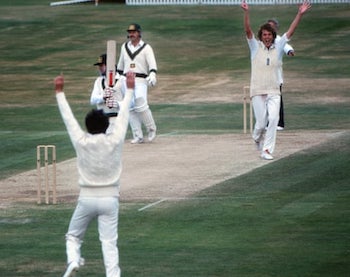
Third test at Headingley, 1981: Willis bowling
(Photograph:  Colorsport/Rex/Shutterstock via The Guardian)

Bob Willis died a few days ago. Famous English fast bowler. Headingley 1981. 130. 18 runs. 8 for 43. Pretty arcane stuff for those who never follow test cricket, as a lot more people did in the days when it was on the BBC rather than tucked away on commercial channels. For those who did—probably those of a certain age—those figures are as instantly evocative as, say, the opening seconds of ‘Like a Rolling Stone’. And, in all likelihood, many of them watched a video of the highlights of that famous day and the narrow victory that seemed impossible until Willis blew the Australian batsmen away. A devoted follower of Bob Dylan, he added the name to his own by deed poll—becoming Robert George Dylan Willis—a craziness I could relate to, having been guilty myself of inflicting thunderous versions of ‘Tombstone Blues’ on drinkers in an upstairs bar and roaring ‘House of the Rising Sun’ into the microphone of a reel-to-reel tape recorder on the bare floorboards of somebody’s upstairs room – not the true original, rather the arrangement that Dylan had ‘borrowed’ from Dave Van Ronk.

So, after playing my part in a highly un-Darwinian scenario, that is, sitting on the step at the back door, gripping the cat tightly with both hands, saying ‘Drop it, Harry! Drop it! Drop the damned mouse, Harry!’ until he tired of growling at me, slackened his hold and watched Robert Burns’ wee, sleekit, cowrin, tim’rous beastie scurry off to the neighbour’s fence—survival of the weakest—after playing that part, I say, I turned on my computer and watched Willis play his own rather more heroic part on that far-off day made vibrantly present again, his odd, angled, jerky run-up, the tumbling wickets, Willis hardly reacting much of the time, fiercely concentrated, always reaching for the second sleeveless sweater while another batsman trudged back to the pavilion.

H-waiting

There have been a few famous cricketing writers—Conan Doyle, Harold Pinter, A. A Milne, P. G. Wodehouse, Siegfried Sassoon and, most notably, Samuel Beckett. And cricketing references often occur as indications of a certain kind or class of Englishness. Henry Green’s sly humour has one of his characters, Alexander, in a fogbound London, ‘bowling along in his taxi the length of cricket pitches at a time, from block to block, one red light to another, or shimmering policemen dressed in rubber.’[1]

I don’t recall Lawrence Durrell particularly as a cricketer—he’d done a bit of boxing, I believe—but a 1958 essay, ‘Old Mathieu’, bristles with cricketing references. ‘He utters the words with the hangdog air of a cricketer who might say: “We have been forced to invite three American baseball players to join the Test team!”’ Durrell wrote. And, ‘Talking of [wine] he sounds rather like old Wilfred Rhodes discussing famous spin-bowlers of the past.’ Then: ‘On his lips the famous names sound full of the regional poetry of old county regiments or county cricket teams decimated in a year of bitter crisis.’ Near the close: ‘It is not unlike a spell at the nets under an exacting yet patient coach.’ And: ‘(I am reminded of a difficult shot to cover-point – or of a glide through the slips.)’[2] Or was that an outside edge, Larry?

Ford Madox Ford employs cricketing references several times in Parade’s End, as he does in No Enemy, which has a chapter, ‘A Cricket Match’, also included in the original French, ‘Une Partie de Cricket’, as ‘Envoi’.[3] In Ancient Lights, he straight facedly asserts that writers in England, being ‘well aware that they are not regarded as gentlemen’, all ‘desire to be something else as well. Sometimes, anxious to assert their manhood, they cultivate small holdings, sail the seas, hire out fishing boats, travel in caravans, engage in county cricket or become justices of the peace.’[4]

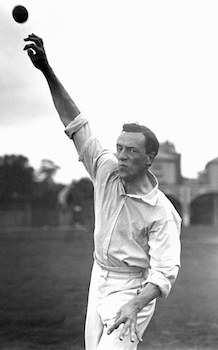
But perhaps his most extended engagement with the subject occurs in a late work, Great Trade Route, where he recalls his visit to the United States thirty years before, and tells the story of Philadelphia’s cricket team, claiming that he met a young man in 1906 who ‘introduced into the English game’ the googly. In a footnote he mentions that ‘the patient and omniscient gentleman who reads my proofs’ has pointed out to Ford that the googly was invented by an Englishman named Bosanquet. Ford assures him that he’s not forgotten Bosanquet but insists that in late 1906 his friend ‘bowled to me in the nets for a quarter of an hour or so balls that broke back both in the air and on the ground and that I found absolutely unplayable. His fellow cricketers who were more used to them played them more easily. They were there called “googlies.”’ His friend afterwards went with a cricket team to England and, Ford says, ‘it certainly seems to me that it was after 1907 that Bosanquet distinguished himself with the googly’.[5]
Bosanquet_bowling

(Bernard Bosanquet: Photograph by George Beldam, 1905)

Well now. Philadelphia certainly did have a good cricket team, which declined as baseball became the country’s dominant sport. Ford was indeed in Philadelphia in 1906 and a team from there did visit England: the third and final tour was in 1908. Bernard Bosanquet actually captained a team that visited Philadelphia in 1901 and it was during the previous English season that he first used the googly in a first-class match. Around 1903, the delivery he’s now famous for became more widely known as ‘a googly’. So Ford’s chronology is a little out while his statement that cricket was dying in England at the time is puzzling. Hayward, Hirst, Hobbs, Woolley: the period up to the First World War is sometime termed the golden age of cricket. And in 1906, when Ford was in the United States, his beloved Kent had actually just won the county championship for the first time.

In ‘Jane Austen Bowls a Googly: The Juvenilia’, the eminent Ford Madox Ford critic, Joseph Wiesenfarth, whose other areas of expertise include the nineteenth-century novel, particularly the work of George Eliot and Jane Austen, begins: ‘To “bowl a googly” is a term from cricket that means to catch a batsman off guard by throwing a very tricky pitch. Idiomatically and figuratively, it means to catch someone unawares with something unexpected.’

pride-and-prejudice-sort-of_final_image-only_landscape_300dpi

Pride and Prejudice* (*sort of) by Isobel McArthur (after Jane Austen)

A fine essay, well worth seeking out – still, I pause briefly over that strikingly American construction, ‘throwing a very tricky pitch’: even my minimal knowledge of baseball is enough to locate such terms in that lexicon, rather than a cricketing one. Cricket has bowlers rather than pitchers; and in a cricketing context, the word ‘throwing’ is treated with great wariness, having been central to several long running ‘chucking’ controversies in the past (Griffin, Meckiff, Griffith, Muralitharan). More to the point—and this applies to Ford as well—a googly is not just ‘tricky’. It’s a trickster, an illusion, a feint, a sleight-of-hand. It has had, for most of its life, a very specific meaning: a ball delivered with an apparent leg-break action but behaving as an off-break when it touches the ground, that is, it spins in one direction while the manner of its delivery had led the batsman to believe that it will spin in precisely the opposite direction.

Wiesenfarth cites Alan Bennett’s The Uncommon Reader—in which the British monarch has gone off-piste to the extent of reading novels and wanting to discuss them with other people—before moving on to Austen: ‘When the author of six classic novels of manners takes to getting some people drunk and throwing others out of windows, we could say that Jane Austen bowls us a googly.’[6] We could. And yes, in that sense, we might well make a case for Ford bowling his readers a googly in the process of telling us the story of the googly’s invention, his sprightly version of the googly origin myth.


Notes

[1] Henry Green, Party Going (1939), in Loving, Living, Party Going (London: Vintage, 2005), 401.

[2] Lawrence Durrell, ‘Old Mathieu’, in Spirit of Place: Mediterranean Writings, edited by Alan G. Thomas (1969; London : Faber and Faber, 1988), 365-368.

[3] First published in Bibliotheque universelle et revue suisse, 85 (January 1917), 117-126: Max Saunders, ‘Ford Madox Ford: Further Bibliographies’, English Literature in Transition 1880-1920, 43:2 (2000), 155.

[4] Ford Madox Ford, Ancient Lights and Certain New Reflections (London: Chapman and Hall, 1911), 110.

[5] Ford Madox Ford, Great Trade Route (London: Allen & Unwin, 1937), 246-249.

[6] Joseph Wiesenfarth, ‘Jane Austen Bowls a Googly: The Juvenilia’, Style, 51,1 (2017), 1-16 (quotations from first couple of pages).


Camelot and St Cecilia

Sea-2

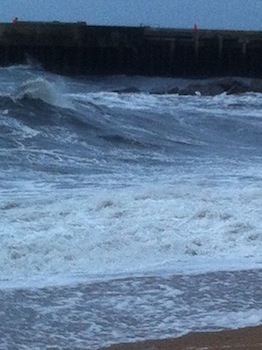
You don’t need an alarm clock in a pitch-dark Dorset bedroom if you can draw on the services of a cat with breakfast on his mind. Tucked away a little here but fifteen minutes’ walk brings you down to the sea, dead calm early in the week, less so later.

A little under seventy miles across the English Channel is Alderney, in the Bailiwick of Guernsey. The northernmost of the Channel Islands, it was the home from 1946 of T. H. White, author of The Goshawk and The Once and Future King, plus more than twenty other books, even though he died at the age of fifty-seven.

From 3 Connaught Square, Alderney, on 22 November 1950, White wrote to his friend David Garnett: ‘The reason why I am sober is that last Friday the 1st lieutenant of our local submarine threw me out of a window while we were amiably conversing about ju-jitsu. He did not mean any harm, and in fact has done nothing but good, as I fell on my head. It has altered something inside. I was unconscious for hours.’[1]


White

(T. H. White)

My Fridays are not like that – though I’m not a total stranger to ‘amiably conversing’. Garnett was a friend of long standing and plays a large part in the biography of White by Sylvia Townsend Warner, also a friend of Garnett. In 1949, a man called Wren Howard of Jonathan Cape visited White and, feeling a bulky object under the settee cushion on which he was sitting, extracted the typescript of The Goshawk, a record of White’s attempt to train a hawk in the mid-1930s. Howard read it, took it back to London and wanted Cape to publish it. White was reluctant; Garnett then read it and agreed that it should be published, whereupon White wrote to Howard: ‘If Bunny Garnett says that the Hawk book is really good, I will consent to publishing. I have not read it since I wrote it, long before the war.’[2]

David-Garnett

(David ‘Bunny’ Garnett)

White and his Hawk book are a major thread running through Helen Macdonald’s H is for Hawk. She refers to the period in which White drafted the book, the collective impulse to recover and draw upon England’s history and domestic culture. ‘It was a movement that celebrated ancient sites and folk traditions. It delighted in Shakespeare and Chaucer, in Druids, in Arthurian legend. It believed that something essential about the nation had been lost and could be returned, if only in the imagination. White, caught up on this conservative, antiquarian mood, walked with his hawk and wrote of ghosts, of starry Orion naked and resplendent in the English sky, of all the imaginary lines men and time had drawn upon the landscape. By the fire, his hawk by his side, he brooded on the fate of nations.’[3]

Richard_Burton_and_Julie_Andrews_Camelot

(Richard Burton and Julie Andrews in Camelot: Wikipedia Commons)

The fate of nations. White’s Arthurian stories reminded me of the Alan Jay Lerner and Frederick Loewe musical based on them, Camelot, directed by Moss Hart and hugely successful on Broadway, starring Richard Burton and Julie Andrews. In turn, ‘Camelot’ became inextricable from the administration of John F. Kennedy, following Jackie Kennedy’s 1963 Life interview, when she quoted lyrics from the Lerner-Loewe production. And today is, of course, the 56th anniversary of Kennedy’s assassination, the day on which Aldous Huxley and C. S. Lewis both died too, though a little overshadowed then by events in Dallas. Just thirty years later, it was Anthony Burgess’s turn (he was born in the same year as Kennedy).

It’s also Saint Cecilia’s Day, she being the patron saint of musicians. On 25 July 1914, in his regular column in Outlook, Ford Madox Ford quoted John Dryden’s ‘Less than a god they said there could not dwell…’[4]
This is from the third stanza of ‘Song for St Cecilia’s Day, 1687’:

What passion cannot Music raise and quell?
When Jubal struck the chorded shell
His listening brethren stood around,
And, wondering, on their faces fell
To worship that celestial sound.
Less than a god they thought there could not dwell
Within the hollow of that shell
That spoke so sweetly and so well.
What passion cannot Music raise and quell?

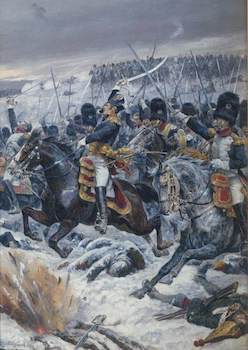
Woodville, Richard Caton, 1856-1927; Marshal Ney at Eylau

(Richard Caton Woodville, Marshal Ney at Eylau: Tate)

In 1928, Ford would publish a novel called A Little Less Than Gods, about Marshal Ney and Napoleon’s hundred days, its writing intimately involved with the history of the Ford–Joseph Conrad relationship. The Dryden poem is quoted, or rather, slightly misquoted, in Chapter V.[5] In his final book, The March of Literature, Ford quoted the whole stanza and commented that, for him, it was ‘the most pleasurable verse in all English poetry’, adding: ‘It further confirms our argument that English poetry depends upon music and died when music died in England.’[6]

That’s a nice example of the Ford who so admired the ‘sweeping dicta’ of his friend Arthur Marwood, partial model for Christopher Tietjens in Parade’s End. And T. H. White was not immune to the habit, writing in 1950:

‘I believe that the peak of British culture was reached in the latter years of George III: that the rot began to set in with the “Romantics”: that the apparent prosperity of Victoria’s reign was autumnal, not vernal: and that now we are done for.’[7]

Hmm. . . ‘now we are done for’. Still, make a note of that. Just in case.

 
Notes

[1] David Garnett, editor, The White/Garnett Letters (London: Jonathan Cape, 1968), 246.

[2] Sylvia Townsend Warner, T. H. White: A Biography (New York: Viking, 1968), 243.

[3] Helen Macdonald, H is for Hawk (London: Jonathan Cape, 2014), 104.

[4] Ford Madox Ford, ‘Literary Portraits—XLVI. Professor Cowl and “The Theory of Poetry in England”’, Outlook, XXXIV (25 July, 1914), 110.

[5] Ford Madox Ford, A Little Less Than Gods (London: Duckworth, 1928), 108.

[6] Ford Madox Ford, The March of Literature: From Confucius to Modern Times (London: Allen & Unwin, 1939), 605.

[7] T. H. White, The Age of Scandal (1950; Harmondsworth: Penguin Books, 2000), 17.


A wink and a wave: Jean Rhys

jean-rhys-teresa-chilton-independent

(Jean Rhys by Teresa Chilton via The Independent)

‘I am very astonished that the BBC like my work’, Jean Rhys wrote to Maryvonne Moerman (9 November 1949). It seems, she went on, ‘they thought I was dead – which of course would make a great difference. In fact they were going to follow it up with a broadcast “Quest for Jean Rhys” and I feel rather tactless being still alive!
‘However I’m cheered up too for if they can make a fuss of me dead surely they can make a little fuss though I’m not.’[1]

Rhys had seen an advertisement in the New Statesman a few days earlier, asking anyone who knew of Rhys’s whereabouts to contact Hans Egli – the husband of the actress Selma Vaz Dias, who had adapted Good Morning, Midnight and wanted to make contact with its author.

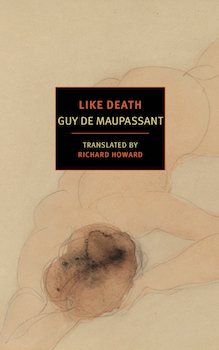
In his ‘Introduction’ to the 1927 edition of The Good Soldier, Ford Madox Ford wrote: ‘I had in those days an ambition: that was to do for the English novel what in Fort Comme la Mort, Maupassant had done for the French.’[2] Also published that year was The Left Bank, Jean Rhys’s first book, a volume of stories with an introduction by Ford, ‘Rive Gauche’. The affair between Ford and Rhys was over by then: it has been, unsurprisingly, written about at length, by all four participants—Ford, Stella Bowen, Rhys and her husband Jean Lenglet—and by their biographers and critics.[3] In Paris in December 1924, the painter Paul Nash and his wife Margaret bumped into Ford and Rhys at the Gare de Lyons. Nash referred to her as ‘the ghost’, Margaret also thought her ‘ghost-like’. The writer Alexis Lykiard, who knew Rhys late in her life, described her as ‘a truly helpful revenant’.[4]

In her ‘Introduction’ to Rhys’s Collected Short Stories, Diana Athill remarked, noting the title story of Tigers are Better-Looking (1968) as an example, ‘there is more humour in Jean Rhys’s observation of life than is usually recognised’.[5] At the end of ‘The Day They Burned the Books’, one of the stories in that collection, the narrator and Eddie both retrieve one book from the library that Mrs Sawyer is burning: Eddie has Kipling’s Kim but it’s been torn and ‘starts at page twenty now’; while the narrator—who doesn’t at first know what she has because it’s ‘too dark to see’— is ‘very disappointed’ because her book ‘was in French and seemed dull. Fort Comme La Mort, it was called. . . . ’[6]

Fort-comme-la-mort.jpg  Like_Death_NYRB

Rhys was very familiar with Maupassant’s work. In 1953, she wrote, in a letter to Morchard Bishop (novelist and biographer: real name Oliver Stoner):

I read a letter in the Observer last Sunday from some editor – Peter Green – promising to accept any story up to (of) the standard of “Boule de Suif”. Well I should damned well think he would! [ . . . ] Poor Boule de Suif. They won’t let her rest –
The thing is I very much doubt whether any story seriously glorifying the prostitute and showing up not one but several British housewives to say nothing of two nuns! – their meannesses and cant and spite – would be accepted by the average editor or any editor.
And “La Maison Tellier”? Well imagine – (Jean Rhys: Letters, 99)

To Selma Vaz Dias, about ‘The Day They Burned the Books’, she commented that it was ‘fairly recent’ and that readers would need to realise that it was about the West Indies ‘a good while ago when the colour bar was more or less rigid. More or less.’ She went on: ‘Also I don’t think I’ve got over what I meant when I called the book “Fort comme la mort” –   (Jean Rhys: Letters, 105)

There’s a nice touch of ambiguity about that phrase ‘got over’: primarily meaning ‘conveyed to the reader’, no doubt, but with a lingering shadow of ‘recovered from’. Jean Rhys never did set down her memories of Ford outside the pages of her fiction, so I like to think of that use of the Maupassant title as something like a wink or a wave from across the street. Although, come to think of it, though the edition of Christina Rossetti’s poems is bound in leather (and the more expensive books are to be sold, not burnt), it goes into the heap to be burnt. Ford always praised Christina as the finest poet of the nineteenth century and wrote about her often.

Rhys-Tigers

Jean Rhys’s contribution to the ‘Memories and Impressions’ section of The Presence of Ford Madox Ford comprised just seventy words:

I am writing my autobiography and have tried to say all I know about Ford Madox Ford in that. Of course his great generosity to young writers was very well known both in London and in Paris. He was willing to take a lot of trouble for those he thought of promise.
I learnt a good deal from him and can’t think of anyone who has quite taken his place.[7]

Alas, that autobiography remained unfinished. There were difficulties, her editor Diana Athill observed, since Rhys’s writerly honesty meant that she was reluctant to include dialogue that she couldn’t be sure she remembered exactly; also, ‘that much of her life had been “used up” in the novels.’ So the end of the main text has Rhys showing some of her writing to Mrs Adam, wife of the Times correspondent in Paris, who suggests having it typed and sending it to ‘a man called Ford Madox Ford’.[8] 


Notes

[1] Jean Rhys: Letters, 1931-1966, edited by Francis Wyndham and Diana Melly (London: André Deutsch, 1984), 61.

[2] See W. B. Hutchings, ‘Ford and Maupassant’, in Ford Madox Ford’s Modernity, edited by Robert Hampson and Max Saunders (Amsterdam: Rodopi, 2003), 257-270.

[3] Max Saunders, Ford Madox Ford: A Dual Life, Volume II (Oxford: Oxford University Press, 1996); Carole Angier, Jean Rhys: Life and Work (London: André Deutsch, 1990); Joseph Wiesenfarth, Ford Madox Ford and the Regiment of Women: Violet Hunt, Jean Rhys, Stella Bowen, Janice Biala (Madison: University of Wisconsin Press, 2005); Joseph Wiesenfarth, ‘Quartet with Variations: Ford Madox Ford, Stella Bowen, Jean Rhys, Jean Lenglet’, in Ford Madox Ford’s Cosmopolis: Psycho-Geography, Flânerie and the Cultures of Paris, ed. Alexandra Becquet and Claire Davison (Amsterdam: Brill Rodopi, 2016), 175-187.

[4] Alexis Lykiard, Jean Rhys Revisited (Exeter: Stride Publications, 2000), 13.

[5] Diana Athill, ‘Introduction’, Jean Rhys, The Collected Short Stories (New York: W. W. Norton, 1992), ix.

[6] Jean Rhys, Tigers are Better-Looking (London: Penguin Books, 1972), 43. ‘Fort comme la mort’ was the original title of ‘The Day They Burned the Books’: Jean Rhys: Letters, 100.

[7] Jean Rhys, in a letter to the editor, 28 July 1978: Sondra J. Stang, editor, The Presence of Ford Madox Ford (Philadelphia: University of Pennsylvania Press 1981), 214.

[8] Jean Rhys, Smile, Please: an unfinished autobiography, with a foreword by Diana Athill (London: André Deutsch, 1979), 5-6, 155.

Differences and pretexts

Crows

To his brother Julian, two months after the end of the First World War, Aldous Huxley wrote that freedom ‘is the only thing in the world worth having and the people who can use it properly are the only ones worthy of the least respect: the others are all madmen, pursuing shadows and prepared at any moment to commit acts of violence. The prospects of the universe seem to me dim and dismal to a degree.’[1]

The Guardian recently reported the results of a poll jointly conducted by academics from Cardiff University and the University of Edinburgh. They found that a majority of voters in England, Wales and Scotland surveyed ‘believe that the possibility of some level of violence against MPs is a “price worth paying” in order to get their way on Brexit’: of the Leave voters who took part in the study, this was true of 71% in England, 60% in Scotland and 70% in Wales. And all this just a little more than three years after the murder of MP Jo Cox by an extreme right-wing terrorist who shouted ‘Britain first!’ Perhaps even more depressing, the majority of remain voters also felt that the risk of violence towards MPs was worth it if it meant the United Kingdom would stay in the EU – 58% in England, 53% in Scotland and 56% in Wales.

(As a cheering footnote, voters overwhelmingly felt that the potential destruction of the country’s farming and fishing industries would also be a price worth paying for getting the result they wanted in the Brexit negotiations.)

https://www.theguardian.com/uk-news/2019/oct/24/majority-of-voters-think-violence-against-mps-is-price-worth-paying-for-brexit

To-West-Bay-Trees

‘The point to be made about the GREAT TRADE ROUTE’, Ford Madox Ford wrote to E. C. Cumberlege of Oxford University Press on 27 October 1936, ‘is that it is not the book of a meditative gentleman who stands before ruined temples and pours mournful soliloquies on old unhappy things, but as it were the testament of a man usually of action who has spent a long life not only on writing and study but on digging, editing, carpentry, cooking, small holding, fighting both literally and metaphorically and in every kind of intrigue that could advance what he considers to be the cause of good letters…’[2]

Great Trade Route was published by Oxford in January 1937 (and by Allen and Unwin in the United Kingdom). ‘But no sort of civilization is possible’, Ford writes there, ‘when difference of opinions can be considered a pretext for murder . . . or even for physical violence.’[3]

A good many political and social commentators have lately been asking: ‘What sort of country do we want to be?’ Or, perhaps more realistically: ‘What sort of country has this become?’ The answer to the first question must be: better than this. And the second? It’s complicated – at least, we hope so.


Notes

[1] Letters of Aldous Huxley, edited by Grover Smith (London: Chatto and Windus, 1969), 173-174.

[2] Ford Madox Ford, Letters of Ford Madox Ford, edited by Richard M. Ludwig (Princeton: Princeton University Press, 1965), 264.

[3] Ford Madox Ford, Great Trade Route (London: Allen & Unwin, 1937), 291.

Spaniels, Beards, Lapis Lazuli

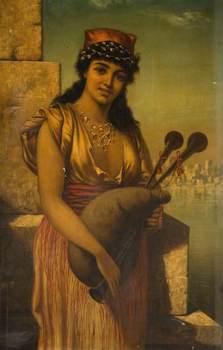
Delort, Charles Edouard, 1841-1895; Girl with Bagpipes . Long, Edwin, 1829-1891; Girl with Bagpipes

(Two examples of ‘Girl with bagpipes’, by Charles Edouard Delort, The Cooper Gallery, Barnsley; and Edwin Long, Wolverhampton Gallery)

Walking round the park, attempting to commit to memory – again, a few lines having fallen out of one ear – Louis MacNeice’s ‘Bagpipe Music’ (‘It’s no go the Yogi-Man, it’s no go Blavatsky,/ all we want is a bank balance and a bit of skirt in a taxi’).

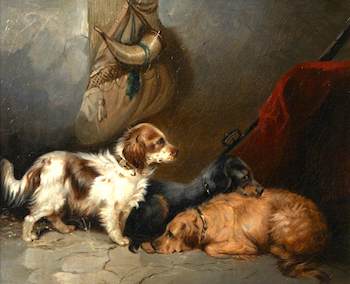
Men with dogs, women with dogs, men with men and with women, women with women, all with dogs. Sometimes, the people in view are outnumbered by the dogs, though all are outnumbered by the trees – a positive feature of a park, I’d say. This was lunchtime. Earlier in the day, I often pass the man with three spaniels—one Springer, I think, and perhaps two Cavalier King Charles. He wears a Fedora that has seen long service rather than a cap but still fits comfortably into my standard image of the sea-captain. An actor named John Hewer played Captain Birdseye in the television adverts for thirty years (he died in 2008) and is probably the version that I best remember, though his beard was far less luxuriant than that of Captain Spaniels.

Armfield, George, 1810-1893; Spaniels in a Barn Interior

(George Armfield, ‘Spaniels in a Barn Interior: Torre Abbey Museum)

Writing to her brother Warner (‘Dear Badger’) in 1915, Marianne Moore reported: ‘I brought home Hueffer’s [Ford Madox Ford’s] Memories and Impressions, a pearl of a book in which Hueffer tells about the Pre-Raphaelites and his grandfather who looked “exactly like the king of hearts on a pack of cards,” and Morris who said “Mary those six eggs were bad. I ate them but don’t let it happen again.” He says they all looked like old fashioned sea captains and Morris was gratified beyond measure on several occasions at being stopped by sailors and questioned with regard to their shipping with him.’[1]

And so he did. In Ancient Lights, the book’s British title, Ford writes that the members of that ‘old, romantic circle’, the Pre-Raphaelites and those associated with them, ‘seem to me to resemble in their lives—and perhaps in their lives they were greater than their works—to resemble nothing so much as a group of old-fashioned ships’ captains.’ He recalls the last time he met William Morris, who told Ford ‘that he had just been talking to some members of a ship’s crew whom he had met in Fenchurch Street. They had remained for some time under the impression that he was a ship’s captain. This had pleased him very much, for it was his ambition to be taken for such a man.’[2]

Of his collaborator Joseph Conrad, Ford wrote that he ‘never presented any appearance of being a bookish, or even a reading man. He might have been anything else; you could have taken fifty guesses at his occupation, from, precisely, ship’s captain to, say, financier, but poet or even student would never have been among them and he would have passed without observation in any crowd. He was frequently taken for a horse fancier. He liked that.’ And: ‘His ambition was to be taken for—to be!—an English country gentleman of the time of Lord Palmerston.’[3]

Now, of course, writers and artists look and dress much the same as anybody else, as you’d expect. But there was a time when some artists wanted to look like artists – while some wanted to look like anything but. What is it, though, about those sea captains? A maritime nation? All the nice girls love a sailor? J. M. W. Turner was another one, in later life compared to a sailor, a farmer, a coachman, a steamboat captain, a North Sea pilot. Robert Bontine Cunningham Grahame, though—writer, adventurer, first president of the National Party of Scotland in 1928—looked, Douglas Goldring remembered, ‘like a Spanish hidalgo.’[4]

Carola-Rackete

(Not all ship’s captains fit the template: this is Carole Rackete, captain of a rescue ship carrying 40 people, who broke a blockade and courageously docked Sea-Watch 3 on the island of Lampedusa after a two-week standoff with the Italian authorities, and in defiance of a ban imposed by the right-wing interior-minister Matteo Salvini (since replaced)
(Photograph : Sea Watch Mediateam via The Guardian)
https://www.theguardian.com/world/2019/jun/29/sea-watch-captain-carola-rackete-arrested-italian-blockade

Conrad had, of course, actually been a ship’s captain; and, if T. S. Eliot looked like a banker or a publishing executive, there was a reason for it. Wallace Stevens no doubt appeared like an insurance executive. Beatrix Potter, after a dozen years of artistic productivity, married and became a farmer, breeding Herdwick sheep and increasingly recognised as an expert in her field: ‘So long as she could live and look like a farmer, she asked no better’.[5]

Ezra Pound, on the other hand, looked like – A Poet. ‘He ordered a snug-waisted full-skirted overcoat of tweed, the blue of delphiniums, and the buttons were large square pieces of lapis lazuli.’[6] Or rather, Ezra ‘would approach with the step of a dancer, making passes with a cane at an imaginary opponent. He would wear trousers made of green billiard cloth, a pink coat, a blue shirt, a tie hand-painted by a Japanese friend, an immense sombrero, a flaming beard cut to a point, and a single, large blue earring.’[7]

Richard Cassell, in conversation with Pound at St. Elizabeths in 1951, recorded that: ‘Ford would take Pound to the drawing rooms of everyone who would accept him, Ford dressed in top hat and swallow-tailed coat, Pound in anybody’s cast-off clothes and old velvet jacket. “The next day, more than likely, Ford would be among his pigs. He was both the lord of the Cinque Ports and a simple farmer.”’[8]

David-Jones.Spectator

(David Jones, via The Spectator)

William Blissett recalled, of one of his visits to David Jones, ‘A couple of anecdotes over tea. Evelyn Waugh (who was very shy and embarrassed if surprised in one of his many kindnesses) took David aside some years ago and remonstrated with him for brushing his hair down over his forehead. “You look like a bloody artist,” he said, to which the only possible reply was, “But I am a bloody artist.”’[9] Waugh, it’s safe to say, did not generally look like a bloody artist. Still, brushing your hair forward certainly requires less financial outlay than tweed or lapis lazuli.

 
Notes

[1] The Selected Letters of Marianne Moore, edited Bonnie Costello, Celeste Goodridge and Cristanne Miller (London: Faber and Faber, 1998), 99.

[2] Ford Madox Ford, Ancient Lights and Certain New Reflections (London: Chapman and Hall, 1911), 17-18.

[3] Ford Madox Ford, Joseph Conrad: A Personal Remembrance (London: Duckworth, 1924), 57-58.

[4] Peter Ackroyd, Turner (London: Vintage 2006), 25-26; Douglas Goldring, South Lodge: Reminiscences of Violet Hunt, Ford Madox Ford and the English Review Circle (London: Constable, 1943), 33.

[5] Margaret Lane, The Tale of Beatrix Potter (1946; Harmondsworth: Penguin Books, 1962), 173.

[6] Brigit Patmore, My Friends When Young, edited with an introduction by Derek Patmore (London: Heinemann, 1968), 61.

[7] Ford Madox Ford, Return to Yesterday: Reminiscences 1894-1914 (London: Victor Gollancz, 1931), 370.

[8] Richard A. Cassell, ‘A Visit with E. P.’, Paideuma, 8, 1 (1979), 67. One or two of these reported facts should be approached warily, and perhaps with the step of a dancer.

[9] William Blissett, The Long Conversation: A Memoir of David Jones (Oxford: Oxford University Press, 1981), 61.


Smelling a rat

H-ratting

(Harry, student of current affairs, smelling a rat)

I was thinking again about rats, prompted not only by the current political situation, though that possesses strong indicators, but, in the first instance, by seeing a brown rat—not the endangered black rat—shoot across the garden and, on a later occasion, help itself to seeds on the bird table, having shinned up a long, smooth pole to reach it. I invited the cat to deal with the situation (perhaps you know the story of James Joyce and Ernest Hemingway out on the town in Paris, where the half-blind Joyce would get into fights, be unable to locate his opponent and simply say ‘Deal with him, Hemingway, deal with him!’)—but Harry showed no inclination to do so. It was not a particularly small rat.

The second instance was my nightly reading to the Librarian, not for the first time, Conan Doyle. Devotees of the Sherlock Holmes stories will recall that, in ‘The Adventure of the Sussex Vampire’, Holmes alludes to the giant rat of Sumatra, ‘a story for which the world is not yet prepared.’ Leslie Klinger notes the discovery made by Guy G. Musser and Cameron Newcomb of a species Sundamys infraluteus, weighing in excess of 22 pounds and 24 inches long (including the tail), a discovery reported in a 270-page article in 1983.

Then too there is ‘The Boscombe Valley Mystery’:

‘The Coroner: Did your father make any statement to you before he died?
Witness: He mumbled a few words, but I could only catch some allusion to a rat.
The Coroner: What did you understand by that?
Witness: It conveyed no meaning to me. I thought that he was delirious.’

Later, Watson asks Holmes: ‘What of the rat, then?’ His friend produces a map of the Colony of Victoria (he has wired to Bristol for it the previous night).

‘He put his hand over part of the map. “What do you read?”
“ARAT,” I read.
“And now?” He raised his hand.
“BALLARAT.”’

Aha! That was Charles McCarthy trying to utter the name of his murderer, John Turner, formerly Black Jack of Ballarat. [1]

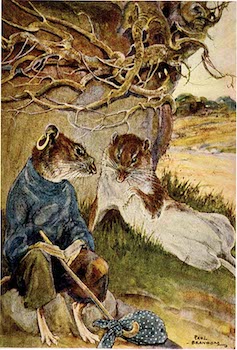
Rats are affectionately observed or referenced by Colette—‘I have a little Rat [Colette de Jouvenel, otherwise Bel-Gazou, born 3 July 1913], and I have paid the price: thirty hours without respite, chloroform and forceps’[2]—and Kenneth Grahame, whose The Wind in the Willows appeared in 1908, though his rat was a water-vole.

Paul-Bransom-Wind-Willows

(Paul Bransom, from The Wind in the Willows)

The First World War, specifically life in the trenches on the Western Front, introduced new rat-perspectives, from David Jones:

You can hear the silence of it:
you can hear the rat of no-man’s-land
rut-out intricacies,
weasel-out his patient workings,
scrut, scrut, sscrut,
harrow out-earthly, trowel his cunning paw;
redeem the time of our uncharity, to sap his own amphibious paradise.[3]

and from Isaac Rosenberg, in ‘Break of Day in the Trenches’ (‘Only a live thing leaps my hand,/ A queer sardonic rat’).

Rats—and ferrets—bulked fairly large in Ford Madox Ford’s war too. When a French Minister in wartime Paris asked how he could be of use to Second Lieutenant Hueffer, Ford expressed his desire for some ferrets. ‘First of everything in the world—of everything in the whole world!—comes your battalion. And the ferrets of my battalion had all died suddenly; and the last thing they had said to me had been: Don’t forget to get us some ferrets. If you had seen the rats of Locre you would have understood.’ But, he adds, ‘the Minister had not seen the rats of Locre so he had not understood…. ’[4] Closer to the time of that ministerial incomprehension—‘“Quoi,” he asked. “What is a ferret?”’—the Francophile Ford wrote: ‘There are no ferrets in France, not in the Ministries, not in the Jardin des Plantes et d’Acclimatation. That is perhaps a defect of France, but I have perceived no other.’[5]

Another species of entente cordiale had emerged in the sixteenth century, with John Florio’s translation of the Essays of Michel de Montaigne. Sarah Bakewell writes: ‘But while Montaigne always moved forward, Florio winds back on himself and scrunches his sentences into ever tighter baroque spirals until their meaning disappears in a puff of syntax. The real magic happens when the two writers meet. Montaigne’s earthiness holds Florio’s convolutions in check, while Florio gives Montaigne an Elizabethan English quality, as well as a lot of sheer fun.’ So, ‘Where Montaigne writes, “Our Germans, drowned in wine” (nos Allemans, noyez dans le vin), Florio has “our carowsing tosspot German souldiers, when they are most plunged in their cups, and as drunke as Rats”’. And, wonderfully, ‘A phrase which the modern translator Donald Frame renders calmly as “werewolves, goblins, and chimeras” emerges from Floriation as “Larves, Hobgoblins, Robbin-good-fellowes, and other such Bug-beares and Chimeraes” – a piece of pure Midsummer Night’s Dream.’

Miranda_-_The_Tempest_JWW

(J. W. Waterhouse, Miranda)

And yes, as she goes on to say, Shakespeare did know John Florio, ‘was among the first readers of the Essays translation’ and left strong traces of that reading in several of his plays.[6] Or, if not Montaigne, then rats:

A rotten carcase of a butt, not rigg’d,
Nor tackle, sail, nor mast; the very rats
Instinctively have quit it (The Tempest, I, ii)


Notes

[1] Arthur Conan Doyle, The New Annotated Sherlock Holmes, 2 volumes, edited with notes by Leslie S. Klinger (New York and London: W.W. Norton and Company 2005), II, 556-557; I, 111, 125.

[2] To Georges Wague, mid-July 1913: Colette, Letters from Colette, selected and translated by Robert Phelps (London: Virago Press, 1982), 36.

[3] David Jones, In Parenthesis (1937; London: Faber, 1963), 54.

[4] Ford Madox Ford, No Enemy (1929; edited by Paul Skinner, Manchester: Carcanet Press, 2002), 133.

[5] Ford Madox Ford, ‘Trois Jours de Permission’, in War Prose, edited by Max Saunders (Manchester: Carcanet Press, 1999), 51. The editor points out in his headnote (49) that the ferrets recur in several other Ford works. The story of ‘Ford’s rat’ is in Joseph Conrad (1924), 40-41.

[6] Sarah Bakewell, How To Live: A Life of Montaigne in one question and twenty attempts at an answer (London: Vintage 2011), 277-279.


Endings also

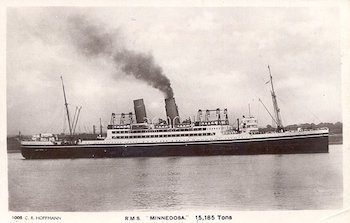
Minnedosa

(The Minnedosa via www.greatships.net )

On the night of 22 September 1927, off Labrador, aboard Canadian Pacific S. S. Minnedosa, Ford Madox Ford wrote to Stella Bowen in Paris: ‘Darling: I finished Last Post ten minutes ago: I am tired out but quite well and awfully happy!’

The fourth and last part of his masterpiece Parade’s End, Last Post, while concerned with new beginnings—for Christopher Tietjens, for Valentine Wannop and the child she is carrying, and for England—is deeply engaged with endings also, both within and without the book itself, not least, the closing of his ten-year life with Stella. She would write to him in New York a few months later, ‘But your letter, & the “Last Post” together, seem to mark the end of our long intimacy, which did have a great deal of happiness in it for me’[1]

stella-bowen

(Stella Bowen: https://www.nationaltrust.org.au )

Exactly thirty-seven years later, 22 September 1964, Hugh Kenner wrote to Guy Davenport that he was reading Evelyn Waugh’s authorized biography of the Catholic theologian and author Ronald Knox. Knox was ‘the darling child of the gone world’ and ‘like so many Englishmen of that generation was the end of something. Literally every single Oxford crony of his fell in W.W.I, having enjoyed only a few months of free manhood and commenced, with Ronnie, to found the future.’ He went on: ‘We are apt to forget how devastated was the landscape over which the Pound Era seized hegemony.’ While Pound and Eliot, as Americans, were noncombatants, the Irish Joyce had sat out the war in Europe and Wyndham Lewis (British mother, American father) had served in the war but survived, ‘the English generation corresponding to theirs was annihilated: how thoroughly, till I read Knox’s life, I had never before realized.’

Kenner and his first wife, Mary-Jo, were received into the Catholic Church that month: Mary-Jo was in her final illness, suffering from spinal cancer, and though she was at home when Kenner wrote again on 28 September, he feared it would be temporary. ‘The statistical likelihood is of course that it has metastasized already. We are all dying, but at different rates.’[2] She died six weeks later.

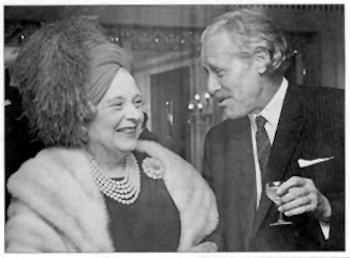
wheeler-cartland

(Sir Mortimer Wheeler with Barbara Cartland)

Then too, ‘every single Oxford crony’ reminded me of Charlotte Higgins writing about Mortimer Wheeler, who became the archaeologist best-known to the British public, not least because of his appearances on the 1950s television show, Animal, Vegetable, Mineral: in 1954, he was the BBC’s first television personality of the year.

Wheeler, Higgins observed, ‘had a good war and emerged a major. But by 1918 his generation, he recalled in his memoir, “had been blotted out”. He wrote: “Of the five university students who worked together in the Wroxeter excavations, only one survived the war. It so happened that the survivor was myself.” The “Oxford Blues” were dead.’ Wheeler himself was not an Oxford man but had studied at University College London, taught Latin by the poet and classicist A. E. Housman.[3]

One visitor to the Wroxeter excavations—the village occupies a portion of what was once Uriconium, the fourth largest Roman town in Britain—in the summer of 1913 was Wilfred Owen. He met several of those working there, probably including Wheeler, though he felt ‘miserably jealous of two of them, who were from Oxford.’[4]

Wroxeter-English-Heritage

(Wroxeter via English Heritage)

It lieth low near merry England’s heart
Like a long-buried sin; and Englishmen
Forget that in its death their sires had part.
And, like a sin, Time lays it bare again
To tell of races wronged,
And ancient glories suddenly overcast,
And treasures flung to fire and rabble wrath.[5]

Owen’s end came just five years later on 4 November 1918 as he crossed the Oise-Sambre canal in northern France—the telegram announcing his death arrived at the family home on Armistice Day, one week later.

Before all else, though, the date on the calendar prompts thoughts of my sister. Had she lived, she would have been seventy-four today, so, though there is hardly a need for more reasons to raise a glass in these benighted times – santé, Penny.


Notes

[1] Correspondence of Ford Madox Ford and Stella Bowen, edited by Sondra J. Stang and Karen Cochran (Bloomington: Indiana University Press, 1993), 320, 373.

[2] Questioning Minds: The Letters of Guy Davenport and Hugh Kenner, edited by Edward M. Burns, two volumes (Berkeley: Counterpoint Press, 2018), I, 618, 620. Kenner’s phrase, ‘the gone world’, occurs, of course, in the opening line of The Pound Era (1971), which he first mentioned to Davenport in October 1961. The famous closing line, ‘Thought is a labyrinth’, came from Davenport.

[3] Charlotte Higgins, Under Another Sky: Journeys in Roman Britain (London: Jonathan Cape, 2013), 80.

[4] Dominic Hibberd, Wilfred Owen: A New Biography (London: Weidenfeld & Nicolson, 2002), 106.

[5] Wilfred Owen, opening of ‘Uriconium – An Ode’ (1913): The Poems of Wilfred Owen, edited by Jon Stallworthy (London: Chatto & Windus, 1990), 42; and see Stallworthy’s note (45).


Plus ça change: editing, comedy, politics

Harry-dozing 1

A flurry of activity, since we are—finally!—in the last throes of preparing for the printer the second issue of Last Post: A Literary Journal from the Ford Madox Ford Society. Before that – days of depressing weather and weathering depression as British politicians plot, plod, falsify, feint and fail, some of them apparently paralysed while others are clearly willing to jeopardise not only the wellbeing of the United Kingdom as a whole but the still fragile peace in Northern Ireland too.

Still, there was my elder daughter’s birthday, though on the actual day she was—not exactly abroad but offshore, that region so favoured by the rich—aboard a small train bound for Laxey in the Isle of Man, and then on another train up a mountain. On the other hand, her sister, who lives in Barcelona, arrived in Bristol to stay with the Librarian and I—and, crucially, Harry the house cat—for a few days before heading off to Scotland to unleash some stand-up comedy at the Edinburgh Festival Fringe with a group of friends. (Such familial displays of extrovert behaviour might offset, to a degree, my increasingly wary view of the world out there and the people in it.)

The second issue of Last Post includes a reprinted article by Ford, dating from 1936, when he revisited London, a relatively rare event in the post-war years, since he lived first in Sussex, then Paris, then Toulon, with trips to New York and other parts of the United States – but not often to London.

Fordie-BBC

http://www.fordmadoxfordsociety.org/last-post-journal.html

In the world-before-the-war, he’d been based in London for a decade and his first commercially successful book (at least since his first, a fairy tale illustrated by his grandfather Ford Madox Brown) was devoted to the city: The Soul of London appeared in 1905. And, though Ford didn’t live there much after 1915, he continued to write about the city or to draw upon it in many of his later books. More than eighty years old, then, that article but I was struck by his characterisation of the politicians of the day:

‘It was impossible to imagine a more impressive collection of dumb-bells and left-overs than were provided by H. M. Government and H. M. Opposition between them. A photograph of the lot of them impressed you with the idea that you were looking at a group-picture of the better-behaved inmates of Bellevue—as who should say Bethlem Hospital. And their political records were none of them more cheerful.’

Plus ça change, plus c’est la même chose, as they say in some quarters, I believe.


Some like it hot; some do not

Overlooking the Bay 1921 by Juan Gris 1887-1927

(Juan Gris, Overlooking the Bay: Tate)

In Anne Carson’s translation of Agamemnon, the messenger says, ‘I could tell you stories of winter so cold it killed the birds in the air.’ By way of seasonal contrast, I remember reading back in 2012 that birds had been falling from the sky in Iraq, where the temperature had breached 50 degrees Celsius.

It was 50 degrees in Basra yesterday; 42 in New Delhi, 40 in Cairo and in Florence too. Temperatures of 45 are predicted in the South of France and parts of Spain in the next few days.

Yesterday marked exactly eighty years since the death of Ford Madox Ford. Scheduled for tomorrow and Saturday, there is a conference taking place on the Mediterranean coast of southern France, ‘Ford and Toulon: Biography, Culture and Environment in the 1920s and 1930s’, under the auspices of the Université de Toulon and the Ford Madox Ford Society. Ford visited Toulon in 1925 with Stella Bowen, and again the following year. According to the dates and places of composition that he gives in the books, he began A Man Could Stand Up— in Toulon, and finished both A Mirror to France and New York Is Not America there. He socialised with the painter Juan Gris and his wife Josette, and Stella Bowen recalled that their group at the café was often joined by the art critic Georges Duthuit and his wife – Duthuit’s dialogues with Samuel Beckett (drawn from their correspondence) would first appear in 1949. Ford later lived with Janice Biala in the Villa Paul on Cap Brun in the last decade of his life. Further details of the conference are on the Ford Society website:
http://www.fordmadoxfordsociety.org/upcoming-events.html

I won’t be in Toulon – which is probably just as well. Even if the temperature doesn’t reach 45, it will be at least 20 degrees above my comfort level these days: I’ll go a couple of degrees higher if there’s a stiff breeze; maybe a few more if I were in Greece, where the heat seemed to bother me less –­ though it’s 33 degrees in Athens today and, given our aversion to flying, will we ever get back?

Harry

So, deep shade for me – some reading, a little wine, a little conversation (two-way with the Librarian, one-way with the cat). And perhaps some material from that conference might find its way, by and by, into Last Post: A Literary Journal from the Ford Madox Ford Society. . .


Bombs, planes, larks and mere delight

Gurney-ODNB FMF-GS-viaNYRB

(Ivor Gurney via Oxford DNB; Ford Madox Ford via New York Review of Books)

The poet Ivor Gurney wrote to his friend and sponsor Marion Scott (21? June 1916): ‘High up in the air like harmless gnats British aeroplanes are sailing – but No Germans – and ever and again as they come round in their circles lovely little balls of white fleece, or dark fleece or occasionally ruddy, gather in their track and up above and below. But they take about as much notice as of so many peas.’ And, in a second letter of the same date: ‘Tonight an aeroplane has been sailing high up in the blue – right over the German lines, and occasionally leaving at his back a flock of tiny white clouds; looking so innocent as they unfold, that unless one has caught the tiny flash of the explosion it is perfectly impossible to think that these are anything but the tiny clouds of Summer W H D loves to sing of.’[1]

This reminded me that, also in that summer of 1916, Second Lieutenant Ford Madox Hueffer—later Ford—arrived in France. In No Enemy: A Tale of Reconstruction, written partly in that year (but mostly in 1919), his persona, Gringoire, recalls a day on which he and other officers ‘sprawled about on the bare hillside with the downland winds running over the grasses just as they do in Sussex on a cloudless day.’ Then:

induced as the eye was to look into the pellucid sky, there became visible a number—some one counted fourteen—of tiny, shining globes. They appeared to be globes, because there was a fresh wind blowing straight from them and they turned end on. So, but slowly and incessantly heaving, did the immense one close at hand; a spider’s network of cordage went with its movements. Tiny and incredibly pretty, like films of gold dust floating in blue water and like peach blossom leaves—yes, incredibly pretty in the sunlight—airplanes were there. Because the—just as pretty—little mushrooms that existed suddenly in the sky, beside the sunlit dragonflies and peach blossoms, were pearly white, one officer said:
“Hun planes!”[2]

FokkerDIIsingleseatfighter.flickr

Flying machines were still a relatively new phenomenon then, something that many people would still not yet have seen. But I’ve been reading lately the poems and prose of Keith Douglas, killed in Normandy on 9 June 1944, so just three days after the Allied landings, at the age of twenty-four. Douglas served in the desert war as a tank commander and, early in his classic narrative, Alamein to Zem Zem, there’s this:

Up above in the clear sky a solitary aeroplane moved, bright silver in the sunlight, a pale line of exhaust marking its unhurried course. The Bofors gunners on either side of us were running to their guns and soon opened a rapid, thumping fire, like a titanic workman hammering. The silver body of the aeroplane was surrounded by hundreds of little grey smudges, through which it sailed on serenely. From it there fell away, slowly and gracefully, an isolated shower of rain, a succession of glittering drops. I watched them descend a hundred feet before it occurred to me to consider their significance and forget their beauty. The column of tanks trundled forward imperturbably, but the heads of their crews no longer showed. I dropped down in the turret and shouted to Evan who was dozing in the gunner’s seat: “Someone’s dropping some stuff.” He shouted back a question and adjusted his earphones. “Bombs!” I said into the microphone.[3]

Douglas-viaWarPoetsAssoc

(Keith Douglas in the desert via War Poets Association)

The bright silver of the plane is noted but that impression of beauty given to the poet’s eye derives from the shower of bombs it drops. Douglas, unsurprisingly, was well acquainted with the poets of the First World War, particularly Wilfred Owen and Isaac Rosenberg – his ‘Desert Flowers’ begins:

Living in a wide landscape are the flowers—
Rosenberg I only repeat what you were saying—
the shell and the hawk every hour
are slaying men and jerboas, slaying

the mind: but the body can fill
the hungry flowers and the dogs who cry words
at nights, the most hostile things of all.[4]

I wondered, then, if there might be an element of reversal there, looking back to Rosenberg’s ‘Returning, we hear the larks’:

Lo! Heights of night ringing with unseen larks:
Music showering on our upturned listening faces.

Death could drop from the dark
As easily as song—

But song only dropped[5]

A comparison of the passage from Alamein to Zem Zem with the earlier draft shows some interesting revisions: the published version adds ‘imperturbably’ to the tanks trundling forward; and in that last line, ‘I said’ replaces ‘I shouted’, clearly choosing to avoid the repetition; ‘and forget their beauty’ was earlier ‘as well as their beauty’.[6]

All three writers note and record the beauty while variously showing themselves aware of the purpose and true meaning of what they’re looking at. The disruptive effect of that ‘Hun planes!’ of Ford finds its echo in Douglas’s ‘Bombs!’, while Gurney’s observations demonstrate a consistent awareness of what he’s looking at. Douglas, though, foregrounds the conscious reinstating of that borderline between observed beauty and understanding of what is observed: ‘I watched them descend a hundred feet before it occurred to me to consider their significance and forget their beauty’—or ‘as well as their beauty’.

So, two qualities held in the mind; or entertained sequentially. If the latter, that neat sequence is like a demonstration of the terms of the debate about subjective and objective judgements, of what Elizabeth Prettijohn refers to as ‘free beauty’, which is ‘altogether independent of interests or ends’, and ‘dependent beauty, ‘in which our response to the object is influenced by considerations other than the mere delight we experience in contemplating it.’[7]

Certainly, in the cases of the Ford and the Douglas, though other considerations are massing in the background, I’d say I’m happy enough in the first instance with mere delight.


Notes

[1] Ivor Gurney, Collected Letters, edited by R. K. R. Thornton (Mid Northumberland Arts Group & Carcanet Press 1991), 100, 102. W. H. Davies has a poem called ‘Clouds’: ‘My Fancy loves to play with Clouds/ That hour by hour can change Heaven’s face;/ For I am sure of my delight, / In green or stony place’. His ‘When the Cuckoo sings’ begins, ‘In summer, when the Cuckoo sings,/ And clouds like greater moons can shine’.

[2] Ford Madox Ford, No Enemy (1929; edited by Paul Skinner, Manchester: Carcanet Press, 2002), 31-32.

[3] Keith Douglas, Alamein to Zem Zem (1946; edited and introduced by Desmond Graham, London: Faber and Faber, 1992), 27.

[4] The Complete Poems of Keith Douglas, edited by Desmond Graham (Oxford: Oxford University Press, 1979), 102.

[5] Isaac Rosenberg (21st Century Oxford Authors), edited by Vivien Noakes (Oxford: Oxford University Press, 2008), 113; Desmond Graham notes that there was no copy of Rosenberg’s poems among Douglas’s books but that he had as a school prize Ian Parsons’ The Progress of Poetry (1936), which contained a good selection of Rosenberg’s work: Graham, Keith Douglas, 1920-1944: A Biography (Oxford: Oxford University Press, 1974), 277, note to page 188.

[6] See ‘Abandoned draft, revising part of Alamein to Zem Zem’, in Keith Douglas: A Prose Miscellany, compiled and introduced by Desmond Graham (Manchester: Carcanet Press, 1985), 107.

[7] Elizabeth Prettejohn, Beauty and Art 1750-2000 (Oxford: Oxford University Press, 2005), 50 – she is here referring back to Kant’s The Critique of Judgement.