An unfamiliar tribe

Harry-Banana

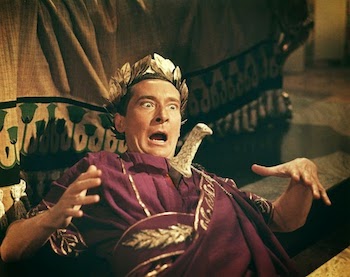
(Harry dealing with Brexit in the only sensible way)

I could just read; or fool around on the internet. The Librarian could, as befits the dignity of her profession, continue to play on the kitchen floor with a tabby cat and a yellow catnip banana. Instead, unwisely, we tune in to the Conservative party leadership debates. Dear God, they’re depressing. We deserve better than this, the Librarian says, flourishing her empty glass with obvious urgency. We do, yes – and are unlikely to get it. Indeed, the latest results have just been announced: the one hundred and sixty thousand members of the Conservative party—and thus grotesquely unrepresentative of the nation as a whole—will choose between Boris Johnson and Jeremy Hunt to assume the position of Prime Minister of this country’s sixty-six million citizens.

Unsurprisingly, the debates were poor stuff. All that relentless concern for the poor, the underprivileged, the disadvantaged, climate catastrophe – and this from Tories, who thus nodded through the hostile environment, the bedroom tax, Universal Benefits, arms sales to the Saudis, airport expansion and much, much more. And, crucially, they all support Brexit and claim that ‘we’ must, absolutely must, leave the EU on or by 31 October.

It was, yes, like watching the antics of an unfamiliar tribe, at least one remove from the ordinary universe. While it’s frankly puzzling that anybody would consider giving a position of any responsibility to Boris Johnson, to be told repeatedly that he’s the favourite to become the country’s next Prime Minister beggars belief. I remind the Librarian that a large chunk of the country has turned mad dog in recent years but she, reasonably enough, reserves the right to continue to be astonished.

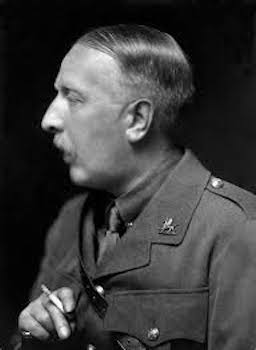
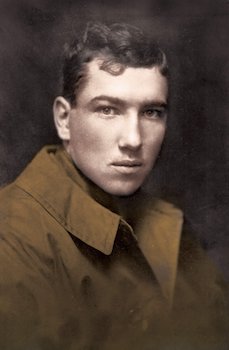
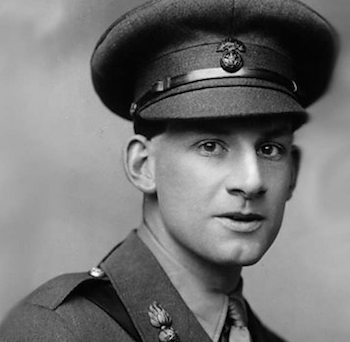
Robert-Graves Siegfried=Sassoon

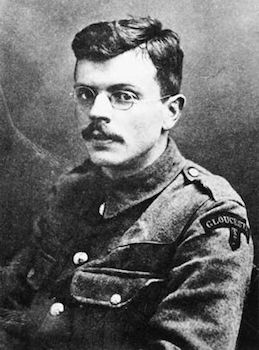
I think briefly of Robert Graves and Siegfried Sassoon around the time of the latter’s famous protest against the conduct of the First World War. ‘We discussed the whole political situation’, Graves recalled. ‘I told him that he was right enough in theory; but that every one was mad except ourselves and one or two others, and that it was hopeless to offer rightness of theory to the insane.’

Somewhere, a hundred years pass. . .


Animal to animal

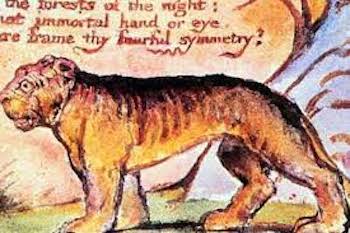
Blake-Tyger

(William Blake’s Tyger)

‘Yes’, William Carlos Williams wrote to Ezra Pound on 14 June 1932, ‘I have wanted to kick myself (as you suggest) for not realizing more about Ford Maddox’s [sic] verse. If he were not so unapproachable, so gone nowadays. I want to but it is not to be done. Also he is too much like my father was – too English for me ever to be able to talk with him animal to animal.’[1]

That phrase would recur more than twenty-five years later, when Williams asked Hugh Kenner whether it might be possible to talk to T. S. Eliot ‘animal to animal’.[2] Ford and Williams became closer in the last year of Ford’s life, when he founded the Friends of William Carlos Williams.[3] Still, animal to animal. . . was there enough common ground for words to mean the same things to both parties? Would each of them even recognise the other’s direction of travel? Were their aims and ideals comparable, perhaps even within touching distance? Could they connect?

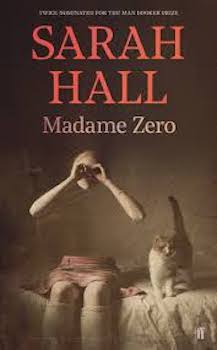
Humans and animals, humans as animals, humans becoming animals – it’s a crowded field: Ovid’s transformations, Kipling, Kafka, David Garnett’s Lady into Fox; more recently, the remarkable Sarah Hall: ‘She stops, within calling distance, were he not struck dumb. She looks over her shoulder. Topaz eyes glinting. Scorched face. Vixen.’[4]

Hall-Madame-Zero

We accept we are animals; or no, it’s those others that are animals; some animal traits we see in humans, some human traits in our dogs, cats, horses. ‘Funny buggers the human animals’, David Jones wrote to Tom Burns, while Llewellyn Powys referred to ‘that escaped, brain-mad animal, man’ and, in order to escape the human into a dreamed world, immaterial and eternal, William Butler Yeats wrote:

Consume my heart away; sick with desire
And fastened to a dying animal
It knows not what it is; and gather me
Into the artifice of eternity.[5]

Guy Davenport remarks that, ‘Odysseus declining the stupidities of hallucination and Akhilleus taming the animal within himself end one age of Greece.’ And here is the philosopher George Santayana in a later Davenport story, ‘Dinner at the Bank of England’:

The unexamined life is eminently worth living, were anyone so fortunate. It would be the life of an animal, brave and alert, with instincts instead of opinions and decisions, loyalty to mate and cubs, to the pack. It might, for all we know, be a life of richest interest and happiness. Dogs dream. The quickened spirit of the eagle circling in high cold air is beyond our imagination. The placidity of cattle shames the Stoic, and what critic has the acumen of the cat? We have used the majesty of the lion as a symbol of royalty, the wide-eyed stare of owls for wisdom, the mild beauty of the dove for the spirit of God.[6]

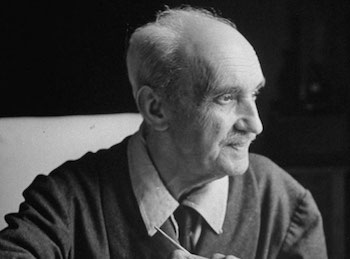
Santayana

(George Santayana)

Of T. H. White, author of both The Goshawk and The Once and Future King, David Garnett recalled: ‘Tim was not a mere devotee of blood sports, he was a naturalist with a gift for sharing the instincts and prejudices of all the animals he hunted or domesticated. Thus he could really enter into the soul of a hawk, or a fox, or a wild goose, or a badger. His description of Merlin’s education of Arthur in The Sword in the Stone is not a piece of fanciful writing, but full of his own experience.’[7] Patrick White wrote of his character, Miss Hare: ‘Now she recalled with nostalgia occasions when she had lost her identity in those of trees, bushes, inanimate objects, or entered into the minds of animals, of which the desires were unequivocal or honest.’[8] Some ten thousand years before the present, Julia Blackburn writes, ‘A man is preparing to go out hunting. In order to achieve the death of the animal that is to be hunted, he must become the animal. Inhabiting that other body is the first step towards possessing it.’[9]

Lily-James-as-Natasha

(Lily James as Natasha in the BBC dramatisation of War and Peace)

That recognised and lived closeness of the worlds of human and animal is certainly an integral part of cultures both ancient and modern. In Tolstoy’s War and Peace, Natasha speaks of recalling memories until one remembers what happened before one was in the world. ‘“That’s metempsychosis,’ said Sonya, who had always been a good scholar and remembered what she learned. “The Egyptians used to believe that our souls once inhabited the bodies of animals, and will return into animals again.”’ And Carlo Levi, exiled by the Mussolini regime to Gagliano in the Lucania region of Italy, wrote: ‘The deities of the state and the city can find no worshippers here on the land where the wolf and the ancient black boar reign supreme, where there is no wall between the world of men and the world of animals and spirits, between the leaves of the trees above and the roots below.’[10]

Harry1

No wall. So near and yet so far away. Reading aloud, animal to animal, I accept the cat as prospective audience – but he keeps his own counsel and, I notice, makes no comment at all.


References

[1] Pound/ Williams: Selected Letters of Ezra Pound and William Carlos Williams, edited by Hugh Witemeyer (New York: New Directions, 1996), 119.

[2] Hugh Kenner, The Pound Era (London: Faber and Faber, 1972), 19.

[3] Max Saunders, Ford Madox Ford: A Dual Life, two volumes (Oxford: Oxford University Press, 1996), II, 537-538.

[4] Sarah Hall, ‘Mrs Fox’, in Madame Zero (London: Faber and Faber, 2017), 9.

[5] Letter of 28 August 1940: Dai Greatcoat: a self-portrait of David Jones in his letters, edited by René Hague (London: Faber and Faber, 1980), 104; Llewellyn Powys, Ebony and Ivory ([1923] Redcliffe Press, Bristol, 1983), 30; ‘Sailing to Byzantium’, W. B. Yeats, The Poems, edited by Daniel Albright (London: Everyman, 1994), 240.

[6] Guy Davenport ‘The Dawn of Erewhon’, in Tatlin! Six Stories (New York: Scribner’s, 1974), 200; ‘Dinner at the Bank of England’, in The Cardiff Team: Ten Stories (New York: New Directions, 1996), 13.

[7] David Garnett, The Familiar Faces (London: Chatto & Windus, 1962), 176.

[8] Patrick White, Riders in the Chariot (Harmondsworth: Penguins Books, 1964), 82.

[9] Julia Blackburn, Time Song: Searching for Doggerland (London: Jonathan Cape, 2019), 171.

[10] Leo Tolstoy, War and Peace, translated by Rosemary Edmonds (Harmondsworth: Penguin Books, 1982), 616; Carlo Levi, Christ Stopped at Eboli, translated by Frances Frenaye ([1947] Penguin 2000), 78.


Play up, play up and play the game!

Operation-Overlord-Wiki

6 June 1944, and the Battle of Normandy begins as Operation Overlord gets underway. The news coverage of the seventy-fifth anniversary has been unsurprisingly extensive and has featured some remarkable veterans, most inevitably in their nineties now, and some extraordinarily moving testimony. And, of course, several commentators and columnists have remarked on the painful ironies of the occasion, that vast military operation to liberate Europe marked by cooperation, expansion and alliance—apart from Britain, the United States and Canada, there were also service personnel from Poland, Greece, Norway, New Zealand, Australia, the Netherlands, Czechoslovakia, France and Belgium—set against the assumptions and values currently espoused by many in Britain and the United States, of separation, closure and isolation.

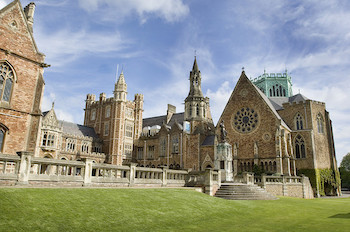
Our local D-Day connection is with Bristol’s Clifton College, founded in 1862, which became, for part of the Second World War, the British headquarters of the United States First Army. In October 1943, General Omar Bradley moved to Clifton and the college Council Room became the centre of invasion planning.

Clifton College boasts an extraordinary list of old boys (mainly boys: its co-educational history is relatively brief), from Trevor Howard, Michael Redgrave and John Cleese to Roger Fry, Peter Lanyon and Henry Tonks. Ford Madox Ford’s Christopher Tietjens, in Parade’s End, has attended Clifton, together with his friend Vincent Macmaster – but then Arthur Marwood, Ford’s friend and the partial model for Tietjens, did go there. Other Clifton-educated writers were Joyce Cary, L. P. Hartley, Geoffrey Household – and Henry (later Sir Henry, knighted in 1915) Newbolt, born 6 June 1862 (he died the year before the Second World War began). Among his contemporaries were Arthur Quiller-Couch (‘Q’, editor of the Oxford Book of English Verse among many other volumes), Francis Younghusband and Newbolt’s ‘lifetime friend’ Douglas Haig, the revered and reviled Field Marshal Haig, commander of the British Expeditionary Force from 1915 until the war’s bloody end. Paul Fussell, in his seminal The Great War and Modern Memory, remarks that, ‘To Newbolt, the wartime sufferings of such as Wilfred Owen were tiny—and whiny—compared with Haig’s’.[1]

Clifton-College

(Clifton College, via https://www.tes.com/)

Newbolt became head of school in 1881 (he was called to the Bar in 1887 and practised for a dozen years). His poem ‘The Chapel’ presents a father talking to his son; the second stanza runs:

To set the cause above renown,
To love the game beyond the prize,
To honour, while you strike him down,
The foe that comes with fearless eyes;
To count the life of battle good,
And dear the land that gave you birth,
And dearer yet the brotherhood
That binds the brave of all the earth.[2]

Newbolt attended the initial meeting that Charles Masterman held at Wellington House, first home of the War Propaganda Bureau. It took place on the afternoon of 2 September 1914 and the writers gathered there included James Barrie, Arnold Bennett, Robert Bridges, G. K. Chesterton, Arthur Conan Doyle, John Galsworthy, Thomas Hardy, John Masefield and H. G. Wells. Kipling and Quiller-Couch, though unable to attend in person, sent messages offering their service. Ford Madox Ford didn’t attend but subsequently wrote two idiosyncratic propaganda volumes for his friend Masterman.[3]

It’s hardly a surprise that, to literary men returning from the trenches or the ‘theatre of war’, who had seen and heard and suffered the devastating effects of mechanised warfare as well as the tactical and strategic policies pursued by those who had such weapons at their disposal, Newbolt was a handily compressed version of all they had learned to reject, mistrust and disbelieve. Wilfred Owen, who fought and died in France, wrote ‘Dulce et decorum est’; Ezra Pound, though a non-combatant, wrote in Hugh Selwyn Mauberley (1920):

Died some pro patria, non dulce non et decor . . .

walked eye-deep in hell
believing in old men’s lies, then unbelieving
came home, home to a lie,
home to many deceits,
home to old lies and new infamy;

usury age-old and age-thick
and liars in public places.[4]

Newbolt3

(Henry Newbolt via http://historywebsite.co.uk/)

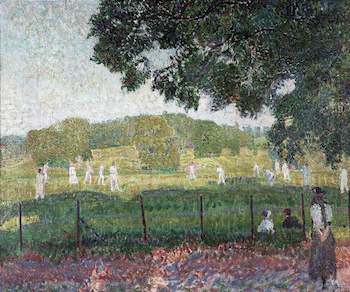
Newbolt’s most famous poems now are probably ‘Drake’s Drum’ and ‘Vitaï Lampada’, the latter ‘a public-school favourite since 1898’, Fussell observes, and one that demonstrates the classic equation between war and sport. ‘Fox-hunting, the sport of kings with only twenty per cent. of the danger of war!’ a character in Ford’s Last Post reflects, perhaps remembering R. S. Surtees’ Handley Cross (1843), ‘it’s the sport of kings, the image of war without its guilt, and only twenty-five per cent of its danger’, and even William Somerville, ‘The Chase’ (1735), ‘the sport of kings; / Image of war, without its guilt.’[5] Newbolt opts for cricket:

Gore, Spencer, 1878-1914; The Cricket Match

(Spencer Gore, The Cricket Match, 1909: The Hepworth Wakefield

There’s a breathless hush in the Close to-night—
Ten to make and the match to win—
A bumping pitch and a blinding light,
An hour to play and the last man in.

The second stanza switches to war in the Sudan, the unsuccessful attempt to relieve Gordon at Khartoum:

The sand of the desert is sodden red,—
Red with the wreck of a square that broke;—
The Gatling’s jammed and the Colonel dead,
And the regiment blind with dust and smoke.
The river of death has brimmed his banks,
And England’s far, and Honour a name,
But the voice of a schoolboy rallies the ranks:
“Play up! play up! and play the game!”[6]

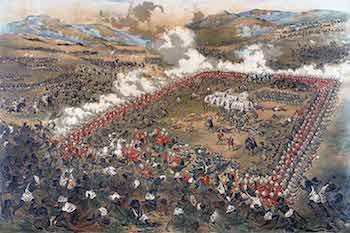
Abu-Klea
(https://www.britishbattles.com/war-in-egypt-and-sudan/battle-of-abu-klea/ )

And, in the final stanza:

This is the word that year by year,
While in her place the school is set,
Every one of her sons must hear,
And none that hears it dare forget.
This they all with a joyful mind
Bear through life like a torch in flame,
And falling fling to the host behind—

“Play up! play up! and play the game!”

Newbolt’s career was marked by literary popularity, eminence in public service and significant governmental influence, including on the policy pursued in Ireland. He became Controller of Telecommunications at the Foreign Office and was made a Companion of Honour in 1922. Still, I like to recall Ezra Pound’s account of a conversation he had, pre-1914, of course, with Maurice Hewlett, poet and novelist, who had likened Newbolt’s poems to ‘The Ballads’.

E. P. BUT (blanks left for profanity) . . . it, Hewlett, look at the line:
‘He stood the door behind’,
(blanks for profanity) you don’t find lines like that in Patrick Spence.
Hewlett: But, but I don’t mean an OLDE ballad, I mean an—eh—eighteenth-century ballad.
E. P., But (blanks left for profanity), Hewlett, the man is a contemporary of Remy de Gourmont!
Hewlett: Ungh!! Unh nnh eh, I don’t suppose he has thought of that. (Long pause)
Hewlett: (continues very slowly): I don’t suppose, eh, I had either.’[7]


References

[1] Paul Fussell, The Great War and Modern Memory (Oxford: Oxford University Press, 1975), 26.

[2] ‘Clifton Chapel’, The Oxford Book of English Verse, 1250-1918, edited by Sir Arthur Quiller-Couch (Oxford: Clarendon Press, 1966), 1066 (yes, really).

[3] Peter Buitenhuis, The Great War of Words: British, American and Canadian Propaganda and Fiction, 1914-1933 (Vancouver: University of British Columbia Press, 1987), 14.

[4] Ezra Pound: Poems and Translations, edited by Richard Sieburth (New York: Library of America, 2003), 551.

[5] Ford Madox Ford, Last Post (1928; edited by Paul Skinner, Manchester: Carcanet Press, 2011), 12fn.

[6] Fussell, Great War and Modern Memory, 25-26.

[7] Ezra Pound, ‘Harold Monro’, in Polite Essays (1937; Plainview, New York: Books for Libraries Press, 1966), 11.


‘Gather the welcome signs’: Whitman, Joyce, Kafka

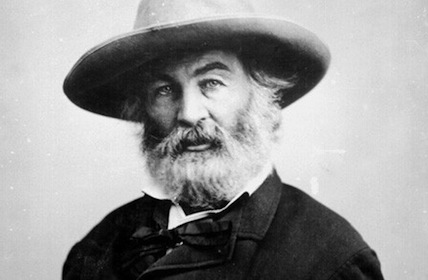
walt-whitman

Given that it’s Walt Whitman’s two hundredth birthday, I meant to write about that ‘good gray poet’; but then, hundreds if not thousands of people will be commenting on Whitman, stressing his concentration on democracy and America, even quoting a bit of his poetry; and, in any case, I’ve been distracted today by the machinations and opaque absurdities of banks – and also by the important business of settling in Harry,  a recent addition to the household.

Cat-stareBirdwatching

Quick, quick, said the bird. Here’s a bit of poetry:

Warble me now for joy of lilac-time, (returning in reminiscence,)
Sort me O tongue and lips for Nature’s sake, souvenirs of earliest
summer,
Gather the welcome signs, (as children with pebbles or stringing
shells,)
Put in April and May, the hylas croaking in the ponds, the elastic
air,
Bees, butterflies, the sparrow with its simple notes,Blue-bird and darting swallow, nor forget the high-hole flashing his golden wings[1]

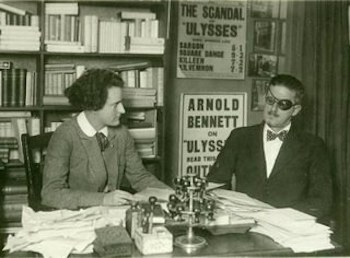
I was thinking, anyway, of James Augustine Aloysius Joyce and Franz Kafka. On 2 February 1926, Sylvia Beach, proprietor of the Shakespeare & Company bookshop and first publisher of James Joyce’s Ulysses, held a party for the fourth birthday of the novel (and its author’s own forty-fourth birthday). Both she and Joyce wore eye patches for the occasion. Joyce suffered consistently from eye problems for many years; Sylvia, more specifically, was suffering an obstruction of the lacrimal ducts, having strained her eyes while working, with Adrienne Monnier, on a translation of Walt Whitman’s unpublished speech, ‘The Eighteenth Presidency’. Sylvia, a member of the newly formed Walt Whitman Committee of Paris, had suggested a Whitman exhibition at the bookshop, with manuscripts, photographs and early editions. At the Ulysses party, Joyce had quoted some Whitman. Now he announced: ‘I am going to Stratford-on-Odéon’, before attending the opening of the Whitman exhibit, to a private audience, on 20 April 1926.[2]

Sylvia’s Aunt Agnes had once visited Whitman in Camden, where manuscripts, letters and much else was strewn all over the floor.[3] Her aunt was with a friend, Alys Smith, who later married Bertrand Russell. ‘Whitman was anything but the style’, Sylvia wrote later. ‘“The Crowd” couldn’t put up with him, especially after T. S. Eliot aired his views about Walt. Only Joyce and the French and I were still old-fashioned enough to get along with Whitman. I could see with half an eye Whitman’s influence on Joyce’s work – hadn’t he recited some lines to me one day?’[4]

Kafka-via-Guardian

(Franz Kafka via The Guardian)

As is often noticed, ‘old Whiteman self’ turns up in both Finnegans Wake and—‘Do I contradict myself? Very well then, I contradict myself’—Ulysses.[5] If Mr Eliot was unconvinced, and Messrs Pound and Lawrence conflicted, there were, quite apart from the French and Mr Joyce, admirers everywhere. In Prague, Franz Kafka gave a copy of the German translation of Leaves of Grass to his young friend, Gustav Janouch, praising Whitman as one of ‘the greatest formal innovators in the modern lyric.’ He went on: ‘The formal element in Walt Whitman’s poetry found an enormous echo throughout the world. Yet Walt Whitman’s significance lies elsewhere. He combined the contemplation of nature and of civilization, which are apparently entirely contradictory, into a single intoxicating vision of life, because he always had sight of the transitoriness of all phenomena. He said: “Living is the little that is left over from dying.” So he gave his whole heart to every leaf of grass.’[6]

beachandjoyce-newyorker

(Sylvia Beach and James Joyce)

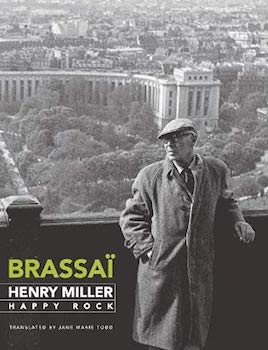
Four years after the Whitman exhibition, another American arrived in Paris, who was also an enthusiast. Henry Miller would later write: ‘For me Walt Whitman is a hundred, a thousand, times more America than America itself’; and, of Dostoievsky and Whitman: ‘for me they represent the peaks in modern literature.’ To the photographer Brassaï, Miller remarked: ‘You know that one of my gods is Walt Whitman. The cosmological scope of his vision no doubt owes a great deal to the “vastness” of the American continent. Whitman was dreaming of a new race on the scale of that land, an earthly paradise. Despite everything about American life that’s been spoiled, that potentiality still exists. I’m convinced of it.’[7]

Happy-Rock.jpg

Paul Zweig registered the noticeable trait among leading modern poets of bringing ‘the unpoetic’ into poetry, pointing to Pound, Rilke, Eliot and Williams: ‘But in this area, Whitman is the master. Apparently there was nothing he could not use: his personal knowledge of house building, Italian opera, Olmsted’s lessons on astronomy, the world atlas.’[8]

Master Whitman posed a problem for many poets, especially American poets. How to avoid and evade the legacy of ‘the great American poet’? Interestingly, in an essay on Wallace Stevens, Hugh Kenner observed that: ‘Nonsense freed both Eliot and Stevens from a poet they longed to be freed from: Whitman. It permitted an American to manipulate the rituals of certified Poetry (the resonant turn of phrase, the mighty line) without sounding the way Whitman had made Tennyson sound, provincial. Whitman’s was no longer the only way around an Anglophile provincialism.’[9]

In a 2008 lecture, the poet Michael Longley said that, throughout fifty years of writing, ‘when the creative buzz comes on, I have felt sizeable, capacious like Walt Whitman; but when I’ve written the poem and typed it out I realise that I am still Emily Dickinson – the pernickety Emily who, when asked for her opinion of Leaves of Grass, said of Whitman, “I never read his book ­ but was told that he was disgraceful.”’

Emily-Dickinson

Longley went on to say that he had worshipped Emily Dickinson since his university days. He had read Whitman ‘of course’ but ‘the penny has only recently dropped. How could I have managed without him for so long?’[10]

Well, yes. How could anybody?

A line in long array where they wind betwixt green islands,
They take a serpentine course, their arms flash in the sun—hark
to the musical clank,
Behold the silvery river, in it the splashing horses loitering stop to
drink,
Behold the brown-faced men, each group, each person a picture,
the negligent rest on the saddles,
Some emerge on the opposite bank, others are just entering the
ford—while,
Scarlet and blue and snowy white,
The guidon flags flutter gayly in the wind.

‘Whitman’s excitement carries weight because he realized that a man cannot use words so unless he has experienced the facts that they express, unless he has grasped them with his senses.’[11]


Notes

[1] ‘Warble for Lilac-Time’, Walt Whitman: The Complete Poems, edited by Francis Murphy (Harmondsworth: Penguin Books, 1986), 400.

[2] Noel Riley Fitch, Sylvia Beach and the Lost Generation: A History of Literary Paris in the Twenties and Thirties (New York & London: Norton, 1983), 225-231.

[3] Guy Davenport, ‘Horace and Walt in Camden’, in The Death of Picasso: New and Selected Writing (Washington: Shoemaker & Hoard, 2003), 196-197.

[4] Sylvia Beach, Shakespeare and Company, new edition (Lincoln: University of Nebraska Press, 1991), 20, 128.

[5] James Joyce, Finnegans Wake (New York: The Viking Press, 1945), 263; Ulysses (1922; London: The Bodley Head, revised edition, 1969), 19.

[6] Gustav Janouch, Conversations with Kafka, translated by Goronwy Rees, second revised and enlarged edition (New York: New Directions, 1971),167.

[7] Henry Miller, The Books in My Life (New York: New Directions, 1957), 104, 221; Brassaï, Henry Miller, Happy Rock, translated by Jane Marie Todd (Chicago: University of Chicago Press, 2002), 55.

[8] Paul Zweig, Walt Whitman: The Making of the Poet (Harmondsworth: Penguin 1986), 93.

[9] Hugh Kenner, ‘Seraphic Glitter: Stevens and Nonsense’, in Historical Fictions (Athens: University of Georgia Press, 1995), 165.

[10] Michael Longley, ‘A Jovial Hullabaloo’, in Sidelines: Selected Prose, 1962-2015 (London: Enitharmon Press, 2017), 314.

[11] F. O. Matthiessen, American Renaissance: Art and Expression in the Age of Emerson and Whitman (1941; New York: Oxford University Press, 1968), 518.


‘Last few days’: bits of paradise

FMF-Biala-viaTLS

(Ford Madox Ford and Janice Biala via the Times Literary Supplement)

Eighty years ago today, Thursday 25 May 1939, William Carlos Williams, poet and paediatrician of Rutherford, New Jersey, went into New York City to make his farewells to Ford Madox Ford and his partner, the painter Janice Biala. Ezra Pound was also expected to say goodbye but didn’t turn up. Ford and Biala were due to leave on 30 May, aboard the Normandie. Williams ‘knew with his trained medical eye that Ford would soon be dead. Nevertheless, Ford himself, wheezing and overweight, was still optimistic. He was taking a villa on the French coast near Le Havre and invited the Williamses to sail over for the month of August.’

The next day, three and a half thousand miles away, Lawrence Durrell and his wife Nancy, returning to Corfu from England, called in to see Henry Miller in Paris. ‘With a sense of finality, Henry inscribed a copy of Tropic of Capricorn to them with the words, “To Larry and Nancy from Henry – Paris 5/26/39 ‘last few days’”.’

Durrells-via-Guardian

(Nancy Durrell and Lawrence Durrell, family photograph, Joanna Hodgkin, included in Amateurs in Eden: The Story of a Bohemian Marriage, Virago, 2012, via The Guardian)

(Miller’s novel begins: ‘Once you have given up the ghost, everything follows with dead certainty, even in the midst of chaos.’)

Ford fell ill on the voyage to France; he and Biala reached Le Havre on 4 June and moved across the Seine to the port of Honfleur. Three weeks later, on 26 June 1939, Ford died at the age of sixty-five. His death ‘hit Williams hard’, though it was four months before he set down his feelings about Ford in a poem because ‘he deeply mistrusted occasional verse’. Towards the end of October, his poem ‘To Ford Madox Ford in Heaven’ emerged. It was later included in his volume The Wedge (1944) and begins:

Is it any better in Heaven, my friend Ford,
than you found it in Provence?

I don’t think so for you made Provence a
heaven by your praise of it
to give a foretaste of what might be
your joy in the present circumstances.
It was Heaven you were describing there
transubstantiated from its narrowness
to resemble the paths and gardens of a
greater world where you now reside.
But, dear man, you have taken a major
part of it from us.
Provence that you
praised so well will never be the same
Provence to us
now you are gone.

With Europe under threat, Paul Mariani comments, Williams was ‘writing an elegy not only for a man but for a whole world in danger now of disappearing forever.’

Ford’s long poem ‘On Heaven’, written before the First World War, essentially identified that celestial place with his beloved Provence. It became increasingly central to his work in the last decade of his life. In the late work Provence: From Minstrels to the Machine (1935), Ford remarked, ‘If I write of Provence a little as if it were an earthly Paradise the reader must amiably condone what, not being fully in the know, he will consider as a weakness.’

Earthly Paradise was the title that Robert Phelps gave to his skilfully assembled collection of Colette’s autobiographical writings. Colette once observed that, ‘For the hearts which have chosen Provence it takes only July, August, to restore – new, annual unchanging – every astonishment and every bestowal.’ Lawrence Durrell, who spent his last decades, living in Sommières, wrote of catching a glimpse of what Provence must have meant to the ancients: ‘a sort of Tibet-shaped land of paradisiacal luxuriance, remote and at peace’.

aldington-durrell-miller-fjt-pont-de-sommic3a8res-1959

(Durrell with Miller – flanked by Richard Aldington and F. J. Temple, Sommières, 1959)
https://lesuniversdetemple.wordpress.com/une-vie-1955-1971/

In earlier years, it was Greece that had seemed paradisal to Durrell, not least because it represented release from a stifling England—it did to his wife Nancy as well at the outset, though Durrell’s jealousy and controlling behaviour led to their separation during the Second World War, after they had been forced to flee Greece. For Henry Miller too, his first experience of Greece tasted of heaven in the face of encroaching catastrophe. A few months before the outbreak of war, he went to the Dordogne region: ‘It is the nearest thing to Paradise this side of Greece.’ Arriving at Piraeus in a heat wave in July 1939, he joined Durrell and spent time on Corfu, in Athens and travelling in the Peloponnese. He would later state simply that, ‘Greece is now, bare and lean as a wolf though she be, the only Paradise in Europe.’

The ‘last few days’. But the noises of war were increasingly difficult to ignore. The American Embassy was keen to get its nationals home safely and Miller returned to the United States.

A few years later, in a detention camp a little to the north of Pisa, Ezra Pound wrote:

Le paradis n’est pas artificiel

adding, unsurprisingly:

l’enfer non plus.


A few books

Colette, Looking Backwards: Recollections [Journal à rebours and De ma fenêtre], translated by David Le Vay (London: Peter Owen, 1975)

Lawrence Durrell, Caesar’s Vast Ghost: Aspects of Provence (London: Faber and Faber, 1990).

Ford Madox Ford, Provence (London: Allen & Unwin, 1938).

Joanna Hodgkin, Amateurs in Eden: The Story of a Bohemian Marriage (London: Virago, 2012).

Edmund Keeley, Inventing Paradise: The Greek Journey, 1937-47 (New York: Farrar, Straus and Giroux, 1999).

Ian MacNiven, Lawrence Durrell: A Biography (London: Faber and Faber, 1998).

Paul Mariani, William Carlos Williams: A New World Naked (New York: W. W. Norton, 1990).

Henry Miller, The Colossus of Maroussi (1941; London: Penguin Books, 1972).

Henry Miller, Tropic of Capricorn (1939; London: John Calder, 1964)

Max Saunders, Ford Madox Ford: A Dual Life, two volumes (Oxford: Oxford University Press, 1996), II: The After-War World.

William Carlos Williams, The Collected Poems, Volume II: 1939-1962, edited by Christopher MacGowan (Manchester: Carcanet Press, 1988).

William Carlos Williams, Selected Letters, edited by John C. Thirlwall (New York: New Directions, 1969).


Going to the polls (greenly, liberally or laboriously)

Our English Coasts, 1852 ('Strayed Sheep') 1852 by William Holman Hunt 1827-1910

(William Holman Hunt Our English Coasts, also known as Strayed Sheep)

We go to the polls tomorrow; I mean that Europe does and, for now at least, the United Kingdom, if we’re sticking with that title, is on the list. The high anxiety for some Labour supporters has, though, been simplified by Mr Corbyn’s continuing to teeter on the fence, not unlike the grey cat that frequently passes, insecurely and unconvincingly, along the back of our garden.

As to the result, the predictions may be awry in some cases but no doubt right enough in one, that the Brexit Party will come out ahead. It’s simple arithmetic: Stayers will split their votes among three or four parties, Quitters will vote for one party. That reflects at least one aspect of the case: the world can be made to appear very simple; or it’s a complicated place where nuances and complexities abound. Louis MacNeice wrote, in ‘Letter to Graham and Anne Shepard’:

We are not changing ground to escape from facts
But rather to find them. This complex world exacts
Hard work of simplifying; to get its focus
You have to stand outside the crowd and caucus.

Still, this is where we are, in a tight spot. ‘My God’, the Librarian says, ‘the news is bleak.’ As it is. The United States national security advisor threatens war with Iran while, domestically, America wages war on women. The recent Australian election seems not to have been particularly good news for women either. On the European continent, there’s a struggle taking place that we’re likely to end up on the wrong side of; as with the environmental crisis, it seems extraordinary that the response to warnings that the building is on fire is so often to yawn and turn over in bed. Nancy Cunard recalled her friend Brian Howard’s bafflement over the lack of interest in the rise of Nazism in Germany. ‘How was it that, each time he returned to England, or even to France, not enough people cared nor wanted to be made aware of the hideous import of these facts, these obviously lucid indications? Why, save for a minimum of really politically minded people, were they, seemingly, not even interested? Must one be politically minded to be concerned at the appalling things going on? What about being merely human?’

tight-spot-Valloton
(Felix Vallotton, ‘A Tight Spot’)

What indeed? Ernest Hemingway famously remarked to George Plimpton: ‘The most essential gift for a good writer is a built-in, shock-proof, shit detector.’ And for non-writers? ‘The road from appearance to reality is often very hard and long, and many people make only very poor travellers’, Franz Kafka once said. ‘We must forgive them when they stagger against us as if against a brick wall.’ He was a forgiving sort of person. Still, given the events of the past few years, not least in the United Kingdom and the United States, the most obviously essential tool for the voter, the citizen, is a built-in bullshit detector; and it’s clear that—to put it mildly—not everybody has one.

It was said after the EU Referendum in this country that, if it showed nothing else, it showed that a great many people didn’t mind being lied to as long as they liked the lie they were being told – and there have always been, in the phrase Pound used in Hugh Selwyn Mauberley, ‘liars in public places’. But as Harry Frankfurt’s On Bullshit and many related books since have suggested, there’s a distinction to be made between lies and bullshit, even though overlap often occurs. While liars tend to know when they’re lying and also to accept that truth matters, even if they’re deliberately deviating from it, bullshitters often don’t even know what’s true and they certainly don’t care. The examples often cited here are Messrs Trump, Johnson and Farage ­– and the main reason why they’re able not to care appears to be that those they are speaking most directly to don’t care either.

Ah, well. As the excellent Marina Hyde concluded a recent column, ‘The UK remains in toxic stasis, presided over by a necrotic government, but now with a gathering sense that much worse could be in the post.’

https://www.theguardian.com/commentisfree/2019/may/17/tory-boris-johnson-leadership-candidate

A gathering sense. Yes. Watch that space.


Oompah and High-Wind: Dylan Thomas, Richard Hughes

Dylan-Caitlin

(Dylan and Caitlin Thomas)

On 16 May 1938, Dylan Thomas updated Henry Treece, the poet and novelist to whom he was writing regularly for a time – they later fell out over Dylan’s refusal to identify himself as an adherent of The New Apocalypse, a movement co-founded by Treece:

‘I’ve been moving house. That is, I’ve left, with trunks and disappointment, one charitable institution after another and have found and am now occupying, to the peril of my inside and out, my rheumatic joints, my fallen chest, my modern nerves, my fluttering knutted pocket, a small, damp fisherman’s furnished cottage—green rot sprouts through the florid scarlet forests of the wallpaper, sneeze and the chairs crack, the double-bed is a swing-band with coffin, oompah, slush-pump, gob-stick and almost wakes the deaf, syphilitic neighbours—by the side of an estuary in a remote village.’

I, the first named, am the ghost of this sir and Christian friend
Who writes these words I write in a still room in a spellsoaked house:
I am the ghost in this house that is filled with the tongue and eyes
Of a lack-a-head ghost I fear to the anonymous end.

Laugharne_Castle_2015

The remote village was of course Laugharne: not yet the Boat House but the cottage in Gosport Street found for Dylan and his wife Caitlin by the novelist Richard Hughes. In the same letter, Dylan wrote: ‘The village also contains bearded Richard High-Wind Hughes, but we move, in five hundred yards, in two or more different worlds: he owns the local castle, no roof and all, and lives in a grand mansion by its side and has a palace in Morocco.’

‘High-Wind’ refers to Hughes’ most famous novel, A High Wind in Jamaica, originally called The Innocent Voyage, a tale of pirates and children: you’d feel safer with the pirates. He was the author of the world’s first radio play, Danger, broadcast in 1924. After In Hazard (1938), there was a gap of over twenty years before he published The Fox in the Attic (1961), the first part of his unfinished trilogy, The Human Predicament, tracing the history of the years following the Great War and the rise of Nazism. The Wooden Shepherdess followed in 1973 but Hughes died three years later.

I read them about ten years ago, in old orange Penguins but then acquired the New York Review Books editions, with introductions by Hilary Mantel. They’re so damned attractive that you could go for a walk with one of them on your arm or, indeed, one on each arm (not literally, perhaps). Their edition of The Wooden Shepherdess includes the twelve chapters that Hughes completed of the planned third volume before his death.

Fox-in-the-Attic

The two volumes we have are a really impressive achievement, a brave tackling of the near-impossible task of weighting both individual and collective histories in a novel so that the balance is held: the context not skimped but the individuals still not pressed like flowers between the pages. The central character, Augustine, is certainly unobservant enough in some instances to be believable and Hughes has a good grasp of the sleight of hand by which great gaps can be left which are satisfactorily filled in by the pressure exerted on either side by existing material rather than needing the writer to shovel in ballast for dear life before the structure cracks. Still, the murky world of the rising Nazi party perhaps convinces even more – because it is less familiar (to the British reader, anyway), and because Hughes is so obviously thoroughly conversant with the historical sources, to an extent that renders it unnecessary for him to labour the fact.

Do we now need to labour the unsettling echoes of that time in this? Probably not: anyone likely to be able to hear them has probably already done so. Martin Kettle certainly has:

https://www.theguardian.com/commentisfree/2019/may/16/brexit-britain-weimar-germany-far-right-democracy-contempt-politicians

Also on this day in 1791, in an edition of 1750 copies (two volumes quarto, price two guineas), James Boswell’s Life of Johnson was published. Many of Johnson’s remarks, so faithfully recorded by Boswell, are specific to his time, to his social, cultural and political context. Others are applicable to other times too:

‘Where a great proportion of the people (said he,) are suffered to languish in helpless misery, that country must be ill policed, and wretchedly governed: a decent provision for the poor is the true test of civilization.—Gentlemen of education, he observed, were pretty much the same in all countries; the condition of the lower orders, the poor especially, was the true mark of national discrimination.’

Making Hay: a visit to The Poetry Bookshop

Hawthorn

Midway through our week in the Anglo-Welsh border country—wonderful setting, indifferent weather—we take advantage of the fact that we are less than twenty miles from Hay-on-Wye (‘the Book Town of Wales’) where we stayed a couple of years ago and brought home an alarming number of secondhand volumes needing shelf space.

The main event is going back to The Poetry Bookshop. I say ‘back’ but since we were last there, the shop has moved, to a more central position in Hay. The owners, Christopher and Melanie Prince, now stock new titles as well as secondhand. Theirs is the only specialist poetry bookshop in the country. There may be others elsewhere in the world, I don’t know, nor do I feel any need to since the stock here is astonishingly good, ranging from the obscure contemporary to the major classic and modern—I think books by and about William Blake, for instance, take up three shelves. But, not having planned this or prepared for it, I fidget, exhale noisily, pick up and put down a dozen volumes, from George Barker to Alun Lewis, browse the Pound shelves and lapse into staring blankness. Then I remember James Merrill.

A while ago, in the course of an unearthing, I turned up an old stray copy of The Hudson Review, dating back to 1972. It led off with poems by Octavio Paz, included four translations of Osip Mandelstam by W. S. Merwin and Clarence Brown and, the reason for its being in my possession in the first place, a twenty-page essay by Richard Pevear, ‘Notes on the Cantos of Ezra Pound’. I had no clear memory of it—my reading must have coincided with thesis research—but my pencil marks are in evidence: ‘Pound’s poetry has its source in “the noblest of the senses,”, the eyes’, ‘The Greek word for truth, aletheia, means unveiling’, ‘there is nothing fictional, nothing mythological, nothing allegorical in the Cantos’, and the remark that, while Homer makes use of the devices of oral poetry (as have many writers of literary epics since), Pound, ‘on the other hand, makes use of the devices of print, not only in the lay-out of the page, but in his basic technique of the suppression of narrative links, which presupposes a fixed text.’ This looked back, I suspect, to an earlier statement that, ‘There is a feeling of wholeness in the Cantos that is very hard to explain.’ I must have frowned over some of this a good deal at the time but the item that struck me when I brought the journal back into the light of day was Merrill’s ‘Days of 1935—a long poem’. The narrator remembers himself as a child, the news on the radio about the Lindberghs’ kidnapped and murdered baby—Richard Hauptmann’s trial took place in early 1935—and imagining his own kidnapping in a long, detailed narrative:

On the Lindbergh baby’s small
Cold features lay a spell, a swoon.
It seemed entirely plausible
For my turn to come soon,

For a masked and crouching form
Lithe as tiger, light as moth,
To glide towards me, clap a firm
Hand across my mouth,

Then sheer imagination ride
Off with us in its old jalopy,
Trailing bedclothes like a bride
Timorous but happy.

HR

Elegant, accomplished, the form seeming very traditional—regular and capitalised lines, rhymes!—in contrast with most of the stuff I was reading at the time. Then too, the main influences or affinities – Henry James, Proust, even Stevens – were not quite the usual suspects for my favoured poets then either. Reviewing Merrill’s Selected Poems in the New York Times (7 November 2008), August Kleinzahler observed: ‘Many readers will find the poetry mannered. It is, by design. The poet is an aesthete, a dandy in the Baudelairean sense, unabashedly so.’ He added that Merrill ‘enjoys creating the sorts of atmospheres found more often in novels than in poetry, and a number of his poems are narratives in miniature, tiny blank verse novels of manners.’

Your village touched us by not knowing how.
Even as we outdrove its clear stormlight
A shower of self-belittling brilliants fell.
Miles later, hours away, here are rooms full
Of things you would have known: pump organ, hymnal,
Small-as-life desks, old farm tools, charter, deed,
Schoolbooks (Greek Grammar, A Canadian Reader),
Queen Mary in oleograph, a whole wall hung
With women’s black straw hats, some rather smart
—All circa 1915, like the manners
Of the fair, soft-spoken girl who shows us through.
Although till now she hasn’t heard of you
She knows these things you would have known by heart
And we, by knowing you by heart, foreknew.

Merrill-CP

Merrill cropped up several times in the course of other reading: in the letters of Elizabeth Bishop and a biography of her—the lines above are the opening of one of the poems that Merrill wrote to her, the elegiac ‘Overdue Pilgrimage to Nova Scotia’—and in Timothy Materer’s Modernist Alchemy, picked up for the sake of Yeats and Pound but which also pays attention to Merrill because of the famous use of an Ouija board in the making of his enormous poem, The Changing Light at Sandover. And I came across other poems of his, mainly in anthologies, which showed a wide range of styles and forms. So a few relevant facts had lodged in my mind: he’d written a lot, some of it very impressive – and I didn’t have any of his books. Until now.

So, the Librarian having snagged a couple of posters by Jackie Morris—and a few Virago titles in Addyman Books later—I was also pretty restrained, limiting myself to the Peter Russell collection of essays on Pound, read decades ago but not previously owned – and the Merrill Collected Poems, a modest volume of a little under 900 pages. Even so, it still excludes The Changing Light at Sandover. Another time, perhaps. . .


Getting it on the page: a few notes on Guy Davenport’s ‘The Aeroplanes at Brescia’

Courbet, Gustave, 1819-1877; Pomegranates

(Gustave Courbet, Pomegranates: People’s Palace and Winter Gardens, Glasgow)

Half a pomegranate, falling from the middle shelf of a refrigerator, has a startling effect upon a kitchen floor. On my hands and knees, I grope under cupboard and table, picking up seeds.

Responding to William Carlos Williams—‘We have/ a microscopic anatomy/ of the whale/ this/ gives/ Man/ assurance’—the Czech poet and scientist Miroslav Holub wrote ‘Wings’:

We have
a map of the universe
for microbes,
we have
a map of a microbe
for the universe.

We have
a Grand Master of chess
made of electronic circuits.

But above all
we have
the ability
to sort peas,
to cup water in our hands,
to seek
the right screw
under the sofa
for hours

This
gives us
wings.[1]

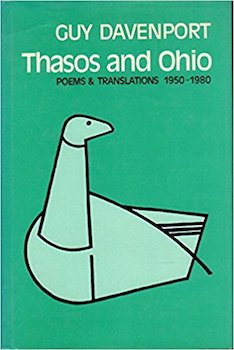
Referring to Ovid’s story of the invention of wings—the master craftsman Daedalus and his lost son—Guy Davenport wrote that the first two stories in Tatlin! ‘are both the tale of Icarus told in different styles’. The first story is ‘Tatlin!’, the second, ‘The Aeroplanes at Brescia.’

The Air Show at Brescia, 1909

(From Peter Demetz, The Air Show at Brescia, 1909 (Farrar, Straus & Giroux, 2002): Blériot is on the right)

This is probably the most discussed of Davenport’s short fictions, perhaps not least by the author himself, both in interviews and in the discussion of his stories in ‘Ernst Machs Max Ernst’. This is in part because it was based on Kafka’s first published writing, his report of the airshow at Brescia (8–20 September 1909), which appeared in La Sentinella Bresciana, in part because the story represented Davenport’s own first foray into fiction since ‘undergraduate days’: he was forty-three when he wrote it, he says, though that was his age on its first publication – the writing of it was more likely 1967-1969. Edward Burns points to the letter of 10 February 1966, in which Hugh Kenner asked Davenport if he knew of any evidence that Kafka’s novel The Castle drew on the castle at Brunnenberg, Merano, where Ezra Pound’s daughter, Mary de Rachewiltz lived with her husband Boris, and where Pound himself lived for a while after his return to Italy. Not until September 1967 did Davenport mention Kafka’s ‘The Aeroplanes at Brescia’.[2] Davenport’s story first appeared in The Hudson Review, in the issue for Winter 1969-1970.

In ‘Ernst Machs Max Ernst’, he discussed the ways in which he went about assembling material for his story: Kafka’s article,[3] of course, from which he draws several details and phrases, including the passage from La Sentinella Bresciana, describing the forthcoming air display; Max Brod’s biography of him, what Davenport could discover of people who were there (the poet and novelist Gabriele D’Annunzio, the composer Giacomo Puccini), ‘as well as of people who might well have been there (Wittgenstein).’ He studied contemporary photographs, read histories of aviation and built a model of Blériot’s Antoinette CV25. ‘Notice everything’, Franklin, a young character in one of Davenport’s later stories says, ‘Know where everything comes from, a hundred years back.’[4]

Franz Kafka (right) with Max Brod’s younger brother, Otto, at the Castel Toblino near Trento, Italy, 1909

(Max Brod and Kafka, via New York Review of Books)

‘I knew that Kafka’s first entry in his notebooks that led to writing The Castle was made at Merano, where he would have been gazing at the castle in which Ezra Pound was living at the time I was writing. What kind of symbol (if any) this constructs I do not know, but I felt that something was inside the image. It can be said of all my involucra [anatomical term for envelope] that I hope there is a meaning inside, but do not necessarily know. I trust the image; my business is to get it onto the page.’[5]

One of the most unsettling aspects of reading Davenport’s stories is his own repeated assertions that his fictional art is ‘primitive’—‘This last term is slippery, and has several implications’, as Erik Reece remarks[6]—and references to these writings as his ‘ravings’. Yet they proceed from a breadth and depth of knowledge—historical, artistic, literary, scientific, anthropological—that is consistently astonishing; they also draw upon a vocabulary that frequently evidences an intimate relationship with Webster’s Third New International Dictionary of the English Language, Unabridged, references to which are scattered through Davenport’s essays. There are also words, phrases, sentences, in French, German, Dutch, Latin, Greek, Italian, Danish.

Reece-Balance

The subjects chosen for stories in Tatlin! ‘are all in the position of being, as fact, almost not there’, Davenport writes, noting that he sidestepped verisimilitude of the Gustave Flaubert or Walter Scott kind at the outset, deciding that his ‘best hope of a sustained reality would be one like Max Ernst’s world, which is always of verifiably real things that are not, however, where they are supposed to be’ (Geography, 376, 377). Indeed, that constantly unsettling vocabulary, the jolts and blanknesses and near-misses (your dictionary has that word, more or less, yet not quite in the form that Davenport’s used it), is a major, integral part of disrupting what is sometimes the trance, the state of suspended animation in which we find ourselves with some naturalistic prose. Ford Madox Ford wrote that, ‘Carefully examined, a good—an interesting—style will be found to consist in a constant succession of tiny unobservable surprises.’[7] The surprises in Davenport’s fiction, if not quite constant, are certainly not tiny and inarguably not unobservable.

In ‘The Aeroplanes at Brescia’, which takes place just five years before the beginning of a machine age war of unprecedented destructiveness, Kafka and Max Brod are accompanied by Max’s brother Otto: ‘The newest style, he said, is always in love with the oldest of which we are aware. The next Wiedergeburt [rebirth, regeneration] will come from the engineers.’[8] Present in Davenport’s story, though not in Kafka’s, is ‘[t]he man named Wittgenstein’, who is ‘again holding his left wrist, massaging it as if it were in pain’ (Tatlin! 70). There was, of course, another ‘man named Wittgenstein’, one of Ludwig’s elder brothers, Paul, a concert pianist who lost his right arm in the First World War but afterwards taught himself to play with his left hand so successfully that he was able to continue his career.

Wittgenstein-New-Statesman

(Ludwig Wittgenstein via The New Statesman)

Since the autumn of 1908, Ludwig Wittgenstein had been registered as a research student in the Engineering Department of Manchester University, where he had gone to study aeronautics. ‘It was his apparent intention to construct, and eventually to fly, an aeroplane of his own design.’[9] He began by experimenting on the design and construction of kites. The Wright Brothers too had so begun. ‘The kite was their beginning, not the bird. That was da Vinci’s radical error’ (Tatlin! 55).

In a 1991 exchange, Laurence Zachar remarked: ‘A proportionately large part of your work is Utopian. It deals with happy people, in an ideal place where there is no violence.’ Davenport responded that ‘The Dawn in Erewhon’ the novella that closes Tatlin! is all about a Utopian vision. Communism is a Utopian vision, first story [‘Tatlin!’]. In “The Aeroplanes at Brescia”, there’s the implicit sense that aeroplanes were going to stop all wars; the Wright brothers wrote a famous letter to the War Department which paid no attention to it, saying: with the aeroplane, there can be no more troop movements because they can be observed from the air, and therefore no more wars.’[10]

Bleriot-25Jul1909-EngCh.NYT

(Louis Blériot, 25 July 1909, having just flown across the English Channel: via New York Times)

When the story first appeared in the Hudson Review, a paragraph on the final page put that assertion into the mouth of Otto Brod but Davenport must have felt that such an unbearably painful irony was too easy, a little too obvious. It was omitted when revised for book publication.

Nevertheless, like so much of the history of flight itself, Davenport’s story ends in tears:

‘—Franz! Max said before he considered what he was saying, why are there tears in your eyes?
—I don’t know, Kafka said. I don’t know.’ (Tatlin! 70).

Davenport once said that he wanted ‘several transformations of each tale simultaneously, because we have reached this possibility.’ He added: ‘The story about Kafka, for instance, which follows his own account of the event, is based on a scene in Proust, where the aeroplanes are not at Brescia but at Le Bourget. It was Proust, not Kafka, who wept inexplicably when he saw an airplane for the first time.’[11]

GD_Apples_pears

This has another fictional relation in Davenport’s work. In Apples and Pears, the narrator, Adriaan van Hovendaal, and Sander, on the island where they often spend time, are talking of buying the house on Spiegelgracht: it will be another island but in Amsterdam, their version of Fourier’s Utopia. ‘Adriaan, he said, there are tears in your eyes.’[12]

And, after all, was it actually Proust who wept? Or was it, rather, his narrator, the ‘almost’ Proust, ‘Marcel’:

All of a sudden my horse reared; he had heard a strange noise, I had difficulty in controlling him and not being thrown to the ground, then I raised my tear-filled eyes to the spot from where the noise appeared to be coming, and I saw, fifty metres or so above me, in the sunlight, between two great wings of glittering steel that were bearing him away, a being whose indistinct face I fancied resembled that of a man. I was moved as might a Greek have been setting eyes for the first time on a demigod. I was weeping also, for I had been ready to weep from the moment when I recognized that the noise was coming from above my head – aeroplanes were still a rarity in those days ­ and at the thought that what I was about to see for the first time was an aeroplane.[13]

One final ‘transformation’, perhaps.


References

[1] Miroslav Holub, ‘Wings’, translated by George Theiner, in The Fly, translated by Ewald Osers, George Theiner, Ian and Jarmila Milner (Newcastle: Bloodaxe Books, 1987), 43. In ‘Histology’, this reads ‘There is/ the/ microscopic/ anatomy/ of, the whale/ this is/ reassuring’: William Carlos Williams, The Collected Poems, Volume II: 1939-1962, edited by Christopher MacGowan (Manchester: Carcanet Press, 1988), 419.

[2] Questioning Minds: The Letters of Guy Davenport and Hugh Kenner, edited by Edward M. Burns, two volumes (Berkeley: Counterpoint Press, 2018), I, xii.

[3] Franz Kafka, ‘The Aeroplanes at Brescia’, in The Transformation and Other Stories: Works Published During Kafka’s Lifetime, translated and edited by Malcolm Pasley (London: Penguin Books, 1992), 1-10.

[4] See the title story in The Jules Verne Steam Balloon: Nine Stories by Guy Davenport (San Francisco: North Point Press, 1987), 108.

[5] Guy Davenport, The Geography of the Imagination (Boston: David R. Godine, 1997), 374.

[6] Erik Anderson Reece, A Balance of Quinces: The Paintings and Drawings of Guy Davenport (New York: New Directions, 1996), 45. One such implication is the rebirth of the archaic in modernism, a reminder that industrial and military innovations are ‘not the only indicators of progress’.

[7] Ford Madox Ford, Joseph Conrad: A Personal Remembrance (London: Duckworth, 1924), 197.

[8] Guy Davenport, Tatlin! Six Stories (New York: Scribner’s, 1974), 53.

[9] Ray Monk, Ludwig Wittgenstein: The Duty of Genius (London: Vintage, 1991), 28.

[10] Laurence Zachar, ‘Guy Davenport. Lexington, Kentucky: December 1991’, Effets de voix (Tours: Presses universitaires François Rabelais, 1994).
See: http://books.openedition.org/pufr/3904 (accessed 20 March 2019)

[11] Guy Davenport, ‘From Indifference to Attention’, New York Times Book Review (4 April 1982), 30.

[12] Guy Davenport, Apples and Pears (San Francisco: North Point Press, 1984), 153.

[13] Marcel Proust, In Search of Lost Time. 4: Sodom and Gomorrah, translated by John Sturrock (London: Allen Lane, 2002), 423.


Cooking, cleaning, washing the pig

; Chinese People Washing Three Large, White Elephants

(Unknown artist, ‘Chinese people washing three large, white elephants’: Wellcome Collection)

07:30 and my Spelt loaf is underway. But I actually enjoy bread making so can this count as housework? Cooking, fine, washing up and vacuuming, okay; ironing, less so; cleaning, much less so.

When Rudyard Kipling moved into Bateman’s in September in 1902, the house and thirty-three acres costing £9300, he was, Andrew Lycett notes, looking forward to washing his 335 apple trees ‘with oil, limewash, salt and soap’ as recommended in the agricultural textbooks.[1] Would that count as housework? Probably not. Gardening or perhaps, on that scale, farming—‘We began with tenants – two or three small farmers on our very few acres – from whom we learned that farming was a mixture of farce, fraud, and philanthropy that stole the heart out of the land’—and would Kipling have done that work himself? He certainly had views on domestic service – of some of the people he met on his return from India to England: ‘They derided my poor little Gods of the East, and asserted that the British in India spent violent lives “oppressing” the Native. (This in a land where white girls of sixteen, at twelve or fourteen pounds per annum, hauled thirty and forty pounds weight of bath-water at a time up four flights of stairs!)’[2]

Batemans

http://www.kiplingsociety.co.uk/batemans.htm

D. H. Lawrence might turn his hand to sweeping floors and baking bread—and the Skeptic philosopher Pyrrhon of Elis was, apparently, ‘known to dust the house and sweep the floors for his sister, and was once seen washing the pig’[3]—but the real (male) literary demon when it comes to housework is Patrick White, whose letters are littered with references to the daily tasks. ‘I seem to spend all my time washing up and preparing for the next meal’, he wrote to Frederick Glover and, on the eve of a long trip to Europe, remarked to Mollie McKie: ‘Still, it will be a change not to do the washing up for a few months. I did go away for a few days recently. but found myself washing up in self-defence as my hosts were so bad at the sink.’ To Geoffrey Dutton, he confided that: ‘My rheumatics only left after house-cleaning days: I suppose all the stooping and stretching drove them out; so you can tell Max [Harris] that is another good reason not to keep a “char”.’ Later, furious at a review of one of his plays which asked what Patrick White knew about suburbia since he was brought up ‘in a mansion’, he told Mary Benson: ‘I had lived in suburbia for twelve years, between sink and stove, and scrubbing my own floors, before writing that play.’ Again to Dutton, describing a call from a friend, he noted in passing that ‘I was labouring at the house-cleaning when the telephone went’.[4]

White-Letters

When White and Manoly Lascaris moved to the house in Martin Road in October 1964, White’s biographer records, they had a cleaning woman for a short time but White stated that, ‘after doing everything in the way of house-cleaning ourselves over the last fifteen years, I find it a great strain having somebody else about, and I am always relieved when those mornings are over.’ She didn’t last and, ‘Once again, he took up the broom and Hoover himself.’[5]

How long does all this stuff take? How long should it take? Judith Flanders writes that most Victorian houses (above a certain social level, of course) ‘operated a system that ran more or less as follows:

Monday: laundry

Tuesday: servant’s room [if time was allowed for it at all, her note adds], one bedroom

Wednesday: remaining bedrooms

Thursday: drawing room, breakfast room, morning room

Friday: dining room and polishing the silver

Saturday: hall, stairs, kitchen, passageways

Sunday: collect, sort and soak laundry ready for Monday’[6]

Edwardian-maids

http://www.edwardianpromenade.com/occupations/general-servants-time-table/

Lucy Lethbridge, writing of the Edwardian period, notes that ‘Cotton, woven in the great textile factories of the industrial Midlands, needed mangling, starching, bleaching and pressing to keep its appearance. For the working-class housewife, washing her own family’s clothes took up two full days of the week.’ Midway through the twentieth century, ‘In 1950 a survey of full-time housewives showed that they spent an average of seventy hours a week on housework; in a survey in 1970 that average had risen to seventy-seven hours.’[7]

Leaving aside the fact that ‘labour-saving devices’ are assumed to do precisely that—and surely they became more widely available in those twenty years—seventy-seven hours? Really? Eleven hours a day every day of the week? Madness. I shall continue to cook, wash up, hoover and sweep a bit – and make bread. As for the bathroom and shower. . . the Librarian and I will draw lots.

 
References

[1] Harry Ricketts, The Unforgiving Minute: A Life of Rudyard Kipling (London: Chatto and Windus, 1999), 278; Andrew Lycett, Rudyard Kipling (London: Weidenfeld, 1999), 347.

[2] Rudyard Kipling, Something of Myself: For My Friends Known and Unknown, (1936; edited by Robert Hampson, Harmondsworth: Penguin, 1987), 146, 87.

[3] ‘Pyrrhon of Elis’, in The Jules Verne Steam Balloon: Nine Stories by Guy Davenport (San Francisco: North Point Press, 1987), 25.

[4] Patrick White, Letters, edited by David Marr (London: Jonathan Cape, 1994), 123, 125, 352, 436-437, 493.

[5] David Marr, Patrick White: A Life (London: Vintage, 1992), 447.

[6] Judith Flanders, The Victorian House: Domestic Life from Childbed to Deathbed (London: Harper Collins, 2003), 106-107.

[7] Lucy Lethbridge, Servants: A Downstairs View of Twentieth-century Britain (London: Bloomsbury, 2013), 76, 308.