That terrible word ‘genius’

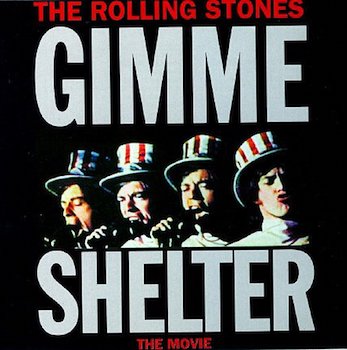
Gimme-Shelter

(Image from the website called, yes, www.genius.com )

Listening again to the opening riff of the Rolling Stones’ Gimme Shelter, I think: ‘This is genius’. Coming up to fifty years ago—it was the opening track on Let It Bleed (1969)—Keith Richards playing an open tuning on a Maton EG240 Supreme, which he was ‘looking after’ for a friend. It sounded great, Richards said, although, on the very last note of Gimme Shelter, ‘the whole neck fell off. You can hear it on the original take.’ (www.guitarworld.com) If your guitar needs looking after, leave it with Keith.

‘This is genius’. If that statement doesn’t conjure up the phrase, ‘Excellency, a few goats’, you probably don’t spend a disproportionate amount of your time on such curious characters as Ford Madox Ford and Joseph Conrad. Ford is writing here of himself in the third person: ‘But no sooner had he got the words on the paper than Conrad burst into one of his roars of ecstasy. “This,” he shouted when he was in a condition to speak, “is genius!” And out of breath, exhausted and rolling on the sofa, he continued to gasp, “Genius I … This is genius…. That’s what it is. Pure genius…. Genius, I tell you!” The writer agreed that it was genius—for the sake of peace!’[1]

Romance

The occasion for this outburst was Ford’s reading to his collaborator a sentence written ‘in a quite commonplace frame of mind’, to ‘provide an obscure Lugareño [local, villager] with a plausible occupation’ – the man is being interrogated by the judge as to how he makes his living – hence the reply: ‘“Excellency—a few goats. . . . ”’[2] In Ford’s telling, Conrad recurred to this example of writerly precision and concision with great frequency for years afterwards.

goats
http://www.bristol.ac.uk/policybristol/policy-briefings/sheep-and-goat/

‘Genius’ – or, as Ford termed it elsewhere, ‘that terrible word “genius”’. He had, after all, come out of ‘the hot-house atmosphere of Pre-Raphaelism where I was being trained for a genius.’[3] Fondly recalling his grandfather once more, forty years after Ford Madox Brown’s death, he wrote: ‘He was, I imagine, the best, the most honorable, the most generous, and the most optimistic of men. For him all geese were swans and all his children and grandchildren geniuses. That was what he asked of life—and to be allowed to go on working.’[4]

Terrible the word may have been but it recurs with striking frequency in Ford’s work (and the work of a great many others too, it’s only fair to add). It certainly did the rounds of the circle of fellow-writers with whom Ford was more usually associated. In 1913, he would note Henry James’s application of the phrase ‘the beautiful genius’ to Ivan Turgenev; in 1927, he would apply the same phrase to Stephen Crane and also referred to Conrad in just that way.[5]

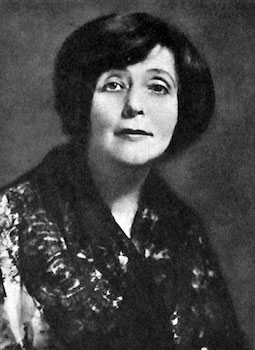
Brett, Dorothy Eugenie, 1883-1977; D. H. Lawrence

(D. H. Lawrence by Dorothy Brett © National Portrait Gallery, London. Photo credit: National Portrait Gallery, London)

D. H. Lawrence too found himself in the firing-line. In ‘Autobiographical Sketch’, he recalled showing the manuscript of his first novel, The White Peacock, to Ford, who read it immediately. ‘And in his queer voice, when we were in an omnibus in London, he shouted in my ear: “It’s got every fault that the English novel can have.”’ Lawrence remarks that, ‘Just then the English novel was supposed to have so many faults, in comparison with the French, that it was hardly allowed to exist at all. “But,” shouted Hueffer in the ’bus, “you’ve got GENIUS.”’ Lawrence goes on to say that, ‘This made me want to laugh, it sounded so comical. In the early days they were always telling me I had got genius, as if to console me for not having their own incomparable advantages.
‘But Hueffer didn’t mean that. I always thought he had a bit of genius himself.’[6]

So did Ford’s friend Olive Garnett, who unleashed the offending word in a diary entry of March 1892. Commenting on a man named Henry Cecil Sturt, who worked at the British Museum, she wrote: “I couldn’t help contrasting him & Ford & the two arguments. He representing solid worth, clear & elaborate construction; Ford, unreliability, inaccuracy &—genius . . . ’[7]

Ezra Pound seemed not to have any problem with the word, writing home in 1908: ‘You have my hearty sympathy for having possibility of genius in the family but I suppose it cant be helped.’[8] And he would supply a lucid enough explanation for that quality in the Roman poet Propertius:

Yet you ask on what account I write so many love lyrics
And whence this soft book comes into my mouth.
Neither Calliope nor Apollo sung these things into my ear,
My genius is no more than a girl.

The poet goes on to enlarge upon this:

Cynthia

If she with ivory fingers drive a tune through the lyre,
We look at the process.
How easy the moving fingers; if hair is mussed on her forehead,
If she goes in a gleam of Cos, in a slither of dyed stuff,
There is a volume in the matter; if her eyelids sink into sleep,
There are new jobs for the author;
And if she plays with me with her shirt off,
We shall construct many Iliads.
And whatever she does or says
We shall spin long yarns out of nothing.[9]

Towards the end of his life, Ford specified one danger of using the word in connection with writers: ‘Really to account for how Jane Austen and Richardson achieved their masterpieces one has to resort to the very dangerous expedient of saying that they must have been natural geniuses. That is dangerous because once you make the concession the whole cry of hounds of the professorio-academic pack will be on your back, shouting: “You see, when it comes to real works of art this fellow has to admit that they can only be produced autochthonously—by writers and others who follow no traditions and know no aesthetic law.” With the corollary that artists who do follow traditions and aesthetic rules are dull fellows whom nobody loves.’[10]

Danger, genius at work! Yes, explanations are not always forthcoming or particularly helpful when they do arrive. Hugh Kenner remarks that ‘the biographer’s is the tested American strategy for doing something about unassimilable phenomena like Howard Hughes and literary genius.’[11] The dictionary can help with that one – ‘assimilable’: able to be taken fully into the mind; or made similar; or received and accepted fully into a group.

With this word in mind, I circle back to Lawrence, who had his faults but also, we remember, genius. Here he is, writing in 1921: ‘The moment has come when America, that extremist in world-assimilation and world-oneness, is reacting into violent egocentricity, a truly Amerindian egocentricity. As sure as fate we are on the brink of American empire.’[12]

Ah, on the brink. Yes, we’ve all been there, I think.


References

[1] Ford Madox Ford, Joseph Conrad: A Personal Remembrance (London: Duckworth, 1924), 147.

[2] Ford Madox Ford and Joseph Conrad, Romance: A Novel (London: Smith, Elder & Co., 1903), 395.

[3] Ford Madox Ford, Ancient Lights and Certain New Reflections (London: Chapman and Hall, 1911), 101, 195. The terrible word appears on at least thirty pages of the book.

[4] Ford Madox Ford, ‘Pre-Raphaelite Epitaph’, The Saturday Review of Literature, X, 27 (20 January 1934), 418.

[5] Ford Madox Ford, Henry James: A Critical Study (London: Martin Secker, 1914), 10; New York Essays (New York: William Edwin Rudge, 1927), 21; Joseph Conrad, 32.

[6] D. H. Lawrence, Phoenix II: Uncollected, Unpublished and Other Prose Works by D. H. Lawrence, Collected and Edited with an Introduction and Notes by Warren Roberts and Harry T. Moore (London: William Heinemann, 1968), 593, 594.

[7] Olive Garnett, Tea and Anarchy! The Bloomsbury Diary of Olive Garnett, 1890-1893, edited by Barry C. Johnson (London: Bartletts Press, 1989), 71.

[8] Ezra Pound to His Parents: Letters 1895–1929, edited by Mary de Rachewiltz, David Moody and Joanna Moody (Oxford: Oxford University Press, 2010), 125.

[9] ‘Homage to Sextus Propertius’ (V, ii), Ezra Pound: Poems and Translations, edited by Richard Sieburth (New York: Library of America, 2003), 534.

[10] Ford Madox Ford, The March of Literature: From Confucius to Modern Times (London: Allen & Unwin, 1939), 595-596.

[11] Hugh Kenner, ‘Literary Biographies’, in Historical Fictions (Athens: University of Georgia Press, 1995), 47.

[12] D. H. Lawrence and Italy (London: Penguin Books, 1997): Sea and Sardinia, 91.


Jonathan Williams: The Lord of Orchards

JW-Lord

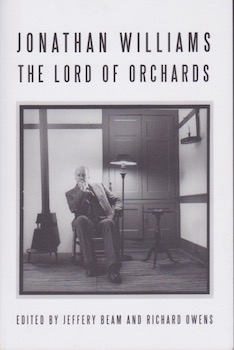
A little late to the party but hugely glad to finally arrive, I’ve been immersed in Jonathan Williams: The Lord of Orchards, edited by Jeffery Beam and Richard Owens.[1] This ‘memorial festschrift’ briefly brought to mind an earlier example, Madeira & Toasts for Basil Bunting’s 75th Birthday, edited by Williams himself, which gathered prose and poetry (and illustrations and music) from almost a hundred writers and artists, published by the Jargon Society and with a cover (a pastel portrait of Bunting) by R. B. Kitaj. But none of those contributions was more than three pages long and most were less than a page, whereas this book of ‘essays, images, and shouts’ (xiv) is not only a good deal heftier, not far short of 500 pages, but also includes substantial studies of several aspects of Williams’ life and work, and is thus perhaps more reminiscent of the ‘Person and Poet’ series of often ground-breaking volumes produced by the National Poetry Foundation (https://personandpoet.wordpress.com/ ).[2]

‘Heft’ is an apposite word, in fact, with its cluster of meanings, some obsolete or archaic, some dialect, ‘weight’, ‘ability or influence’—and one alternative reading ‘a number of sheets fastened together: an instalment of a serial publication.’ Apposite for Jonathan Williams, to be sure. Polumetis—‘many-minded’, versatile—was one of the stock epithets for Odysseus, which Ezra Pound took over and lavished also upon Sigismondo Malatesta; and Williams possessed, and displayed, that versatility in spades, a versatility not only of cultural activities and poetic forms but in his range of reference, from the Greek and Latin classics to Appalachian eavesdropping.

Divided into four sections—‘Remembering’, ‘Responding’, ‘Reviewing’ and ‘Recollecting’—and concluding with two invaluable checklists, of Jargon Society titles and of Williams’s own publications, this volume explores and celebrates that many-minded Williams in a rich array of prose, poetry and, appropriately, illustration—Williams was a superb photographer. There is an extraordinary gallery of images, both of and by Williams, some truly memorable (and also offering a splendid selection of Williams’ hats). A good number of the contributors to Williams’ festschrift for Bunting are represented here too, among them Robert Kelly, Ronald Johnson, Simon Cutts, Eric Mottram, Guy Davenport, Thomas Meyer and Bunting himself.

JW-Jubilant

The last three sections include extensive, thoroughly-researched essays: on Williams and Black Mountain; on Williams’ poetic practice and, more specifically, on ‘metafours’, the form that he invented, refined and extended through several books—‘Williams proves there is always something new under the sun. And that the new is usually found in the glory of the remaindered old’ (195)—and on Williams the photographer. Tom Patterson considers Williams’ long and dynamic engagement with the visual arts: he was a significant collector of folk or vernacular art and, in a talk transcribed here, says that a lot of his poetry of the last ten or fifteen years has been ‘involved with what they call these days, I guess, “outsider art” or “self-taught art” or “naïve art” or . . . Again, it’s essentially people who live in the country who make things’ (416). Patterson’s lengthy essay on this ‘involvement’ details Williams’ discovery of the potter Lanier Meaders and the wood sculptor Edgar Tolson, listing, at one point, nearly forty other ‘self-taught artists’ from Williams’ native region from whom he’d acquired pieces for his collection, not only buying from them but meeting and talking with them too. Much of this was field work connected with the Southern Visionary Folk Art Project though the resultant manuscript, Walks to the Paradise Garden, remained unpublished (338-339).

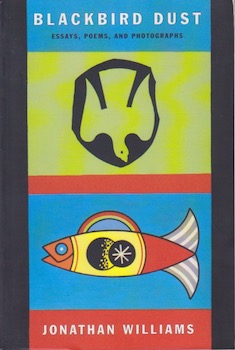
‘The essential thing in a poet is that he build us his world’, Ezra Pound wrote in 1915.[3] It’s striking just how often the word or the sense of that scope and reach arises in this book. In his introduction, Beam refers to ‘the Jonathan who collected the world and offered it to anyone willing and capable of responding’ (xiii). Guy Davenport points to ‘a long and distinguished history of poets who have balanced a love affair and a feud with the world’, and comments a little later: ‘A pattern of artists emerge—Blake, Ives, Nielsen, Samuel Palmer, Bruckner—and (if we have our eyes open) a whole world’ (118, 120). Kenneth Irby writes that Williams’ is ‘a contemplative poetry, attentive upon the entire world before the clear senses’ and further comments: ‘It is very much a poetry of what Ford Madox Ford called, in that neglected masterpiece, England and the English (1907), assoupissement, “a bathing in the visible world”’ (225).[4] The poet Thomas Meyer, Williams’ partner for forty years, remarks: ‘Here is a man for whom the world cannot be the world until it is palpable, until it can be handled. Or is itself a “handle”’ (247). ‘He has made a great motion in the world’, Vic Brand observes, ‘in his goings and comings, on foot and by car across America’ (278). And Williams himself, in the ‘Foreword’ to his beautiful collection of photographs and extended captions (or mini-essays) A Palpable Elysium, pronounced: ‘So, finally, what we have here is a “Home-Made World,” to use Hugh Kenner’s term.’[5]

The main impressions—either new or enhanced—that I take away from this remarkable collection are, firstly, the truly multifarious nature of Williams’ activities and enthusiasms. ‘His wide-ranging passions and interests were omnivorous. Literature, photography, hiking, food & wine, folk art, music were just a few of his serious preoccupations’ (Jonathan Greene, 202)—and he means serious: Williams’ knowledge of these things was deep and detailed. Jeffery Beam, friend and colleague of Williams for almost three decades, writes that ‘his work of more than half a century is such that no one activity or identity takes primacy over any other—seminal small press publisher of the Jargon Society; poet; book designer; editor; photographer; legendary correspondent; literary, art, and photography critic and collector; early collector and proselytizer of visionary folk art; cultural anthropologist and Juvenalian critic; curmudgeon; happy gardener; resolute walker; and keen and adroit raconteur and gourmand’ (xiii). That ‘resolute walker’ takes in the Appalachian Trail (close to 1500 miles, walked with poet Ronald Johnson over some four months) and later the fells and dales of Cumbria and Yorkshire, while the ‘legendary correspondent’ kept up an average of fifty letters a week for fifty years.

Secondly, I’d say, a much better grasp of Williams’ complex relationship with the Black Mountain poets (so many of whom he published and, often, launched), the subject of Ross Hair’s thirty-page essay: Williams’ strong admiration for Charles Olson coupled with his understanding that, ‘You ran a risk being a student of his of being kind of smothered’ (393). Hair is very good on the paradox of Black Mountain College’s being so liberal and advanced in many ways while still strikingly conservative in its gender politics and the prevailing view of the men as ‘shakers and makers’, while women ‘cooked the cornbread and made children and kept quiet’ (Williams, quoted, 138).

JW-Blackbird

Thirdly, the Jargon Society’s irrefutable importance in the history of American literature in the second half of the twentieth century: look at the authors of the first twenty Jargon titles, famous now but many or most of them far from famous then. Apart from Williams (volumes of his own poetry as well as his calligraphy and photographs deployed in several others), they include Oppenheimer, Patchen, Olson, Creeley, Zukofsky, Duncan, Levertov, McClure – and Henry Miller, Mina Loy and Paul Metcalf are just around the corner, as are introductions by William Carlos Williams and Kenneth Rexroth. Nor are we seeing only the names of writers: here are Robert Rauschenberg, Paul Ellsworth, Dan Rice, René Laubiès, Aaron Siskind – and drawings by Miller, Patchen and Fielding Dawson.

Fourthly, the extent of Williams’ enthusiasm for the chance encounter, the overheard remark, the glimpsed roadside sign, the ready-made. One of his favourite quotations (and one cited several times by other contributors here) is from John Clare: ‘I found these poems in the fields and only wrote them down.’ Jim Cory asserts that, more than any other poet in the postmodern schools descending from the Pound–William Carlos Williams line, Jonathan Williams ‘made the found poem central to his enterprise’, believing that ‘discovery was at least half the process of creation’ (197). As far back as the Black Mountain years, Hair points to Williams sharpening his ears on local speech at Ma Peak’s Tavern, three miles from the college: ‘The beer joint in Hicksville, USA should never be underestimated’ (Williams quoted, 156). Eric Mottram quotes Williams (in the London Times, 1970) saying that, ‘Poetry to me is a kind of field—a place in which things happen’ (187-188).[6] Their happening requires a democratic openness, a quickness of response and recording, a detailed memory—but, above all, attention. ‘It is the life of attention which is life itself for the Epicurean, the panoply of detail and experience’, Thomas Meyer writes. ‘Pay attention. Close attention. Is his credo. / For attention is the highest form of delight’ (250). As Williams himself said, ‘I don’t make much distinction. I like to find things, and then I like to make things. I don’t particularly like to make up things. I just like to make things, and they’re usually things that I’ve found—either signs or conversation or words out of some stranger’s mouth, which struck me as terrific’ (383).

JW-Palpable

Fifthly, the extent of his concern to commemorate and celebrate those—poets and others—who have gone on to Elysium. Gary Carden remembers that Williams ‘was fond of addressing his dead friends, saying things like, “If there is a flight out of the Elysian Fields tonight, old friend, I’ll pick you up at the airport.”’ (49). And Guy Davenport described Williams as not only ‘the iconographer of poets in our time’ but also ‘of the places and graves of poets gone on to Elysium’ (111).[7] Indeed, some of the most resonant photographs in A Palpable Elysium are of the many and varied graves: Jelly Roll Morton, Kenneth Grahame (‘who passed the river on the 6th of July 1932’), Erik Satie, Wallace Stevens, Rachmaninoff, Charlie Parker, Vincent and Theo Van Gogh in Auvers-sur-Oise, E. E. Cummings and H. P. Lovecraft, James Thurber, Edgar Tolson (‘the Woodcarver’) and the mausoleum of Walt Whitman.

Attention and death— they come together in Tom Meyer’s elegant and often intensely moving poem Kintsugi. Robert Kelly, in his foreword, notes that, ‘When we are that close, so close that the whole of one’s attention is given to that person who is going away, love means little more than paying attention’ (98). Meyer writes:

Walk into a room.
Not know where I am.
Once it was Love
had me so distracted.
Now it’s Death. (103)

As soon as I came across Jeffery Beam, in his introduction to this print edition, quoting a 1991 letter from Williams that starts by recommending Alan Judd’s fine biography of Ford Madox Ford, I knew that the omens were good, at least for this reader. And so it proved, to a greater extent than I’ve managed to outline here – and a sense of Williams’ real significance is brought into sharp relief by the extraordinary range and variety of the contributors gathered in The Lord of Orchards, to remember, bear witness, respond, review and celebrate the poet, the publisher, the photographer and the man.

In his 2007 interview with Beam’s co-editor, Richard Owens, Jonathan Williams remarked of Lorine Niedecker: ‘It’s hard to imagine people not being interested in her but most people do manage not to be interested and it continues on’ (367). Most people do so manage and it does continue on – but it’s at least as hard to imagine anybody with an interest in Jonathan Williams, or Charles Olson and the other Black Mountain poets, or small press publishing, or Anglo-American literature from the 1940s to now, not finding a great deal of intense and lasting interest—and enjoyment—here.

 
References

[1] Jonathan Williams: The Lord of Orchards, edited by Jeffery Beam and Richard Owens. ISBN 978-1-63226-087-1. Westport and New York: Prospecta Press, 2017. The title is taken from Williams’ ‘Symphony No. 2 in C Minor’, v (‘Scherzo tempo: all stops out’): ‘The Lord of Orchards/ selects his fruits/ in the Firmament’s/ breast’. See Jubilant Thicket: New & Selected Poems (Port Townsend, Washington: Copper Canyon Press, 2005), 61. The book is an expansion of the feature on Williams which appeared in late 2009 in the online journal Jacket: http://jacketmagazine.com/38/index.shtml#jw

[2] Sensibly amalgamated from the earlier ‘Man and Poet’ (William Carlos Williams, Eliot, Bunting, Zukofsky, Bunting) and ‘Woman and Poet’ (Mina Loy, Lorine Niedecker, H. D., May Sarton, Marianne Moore).

[3] Pound, ‘Hark to Sturge Moore’, Poetry, VI, 3 (June 1915), 140. The line was used as epigraph to ‘Part One’ of Ezra Pound, Selected Prose 1909-1965, edited by William Cookson (London: Faber and Faber, 1973), 19.

[4] Indeed he does, in The Soul of London (1905): see England and the English, edited by Sara Haslam (Manchester: Carcanet Press, 2003), 75.

[5] Jonathan Williams, A Palpable Elysium: Portraits of Genius and Solitude, introduction by Guy Davenport (Boston: David R. Godine, 2002), 10. The Hugh Kenner book referred to is A Homemade World: The American Modernist Writers (1975).

[6] This may recall William Carlos Williams’ ‘The Poem as a Field of Action’ (1948) – ‘we here must listen to the language for the discoveries we hope to make’: Selected Essays (New York: New Directions, 1969), 290.

[7] In his ‘Introduction’ to A Palpable Elysium, Davenport notes of Williams: ‘It is his opinion (in conversation) that lots of people who think they are alive are actually dead’ (11).


Autumn harvest

Sargent-gassed

(John Singer Sargent, Gassed, Imperial War Museums)

September. Originally the seventh month of the year. The Welsh name, ‘Medi’, is the word for reaping; the Irish, ‘Meán Fómhair’ means ‘mid-autumn’; and the Scots Gaelic, an t-Sutltuine, refers to the abundance and cheerfulness of harvest.[1] It hardly feels like mid-autumn here yet, early mornings aside; and while the ‘astronomical’ autumn begins on 23 September, the date of the autumn equinox, the ‘meteorological’ autumn began on 1 September (mine too).

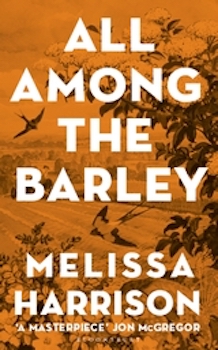
The ‘abundance of harvest’. Yes, I’m currently closely engaged with a handsome festschrift for poet and publisher (and much else) Jonathan Williams, which I intend to write about in the very near future. Jeffery Beam, one of the book’s editors, closes his introduction with the observation that, ‘One might call Jonathan’s life a poetics of gathering, and this book is a first harvest.’[2] Then too, harvest looms very large indeed in a superb recent novel, All Among the Barley, by Melissa Harrison.[3] She took part in a Festival of Ideas event last night with Tim Pears, ‘The Pastoral Novel and Lessons of History’, held at the main Waterstones branch in Bristol, both of them very impressive, articulate and engaged (the moderator was good too). Melissa Harrison, asked to read an extract from her book, recited from memory, as Alice Oswald does her poetry. With prose, it’s rarer, though I recall an event years ago at which Iain Sinclair read and then Stewart Home recited or, possibly, improvised, talking very quickly and for a good fifteen minutes.

Harrison-Barley

I read Melissa Harrison’s novel on the train to and from Manchester. Set in the 1930s, it doesn’t need to spell out or even point towards the painful resonances with our current situation. The narrator dreams of the countryside in which she grew up. ‘Awake, I would picture in loving detail the valley’s fields and farms, its winding lanes and villages, conjuring up a vision of a lost Eden to which I longed to return. But at last I came to see that there is a danger in such thinking; for you can never go back, and to make an idol of the past only disfigures the present, and makes the future harder to attain’ (324).

Wave-IWMN

The Imperial War Museum North is exhibiting Wave, initially conceived for the installation at the Tower of London in 2014, designed by Tom Piper and sculpted by Paul Cummins. Poppies as symbols of remembrance (the history, the controversies, the disparate opinions) featured in the current exhibition, Lest We Forget? As well as some fascinating photographs, film footage, documents and commissioned war paintings—Paul Nash, Stanley Spencer, Wyndham Lewis—there was the huge John Singer Sargent picture, Gassed, which I’d been trying to show to the Librarian for quite a while: when we asked in London it had been lent to Washington but now we’d finally caught up with it.

Whitworth

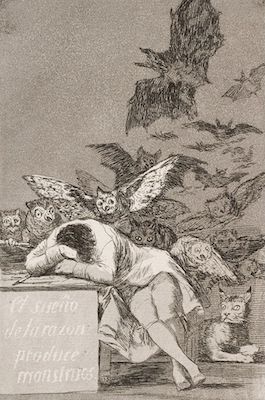
Once checked-out of the hotel, we walked to the refurbished Whitworth Gallery, a stunning success, every detail a real class act, now one of the Librarian’s favourite places (and mine). To walk into a huge and elegant space—the exhibition is called In the Land—a Terry Frost canvas on either side of the threshold, past a Peter Lanyon, a Bryan Wynter, a Roger Hilton, then a Barbara Hepworth and John Milne’s aluminium Icarus, to the end wall’s pairing of a John Piper and a beautiful Ben Nicholson—it’s a damned fine walk. Prints of Darkness: Goya and Hogarth in a Time of European Turmoil was wonderful and terrifying, reminding me again how precisely Goya’s ‘The Sleep of Reason Produces Monsters’ provides the default text for our times. Textiles from the Islamic World included some breathtaking exhibits and Bodies of Colour—yes, wallpaper—was diverting too.

Goya-sleep-of-reason

(Goya, ‘The Sleep of Reason Produces Monsters’)

Then the City Gallery—remarkable—with the wonderful cards that people fill in: ‘What did you enjoy most about your visit?’ One read: ‘I saw it with my wife’. Another: ‘The Ancient Arts were decent. Thank you.’ Then the Central Library. Bloody hell. Fantastic. The Wolfson Reading Room. The rows of intent and silent readers. The Henry Watson Music Library. The kids picking out tunes on the piano, working out songs together. Democratic. Non-judgemental. Free. This stuff matters. I think of all the Tories and privatisation fetishists who say: ‘We don’t need libraries’ or ‘Nobody uses libraries’. They know nothing; they display such shameful ignorance that they should never pronounce on this or any other issue again. Never ever again.
References

[1] Bonnie Blackburn and Leofranc Holford-Strevens, The Oxford Companion to the Year (Oxford: Oxford University Press, 1999), 355.

[2] Jonathan Williams: The Lord of Orchards, edited by Jeffery Beam and Richard Owens (Westport and New York: Prospecta Press, 2017), xiv.

[3] Melissa Harrison, All Among the Barley (London: Bloomsbury Publishing, 2018).

Memory, photographs, life

Ginzburg-via-TLS

(Natalia Ginzburg via the TLS)

Recently, reading a novella by Natalia Ginzburg, I came across this passage, a memory of Carmine Donati, an architect, forty years old.

‘He remembered one occasion when he was very tiny, still in his mother’s arms, and they were in town, at the station. It was night time and pouring with rain. There were crowds of people with umbrellas waiting for the train, and mud was running between the tracks. Why on earth his memory should have squandered and destroyed so many events, and yet preserved that moment so accurately, bringing it safely through the years, tempests and ruins, he did not know. At that point, he could not remember anything about himself, what clothes and shoes he had worn, what wonder and curiosity had woven and unwoven itself in his thoughts at the time. His memory had thrown all that out as useless. Instead, he had retained a whole pile of random detailed impressions, that were hazy, but light as a feather. He had kept the memory of voices, mud, umbrellas, people, the night.’[1]

BSMCricket794

(Rohan Kanhai, via The Cricket Monthly)

Memory, the eternal object of fascination, certainly for a reader of Ford Madox Ford and an occasional, though rather short-winded, visitor to the Marcel Proust estate. Why, years after I stopped following test cricket (and reading Wisden Cricketers’ Almanack) could I recall the exact scores made by the Guyanese batsman Rohan Kanhai in Adelaide in 1960-61? Or the first paragraph of Henry Miller’s Tropic of Cancer, not having read it for forty years? Or the exact shape and feel of the gates of our house in Gillingham, Kent, when I was two or three years old? All these against the important—sometimes crucial—information that fell out of my head the moment it arrived there. Arbitrary, unreliable, disordered, beloved memory.

Up in the loft, surrounded by books—as I would be practically anywhere else in the house save for the bathroom—and distracted by misreading the maker’s name on the iron as ‘Russell Hoban’ (literary tunnel vision) as I attempt to subdue a clean shirt, I catch sight of an old photograph of myself, unearthed by the Librarian in her recent excavations, clearing and culling.

I have a few other photographs of similar vintage but buried in boxes or an old album given to me by my mother and misplaced since, of course. This recent rediscovery would probably prompt remarks similar to those elicited by others of its kind. ‘Nice-looking chap. What happened?’ To which the standard rejoinder is: ‘Life’.

PS-c1970

Bad haircut; cigarette hanging out of mouth; good grief, thin tie tucked into trousers. I was, I think, working at a garage at the time: it was primarily a Fiat dealership but also sold used cars, specialising in Rovers. I was the accounting troubleshooter, brought in because not all the mechanics’ hours were being charged and I was to track them down. The owner—father of a close friend, who also worked there as a salesman—paid for my driving lessons until I passed my test and became more generally useful, able occasionally to collect and deliver new cars when I wasn’t hunched over an adding-machine, telling bad jokes to the foreman or flirting with the forecourt attendant.

Such recollections seem stable enough—are they also static, black and white, like my photographs of the time, because of my photographs of the time? ‘Like history, memory is inherently revisionist and never more chameleon than when it appears to stay the same.’[2] The novelist Patrick White wrote that, ‘although memory is the glacier in which the past is preserved, memory is also licensed to improve on life.’[3]

Photographs of oneself. I’m reminded of Marie Darrieussecq’s discussion of Paula Modersohn-Becker’s pregnancy in her 1907 self-portrait. Darrieussecq writes that the only photograph of herself on the walls of her home, a portrait by Kate Barry, was taken when she was six months pregnant. ‘At the time, I often offered it to journalists when they asked me for an author photo. It was rejected every time. The answer was always the same: “We’d like a normal photo.”’[4]

Ah yes, the widely-known abnormality of a woman being pregnant.

With memory in mind, Eric Ormsby wrote:

‘Somehow I had assumed
That the past stood still, in perfected effigies of itself,
And that what we had once possessed remained our possession
Forever, and that at least the past, our past, our child-
Hood, waited, always available, at the touch of a nerve,
Did not deteriorate like the untended house of an
Aging mother, but stood in pristine perfection, as in
Our remembrance. I see that this isn’t so, that
Memory decays like the rest, is unstable in its essence,
Flits, occludes, is variable, sidesteps, bleeds away, eludes
All recovery; worse, is not what it seemed once, alters
Unfairly, is not the intact garden we remember but,
Instead, speeds away from us backward terrifically
Until when we pause to touch that sun-remembered
Wall the stones are friable, crack and sift down,
And we could cry at the fierceness of that velocity
If our astonished eyes had time.’[5]

Blackburn-Emperors

In a Julia Blackburn book, I came across this: ‘I recently read an article about a retired accountant who uses a metal coat-hanger as a dowsing rod with which he can locate the exact position of the walls, windows and doorways of churches that fell down long ago and are now covered by grass and earth and forgetfulness. Sometimes he might sketch out an area where stones and bricks should be lying but when the archaeologists come to dig they find nothing there. This can be simply because he has made a mistake, but often it has turned out that he was locating a part of a building that had lain there concealed and undisturbed but was then dug up and removed many years ago. This phenomenon, of finding the memory of something that has vanished and left no trace of itself, is called by dowsers “remanence”.’[6]

Under ‘remanent’, my dictionary offers ‘remaining’ and, for the noun, ‘a remainder, a remnant’. My other dictionary, though, suggests for the adjective, ‘(of magnetism) remaining after the magnetizing field has been removed’.

The magnetizing field of memory; and the memory of ‘something that has vanished and left no trace of itself’. Elusive, allusive, illusive stuff. As for that photograph, the script will read: ‘Who’s this?’ ‘No idea. Looks vaguely familiar but. . . can’t quite place it.’

 
References

[1] Natalia Ginzburg, Family and Borghesia: Two Novellas, translated by Beryl Stockman (Manchester: Carcanet Press, 1992), 68.

[2] Raphael Samuel, Theatres of Memory (London: Verso, 1996), 15.

[3] Patrick White, The Solid Mandala (Harmondsworth: Penguin Books, 1969), 192.

[4] Marie Darrieussecq, Being Here: The Life of Paula Modersohn-Becker, translated by Penny Hueston (Melbourne, Australia: Text Publishing, 2017), 131.

[5] From ‘Childhood House’ by Eric Ormsby, in For a Modest God: New and Selected Poems (New York: Grove Press, 1997), 117. I believe I first saw this poem on the Anecdotal Evidence website years ago: http://evidenceanecdotal.blogspot.com/

[6] Julia Blackburn, The Emperor’s Last Island: A Journey to St Helena (London: Vintage, 1997), 176-177.

Golden lads and girls

Bishop

On Wednesday afternoon, 5 September 1929, the eighteen-year-old Elizabeth Bishop was writing to Frani Blough, whom she’d met at the Walnut Hill boarding school in Massachusetts: they became lifelong friends. Bishop was, she said, halfway through Cymbeline: ‘I had no idea it was so good—I never thought of Shakespeare except in terms of Macbeth and Hamlet, but don’t you like this?’ And she quoted:

Fear no more the heat o’ the sun,
Nor the furious winter’s rages;
Thou thy worldly task hast done,
Home art gone, and ta’en thy wages:
Golden lads and girls all must,
As chimney-sweepers, come to dust.[1]

Don’t you like this? Yes, we do. We also like the passage in Hugh Kenner’s The Pound Era, discussing those lines. ‘“Golden,” magical word, irradiates the stanza so that we barely think to ask how Shakespeare may have found it.’ Kenner thinks to ask – or rather, puts to good use what a friend has passed on to him: ‘Yet a good guess at how he found it is feasible, for in the mid-20th century a visitor to Shakespeare’s Warwickshire met a countryman blowing the grey head off a dandelion: “We call these golden boys chimney-sweepers when they go to seed.”’[2]

But yes, ‘golden’, certainly a word magical enough to fascinate and gravitate to many title pages. Before Penelope Fitzgerald’s The Golden Child, David Garnett’s The Golden Echo or Carson McCullers’ Reflections in a Golden Eye, Kenneth Grahame wrote The Golden Age, a phrase that would later resound in Raymond Williams’ The Country and the City as he explored the ‘myth’ of the golden age, pointing out that, as early as Hesiod, ‘at the beginning of country literature, it is already far in the past.’ He sees the ‘escalator of golden ages’ always moving backwards in time, always receding.[3] Every generation, in fact, or a proportion of it, looks back to that supposed idyllic period.

Frida_Uhl

(Frida Strindberg, née Uhl)
https://commons.wikimedia.org/w/index.php?curid=17944741

Then, as Ronald Blythe recalls, ‘One of the first night-clubs was opened in 1913 by Strindberg’s second wife, a beautiful ex-actress with a Viennese reputation. It was called the Cave of the Golden Calf and Epstein and Wyndham Lewis decorated its walls and columns. It was haunted by artists, the demi-monde, and guardsmen who went there, so they said, to listen to the accordions of Galician gypsies and hear Lilian Shelly singing “Popsie-wopsie”.’[4]

‘Popsie-wopsie’? It seems so, though I’ve seen it mentioned as ‘My Little Popsy-Wopsy’. She was born in Bristol and apparently posed for both Jacob Epstein and Augustus John.

Eric Gill carved a bas-relief of the golden calf – obviously the central motif – which was hung up beside the entrance (and reproduced on membership cards) ‘and finally carved in three dimensions in Hoptonwood stone and erected on a pedestal’. Madame Strindberg being unable to pay for it, Gill then lent it to Roger Fry for the second Post-Impressionist show at the Grafton Gallery.[5]

And then: The Golden Bowl by Mr Henry James. Writing to his aunt Laura from Alexandria in 1916, E. M. Forster wrote: ‘Work here is quieter again, which leaves me time for reading, and while you were at H. J.’s Portrait of a Lady I was tackling his latter and tougher end in the person of What Maisie Knew. I haven’t quite got through her yet, but I think I shall: she is my very limit—beyond her lies The Golden Bowl, The Ambassadors and similar impossibles. I don’t think James could have helped his later manner—is a natural development, not a pose. All that one can understand of him seems so genuine, that what one can’t understand is likely to be genuine also.’[6] A careful cloud of unknowing.

Warlight

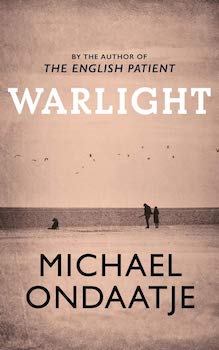
Three years later, in John Buchan’s Mr Standfast, the chapter entitled ‘‘I take the Wings of a Dove’ includes the phrase ‘golden bowl’.[7] But my favourite recent reference is in Michael Ondaatje’s fine novel Warlight (‘The Moth’ is a name conferred by the narrator and his sister): ‘One night when Rachel had been unable to sleep, he pulled a book called The Golden Bowl from my mother’s shelf and began reading to us. The manner of the paragraphs, as the sentences strolled a maze-like path towards evaporation was, to the two of us, similar to The Moth’s when he was being drunkenly magisterial. It was as if language had been separated from his body in a courteous way.’[8]


References

[1] Elizabeth Bishop, One Art: The Selected Letters, edited by Robert Giroux (London: Pimlico, 1996), 5. Cymbeline, IV, ii, 258-263.

[2] Hugh Kenner, The Pound Era (London: Faber and Faber, 1972), 122. His endnote (570) reads: ‘A visitor to Warwickshire: W. Arrowsmith, reported by Guy Davenport.’ Further elucidated in Questioning Minds: The Letters of Guy Davenport and Hugh Kenner, edited by Edward Burns, two volumes (Berkeley: Counterpoint Press, 2018), I, 639, 641, 643.

[3] Raymond Williams, The Country and the City (New York: Oxford University Press, 1973), 14, 10.

[4] Ronald Blythe, The Age of Illusion: England in the Twenties and Thirties 1919-40 (Harmondsworth: Penguin Books, 1964), 28.

[5] Fiona MacCarthy, Eric Gill (London: Faber and Faber, 1990), 108-109.

[6] Selected Letters of E. M. Forster, Volume One: 1879-1920, edited by Mary Lago and P. N. Furbank (London: Collins, 1983), 240.

[7] John Buchan, Mr Standfast (1919; edited by William Buchan, Oxford: Oxford University Press, 1993), 133.

[8] Michael Ondaatje, Warlight (London: Jonathan Cape, 2018), 61.


‘Now it is time’ – revisiting Rilke

rilke-clara-1906
(Rilke and Clara, 1906)
http://fondationrilke.ch/rainer-maria-rilke/

‘Where to begin? And am I the one to give the Elegies their proper explanation? They pass infinitely beyond me.’[1] Yes, I’ve been revisiting Rilke, having read a good deal of his work decades ago, and always in translation, but nothing at all recently. In that long interval, though, I often noticed his name cropping up in all sorts of contexts in other books I was reading. Here was Lewis Hyde, writing about Rilke on art as a way of life, referring to his ‘wise blindness’.[2] Then W. H. Auden explaining to Alan Ansen that he wouldn’t mind Yeats’s ‘crazy mythology if he took it more seriously’, or, conversely, tipped a wink at the end to say the whole thing was a hoax; adding: ‘I like really crazy people like Rilke, yes, and D. H. Lawrence.’[3]

There are four versions of Rilke poems in Robert Lowell’s Imitations and, in History, a poem called ‘Rilke Self-Portrait’.[4] In Vernon Watkins’s poem, ‘Discoveries’, ‘Rilke bears all, thinks like a tree, believes,/ Sinks in the hand that bears the falling leaves.’ In the early summer of 1941, Watkins stayed with Dylan Thomas in Laugharne. ‘We had read Rilke’s Duino Elegies to each other in the look-out of Laugharne Castle perched on the wall over the estuary. The poems excited Dylan deeply, though he called Rilke “a very odd boy indeed”.’[5]

Here is Ted Hughes writing to Anne Stevenson in the autumn of 1986, pointing out the very wide range of Sylvia Plath’s reading in modern poetry, particularly European poets. ‘She was saturated with Rilke, of course’, Hughes notes, ‘she was perpetually studying German and used Rilke as a text. She regarded Rilke and [Zbigniew] Herbert as much more her “fellow-countrymen” than other US poets.’[6]

There are almost twenty Rilke translations in Randall Jarrell’s published work:

‘One star in the dark pass of the houses,
Shines as if it were a sign
Set there to point the way to—
But more beautiful, somehow, than what it points to,
So that no one has ever gone on beyond
Except those who could not see it, and went on
To what it pointed to, and could not see that either.’[7]

And then—Guy Davenport. Discussing Eliot’s Four Quartets, he suggests that they are, ‘in one sense Eliot’s emulation, and rivalry, of Rainer Maria Rilke’s Duino Elegies [1923]. Both are the greatest poems of our century about time, mortality, and our tragic incomprehension of existence. Both negate time for an eternal present containing the past and the future.’[8]

Schloss-Duino

In his essay on Ezra Pound published a few months after the poet’s death, Davenport recalled, on a visit to Venice, learning that Pound was then reading aloud to Olga Rudge Jean Paul Sartre’s recently published Les Mots. ‘A book less likely to interest Pound cannot be imagined’, Davenport observes, ‘and yet he was always capable of surprising our notions of what he did and didn’t like. His last journey was by yacht to the Schloss Duino. Rilke! Who could have foreseen that act of homage?’[9]

This finds its echo or enlargement in an August 1972 letter from Davenport to Hugh Kenner, in the wonderful edition of their correspondence forthcoming from Counterpoint Press next month: ‘Last report is that Ezra, Olga, and some well-heeled friend with a yacht are off to the Schloss Duino to inspect the ramparts from which Rilke, gazing into the storm, heard the angel cry, or shriek, or whistle. It is news to me that Ezra Pound ever looked into a copy of the Duineser Elegien.’ Edward Burns’ note informs us that Davenport is thinking of ‘the opening of the first elegy’, which Davenport translates as ‘“What eye among the rungs and hordes / of angelkind would turn and find / my long call through the storm of time?”’[10]

J. B. Leishman begins his translation of that first elegy like this:

Who, if I cried, would hear me among the angelic
orders? And even if one of them suddenly
pressed me against his heart, I should fade in the strength of his
stronger existence. For Beauty’s nothing
but beginning of Terror we’re still just able to bear,
and why we adore it so is because it serenely
disdains to destroy us. Every angel is terrible.[11]

I think, though, that what really jolted me back to Rilke was happening across this translation by Michael Hamburger of a poem, dated ‘October, 1925’, that begins, ‘Jetzt wär es Zeit, daß Götter träten aus / bewohnten Dingen…’

Now it is time that gods came walking out
of things inhabited. . .
And then demolished every wall inside
my house. New page. For nothing but the wind
that would be raised by such a wind in turning
could turn the air as shovel turns a sod:
a brand-new field of air. O gods, you gods,
the often come, who are asleep in things,
cheerfully rise, at wells that we conjecture
wash wide awake their faces and their necks
and add their restedness to that which seems
full as it is, our lives already full.
Another morning make your morning, gods!
We’re the repeaters, only you the source.
Your rising is the world’s, beginning shines
from every crack within our patched-up failure. . . .[12]

An extraordinary poem, an extraordinary translation and, surely, both. All those gods! And angels! Yet, referring to the scepticism of Nietzsche, Charles Tomlinson remarks that it was ‘a disbelief that found its most lasting poetic embodiments in the Duino Elegies of Rainer Maria Rilke’.[13] And Rilke himself wrote, in the letter first quoted, ‘The angel of the Elegies has nothing to do with the angel of the Christian heaven (rather with the angelic figures of Islam. . . .) The angel of the Elegies is that Being in whom the transmutation of the Visible into the Invisible, which we seek to achieve, is consummated.’

PMB-Rilke

(Paula Modersohn-Becker, Rainer Maria Rilke, 1906)

Drusilla Modjeska Stravinsky’s Lunch, largely devoted to the study of two Australian women painters— Grace Cossington-Smith and Stella Bowen, one of the most important people in the life of Ford Madox Ford—briefly traces in the early pages the life and career of Paula Modersohn-Becker, who painted most of her significant pictures, and eighty in all, in one year, 1906-1907, the year in which she died at the early age of thirty-one. Modjeska mentions that Modersohn-Becker sold only one painting in her lifetime (in fact, it seems to have been three) and that one to her friend Rilke. She was a close friend of the artist Clara Westhoff, who did in fact marry Rilke.[14] After Modersohn-Becker’s death, Rilke wrote a long, remarkable ‘Requiem for a Friend’, though without naming her.

‘Are you still there? Still hiding in some corner? —
You knew so much of all that I’ve been saying,
and could so much too, for you passed through life
open to all things, like a breaking day.
Women suffer: loving means being lonely,
and artists feel at times within their work
the need, where most they love, for transmutation.’[15]

B opener Moderson-BeckerSelfPortrait.jpg

(Paula Modersohn-Becker, Self-Portrait on the 6th Wedding Day, 1906)

Naturally, I became interested in Modersohn-Becker: the recent fine biography of her by Marie Darrieussecq—‘And, through all these gaps, I in turn am writing this story, which is not Paula M. Becker’s life as she lived it, but my sense of it a century later. A trace’—was largely responsible for the major retrospective of Paula Modersohn-Becker’s work at the Musée d’Art Moderne in Paris in 2016, for which Darrieussecq wrote the catalogue texts.[16]

Rilke arrives in Worpswede in Northern Germany in September 1900, initially to visit his friend, the painter Heinrich Vogeler. ‘Rilke thinks that painters know how to live, always. They depict anxiety. In hospital, Van Gogh paints his hospital room. The bodies of painters and sculptors are active. Their work is given over to this movement. He, the poet, doesn’t know what to do with his hands. He doesn’t know how to be alive.’ Then: a painter and a sculptor. Rilke ‘is in two minds. Paula, Clara. His heart is torn. He has a preference for threesomes, which will continue his whole life’ (Being Here 27, 28). In 1901, in preparation for her marriage to Otto Modersohn, Paula Becker is sent to Berlin, to take a cookery course. Rilke is also there and they meet. ‘As soon as she leaves, he writes to her again. It is midnight under his green lamp; he doesn’t touch a thing, in order to retain her presence’ (Being Here 49). They have dinner together for the last time in Paris, 27 July 1906. She dies of an embolism in November 1907: she is thirty-one years old. A year after her death, Rilke will write the ‘Requiem for a Friend’ over ‘three haunted nights in Paris’, at the Hotel Biron, 77 rue de Varenne, ‘a building Clara located for him and which will become the Musée Rodin.’ (Being Here 136).

‘Do not return. If you can bear it, stay
dead with the dead. The dead are occupied.
But help me, as you may without distraction,
as the most distant sometimes helps: in me.’[17]

So yes—intrigued, baffled, astonished, bemused, exhilarated—I am reading Rilke.


References

[1] Rainer Maria Rilke, Selected Letters of Rainer Maria Rilke, 1902-1926, translated by R. F. C. Hull (London: Macmillan, 1946), 392.

[2] Lewis Hyde, The Gift: Imagination and the Erotic Life of Property (New York: Vintage, 1983), 150.

[3] Alan Ansen, The Table Talk of W. H Auden, edited by Nicholas Jenkins (London: Faber and Faber, 1991), 72.

[4] Robert Lowell, Collected Poems, edited by Frank Bidart and David Gewanter (New York: Farrar, Straus and Giroux, 2003), 273-279, 497.

[5] Vernon Watkins, ‘Discoveries’. Selected Poems (London: Faber and Faber, 1967), 8; Dylan Thomas, Letters to Vernon Watkins, edited by Vernon Watkins (London: J. M. Dent and Sons and Faber and Faber, 1957), 105.

[6] Letters of Ted Hughes, selected and edited by Christopher Reid (London: Faber and Faber, 2007), 516-517.

[7] Randall Jarrell, ‘The Evening Star’, The Complete Poems (New York: Farrar, Straus and Giroux, 1969), 485.

[8] Guy Davenport, ‘Civilization and its Opposite in the 1940s’, The Hunter Gracchus and Other Papers on Literature and Art (Washington: Counterpoint, 1996), 80: Davenport had the date as 1921 but appears to have been two years out.

[9] Guy Davenport, The Geography of the Imagination (Boston: David R. Godine, 1997), 171.

[10] Questioning Minds: The Letters of Guy Davenport and Hugh Kenner, edited by Edward Burns (Berkeley: Counterpoint Press, 2018), II, 1413; 1447, n.105.

[11] Rainer Maria Rilke, Selected Works. Volume II: Poetry, translated by J. B. Leishman (London: The Hogarth Press, 1980), 225.

[12] German Poetry, 1910-1975, an Anthology translated and edited by Michael Hamburger (Manchester: Carcanet New Press, 1977), 22-23.

[13] Charles Tomlinson, American Essays: Making It New (Manchester: Carcanet Press, 2001), 59.

[14] Drusilla Modjeska, Stravinsky’s Lunch (New York: Farrar, Straus and Giroux, 2000), 6-13.

[15] Rilke, Poetry, 204.

[16] Marie Darrieussecq, Being Here: The Life of Paula Modersohn-Becker, translated by Penny Hueston (Melbourne, Australia: Text Publishing, 2017), 44, 154, n.34.

[17] Rilke, Poetry, 205.


Taking some lines for a walk: Ford, Conrad, Novalis

(Ford by Hoppé; Conrad via New York Public Library)

On this day in 1913, Ford Madox Ford published an essay in The New Freewoman, the middle incarnation of three journals edited wholly or in part by the suffragist and radical activist Dora Marsden. She started The Freewoman: A Weekly Feminist Review (1911-1912) with her friend Mary Gawthorpe; in the latter half of 1913, she edited what had become The New Freewoman – Rebecca West (who had got her start in The Freewoman) was literary editor; finally, it became The Egoist, with Harriet Weaver as editor (and primary financial backer) and Marsden as contributing editor, running from January 1914 to December 1919 and famously publishing some key modernist texts (by Joyce, Wyndham Lewis, Pound and Eliot).[1]

Dora-Marsden

Dora Marsden apparently necessitating the attention of several big strong men:
http://spartacus-educational.com/WmarsdenD.htm

Ford’s essay, ‘The Poet’s Eye’, unsurprisingly bore a strong resemblance to the ‘Preface’ to his Collected Poems, published towards the end of that year. Much of it discussed his view of the differences between poetry and prose, the first being for him quite uncontrollable, ‘words in verse form’ coming into his head from time to time and being written down ‘quite powerlessly and without much interest, under the stress of certain emotions.’ With prose, ‘that conscious and workable medium’, it was ‘a perfectly different matter.’

Ford is actually arguing that the ‘literary jargon’ to which English poetry is wedded, together with the narrow assumptions of what constitutes the suitable material of poetry, renders it incapable of dealing with modern life, ‘so extraordinary, so hazy, so tenuous with, still, such definite and concrete spots in it’. Poetry in English was, of course, on the cusp of extraordinary change: Pound’s Ripostes the previous year had included ‘The Return’ and T. E. Hulme’s poems; Des Imagistes would follow in 1914, as would W. B. Yeats’s Responsibilities; Cathay and Eliot’s ‘The Love Song of J. Alfred Prufrock’ in 1915. But, at the time of his writing, there was still a strong and widespread adherence to what Ford termed ‘the sure cards of the poetic pack’.

‘I may really say’, Ford asserted, ‘that for a quarter of a century I have kept before me one unflinching aim—to register my own times in terms of my own time, and still more to urge those who are better poets and better prose writers than myself to have the same aim. I suppose I have been pretty well ignored; I find no signs of my being taken seriously. It is certain that my conviction would gain immensely as soon as another soul could be found to share it. But for a man mad about writing this is a solitary world, and writing—you cannot write about writing without using foreign words—is a métier de chien.’[2]

Ford was precocious—but perhaps not to quite that degree: a literal ‘quarter of a century’ would have made him fourteen. His first book was published shortly before his eighteenth birthday. But there are some splendidly recurrent phrases here, I mean ones that resonate in minds that have grazed in Fordian fields. I remember Donald Davie writing about a phalanx of details in Pound’s Canto 80, pausing to remark that ‘Anyone is free to decide that life is too short for such unriddlings; others (I speak from experience) may develop a taste for them.’[3] This is not such an unriddling but certainly a related pleasure—or vice.

Novalis

(Friedrich von Hardenberg: Novalis)

‘It is certain that my conviction would gain immensely as soon as another soul could be found to share it.’ Yes, ‘recurrent’ is an apt word here. In 1900, William Blackwood published Lord Jim by Joseph Conrad, its epigraph reading: ‘“It is certain my conviction gains infinitely, the moment another soul will believe in it.”—Novalis.’ Cedric Watts’ note points out that in the German original, the word means ‘opinion’ rather than ‘conviction’, that Conrad was probably using the translation by Thomas Carlyle in On Heroes, Hero-Worship and the Heroic in History, and that an alternative version appears in another Carlyle book, Sartor Resartus, which Conrad has his character Marlow read in his novella Youth. Watts also notes that Conrad quotes Novalis’ aphorism again in A Personal Record.[4]

Lord Jim was published during the intense period of collaboration between Ford and Conrad which eventually produced The Inheritors (1901), Romance (1903) and The Nature of a Crime (1909; 1924). It was in the September of 1898 that the two men met and , in the following month, Conrad and his family moved into Pent Farm, Postling, Kent, sublet to them by Ford. A quarter of a century later, Ford recalled of that time: ‘Conrad’s conviction restored life to the fainting Pent: it breathed once more: the cat jumped off the window sill; the clock struck four’: this immediately preceding the arrival of W. H. Hudson—their first meeting—who would be of immense importance to Ford, though in less immediately evident ways than Conrad.[5]

Use what’s at hand: ‘pent’, wonderful. Ford’s fictional ambitions were both fired and freed in the course of the collaboration, while ‘the bulk of [Conrad’s] greatest fiction—the completed Lord Jim, Heart of Darkness, Nostromo, and The Secret Agent—was written while collaborating with Ford.’[6]

In 1915, in the second of Ford’s propaganda books, he notes in the ‘Preface’, ‘It is certain that my conviction gains immensely as soon as another soul can be found to share it.’[7] The following year, writing to Conrad from a Red Cross hospital in Rouen, he commented, ‘Since I have been out here this time I have not had one letter from one living soul. So one’s conviction does not get much from wh[ich]. to gain anything!’ By 1921, when Ford was writing to Harriet Monroe to acknowledge the Poetry prize awarded to him for A House (1921), the quote from Novalis (not named here) had become ‘the immortal dictum: “It is certain that my conviction gains immensely as soon as another soul can be found to share it”’[8] and the precise wording recurs in a 1927 essay about Ford’s memories of New York.[9]

One clear implication of these instances is that, while Ford—at least trilingual—could have read, and translated for himself, the lines from Novalis, he didn’t: though perhaps, even if he’d done so, he might have persisted with the version he associated with Conrad. But it’s also very striking, and surely poignant, that Ford, editor as well as writer, closely connected with so many groups of writers and artists, from the late 1890s through the English Review crowd, Imagism, Vorticism, Paris in the 1920s, New York and Tennessee in the 1930s, had that constant need for another soul to share his conviction. ‘He needed more reassurance than anyone I have ever met’, Stella Bowen remembered.[10] ‘Until the arrival of such “uncomfortables” as Wyndham Lewis, the distressful D. H. Lawrence, D. Goldring, G. Cannan, etc., I think Ford had no one to play with’, Ezra Pound wrote—an oddly selected cast but with a grain of truth, nevertheless.[11]

Hokusai

Those phrases, ‘a man mad about writing’ and ‘a métier de chien’ in Ford’s essay also have their histories. Describing himself as ‘an old man mad about writing’, Ford pointed to the artist Hokusai who called himself ‘an old man mad about painting’: he used the phrase or variations on it several times.[12] That ‘métier de chien’ is, again, associated particularly with Conrad: ‘For Conrad hated writing more than he hated the sea. . . . Le vrai métier de chien. . . . ’ but employed and alluded to in various contexts.[13] Then later references to the Shepherd’s Bush Exhibition and that phrase, ‘We are the heirs of all the ages’. . . But no, the comments on the essay would threaten to rival, in length at least, the essay itself. Perhaps another time, another walk, another conviction. ‘Taking a line for a walk’ – that was Paul Klee, I think. Another kind of line but the phrase would probably serve: taking a few Fordian lines for a walk. Yes, why not?

 
References

[1] Detailed on the indispensable Modernist Journals Project website: http://modjourn.org/index.html

[2] Ford Madox Ford, ‘The Poet’s Eye’, New Freewoman, I, 6 (1 September 1913), 107-110.

[3] Donald Davie, ‘Ezra Pound Abandons the English’ (1975), reprinted in Studies in Ezra Pound (Manchester: Carcanet Press, 1991), 236.

[4] Joseph Conrad, Lord Jim, edited by Robert Hampson with an introduction and notes by Cedric Watts (London: Penguin Books, 1989), 41, 353; see also Ian Watt, Conrad in the Nineteenth Century (Berkeley: University of California Press, 1979), 40 and n.

[5] Ford Madox Ford, Joseph Conrad: A Personal Remembrance (London: Duckworth, 1924), 155.

[6] Max Saunders, Ford Madox Ford: A Dual Life, two volumes (Oxford: Oxford University Press, 1996), I, 117. Alan Judd observes that, ‘Most of Conrad’s best work was written during periods of their intimacy’: Ford Madox Ford (London: Collins, 1990), 63.

[7] Ford Madox Ford, Between St. Dennis and St. George: A Sketch of Three Civilisations (London: Hodder and Stoughton, 1915), vi.

[8] Ford Madox Ford, Letters of Ford Madox Ford, edited by Richard M. Ludwig (Princeton: Princeton University Press, 1965), 80, 136. E. M. Forster was at it too, quoting the same aphorism of an unnamed ‘mystic’: Howards End (1910; edited by Oliver Stallybrass, London: Penguin Books, 1989).

[9] Ford Madox Ford, New York Is Not America (London: Duckworth, 1927), 91.

[10] Stella Bowen, Drawn From Life (London: Collins, 1941), 80.

[11] Ezra Pound, ‘Ford Madox (Hueffer) Ford; Obit’, in Selected Prose 1909-1965, edited by William Cookson (London: Faber and Faber, 1973), 433.

[12] Ford Madox Ford, The March of Literature: From Confucius to Modern Times (London: Allen & Unwin, 1939), vi: Conrad is named on the last page (850) of the text. Nicholas Delbanco’s essay on this book is titled ‘An Old Man Mad about Writing’: Joseph Wiesenfarth, History and Representation in Ford Madox Ford’s Writings (Amsterdam: Rodopi, 2004), 219-231. In A Mirror to France (London: Duckworth, 1926), for instance, Ford is ‘an old man mad about Provence’ (208).

[13] Ford Madox Ford, Joseph Conrad, 113, 255; Thus to Revisit (London: Chapman & Hall, 1921), 57; Return to Yesterday: Reminiscences 1894-1914 (London: Victor Gollancz, 1931), 292; The Simple Life Limited by ‘Daniel Chaucer’ (John Lane, 1911), 73.


Sleep and his brother Death

Turner, Joseph Mallord William, 1775-1851; Death on a Pale Horse (?)

(Turner, Death on a Pale Horse (?): Tate Britain)

On 28 August 1967, after hearing the news of her friend Alyse Gregory’s death, Sylvia Townsend Warner wrote in her diary, ‘As for me, I think sadly that my store of congenial minds is running very low. Never mind, so am I. And she is safe at least. Sleep and his brother Death have seen to that.’[1]

‘Sleep and his brother Death’. That sibling naming, though not the sentiments, recall David Jones’ In Parenthesis: ‘But sweet sister death has gone debauched today and stalks on this high ground with strumpet confidence, makes no coy veiling of her appetite but leers from you to me with all her parts discovered.’[2]

Allyson Booth writes of the etymological relationship between sleep and death—‘bed’ derived from the word meaning ‘to bury’, ‘cemetery’ derived from a word meaning ‘a place to sleep’, and of how the First World War literally undermined ‘a soldier’s confidence in the stability of death and a corpse’s embodiment of death’ in the churned-up ground of the Western Front as men walked and slipped and fought on the bodies of the fallen.[3]

But this is, so they say, a time of peace; and the fact is that, certainly once we reach a certain age, we are increasingly likely to witness or commemorate the death that is viewed as relief rather than tragedy. Some deaths, seeming to occur absurdly early, can still fall into that category – though some, of course, are simply an affront, a spitting in the eye of the universe and an insult to nature.

Only with the 18th century did the number of births gain over that of deaths; and this became the pattern regularly thereafter.[4] It was in 1918 that deaths overtook births again. ‘Coffins that had been stockpiled during the war, as there were no bodies to put in them, were suddenly in short supply. The Leicester railway workshops turned to coffin manufacturing and Red Cross ambulances were employed as hearses.’[5]

Self-Portrait 1914 by Sir Stanley Spencer 1891-1959

(Stanley Spencer, Self-Portrait: Tate Gallery)

Sometimes, death constitutes no serious interruption to a process possessing its own rules and impetus. Stanley Spencer’s correspondence with his former wife Hilda continued after her death, beginning with a December 1950 letter and continuing until his own death nine years later. There was never any reference to her being dead and some of his letters ran to scores of pages.[6]

And the approach of death is sometimes neither feared nor unwelcome. In Patrick White’s novel The Riders in the Chariot, though Himmelfarb is near death in Mrs Godbold’s house, ‘He was as content by now as he would ever have allowed himself to be in life. Children and chairs conversed with him intimately.’[7] The importance of chairs – and tables – as solid, honest, real is a recurrent motif in White’s work.

Walter Savage Landor does a nice line in stoic acceptance of the inevitable ending:

To my ninth decad I have tottered on,
And no soft arm bends now my steps to steady;
She, who once led me where she would, is gone,
So when he calls me, Death shall find me ready.

Landor

And perhaps one more:

I strove with none, for none was worth my strife;
Nature I loved, and next to Nature, Art;
I warmed both hands before the fire of life;
It sinks, and I am ready depart.[8]

And Ali Smith writes of how ‘many things get forgiven in the course of a life: nothing is finished or unchangeable except death and even death will bend a little if what you tell of it is told right’.[9]

That’s something to aim for: bend death a little. Tell it right.

 
References

[1] Sylvia Townsend Warner, The Diaries of Sylvia Townsend Warner, edited by Claire Harman (London: Virago Press, 1995), 312.

[2] David Jones, In Parenthesis (1937; London: Faber and Faber, 1963), 162.

[3] Allyson Booth, Postcards From the Trenches: Negotiating the Space Between Modernism and the First World War (New York: Oxford University Press, 1996), 59-63

[4] Fernand Braudel, Civilization and Capitalism, 15th – 18th Century. Volume I: The Structures of Everyday Life: The Limits of the Possible, translated from the French and revised by Sîan Reynolds. (London: Fontana Books 1985), 73.

[5] Juliet Nicolson, The Great Silence, 1918-1920 (London: John Murray, 2009), 94.

[6] Maurice Collis, Stanley Spencer: A Biography (London: Harvill Press, 1962), 214.

[7] Patrick White, Riders in the Chariot (1961; Harmondsworth: Penguins Books, 1964), 432.

[8] Nick Rennison and Michael Schmidt, editors, Poets on Poets (Manchester: Carcanet Press, in association with Waterstones, 1997), 231; Daniel Karlin, editor, The Penguin Book of Victorian Verse (London: Penguin Books, 1997), 18.

[9] Ali Smith, How to be both (London: Hamish Hamilton, 2014), 95.

Thin crusts, modern girls: John Buchan

JB_Buchan_in_library

John Buchan in the library
https://archives.queensu.ca/exhibits/buchan/family

‘You may say that everyone who had taken physical part in the war was then mad’, Ford Madox Ford wrote a dozen years after the Armistice. Objects that ‘the earlier mind labelled as houses’, that had seemed to be ‘cubic and solid permanences’, had been revealed as thin shells that could be crushed like walnuts, he went on. ‘Nay, it had been revealed to you that beneath Ordered Life itself was stretched, the merest film with, beneath it, the abysses of Chaos. One had come from the frail shelters of the Line to a world that was more frail than any canvas hut.’[1]

In John Buchan’s Huntingtower (1922), the poet John Heritage remarks to Dickson McCunn, ‘I learned in the war that civilization anywhere is a very thin crust.’[2] And here is Andrew Lumley in The Power-House: ‘“You think that a wall as solid as the earth separates civilisation from barbarism. I tell you the division is a thread, a sheet of glass. A touch here, a push there, and you bring back the reign of Saturn.”’[3]

On the face of it, the two novelists could hardly appear less alike, one a modernist with a markedly artistic background, whose work sold poorly for most of his life; the other a hugely successful writer of popular fiction, keen sportsman, son of a minister of the Free Church of Scotland, very traditional, a seemingly paradigmatic establishment figure: Lord Tweedsmuir, Governor General of Canada, born in Perth on this day, 26 August, 1875. Still, they were almost exact contemporaries: Buchan published his first book at the age of nineteen—Ford’s was published shortly before his eighteenth birthday—and produced more than a hundred in total (as against Ford’s eighty). I’ve read around a quarter of Buchan’s titles, ten of them more than once, I see. The ‘shockers’ like The Thirty-Nine Steps are by far the best-known but those made up a relatively small part of Buchan’s huge output: even fiction comprises barely one-third of it.

Walton

(Izaak Walton: Dean & Co © National Portrait Gallery, London)

In a more detailed sense, even confining the matter to Huntingtower, a reader infected with the Ford Madox Ford virus might be pencilling faint marks in the margin against such lines as ‘Finally he selected Izaak Walton’ and ‘the seeing eye’ (16), ‘Poetry’s everywhere, and the real thing is commoner among drabs and pot-houses and rubbish-heaps than in your Sunday parlours’ (26)[4] and ‘a white cottage in a green nook’ (31), as well as the editor’s citing of a passage in Buchan’s autobiography dealing with his feelings about the war (xx). Buchan writes there, ‘I acquired a bitter detestation of war, less for its horrors than for its boredom and futility, and a contempt for its panache. To speak of glory seemed a horrid impiety.’[5]

Before all else, Buchan writes a rattling good yarn and I enjoy his books enormously for themselves. Those thrillers and adventure stories and romances largely achieve exactly what they set out to do, while their limitations are fairly obvious, not least to Buchan himself. Writing to his sister Anna about her second novel The Setons (she wrote under the name of O. Douglas), Buchan remarked: ‘In Elizabeth you draw a wonderful picture of a woman (a thing I could about as much do as fly to the moon).’[6]

The_39_Steps_1935_British_poster

Oh Carroll! (character added by Hitchcock) https://en.wikipedia.org/w/index.php?curid=38053736

Of course, hundreds of other writers have written rattling good yarns, made a living and duly faded from view; but many of Buchan’s books have not only survived but seem to be in a state of constantly improving health. They certainly possess qualities or contain features, often hard to pin down and specify, which have enabled that continued vitality. David Daniell refers to Buchan’s writing novels ‘with a mixture of surface pace of action and a deeper density of content which have a timeless quality’.[7]

For me, one of the pleasures is noticing the many ways in which a writer superficially so different from the usual modernist cast list overlaps with them, inhabits a recognisably similar world. His writing may be aimed at an audience quite unlike those aimed at by Joyce or Woolf or Ford; and he may not be fragmenting narratives or operating tricky timeframes or incorporating extra-literary discourses or multilingual puns but the overlap is certainly there for me.

This is largely because much of his work is set in and around the First World War, particularly in the years following it, perhaps my main area of interest. And although Buchan himself inhabited a world of prominent political and diplomatic figures, there remained a touch of the outsider, not least because of the war. Rejected for the army on grounds of both age and health, he visited France and Flanders as correspondent for The Times and took increasingly senior roles in information and intelligence but, as Andrew Lownie writes, Buchan ‘emerged from the First World War physically and emotionally shattered. Many of his closest friends had been killed and this loss of his immediate circle reinforced his sense of being displaced.’[8]

A good deal of his writing, then, is concerned with the terrain that most engages me: with the effects of the war both on individuals who were actively engaged in the fighting and those who were not, with shifting perceptions and understanding of shell-shock, with radical jolts in social relations, the rising threat of fascism, the ‘new Vienna doctrine’ and shifts in fashion and femininity, as the Edwardian ‘hourglass’ shape was replaced with the ‘tubular look’.[9]

Flapper
https://www.collectorsweekly.com/

This last is an example of the fascinating detail that can be followed for a short stretch or for many, many miles. While there is never (to my mind) any convincing strain of homoeroticism, here in Huntingtower is Saskia: ‘her slim figure in its odd clothes was curiously like that of a boy in a school blazer’ (70); in Mr Standfast, Mary is described as moving ‘with the free grace of an athletic boy’.[10] In John Macnab, Janet’s face ‘had a fine hard finish which gave it a brilliancy like an eager boy’s’ and later she looks to Sir Archie ‘like an adorable boy.’[11] Finally, in The Dancing Floor, Mollie Nantley says of Koré that she is ‘utterly sexless – more like a wild boy’, while Leithen reflects that, ‘These children [both youths and girls] looked alert and vital like pleasant boys, and I have always preferred Artemis to Aphrodite.’[12]

Artemis: virginal, eternally young, independent of men, athletic, the huntress. In C. E. Montague’s Rough Justice, Molly, ‘the young Artemis’, has a job as ‘games mistress’,[13] as does Valentine Wannop in Ford’s A Man Could Stand Up–, though a good many other male novelists and poets of the period would far rather, I think, have embraced Aphrodite. Trudi Tate mentions Lawrence and Faulkner as seeming ‘to disapprove of these androgynous figures’,[14] and one would immediately add Joyce. All non-combatants, I notice, which is either irrelevant or a thought for another time.

Catherine Carswell

Writing of her single meeting with Buchan in the summer of 1932, Catherine Carswell, novelist and friend (and biographer) of D. H. Lawrence, observed that, ‘A traditionalist in so many respects, he was yet a champion of the modern girl, delighting in her independences, even in her defiances, frowning neither upon her sometimes extravagant make-up nor upon her occasions for wearing trousers. As among the goddesses, his preference was for Artemis.’[15]

Ah, the modern girl. In The Dancing Floor (213), Buchan writes: ‘Virginity meant nothing unless it was mailed, and I wondered whether we were not coming to a better understanding of it. The modern girl, with all her harshness, had the gallantry of a free woman. She was a crude Artemis, but her feet were on the hills. Was the blushing, sheltered maid of our grandmother’s days no more than an untempted Aphrodite?’

Buchan is not a modernist novelist and not a part of any literary movement, though he doesn’t seem as wholly removed from the literary world as Kipling, who sometimes seems not to have known any writers other than Rider Haggard. Buchan and his wife knew Elizabeth Bowen, Rose Macaulay, Hugh MacDiarmid, Walter de la Mare, Robert Graves, T. E. Lawrence – and Virginia Woolf, whose novels Buchan admired. Woolf had known Buchan’s wife Susan for many years and one of her last letters was written to Susan, though unposted: Leonard Woolf sent it on in the month following Virginia’s death.[16]

There have, naturally, been recurrent complaints about Buchan as racist, anti-Semitic, sexist: the usual fare. There have been equally recurrent rebuttals and, indeed, what a lot of it comes down to seems to be complaints that people a hundred years ago didn’t wholly share the social attitudes that we – that most of us, we hope – share today. Still, one clue to his books lasting is, I suspect, the way that certain artists fall out of fashion because of their content or attitudes or language but then, after a further period of time has elapsed, come into focus again, far enough back now to be viewed objectively and enjoyed without fretting about ‘relevance’ or current orthodoxies. Here’s Graham Greene, looking back to the 1930s:

‘An early hero of mine was John Buchan, but when I re-opened his books I found I could no longer get the same pleasure from the adventures of Richard Hannay. More than the dialogue and the situation had dated: the moral climate was no longer that of my boyhood. Patriotism had lost its appeal, even for a schoolboy, at Passchendaele, and the Empire brought first to mind the Beaverbrook Crusader, while it was difficult, during the years of the Depression, to believe in the high purposes of the City of London or of the British Constitution. The hunger-marchers seemed more real than the politicians. It was no longer a Buchan world.’[17]

Not a Buchan world; yet, although the attitudes towards the threats may have changed over the years, some of the current threats themselves—the threat of fascism, attempts to subvert democracy, ‘fake news’ (that blood relation of propaganda)—seem worryingly familiar. But, alas, Richard Hannay, Edward Leithen, Sandy Arbuthnot and Archie Roylance will not be saving us this time around.


References

[1] Ford Madox Ford, It Was the Nightingale (London: Heinemann, 1934), 48, 49.

[2] John Buchan, Huntingtower (1922; edited by Ann Stonehouse, Oxford: Oxford University Press, 1996), 116.

[3] John Buchan, The Power-House (1916; Edinburgh: B&W Publishing, 1993), 38.

[4] See Ford Madox Ford on ‘the portable zinc dustbin’, in the ‘Preface’ to Collected Poems (London: Max Goschen, 1913 [dated 1914]), 16-17.

[5] John Buchan, Memory Hold-the-Door (London: Hodder and Stoughton, 1940), 167.

[6] Quoted by Janet Adam Smith, John Buchan: A Biography (Oxford: Oxford University Press, 1985), 284.

[7] David Daniell, The Interpreter’s House: A Critical Assessment of the Work of John Buchan (London: Thomas Nelson, 1975), 209.

[8] Andrew Lownie, John Buchan: The Presbyterian Cavalier (London: Constable, 1995), 297.

[9] Martin Pugh, ‘We Danced All Night’: A Social History of Britain Between the Wars (London: The Bodley Head, 2008), 171.

[10] John Buchan, Mr Standfast (1919; Oxford: Oxford University Press, 1993, edited by William Buchan), 11.

[11] John Buchan, John Macnab (1925; edited with an introduction by David Daniell, Oxford: Oxford University Press, 1994), 125, 182.

[12] John Buchan, The Dancing Floor (1926; edited with an introduction by Marilyn Deegan, Oxford: Oxford University Press, 1997), 57, 51.

[13] C. E. Montague, Rough Justice (London: Chatto & Windus 1926), 171.

[14] Trudi Tate, Modernism, History and the First World War (Manchester: Manchester University Press, 1998), 115n.

[15] Catherine Carswell, ‘John Buchan: A Perspective’, in John Buchan by His Wife and Friends (London: Hodder and Stoughton, 1947), 160.

[16] Virginia Woolf, Leave the Letters Till We’re Dead: Collected Letters VI, 1936-41, edited by Nigel Nicolson and Joanne Trautmann Banks (London: The Hogarth Press, 1994), 483 and n.

[17] Graham Greene, Ways of Escape (London: Vintage, 1999), 69.

Temperature normal – sometimes

Borogroves-toves-raths

(Sir John Tenniel, ‘Borogroves, toves, raths’)

‘Delirium would seem to be the fate of all societies which become content in secured wealth and gradually forget the conditions of labour and service upon which alone that security can be maintained.’[1]

 
Writing to Eudora Welty in 1996, William Maxwell told her that he was sending ‘a lifetime of correspondence’ to the University of Illinois Library but couldn’t bear to dispose of his letters from Charles and Susan Shattuck without rereading them.

‘Reading the letters has plunged me into such a fit of remembering, not only of them but of almost everything else, that I couldn’t sleep because my mind was racing so. It made me realize that remembering can be a kind of illness, and perhaps I have it.’[2]

It can be; I may have it too. But if it’s the other way around, I’ve had a touch of that too lately, encountering people I’ve not seen for years, some of them dead, of course, but also with the tendency to turn into others or, indeed, into narrow staircases or resistant thickets or animals—among them, white rabbits, though not, to my recollection, Grace Slick.

Even though I’ve been luckier than a great many other people in the matter of general health, I’ve still had far more serious medical conditions than this in my life—‘I want you to go to hospital’, my doctor said once, years ago and, when I mumbled vaguely about dates and appointments, he said, ‘I mean now. Immediately.’ So peritonitis was happily avoided—but I can’t remember feeling so generally ill. And yes, the nights have been the worst but I’m still frustrated by the sheer physical effort involved in such major undertakings as putting on clothes or lifting a dropped spoon from the floor. (For the most part, the Librarian, visibly puzzled by the circumstances which have landed her with this most unnatural role, buckles to and tends.)

‘Space the doses evenly throughout the day.’

We all experience illness; some are never free of it; a part of ordinary life, it also offers the means of luring or urging the poet, the painter, the storyteller into strange and often arresting terrain. Illness is so various, involves its own related places, its own rituals, its own company. If we are not ill now, we have been and we will be.

The Centurion's Servant 1914 by Sir Stanley Spencer 1891-1959

Stanley Spencer, The Centurion’s Servant: Tate Gallery
© Estate of Stanley Spencer

Discussing Stanley Spencer’s The Centurion’s Servant —‘a person walking only it is lying down’, the painter remarked— Kenneth Pople notes that, in Spencer’s childhood Cookham, it was the custom to pray round the sickbed. Family recollections included an episode in which one of the older Spencer boys developed pneumonia. The illness reached a stage at which the anxiously watching women dispatched young Sydney Spencer to run to his father, then working across the Thames at Hedsor, ‘to tell him that “the crisis has come”; a message which reached Pa’s ears as ‘“Christ has come.”’[3]

Alethea Hayter quotes Coleridge—‘“I appear to myself like a sick physician, feeling the pang acutely, yet deriving a wonted pleasure from examining its process and developing its causes”’—and comments that, ‘He was speaking metaphorically, but illness, like anything else for him, could become an allegory and was interesting for that reason. Anything, however intrinsically repugnant, could be used as a symbol which would make a poem.’[4]

The warring elements of my recent nights have been the sleeplessness for hours at a time but, on the other hand, a seething and feverish onslaught of images tap-dancing on the insides of my eyelids. Lying still can, of course, be a quite exhausting business.

‘This medicine may colour your urine. This is harmless.’

Kipling-via-BBC

Edmund Wilson’s assertion that ‘[t]he theme of inescapable illness dominates the whole later Kipling’ is a reminder of just how many impressive stories this applies to, when postwar trauma is included, as it must be.[5] Yet, as J. M. S. Tompkins points out, the theme of healing predates the war, emerging in Actions and Reactions (1909), with its opening story ‘An Habitation Enforced’ and its concluding one, ‘The House Surgeon’.[6] In later stories, it is sometimes the ritual and fellowship of the masonic lodge that is the healing power: ‘In the Interests of the Brethren’, ’Fairy-Kist’, ‘The Janeites’.

‘Ah!’ Conrad’s Marlow says, ‘but it was something to have at least a choice of nightmares.’ (I think we can all wholeheartedly second that.) And: ‘I admit my behaviour was inexcusable, but then my temperature was seldom normal in these days.’[7]

My own temperature promises to be—and, importantly, to stay—normal, any day now. Yes. I think so. Any day now.


References

[1] C. F. G. Masterman, The Condition of England (London: Methuen, 1911), 34.

[2] Suzanne Marrs, editor, What There Is to Say, We Have Said: The Correspondence of Eudora Welty and William Maxwell (Boston and New York: Houghton Mifflin Harcourt, 2011), 441.

[3] Kenneth Pople. Stanley Spencer: A Biography (London: Harper Collins, 1991), 63.

[4] Alethea Hayter, Voyage in Vain: Coleridge’s Journey to Malta in 1804 (1973; London: Robin Clark, 1993), 152.

[5] Edmund Wilson, ‘The Kipling That Nobody Read’, in Andrew Rutherford, editor, Kipling’s Mind and Art (Stanford: Stanford University Press, 1964), 67.

[6] J. M. S. Tompkins, The Art of Rudyard Kipling, second edition (Lincoln: University of Nebraska Press, 1965), Chapter Six, ‘Healing’.

[7] Joseph Conrad, Heart of Darkness with The Congo Diary, edited by Robert Hampson (London: Penguin Books, 1995), 103, 114.